CRO Tools: Best Conversion Optimisation Tools for Every Budget
Table of Contents
Why the Right CRO Tools Matter
Having the right CRO tools guide at your disposal is essential for making data-driven optimisation decisions. Without proper tools, you are essentially guessing at what might improve conversions rather than testing and measuring with confidence.
The CRO tool landscape has matured significantly, offering options at every price point from completely free to enterprise-grade platforms costing thousands per month. For Singapore businesses, the challenge is not finding tools but selecting the right combination that fits your budget, traffic volume, and technical capabilities.
A complete CRO toolkit covers four key areas: analytics to understand what is happening on your site, testing tools to run experiments, behaviour analytics to see how users interact with pages, and user research tools to understand why users behave the way they do.
The mistake many businesses make is investing in expensive tools before establishing the fundamentals. You do not need enterprise software to start optimising. A well-configured free toolkit can deliver significant results, especially when combined with a disciplined CRO process.
Analytics and Data Tools
Analytics tools form the foundation of your CRO toolkit, providing the quantitative data you need to identify opportunities and measure results.

Google Analytics 4 is the essential starting point and it is completely free. GA4 provides comprehensive traffic data, conversion tracking, funnel analysis, and audience insights. For Singapore businesses, properly configuring GA4 with conversion events, custom dimensions, and audience segments is the single most important step in building CRO capability.
Google Tag Manager, also free, complements GA4 by allowing you to manage all tracking codes through a single interface. GTM makes it easy to add conversion tracking, event tracking, and third-party tool integrations without modifying your website code directly.
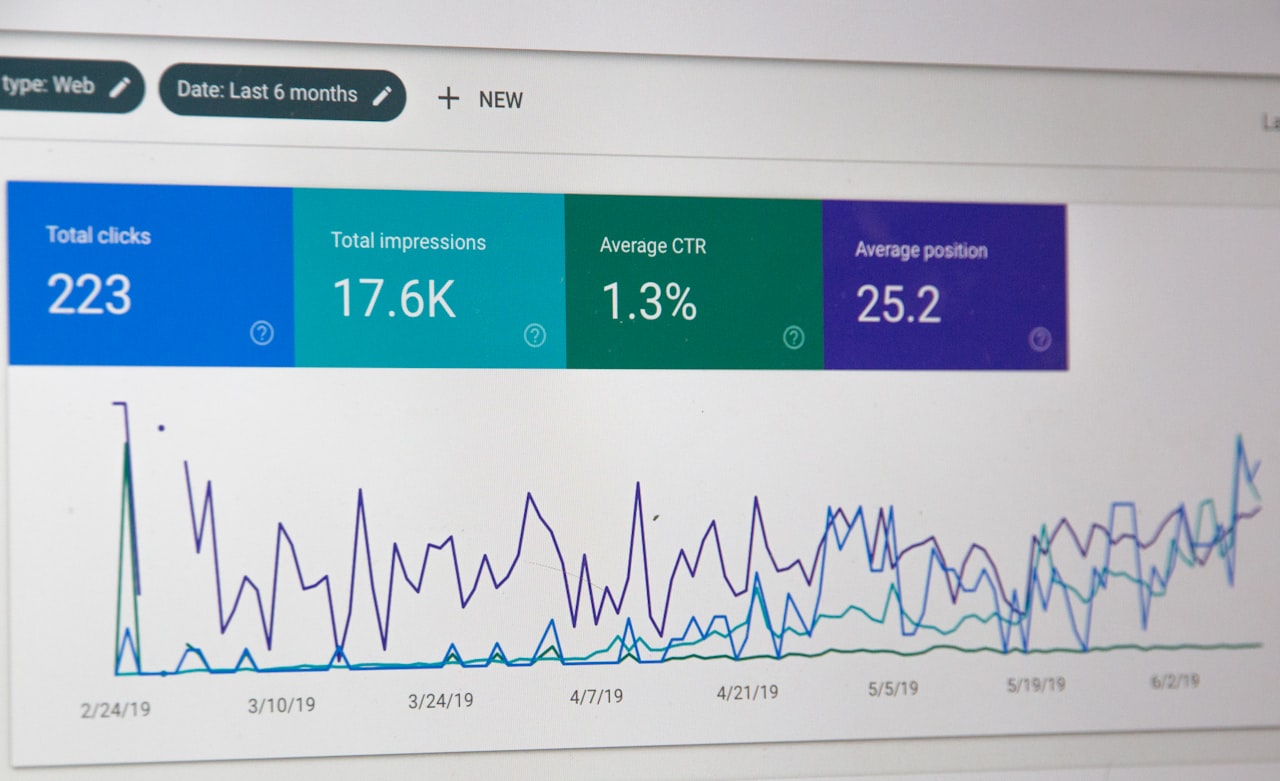
Google Search Console provides search-specific data including keyword performance, click-through rates, and indexing status. For pages that receive organic traffic, Search Console data helps you understand whether low conversion rates stem from targeting the wrong keywords or from on-page issues. This integrates closely with your SEO strategy.
For businesses needing more advanced analytics, platforms like Mixpanel and Amplitude offer event-based analytics with powerful segmentation, funnel analysis, and cohort tracking. These tools are particularly valuable for SaaS businesses and mobile apps common in Singapore’s tech ecosystem. Pricing starts from free tiers for smaller volumes and scales with usage.
Data visualisation tools like Google Looker Studio (free) or Tableau allow you to create custom dashboards that combine data from multiple sources. A unified CRO dashboard showing traffic, conversions, test results, and user behaviour metrics in one place dramatically improves decision-making speed.
A/B Testing and Experimentation Tools
Testing tools allow you to create variations, split traffic, and measure results for your A/B tests and multivariate experiments.
VWO (Visual Website Optimizer) is a popular choice for Singapore businesses. It offers a visual editor for creating variations without code, robust statistical analysis, and integrated heatmaps. Plans start from approximately USD 99 per month for basic A/B testing, with more advanced features at higher tiers.
Optimizely is the enterprise standard for experimentation. It provides sophisticated targeting, feature flagging, and advanced statistical methods including sequential testing. Pricing is custom and typically starts at several hundred dollars per month, making it more suitable for larger Singapore businesses with substantial testing programmes.
Convert is a privacy-focused alternative that performs well for businesses concerned about data compliance. It offers flicker-free testing, advanced targeting, and good integration options. Plans start from approximately USD 99 per month.
AB Tasty provides a solid mid-market option with AI-powered personalisation features alongside traditional A/B and multivariate testing. Its visual editor is intuitive, making it accessible to marketing teams without developer support.
For budget-conscious Singapore businesses, several free or very affordable options exist. Google Analytics 4 includes basic experimentation features. Kameleoon offers a free tier for lower-traffic sites. And open-source tools like GrowthBook provide powerful testing capabilities with no licensing costs, though they require technical setup.
Heatmap and Behaviour Analytics Tools
Heatmap and session recording tools provide visual insights into how users actually interact with your pages, revealing patterns that analytics numbers alone cannot show. For detailed implementation guidance, see our heatmap analysis guide.

Microsoft Clarity is the standout free option. It provides unlimited heatmaps, session recordings, and rage click detection at no cost with no traffic limits. For Singapore businesses just starting with behaviour analytics, Clarity is an exceptional starting point that many paid tools struggle to match on core functionality.
Hotjar is the most widely used paid behaviour analytics tool. It combines heatmaps, session recordings, surveys, and feedback widgets in a single platform. The free tier includes limited session recordings and heatmaps, while paid plans start from USD 39 per month for more generous limits.
Lucky Orange offers real-time heatmaps and session recordings along with live chat and conversion funnel analysis. Its dynamic heatmaps capture interactions on dynamic page elements that static heatmaps miss. Plans start from USD 32 per month.
FullStory provides advanced session replay with AI-powered frustration detection and detailed interaction analytics. It automatically identifies rage clicks, dead clicks, and error clicks, helping you find UX problems faster. It is positioned as an enterprise tool with pricing to match.
Mouseflow rounds out the options with heatmaps, session recordings, funnels, form analytics, and feedback campaigns. Its form analytics feature is particularly useful for optimising lead generation forms, which is a priority for many Singapore service businesses.
User Research and Feedback Tools
Understanding why users behave the way they do requires direct feedback. These tools facilitate user testing and qualitative research.
UserTesting provides access to a panel of testers who complete tasks on your site while recording their screen and commentary. You can target testers by demographics, including location for Singapore-specific testing. This premium service offers unparalleled qualitative insights but comes at a significant cost, typically starting at several thousand dollars per year.
Maze offers rapid remote testing for prototypes and live sites. Testers complete predefined tasks, and the platform automatically generates metrics like completion rate, time-on-task, and misclick rate. Plans start from approximately USD 75 per month.
UsabilityHub (now Lyssna) provides quick design and copy testing through five-second tests, first-click tests, preference tests, and design surveys. It is ideal for validating design decisions before committing to development. Plans start from free for limited tests.
Survey tools like Typeform and SurveyMonkey enable you to collect structured feedback from your users. On-site surveys triggered at specific moments, such as exit intent or after conversion, provide context that other tools cannot. Many offer free tiers sufficient for basic use.
Intercom and similar live chat platforms provide a channel for real-time user feedback. Chat transcripts are a goldmine of conversion insights, revealing the questions, objections, and concerns that your website content fails to address.
Building a Free CRO Toolkit
Singapore businesses with limited budgets can build a surprisingly capable CRO toolkit at zero cost.
Start with Google Analytics 4 for quantitative analysis and conversion tracking. Pair it with Google Tag Manager for implementation flexibility. Add Google Search Console for search-specific insights. These three free Google tools provide a solid analytical foundation.
Add Microsoft Clarity for heatmaps and session recordings. With unlimited recordings and no traffic caps, Clarity fills the behaviour analytics gap that analytics alone cannot cover. Its integration with GA4 adds even more value.
Use Google Forms or Tally for simple user surveys. While not as polished as paid survey tools, they capture the qualitative feedback you need to understand user motivations and barriers.
For testing, use GA4’s basic experimentation features or set up GrowthBook as an open-source testing platform. While these require more technical effort than paid tools, they provide genuine A/B testing capability without any licensing cost.
Complement these tools with manual session recording analysis and informal user testing with friends, family, or colleagues who match your target audience. These zero-cost methods provide valuable qualitative insights while you build the case for investing in paid tools. This free toolkit, combined with a solid digital marketing strategy, can deliver impressive results.
Choosing the Right Tools for Your Business
Selecting tools should be driven by your specific needs, traffic volume, budget, and technical capabilities rather than feature lists or marketing hype.
Assess your current maturity level first. If you are just starting with CRO, the free toolkit described above is more than sufficient. Investing in premium tools before you have the processes and expertise to use them effectively wastes money and creates complexity without value.
Consider your traffic volume. Testing tools are only valuable if you have enough traffic to reach statistical significance. If your site receives under 5,000 monthly visitors, invest in qualitative research tools rather than quantitative testing platforms.
Evaluate integration capabilities. Your CRO tools should work together seamlessly. Check that your testing tool integrates with your analytics platform, that your heatmap tool can be segmented by test variations, and that your data flows smoothly between systems.
Factor in team capabilities. A powerful tool that requires a data scientist to operate is useless if your team consists of marketers without technical expertise. Choose tools with interfaces that match your team’s skill level, even if they offer fewer features.
Plan for growth. Start with tools that offer affordable entry points but can scale as your needs grow. Migrating between tools is disruptive, so choosing platforms with room to grow saves future hassle. A well-constructed CRO roadmap should include tool evolution alongside testing plans.
Frequently Asked Questions
What is the best free CRO tool?
Microsoft Clarity stands out as the best free CRO tool because it offers unlimited heatmaps and session recordings with no traffic limits. Combined with Google Analytics 4, these two free tools cover the majority of CRO data needs for Singapore businesses.
How much should I budget for CRO tools?
Small businesses can start with a completely free toolkit. As you grow, budget SGD 200 to SGD 500 per month for mid-tier tools covering testing and behaviour analytics. Enterprise programmes typically spend SGD 1,000 to SGD 5,000 per month on comprehensive tool stacks.
Do I need a heatmap tool if I already have Google Analytics?
Yes. Google Analytics tells you what happens on your site in aggregate, but heatmaps and session recordings show you how individual users interact with specific page elements. These complementary perspectives provide a much more complete picture of user behaviour and conversion barriers.
Can CRO tools slow down my website?
Yes, adding multiple tracking scripts can impact page load speed. Minimise impact by loading tools asynchronously, using Google Tag Manager for consolidated script management, and limiting the number of tools active on any single page. Monitor page speed after installing new tools.
Which A/B testing tool is best for beginners?
VWO and AB Tasty both offer intuitive visual editors that allow non-technical users to create test variations without coding. For absolute beginners, VWO’s guided workflows and built-in statistical analysis make it the most accessible option.
Are enterprise CRO tools worth the investment?
Enterprise tools like Optimizely and FullStory are worth the investment for businesses with high traffic, dedicated optimisation teams, and complex testing requirements. For most Singapore SMEs, mid-tier tools provide sufficient capability at a fraction of the cost.
How do I evaluate a CRO tool before buying?
Take advantage of free trials, which most CRO tools offer for 14 to 30 days. During the trial, test the tool on your actual site with your real data. Evaluate ease of use, data accuracy, integration with your existing tools, and customer support responsiveness.