
APAC Marketing Strategy: How to Scale Across Asia-Pacific from Singapore
Table of Contents
Why Singapore Is the Ideal APAC Marketing Hub
Singapore has long been the preferred base for companies looking to manage marketing across the Asia-Pacific region. An effective APAC marketing strategy starts with understanding why this city-state provides unique advantages as a regional headquarters for marketing operations.
The strategic benefits are substantial. Singapore sits at the geographic centre of APAC, making it easy to travel to any market within a few hours. The country has a deep talent pool of multilingual marketing professionals who understand both Western business practices and Asian consumer behaviour. The legal and business infrastructure is world-class, with strong intellectual property protections and a stable regulatory environment.
Many global brands — from tech companies to consumer goods — run their APAC marketing from Singapore. This concentration of regional headquarters means the supporting ecosystem is mature: media agencies, creative studios, research firms, PR agencies, and digital marketing agencies with APAC expertise are all readily available.
Singapore also serves as an effective test market. Its multicultural population (Chinese, Malay, Indian, and Western) provides a microcosm of the broader APAC region. Campaigns tested in Singapore can be adapted and scaled across the region with greater confidence.
Market Prioritisation: Where to Expand First
APAC is not a single market — it is a collection of vastly different economies, cultures, languages, and consumer behaviours. Trying to enter every market simultaneously is a common and costly mistake. Successful regional expansion requires disciplined market prioritisation.

Consider these factors when prioritising markets. Market size and growth rate provide the top-line opportunity. China, India, Indonesia, and the Philippines offer the largest consumer bases. However, market size alone is misleading — entry barriers, competitive intensity, and regulatory complexity vary dramatically.
For most Singapore-based businesses, Southeast Asia is the natural first expansion zone. The markets share ASEAN trade agreements, and cultural proximity makes localisation more manageable. Within ASEAN, common expansion paths include Malaysia (closest culturally and linguistically), Indonesia (largest market), Thailand (strong digital economy), Vietnam (fastest growth), and the Philippines (English-speaking, large population).
Beyond Southeast Asia, the Northeast Asian markets of Japan, South Korea, and Taiwan offer premium consumer bases but require significant investment in localisation and cultural adaptation. Australia and New Zealand are attractive for B2B and SaaS companies, with English-speaking markets and high digital adoption.
India represents an enormous opportunity but is a complex market that demands dedicated resources and deep local understanding. Most Singapore companies approach India as a separate strategic initiative rather than bundling it into a broader APAC campaign.
We have covered individual market strategies in detail: marketing to the Philippines, and our guides to marketing to Malaysia, Indonesia, Thailand, and Vietnam provide market-specific playbooks for each country.
Building a Regional Marketing Framework
The most effective APAC marketing operations balance regional consistency with local flexibility. This requires a framework that defines what is centralised at the regional level and what is delegated to local markets.
At the regional level, centralise your brand strategy, messaging architecture, visual identity guidelines, and core value propositions. These elements ensure brand consistency across markets and prevent the fragmentation that occurs when each market operates independently. Your branding strategy should define clear guidelines that are flexible enough to work across diverse cultures.
At the local level, allow flexibility in channel selection, creative execution, influencer partnerships, and tactical promotions. What works in Singapore may not work in Indonesia or Japan. Local teams or partners need the autonomy to adapt campaigns to their specific market dynamics.
The “hub and spoke” model is the most common structure for APAC marketing. Singapore serves as the hub, setting strategy, managing budgets, and providing shared services (analytics, technology, creative production). Local market teams or agency partners serve as spokes, executing campaigns with local expertise.
Technology infrastructure should be centralised where possible. Use a single marketing automation platform, analytics stack, and CRM across markets to enable consistent reporting and cross-market insights. However, ensure your tech stack supports local requirements like language, currency, and data residency regulations.
Content production can follow a “create once, adapt many” approach. Develop core content at the regional level, then localise it for each market. This is more efficient than creating everything from scratch in each market, while still ensuring local relevance.
Channel Strategy by Market
Digital channel preferences vary significantly across APAC. A strategy that relies heavily on Google and Facebook may work in Southeast Asia and Australia, but will miss the mark entirely in China, Japan, or South Korea where local platforms dominate.

Southeast Asia (Singapore, Malaysia, Indonesia, Thailand, Vietnam, Philippines): Google and Meta (Facebook/Instagram) are the dominant digital platforms across the region. YouTube is universally strong. TikTok has become a major force in every ASEAN market. LINE dominates messaging in Thailand, while WhatsApp is preferred in Singapore, Malaysia, and Indonesia. For a detailed breakdown, see our guide on social media platforms in Asia.
China: An entirely different digital ecosystem. WeChat, Douyin (TikTok’s Chinese version), Xiaohongshu (RED), Baidu, Tmall, and JD.com are the platforms that matter. Google, Facebook, Instagram, and YouTube are blocked. Marketing in China requires a dedicated strategy and typically local partners.
Japan: LINE is the dominant messaging and social platform. Twitter (X) has unusually high penetration compared to other markets. Yahoo Japan retains a significant search share alongside Google. E-commerce runs through Amazon Japan, Rakuten, and Yahoo Shopping.
South Korea: Naver is the dominant search engine, requiring a completely different SEO approach. KakaoTalk is the primary messaging platform. Instagram has very high penetration. Coupang dominates e-commerce.
India: WhatsApp is the primary communication platform with over 500 million users. YouTube and Instagram are the leading social platforms. Google dominates search. Flipkart and Amazon India are the e-commerce leaders.
Australia/New Zealand: Similar digital landscape to Western markets — Google, Meta, LinkedIn (strong for B2B), and YouTube are the primary channels.
Working with an agency that understands social media marketing nuances across these different markets ensures you invest in the right channels for each country.
Localisation at Scale
Localisation is the single biggest challenge in APAC marketing. The region encompasses dozens of languages, multiple writing systems, and vastly different cultural contexts. Getting localisation right is the difference between campaigns that resonate and campaigns that fall flat — or worse, offend.
Effective localisation goes far beyond translation. It encompasses cultural adaptation of messaging, visual elements, colour choices, imagery, humour, and references. What is aspirational in one culture may be irrelevant or inappropriate in another. Festive seasons, holidays, and cultural events differ by market and represent both opportunities and sensitivities.
Build a localisation workflow that includes native-speaker review at every stage. Machine translation has improved dramatically, but it still cannot capture cultural nuance, wordplay, or the subtle differences in formality and tone that matter in Asian languages. Use AI translation for initial drafts, then have native speakers refine and culturally adapt the content.
Visual localisation is equally important. Stock photography featuring Western models may feel disconnected in Asian markets. Colours carry different cultural meanings — red signifies luck and prosperity in China but can signal danger in Western contexts. Even layout preferences differ: Japanese consumers expect information-dense pages, while Western-influenced markets like Singapore prefer cleaner designs.
For comprehensive guidance on this topic, our article on multilingual marketing strategy for Asia covers localisation best practices in depth.
Budget Allocation Across APAC Markets
Allocating marketing budget across APAC markets requires balancing opportunity, cost efficiency, and strategic priority. There is no universal formula, but several principles guide effective budget allocation.
Start with your priority markets. Concentrate budget on two to three markets where you have the strongest product-market fit and the clearest path to revenue. It is better to have meaningful presence in three markets than token presence in ten.
Factor in cost differences. Advertising costs vary dramatically across APAC. CPCs and CPMs in developing markets like Vietnam, the Philippines, and Indonesia are a fraction of what you pay in Singapore, Japan, or Australia. The same budget that generates 1,000 clicks in Singapore might generate 10,000 in the Philippines. However, conversion rates and customer lifetime values also differ, so lower costs do not automatically mean better ROI.
Allocate a testing budget for new markets. Before committing significant spend to a new country, run small-scale campaigns to validate demand, test messaging, and understand conversion patterns. A three-month test with modest budget can provide the data you need to make an informed investment decision.
Reserve budget for localisation. Many companies underestimate the cost of localising content, creative assets, and landing pages for multiple markets. A general rule is to budget 15-25% of your total marketing spend for localisation when operating across three or more APAC markets.
Consider working with a Google Ads specialist who can manage multi-country campaigns efficiently, optimising spend allocation based on performance data across markets. For detailed guidance on running ads across the region, see our article on Google Ads in multiple Asian countries.
Measurement and Reporting Across Markets
Consistent measurement across APAC markets is challenging but essential. Without comparable metrics, you cannot make informed decisions about where to invest and where to pull back.
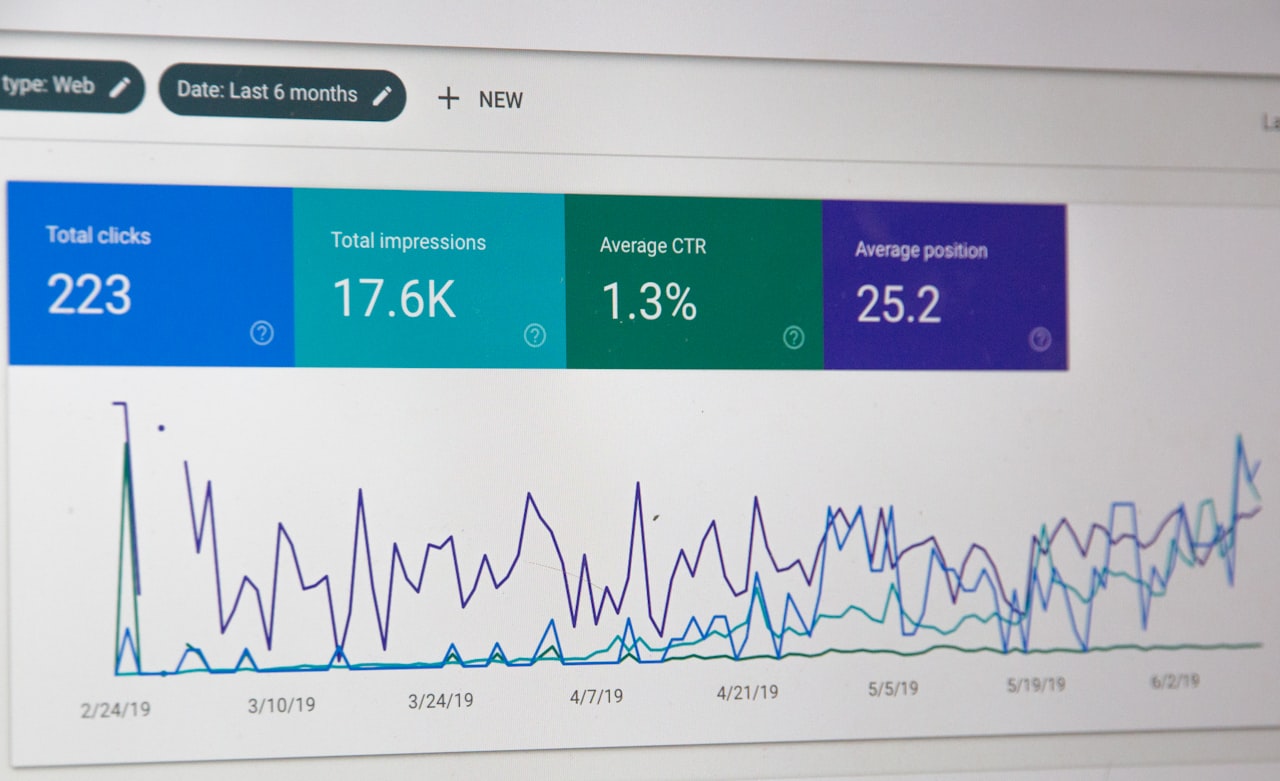
Establish a core set of KPIs that every market reports on: traffic, leads, conversions, cost per acquisition, and revenue attributed to marketing. These metrics should be reported in a common currency (typically USD or SGD) to enable fair comparisons.
Implement a centralised analytics infrastructure. Google Analytics 4, when properly configured, can track performance across multiple country-specific websites or subdirectories. Ensure consistent UTM tagging, goal configuration, and e-commerce tracking across all markets.
Account for attribution differences. In some markets, the customer journey spans multiple platforms and touchpoints over weeks or months. In others, the path to purchase is shorter. Do not penalise a market for having a longer attribution window if the eventual conversion value justifies the investment.
Build market-specific benchmarks. Comparing the performance of your Japan campaigns against your Philippines campaigns using the same benchmarks is misleading. Instead, establish benchmarks for each market based on local competitive dynamics, industry averages, and your historical data. Compare each market against its own benchmarks and trajectory.
Report at both the market level and the regional level. Market-level reporting enables local optimisation. Regional reporting enables strategic budget reallocation and identifies which markets are delivering the best returns on marketing investment. A content marketing strategy that works well in one market can be adapted and deployed across others once the data supports it.
Frequently Asked Questions
How many APAC markets should we target initially?
Start with two to three markets where you have the strongest product-market fit. Most Singapore-based companies begin with neighbouring ASEAN markets — typically Malaysia, Indonesia, or the Philippines — before expanding to Northeast Asia or India. Spreading too thin across many markets simultaneously dilutes your impact and complicates operations.
Should we hire local marketing teams or use agencies in each market?
For initial market entry, working with local agencies or a regional agency with market-specific expertise is more cost-effective and faster than hiring. As a market matures and generates significant revenue, transitioning to in-house teams for core functions while retaining agency support for specialist capabilities is a common evolution.
How much should we budget for APAC expansion?
Budget requirements vary enormously depending on your industry, target markets, and objectives. As a rough guide, plan for meaningful investment in each priority market — typically SGD 10,000-50,000 per month per market for digital marketing, plus localisation costs. Under-investing across too many markets is a common and costly mistake.
Can we use the same creative across all APAC markets?
Generally, no. While some visual elements and brand assets can be shared, creative execution needs to be adapted for each market. This includes language, cultural references, models and imagery, colour choices, and messaging tone. The “create once, adapt many” approach balances efficiency with local relevance.
What is the biggest mistake companies make in APAC expansion?
Treating APAC as a homogeneous region. The differences between a Japanese consumer and an Indonesian consumer are as vast as the differences between a Swedish consumer and a Brazilian consumer. Companies that apply a one-size-fits-all approach invariably underperform those that invest in understanding and adapting to each market.
How long does it take to see results in a new APAC market?
Paid advertising can generate leads and sales within weeks of launch. SEO typically takes 6-12 months to gain traction in a new market, longer if you are building domain authority from scratch. Brand awareness and market positioning are longer-term investments, often requiring 12-24 months of consistent activity to establish meaningful presence.
Do we need separate websites for each APAC market?
For most businesses, a subdirectory approach (yoursite.com/ph/, yoursite.com/id/) provides the best balance of SEO benefit and operational simplicity. Separate country-code domains (yoursite.ph, yoursite.co.id) can be stronger for local SEO but require more infrastructure. The right approach depends on your budget, technical capabilities, and the importance of local SEO in each market.