
Conversion Rate Optimisation in Singapore: The Complete CRO Guide
Table of Contents
What Is Conversion Rate Optimisation?
Conversion rate optimisation singapore businesses are increasingly investing in is the systematic process of increasing the percentage of website visitors who take a desired action. Whether that action is filling out a contact form, making a purchase, or signing up for a newsletter, CRO focuses on making every visit count.
At its core, CRO is about understanding what drives your visitors, what stops them, and what persuades them to convert. Rather than spending more on driving traffic, CRO helps you extract more value from the traffic you already have. For Singapore businesses operating in a competitive digital landscape, this distinction is critical.
A typical conversion rate across industries sits between 2% and 5%. However, with a disciplined CRO approach, many businesses double or even triple their baseline conversion rates. The compounding effect of these improvements on revenue cannot be overstated.
Why Singapore Businesses Need CRO
Singapore has one of the highest internet penetration rates in the world, with over 96% of the population online. Digital advertising costs continue to rise year over year, making it more expensive to acquire each visitor. This is precisely why CRO has become essential rather than optional for local businesses.
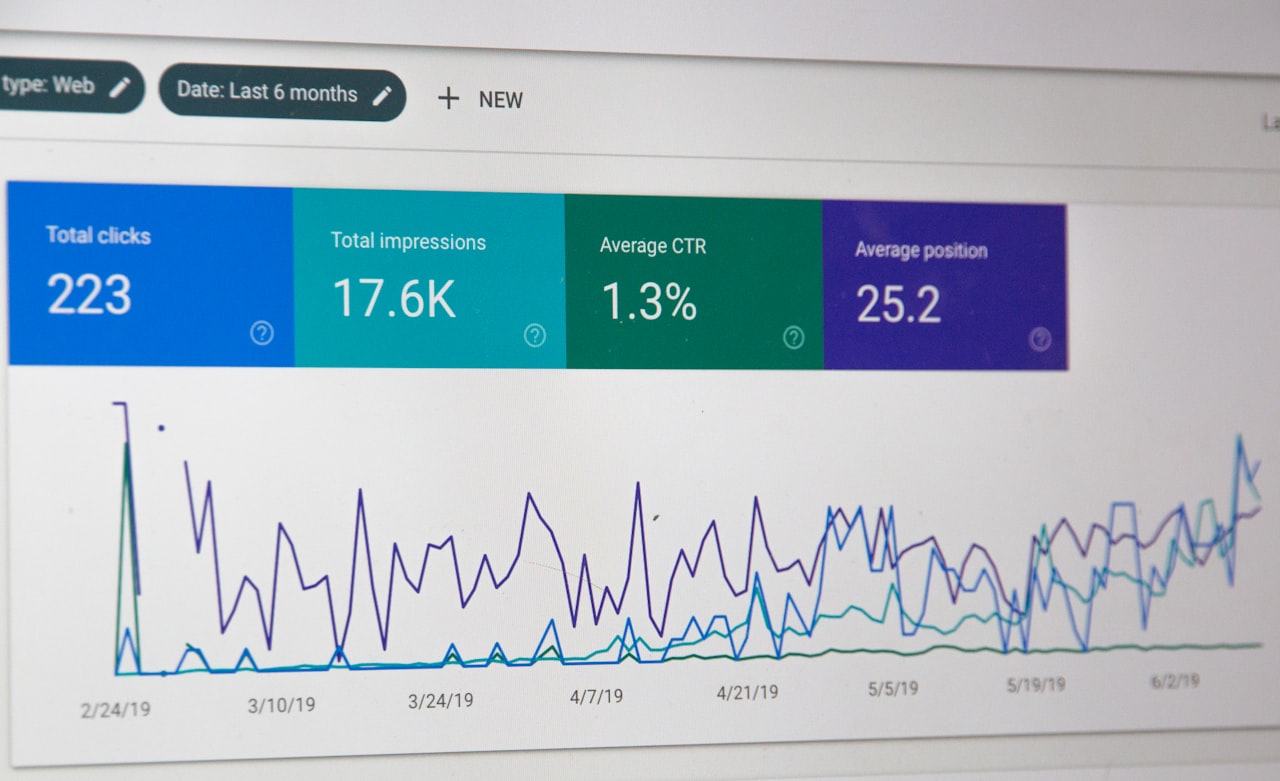
Consider this: if you spend SGD 10,000 per month on Google Ads driving 5,000 visitors to your site, and your conversion rate is 2%, you generate 100 leads. By improving your conversion rate to 4% through CRO, you double your leads to 200 without spending a single additional dollar on advertising.
Singapore consumers are also increasingly sophisticated. They compare multiple providers, read reviews, and expect seamless digital experiences. A poorly optimised website does not just lose conversions; it damages brand credibility in a market where trust is paramount.
The local competitive landscape adds another layer of urgency. With businesses across every sector investing in digital marketing services, standing still means falling behind. CRO provides a measurable competitive advantage that compounds over time.
Key CRO Metrics You Should Track
Before you begin optimising, you need to establish the right measurement framework. These are the metrics that matter most for CRO in Singapore.
Your overall conversion rate is the starting point, calculated as conversions divided by total visitors multiplied by 100. But you should also segment this by traffic source, device type, and landing page to identify specific opportunities.
Bounce rate tells you the percentage of visitors who leave without interacting with your page. A high bounce rate on key landing pages signals a disconnect between visitor expectations and page content. For Singapore audiences, this often relates to relevance, load speed, or trust signals.
Average session duration and pages per session indicate engagement depth. If visitors are spending minimal time on your site, your content or user experience may not be compelling enough to hold attention.
Cart abandonment rate is critical for e-commerce businesses. In Singapore, the average cart abandonment rate hovers around 70%, but top-performing sites bring this below 50% through targeted CRO interventions.
Micro-conversions such as email signups, video views, and add-to-cart actions serve as leading indicators. Tracking these helps you understand the full conversion funnel and identify where drop-offs occur. Using heatmap analysis can reveal exactly where users engage and disengage on each page.
The CRO Process: Step by Step
Effective CRO follows a structured, repeatable process. Skipping steps or jumping straight to testing without proper research is one of the most common mistakes businesses make.

The first phase is research and data collection. This involves analysing your current analytics data, conducting user surveys, reviewing session recordings, and performing heuristic evaluations of your key pages. The goal is to build a comprehensive picture of how users interact with your site and where friction exists.
Next comes hypothesis formation. Based on your research, you develop specific, testable hypotheses about what changes could improve conversions. A strong CRO hypothesis framework follows the format: “If we change X on page Y, we expect metric Z to improve because of reason W.”
The third phase is prioritisation. Not all hypotheses are equal. You need a framework to rank tests by potential impact, confidence level, and ease of implementation. This ensures you focus resources on the highest-value experiments first.
Testing comes next. Depending on the complexity of your hypothesis, you might run an A/B test or a multivariate test. The key is ensuring statistical rigour so your results are reliable.
Finally, you analyse results, implement winners, and document learnings. This documentation feeds back into the research phase, creating a continuous improvement loop that drives sustained growth.
Common Conversion Killers on Singapore Websites
Through years of working with Singapore businesses, certain patterns emerge repeatedly as conversion killers. Identifying and fixing these should be your first priority.
Slow page load times are a persistent issue. With Singapore users accustomed to fast mobile connections, even a one-second delay can reduce conversions by 7%. Many local sites are overloaded with unoptimised images, excessive scripts, and bloated themes. Investing in proper web design that prioritises performance is foundational to CRO success.
Weak or missing calls to action leave visitors without clear direction. Every page on your site should have a primary CTA that is visually prominent, action-oriented, and relevant to the visitor’s intent at that stage of the journey.
Lack of trust signals is particularly damaging in Singapore’s market. Consumers here expect to see client logos, testimonials, case studies, certifications, and clear contact information. A site without these elements creates doubt that kills conversions.
Poor mobile experience continues to plague many Singapore websites despite mobile traffic accounting for over 60% of web traffic. Forms that are difficult to complete on mobile, text that is too small to read, and buttons that are too close together all contribute to mobile conversion gaps.
Complicated checkout or enquiry processes add unnecessary friction. Every additional form field or step in your conversion process is an opportunity for visitors to abandon. Streamlining these flows is often the single highest-impact CRO intervention. A thorough CRO audit can systematically uncover these issues.
Proven CRO Strategies for the Singapore Market
These strategies have consistently delivered results for Singapore businesses across industries.
Localise your value proposition. Generic messaging does not resonate with Singapore audiences. Reference local pain points, use SGD pricing, mention Singapore-specific regulations or standards, and demonstrate local expertise. This immediately builds relevance and trust.
Implement social proof strategically. Place testimonials near conversion points, display real-time purchase notifications for e-commerce, and showcase client counts or results. Singapore consumers are heavily influenced by peer behaviour and social validation.
Optimise for the local buying journey. Singapore customers typically research extensively before purchasing. Provide comparison tools, detailed product information, and content that addresses common objections. Your content marketing should align with each stage of the decision process.
Use urgency and scarcity appropriately. Limited-time offers, countdown timers, and stock indicators can boost conversions when used honestly. Singapore consumers respond to genuine urgency but are quick to disengage from artificial pressure tactics.
Simplify your forms. Reduce fields to the absolute minimum required. Use smart defaults, enable autofill, and consider progressive profiling where you collect additional information over time rather than all at once. For B2B businesses in Singapore, reducing form fields from seven to four typically increases submissions by 30% or more.
Getting Started With CRO in Singapore
If you are new to CRO, the path forward does not need to be overwhelming. Start with the fundamentals and build from there.

Begin by setting up proper analytics. Ensure Google Analytics 4 is correctly configured with conversion tracking for all key actions on your site. Without accurate data, CRO is guesswork. Complement analytics with CRO tools that provide qualitative insights like heatmaps and session recordings.
Conduct a baseline audit of your current conversion performance. Document conversion rates for each key page and traffic source. This gives you a clear benchmark against which to measure improvements.
Identify your highest-impact pages. These are typically your homepage, top landing pages, pricing page, and checkout or contact page. Focus your initial CRO efforts here for the greatest return.
Build a CRO roadmap that outlines your testing priorities for the next 12 months. This keeps your efforts focused and ensures you are systematically addressing the biggest opportunities.
Consider whether to build CRO capability in-house or partner with specialists. For many Singapore SMEs, working with experienced SEO and CRO professionals accelerates results and avoids common pitfalls. The agency vs in-house decision depends on your team’s capacity, budget, and the complexity of your optimisation needs.
The most important step is simply to start. Every day you operate without CRO is a day you leave revenue on the table. In a market as competitive as Singapore, that is a luxury no business can afford.
Frequently Asked Questions
What is a good conversion rate for Singapore websites?
A good conversion rate varies by industry. E-commerce sites in Singapore typically see 1.5% to 3%, while B2B lead generation sites aim for 3% to 7%. The most important benchmark is your own historical performance and continuous improvement from that baseline.
How long does it take to see results from CRO?
Initial quick wins from fixing obvious conversion killers can show results within weeks. However, a comprehensive CRO programme typically takes 3 to 6 months to deliver significant, sustained improvements. The key is consistent testing and iteration.
How much does CRO cost in Singapore?
CRO costs vary widely based on scope. Basic CRO audits start from SGD 2,000 to SGD 5,000. Ongoing CRO programmes with regular testing typically range from SGD 3,000 to SGD 10,000 per month. The ROI usually far exceeds the investment within the first few months.
Can CRO work for small businesses in Singapore?
Absolutely. In fact, CRO often delivers the highest ROI for small businesses because they have the most room for improvement. Even simple changes like improving CTAs, adding trust signals, and streamlining forms can produce meaningful conversion lifts.
What is the difference between CRO and SEO?
SEO focuses on driving more traffic to your website through search engine visibility. CRO focuses on converting more of that traffic into leads or customers. They are complementary strategies, and the best results come from investing in both simultaneously.
Do I need special tools for CRO?
At minimum, you need Google Analytics and a testing tool. Free options like Google Optimize alternatives, Microsoft Clarity, and Hotjar‘s free tier can get you started. As your programme matures, investing in more advanced tools becomes worthwhile.
How do I convince my boss to invest in CRO?
Frame CRO in terms of revenue impact. Calculate the value of a 1% conversion rate improvement based on your current traffic and average order value. Show that CRO makes existing marketing spend more efficient rather than requiring additional budget. Most decision-makers respond to this financial argument.
What are the biggest CRO mistakes to avoid?
The most common mistakes are testing without a hypothesis, ending tests too early before reaching statistical significance, copying competitor tactics without understanding your own data, and focusing on minor design tweaks rather than addressing fundamental conversion barriers.