Mixed Reality App Development Services in Singapore
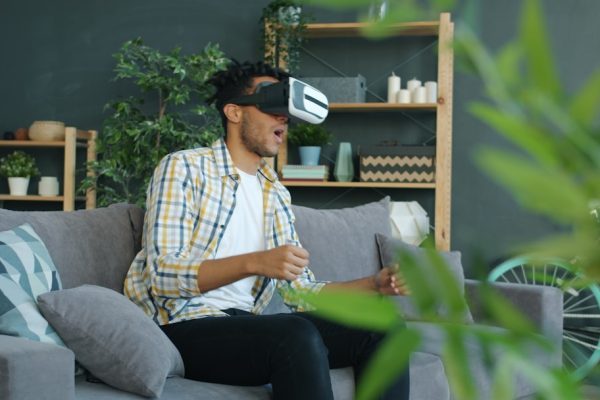
Create immersive mixed reality applications that blend digital content with the physical world through our MR app development services in Singapore. We build cutting-edge mixed reality experiences for enterprise, retail, education, and entertainment sectors across Singapore. Transform how your customers and teams interact with your brand through innovative MR technology.
Why Choose Our Mixed Reality App Development Services?
Cross-Platform MR Expertise
We develop for Meta Quest, Apple Vision Pro, Magic Leap, and mobile MR platforms, ensuring your Singapore business reaches users on their preferred devices.
Enterprise-Grade Solutions
Our mixed reality apps are built with security, scalability, and integration in mind, connecting seamlessly with your existing enterprise systems and workflows.
UX-First Design
We prioritise intuitive spatial interfaces and natural interactions that make complex mixed reality experiences accessible and engaging for Singapore users of all technical levels.
Our Process
Discovery & Concept
We explore your business objectives and user needs to define a compelling mixed reality concept that solves real problems for your Singapore audience.
UX & Spatial Design
Our designers create 3D wireframes, spatial interaction models, and user flow prototypes to validate the experience before development begins.
Development & Integration
Our engineers build the MR application using Unity or Unreal Engine, integrating with your data sources, APIs, and backend systems.
Testing & Deployment
We conduct rigorous testing across devices and environments, then deploy and support your mixed reality application for Singapore users.
Frequently Asked Questions
Mixed reality app development involves creating applications that blend digital objects with the real world, allowing users to interact with both simultaneously. We build these immersive experiences for Singapore businesses across various industries.
Mixed reality goes beyond AR by allowing digital objects to interact with and respond to the physical environment. Unlike VR, MR keeps users connected to the real world while overlaying interactive digital content.
Manufacturing, real estate, retail, healthcare, education, and architecture are leading adopters. Any Singapore business that can benefit from spatial visualisation, remote collaboration, or immersive training can leverage MR technology.
We develop for Meta Quest 3, Apple Vision Pro, Magic Leap, and mobile MR-capable devices. We recommend the best platform based on your use case and Singapore deployment requirements.
A typical MR application takes three to six months from concept to deployment. Complex enterprise solutions may require longer timelines depending on integration requirements and scope.
Costs vary significantly based on complexity, platform, and features. Simple MR experiences start from $30,000, while full enterprise solutions can range significantly higher. Contact us for a detailed estimate.
Yes, we specialise in integrating mixed reality applications with ERP systems, CRM platforms, IoT sensors, and cloud services. Our solutions work seamlessly within your existing Singapore business technology stack.
Absolutely. We offer maintenance, updates, and technical support packages to ensure your MR application continues to perform optimally as platforms evolve and your Singapore business needs change.
Not always. Many apps can run offline once content is loaded onto the device, which suits factories and remote sites. Features such as remote assistance, live data and cloud collaboration do need a reliable connection.
Many augmented reality features work on modern smartphones and tablets, which makes them accessible to customers without special hardware. Full mixed reality with hands-free interaction typically requires a headset, which is more common for enterprise and training use.
Yes. Apple Vision Pro apps run on visionOS and are typically built with Apple’s native tools, such as Swift, SwiftUI and RealityKit, or with Unity for teams that also target other headsets. Many existing iPad apps can run on the device, but spatial experiences need dedicated design for eye and hand input. Singapore businesses usually start with a focused pilot because the device’s installed base is still relatively small.
Unity is the more common choice for mixed reality apps because it supports the widest range of headsets and mobile devices and has mature MR toolkits. Unreal Engine suits projects where photorealistic visuals matter most, such as architectural or automotive visualisation, but it is heavier and has fewer MR-specific tools. The right engine depends on target devices, visual quality needs and the skills of the team maintaining the app.
Mixed reality apps in Singapore must comply with the PDPA whenever they collect personal data, which can include camera feeds, voice recordings, eye-tracking data or images of people in the user’s surroundings. Organisations should limit what is captured and stored, tell users and bystanders how data is used, secure any recordings shared in remote-assistance sessions and set clear retention periods. A data protection review during design avoids costly changes later.