Augmented Reality Marketing: How Brands Use AR in 2026
Augmented reality marketing is no longer a novelty reserved for tech companies with massive budgets. In 2026, AR has become a practical, accessible marketing tool used by brands across retail, beauty, property, food and beverage, and education. The technology overlays digital content onto the physical world through smartphone cameras, smart glasses, or dedicated AR devices, creating interactive experiences that static images and video simply cannot replicate.
For businesses in Singapore, AR marketing is particularly compelling. The city-state has one of the highest smartphone penetration rates in the world, robust 5G coverage that supports data-heavy AR experiences, and a tech-savvy consumer base that is receptive to interactive digital experiences. The infrastructure is in place. The audience is ready. The question is not whether AR marketing works — it is how to deploy it effectively.
This guide covers the practical applications of augmented reality marketing, from virtual try-ons to interactive packaging to AR advertising. We discuss what works, what does not, what it costs, and how Singapore brands are implementing AR strategies that deliver measurable results.
What Is Augmented Reality Marketing
Augmented reality marketing uses AR technology to create interactive brand experiences that blend digital content with the physical environment. Unlike virtual reality, which replaces the real world entirely, AR adds to it — layering 3D models, animations, information, and interactive elements onto what the user sees through their device’s camera.
The distinction between AR and other digital marketing formats is fundamentally about interaction. A product image shows you what something looks like. A video shows you how it works. AR lets you experience it in your own context — see how that sofa looks in your living room, how those sunglasses look on your face, or how that building will look when construction is complete.
This contextual, interactive quality makes AR marketing uniquely effective at several stages of the customer journey:
- Awareness. AR experiences are inherently shareable. Users who encounter a novel AR experience are significantly more likely to share it on social media, generating organic reach.
- Consideration. AR reduces uncertainty by letting consumers visualise products in their own environment before purchasing. This is particularly valuable for high-consideration purchases like furniture, eyewear, cosmetics, and property.
- Conversion. By bridging the gap between online browsing and physical experience, AR reduces return rates and increases purchase confidence. Shopify reports that products with AR content see 94 per cent higher conversion rates than those without.
- Retention. AR loyalty programmes, interactive packaging, and gamified brand experiences create ongoing engagement that keeps customers connected to your brand beyond the initial purchase.
Professional AR and augmented reality services help brands identify where AR can add genuine value rather than deploying technology for technology’s sake.
Key AR Applications for Brands
AR marketing encompasses a wide range of applications. The most effective deployments solve a real consumer problem or provide genuine utility rather than serving as gimmicks.
Virtual try-on. This is the most commercially proven AR application. Beauty brands like Sephora and MAC use AR to let customers try on makeup virtually through their smartphone cameras. Eyewear brands offer virtual try-on for frames. Fashion retailers enable virtual fitting of accessories and clothing. In Singapore, Sephora’s AR mirror in ION Orchard and online AR try-on tools have become standard shopping features. Virtual try-on reduces purchase hesitation and return rates simultaneously.
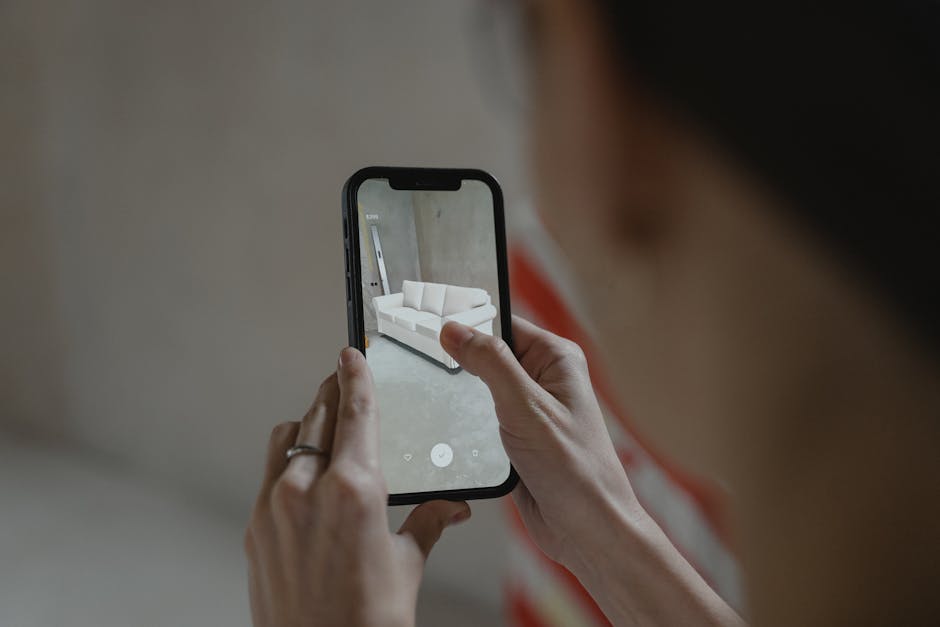
Product visualisation. IKEA’s Place app is the landmark example — users can place true-to-scale 3D models of furniture in their rooms using AR. This application extends to home improvement products, electronics, appliances, and any product where size, fit, and aesthetic compatibility matter. For Singapore’s property market, AR visualisation of interior design options within HDB flats and condominiums provides practical value for homeowners planning renovations.
Interactive packaging. AR transforms physical packaging into a digital touchpoint. Consumers scan a product’s packaging with their phone to unlock additional content — recipe videos on food packaging, assembly instructions on furniture boxes, brand stories on beverage labels, or authentication verification on luxury goods. Wines, spirits, and craft beverages are particularly active in this space, using AR labels to tell provenance stories and provide tasting notes.
Location-based AR experiences. These are tied to physical locations — retail stores, events, tourist attractions, or public spaces. Brands create AR experiences that users access when they visit a specific location. In Singapore, museums like the ArtScience Museum and National Gallery have deployed AR experiences that enhance physical exhibitions. Retail brands use location-based AR for in-store navigation, product information, and gamified shopping experiences.
AR business cards and print materials. Printed materials come alive with AR — business cards that display a portfolio when scanned, brochures with embedded product demonstrations, and direct mail pieces with interactive calls to action. For B2B marketing in Singapore, AR-enhanced print materials create memorable first impressions at trade shows and business meetings.
Gamified brand experiences. AR games and challenges drive engagement and social sharing. Brands create AR scavenger hunts, interactive challenges, or collectible experiences that incentivise participation. These work particularly well for product launches, seasonal campaigns, and event activations. The gamification element increases time spent engaging with the brand and generates user-generated content.
AR Advertising Channels
AR advertising places interactive, augmented experiences within existing advertising platforms. The major social and digital platforms now offer AR ad formats that reach consumers at scale.
Instagram and Facebook AR ads. Meta’s Spark AR platform enables brands to create AR filters and effects that users can access through Instagram Stories and Facebook Camera. AR ads on these platforms let users try on products, visualise items, or interact with branded effects. The combination of AR engagement and Meta’s targeting capabilities creates a powerful performance marketing channel. AR ads on Instagram consistently outperform standard image and video ads in engagement metrics.
Snapchat AR lenses. Snapchat was the pioneer of consumer AR and remains a leader in AR advertising. Sponsored lenses allow brands to create face filters, world lenses, and interactive experiences that Snapchat users engage with and share. While Snapchat’s user base in Singapore is smaller than Instagram’s, its audience skews young and tech-forward — making it ideal for brands targeting younger demographics.
TikTok branded effects. TikTok’s Effect House enables AR effects that users can apply to their videos. Branded effects that align with trending content formats can generate massive organic reach as users create and share content using the effect. The key to success on TikTok is creating effects that are fun, creative, and participatory rather than overtly branded.
Google AR in Search. Google enables AR product viewing directly in search results for certain product categories. Users searching for products can tap “View in 3D” to see an AR model in their environment. This is available for supported product categories and requires 3D models in your Google Merchant Center product feed. As search-integrated AR matures, this channel will become increasingly important for e-commerce brands.
WebAR. WebAR experiences run directly in mobile web browsers without requiring a dedicated app. Users access the AR experience through a URL or QR code, eliminating the friction of app downloads. WebAR is particularly effective for marketing campaigns because it minimises the barrier to entry. Platforms like 8th Wall and Zappar enable WebAR experiences that work across devices and browsers.
Understanding how AR advertising integrates with social commerce in Singapore helps brands create cohesive campaigns that drive both engagement and sales.
Implementation: Technology and Process
Implementing AR marketing requires decisions about technology platforms, content creation, and user experience design. Here is a practical overview of the implementation process.
Choosing the right AR platform. Your platform choice depends on your use case, target audience, and distribution channel. Key options include:
- ARKit (Apple) and ARCore (Google) — native AR frameworks for iOS and Android app development. Best for dedicated AR features within your own app.
- Spark AR (Meta) — for Instagram and Facebook AR effects and ads.
- Lens Studio (Snap) — for Snapchat AR lenses.
- Effect House (TikTok) — for TikTok branded effects.
- WebAR platforms (8th Wall, Zappar, Blippar) — for browser-based AR experiences accessible via URL or QR code.
- Unity and Unreal Engine — for complex, custom AR applications requiring advanced 3D rendering and interaction.
3D content creation. AR experiences require 3D assets — product models, animations, environments, and interactive elements. Creating high-quality 3D content is typically the most time-consuming and costly part of AR implementation. 3D models can be created from scratch using software like Blender, Maya, or 3ds Max, or generated from physical products using photogrammetry (capturing multiple photographs and reconstructing a 3D model algorithmically).
User experience design. AR experiences must be intuitive. Users should understand what to do without instructions. This means clear visual cues, responsive interactions, and graceful fallback behaviour when the AR experience encounters limitations (poor lighting, unsupported devices, or tracking difficulties). Test your AR experience across multiple devices and environments before launch.
Development and testing. Depending on complexity, AR development can take 4 to 16 weeks from concept to launch. Simple AR filters for social platforms may take 2 to 4 weeks. Custom AR apps with advanced features can take 3 to 6 months. Rigorous testing across devices, operating system versions, and real-world conditions is essential — AR that works perfectly in a studio may fail in a dimly lit retail environment.
Dedicated AR app development services handle the technical implementation while you focus on the marketing strategy and creative direction.
Costs and ROI of AR Marketing
AR marketing costs have decreased significantly as the technology has matured, but it remains a more capital-intensive format than traditional digital content. Here is what Singapore businesses can expect to invest.
Social media AR filters (SGD 3,000 to SGD 15,000). Simple branded face filters or effects for Instagram, Snapchat, or TikTok. Costs depend on complexity — a basic colour overlay or frame is at the lower end, while a face-tracking product try-on effect is at the higher end.
WebAR experiences (SGD 8,000 to SGD 40,000). Browser-based AR experiences accessible via QR code or URL. Includes 3D content creation, AR development, UX design, and hosting. Product visualisation experiences tend toward the lower end, while interactive gamified experiences cost more.
AR product try-on solutions (SGD 20,000 to SGD 100,000+). Full virtual try-on implementations for e-commerce platforms, including 3D product catalogue creation, real-time rendering, and platform integration. The cost scales with the number of products in your catalogue and the complexity of the try-on interaction.
Custom AR apps (SGD 50,000 to SGD 250,000+). Dedicated AR applications built on ARKit or ARCore with custom features, integrations, and ongoing maintenance. These are typically justified only for brands with sustained, long-term AR strategies or specific use cases that cannot be served by existing platforms.
ROI measurement. Measuring AR marketing ROI requires tracking both engagement metrics and business outcomes:
- Engagement metrics — session duration, interaction rate, share rate, repeat usage.
- Conversion metrics — add-to-cart rate from AR interactions, conversion rate lift compared to non-AR product pages, reduction in return rates.
- Brand metrics — brand recall improvement, Net Promoter Score changes, social media sentiment.
- Cost metrics — cost per AR interaction, cost per conversion attributed to AR, comparison to cost per engagement on other channels.
The brands seeing the strongest ROI from AR are those deploying it at scale across their product catalogues and integrating it into the core shopping experience rather than using it as a one-off campaign tactic.
The Singapore AR Landscape
Singapore’s technology infrastructure, consumer behaviour, and regulatory environment make it one of the most favourable markets for AR marketing in Southeast Asia.
Infrastructure advantages. Singapore’s nationwide 5G coverage, one of the highest smartphone penetration rates globally (over 90 per cent), and advanced mobile payment ecosystem create the technical foundation for seamless AR experiences. Users can access high-quality AR content without the connectivity and device limitations that constrain AR adoption in other markets.
Consumer readiness. Singaporean consumers are early adopters of technology and have high expectations for digital experiences. The population is accustomed to scanning QR codes (accelerated by the pandemic-era TraceTogether and SafeEntry adoption), which reduces friction for AR experiences triggered by QR codes. Comfort with mobile commerce means that AR experiences can seamlessly connect to purchase flows.
Retail environment. Singapore’s retail landscape — from Orchard Road malls to neighbourhood heartland shops — provides diverse physical touchpoints for location-based AR. Major retail groups like CapitaLand, Mapletree, and Frasers have explored AR-enhanced shopping experiences in their properties. The compact geography means a single location-based AR campaign can reach a dense concentration of potential users.
Government support. IMDA and Enterprise Singapore have supported digital innovation initiatives that include AR and immersive technology. Grants and innovation programmes may be available for businesses investing in AR capabilities, particularly SMEs looking to digitalise customer experiences.
Industry adoption. Property developers use AR for virtual showflat experiences. Tourism operators create AR-enhanced heritage trails. Retail brands deploy AR in stores and e-commerce platforms. Education providers use AR for interactive learning. The breadth of adoption across industries signals that AR marketing has moved beyond the experimental phase in Singapore.
Broader extended reality services encompassing AR, VR, and mixed reality provide the full spectrum of immersive technology capabilities for Singapore brands.
Best Practices for AR Campaigns
AR marketing campaigns succeed or fail based on execution quality and strategic alignment. Here are the practices that consistently produce strong results.
Solve a real problem. The best AR experiences address a genuine consumer need — reducing purchase uncertainty, providing useful information, or enabling an interaction that was previously impossible. AR for the sake of novelty generates initial curiosity but does not sustain engagement. Ask yourself: would this experience be genuinely useful even if AR were not involved? If the underlying concept is strong, AR amplifies it. If the concept is weak, AR cannot save it.
Minimise friction. Every additional step between the user and the AR experience reduces participation. Requiring an app download is the biggest friction point — WebAR eliminates this barrier. Keep instructions minimal. Auto-detect surfaces and faces rather than requiring manual calibration. Design for the user who will spend three seconds deciding whether to engage.
Optimise for mobile. The vast majority of AR marketing experiences are accessed through smartphones. Design for the mobile context — vertical orientation, thumb-friendly interactions, and performance that works on mid-range devices, not just the latest flagships. Test on multiple devices and operating system versions.
Integrate with your marketing funnel. AR should not be an isolated experience. Connect it to your broader marketing ecosystem — link AR try-ons to purchase pages, capture user data for retargeting, integrate with your CRM, and create follow-up touchpoints. An AR experience that generates delight but no downstream action is a missed opportunity.
Measure and iterate. Track how users interact with your AR experience — where they drop off, what they engage with most, and how engagement correlates with conversion. Use this data to refine the experience. AR campaigns should be treated as living products that improve over time, not one-and-done launches.
Consider accessibility. Not all users will have devices that support advanced AR features. Provide fallback experiences — static 3D viewers, image galleries, or video alternatives — for users on unsupported devices. Ensure your AR experience does not exclude significant portions of your audience.
An experienced immersive experience agency brings cross-industry knowledge to AR campaign planning, helping you avoid common pitfalls and identify the highest-impact applications for your brand.
Frequently Asked Questions
Do users need to download an app to use AR marketing experiences?
Not necessarily. WebAR technology enables AR experiences that run directly in mobile web browsers — users simply tap a link or scan a QR code and the AR experience loads without any app download. This significantly reduces friction and increases participation rates. However, app-based AR (using ARKit or ARCore) can deliver more advanced experiences with better performance, tracking accuracy, and feature depth. For marketing campaigns where reach and participation are priorities, WebAR is usually the better choice. For sustained, feature-rich AR experiences integrated into your product ecosystem, a dedicated app may be warranted.
What industries benefit most from AR marketing?
Industries where consumers need to visualise products before purchasing benefit most — furniture and home decor, beauty and cosmetics, eyewear, fashion accessories, and property. Retail in general benefits from AR product visualisation and virtual try-on. Beyond retail, education, tourism, automotive, and healthcare have strong AR marketing use cases. In Singapore specifically, the property sector has been an active adopter, using AR for virtual showflat experiences and interior design visualisation. Any industry where the gap between online browsing and physical experience creates purchase hesitation can benefit from AR.
How long does an AR marketing campaign take to develop?
Simple social media AR filters can be developed in 2 to 4 weeks. WebAR product visualisation experiences typically take 4 to 8 weeks. Complex AR try-on solutions or custom AR apps require 8 to 20 weeks depending on scope. These timelines include concept development, 3D content creation, AR development, testing, and launch preparation. The most time-consuming element is usually 3D content creation — if you already have 3D product models, development timelines shorten significantly. Plan for an additional 2 to 4 weeks of marketing preparation, including promotional assets and distribution strategy.
What is the difference between AR and VR in marketing?
Augmented reality overlays digital content onto the real world — the user sees their actual environment with digital elements added. Virtual reality replaces the real world entirely with a fully digital environment. In marketing, AR is more accessible because it works on smartphones that consumers already own, whereas VR requires headsets. AR is better suited for product visualisation, try-ons, and interactive print because it connects digital content to physical context. VR is better suited for fully immersive experiences like virtual property tours, training simulations, and entertainment. For most marketing campaigns targeting general consumers, AR offers a better balance of accessibility, engagement, and cost-effectiveness.
How do I measure the success of an AR marketing campaign?
Measure AR campaign success across three dimensions. First, engagement: track the number of AR sessions initiated, average session duration, interaction depth (how many features users explored), and social sharing rate. Second, conversion impact: compare conversion rates, average order values, and return rates for users who engaged with AR versus those who did not. Third, cost efficiency: calculate cost per AR interaction and compare to cost per engagement on other marketing channels. Set benchmarks before launch and measure against them. For product try-on experiences, the most important metric is typically the conversion rate lift — how much more likely users are to purchase after using the AR feature compared to viewing standard product images alone.