
Part of our SEO Guides guide →
Why SEO Matters for Dentists
When a Singapore resident needs a dentist, they open Google. They search for “dentist near me,” “dental clinic Tampines,” or “teeth whitening Singapore.” If your practice does not appear in those results, you are invisible to a significant portion of potential patients.
The dental market in Singapore is competitive. There are over 1,500 registered dental clinics across the island, and patients have no shortage of options. SEO for dentists is not about vanity rankings — it is about ensuring that patients in your area can find your clinic when they need dental services.
Several factors make dental SEO particularly important:
- High local intent. Dental searches are inherently local. Patients want a clinic near their home, workplace, or MRT station. Local SEO determines whether your clinic appears in the map pack and local search results.
- Patient lifetime value. A single new patient acquired through SEO may return for years — regular check-ups, cleanings, and procedures. The lifetime value of a dental patient in Singapore easily exceeds $2,000 to $5,000, making SEO investment highly profitable.
- Trust and credibility. Ranking prominently on Google signals credibility. Patients are more likely to trust and choose a clinic that appears at the top of search results over one they have never heard of.
- Reduced dependence on paid advertising. While Google Ads can generate immediate leads, organic SEO delivers sustainable traffic without ongoing per-click costs. A well-optimised dental website can generate dozens of patient enquiries per month from organic search alone.
Investing in medical SEO services is one of the most cost-effective patient acquisition strategies available to dental clinics in Singapore.
Local SEO for Dental Clinics
Dental SEO is fundamentally local SEO. Patients search for dental services within a geographic area, and Google prioritises local results for these queries. Getting local SEO right is the single most impactful thing a dental clinic can do for its online visibility.

The local pack. For most dental searches, Google displays a map pack — three local business listings with a map — above the organic results. Appearing in this pack dramatically increases your visibility and click-through rate. The local pack is driven by your Google Business Profile, not your website, which is why GBP optimisation is critical.
Local ranking factors for dentists:
- Proximity. How close your clinic is to the searcher. You cannot change your location, but you can ensure Google accurately understands where you are by providing consistent NAP (Name, Address, Phone) information everywhere.
- Relevance. How well your business profile matches the search query. A profile that lists “dental implants,” “Invisalign,” and “wisdom tooth extraction” as services is more relevant to a wider range of dental queries than a profile with no service descriptions.
- Prominence. How well-known and trusted your clinic is online. This is influenced by reviews, citations, backlinks, and overall online presence.
NAP consistency. Your clinic’s name, address, and phone number must be identical across your website, Google Business Profile, Singapore dental directories, and any other online listings. Inconsistencies confuse search engines and can hurt your local rankings.
Local citations. Register your clinic on relevant Singapore directories: SingHealth, Healthhub, Yellow Pages Singapore, Yelp Singapore, and dental-specific directories. Each consistent citation reinforces your local presence.
For a comprehensive guide to local search optimisation, see our local SEO guide for Singapore businesses.
Google Business Profile Optimisation
Your Google Business Profile is arguably more important than your website for local patient acquisition. It powers your appearance in the map pack, Google Maps, and local search results. Here is how to optimise it for a dental practice.
Claim and verify your profile. If you have not already, claim your Google Business Profile listing and complete the verification process. Unverified profiles have severely limited visibility.
Complete every section:
- Business name. Use your official clinic name exactly as it appears on your signage. Do not add keywords like “Best Dentist Singapore” — this violates Google’s guidelines and can get your profile suspended.
- Primary category. Select “Dentist” or “Dental Clinic” as your primary category. Add relevant secondary categories like “Cosmetic Dentist,” “Orthodontist,” or “Paediatric Dentist” if applicable.
- Address. Enter your exact address, including unit number. Ensure it matches your website and all other listings.
- Phone number. Use a local Singapore number. A landline is preferred for credibility, but a mobile number works if that is your primary contact.
- Business hours. Keep these accurate and up to date. Include special hours for public holidays.
- Services. List every dental service you offer with descriptions. This helps Google match your profile to relevant queries.
- Business description. Write a clear, informative description of your practice. Include your location, specialities, and what sets you apart. Avoid keyword stuffing.
Photos and updates. Upload high-quality photos of your clinic interior, exterior, team, and equipment. Google prioritises profiles with recent photos. Post regular updates — new services, hygiene tips, or announcements — to keep your profile active.
Keyword Research for Dentists
Understanding what potential patients search for is the foundation of dental SEO. Dental keywords in Singapore fall into several categories.
Service-based keywords:
- “Dental implants Singapore”
- “Invisalign Singapore cost”
- “Teeth whitening near me”
- “Root canal treatment Singapore”
- “Wisdom tooth extraction cost Singapore”
- “Dental crowns and bridges”
Location-based keywords:
- “Dentist Tampines”
- “Dental clinic Jurong East”
- “Emergency dentist Orchard”
- “Kids dentist Woodlands”
Informational keywords:
- “How much do dental implants cost in Singapore”
- “Is Invisalign covered by Medisave”
- “How long does root canal take”
- “Difference between ceramic and metal braces”
Urgency keywords:
- “Emergency dentist open now”
- “24-hour dental clinic Singapore”
- “Toothache dentist same day”
Map each keyword to a specific page on your website. Service-based keywords should correspond to dedicated service pages. Location-based keywords should target your homepage or location-specific landing pages. Informational keywords are best addressed through blog content.
Use tools like Google Keyword Planner, Ahrefs, or SEMrush to estimate search volume and competition for each keyword. Focus on keywords with clear patient intent rather than chasing high-volume terms that may not convert.
Content Strategy for Dental Websites
A dental website needs more than a homepage and a contact page. A robust content strategy positions your clinic as an authority and captures traffic across hundreds of dental-related searches.
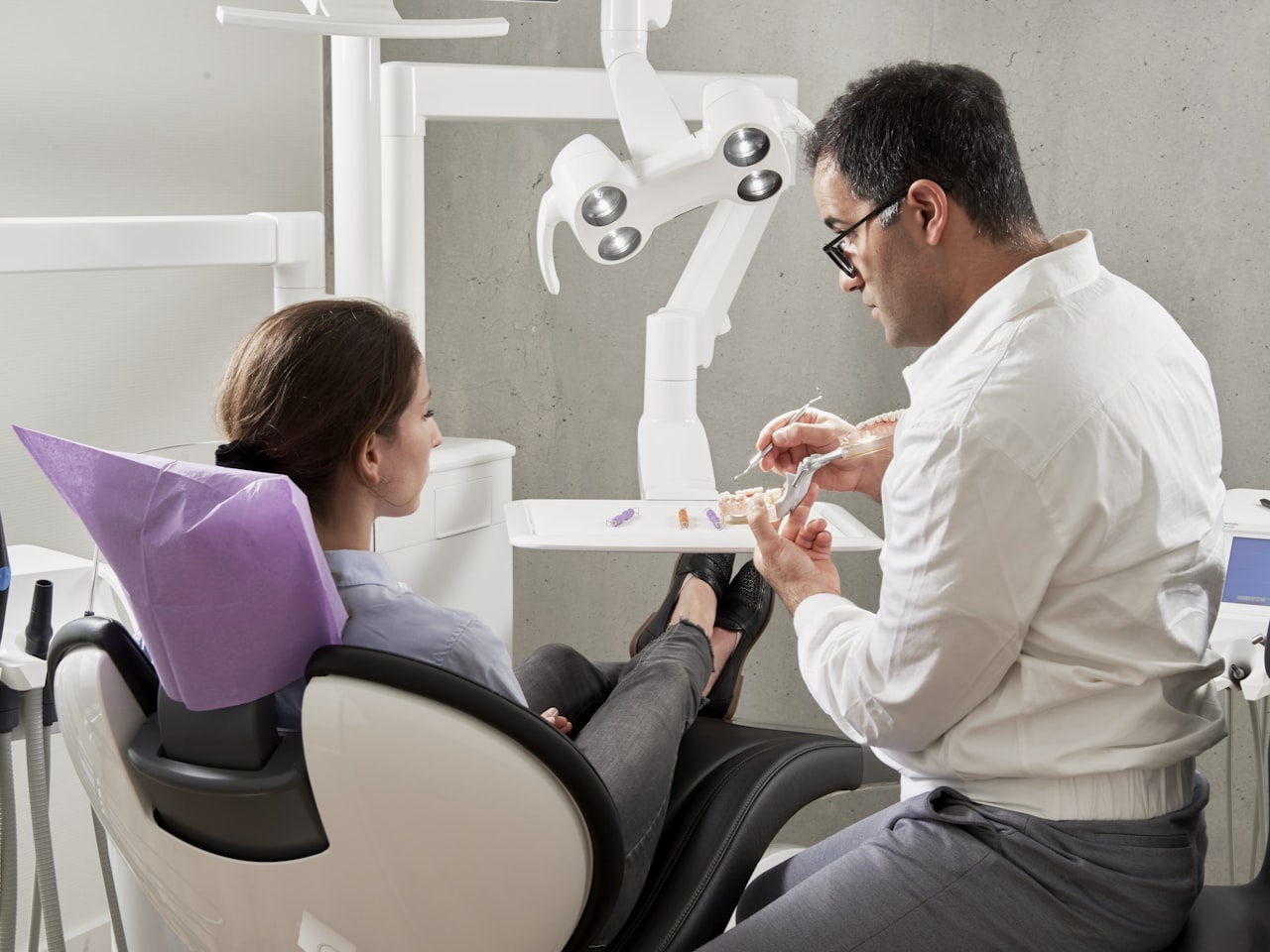
Service pages. Create a dedicated page for every major service you offer: dental implants, Invisalign, teeth whitening, veneers, root canal, wisdom tooth extraction, scaling and polishing, and so on. Each page should cover what the procedure involves, who it is suitable for, approximate costs, recovery expectations, and a call to action to book an appointment.
Blog content. Regular blog articles address informational queries that patients search for during their research phase. Effective dental blog topics include:
- Cost guides (e.g., “How Much Do Dental Implants Cost in Singapore in 2026”)
- Procedure explanations (e.g., “What to Expect During a Root Canal”)
- Comparison articles (e.g., “Invisalign vs Braces: Which Is Right for You”)
- Dental health tips (e.g., “How to Prevent Cavities in Children”)
- Insurance and Medisave guides (e.g., “Which Dental Procedures Are Claimable Under Medisave”)
Location pages. If your practice has multiple branches or serves patients from specific areas, create location-specific pages. A clinic in Tampines might create pages targeting “dentist Tampines,” “dental clinic Pasir Ris,” and “dentist Bedok” if those areas are within its service radius.
FAQ pages. Compile frequently asked questions about your services, pricing, insurance, and appointment procedures. FAQ content often wins featured snippets in Google, and FAQ schema helps search engines understand it (Google limits FAQ rich results to well-known, authoritative government and health sites).
Your SEO strategy should ensure that every piece of content serves a clear purpose in your patient acquisition funnel.
Technical SEO for Dental Sites
Technical SEO ensures that search engines can crawl, index, and understand your website effectively. Many dental websites are built on WordPress or website builders that introduce technical issues if not configured properly.
Site speed. Google uses page speed as a ranking factor, and patients will abandon a slow-loading site. Compress images, enable browser caching, and use a content delivery network (CDN). Aim for a Largest Contentful Paint (LCP) of under 2.5 seconds.
Mobile responsiveness. Google indexes the mobile version of your site first. Ensure your website looks and functions perfectly on smartphones. Test navigation, forms, and click-to-call buttons on mobile devices.
Schema markup. Implement structured data to help Google understand your content. Key schema types for dental websites include:
- LocalBusiness (Dentist). Provides Google with your clinic’s name, address, phone number, hours, and services in a structured format.
- MedicalBusiness. Specific to healthcare providers, this schema type communicates your medical specialities.
- FAQPage. Marks up your FAQ content so search engines and AI tools can parse it.
HTTPS. Your website must use HTTPS encryption. This is a ranking factor and essential for patient trust, especially if your site collects personal information through appointment forms.
Crawlability. Ensure your robots.txt file does not block important pages. Submit an XML sitemap through Google Search Console to help Google discover and index all your pages efficiently.
URL structure. Use clean, descriptive URLs. A page about dental implants should have a URL like /dental-implants-singapore/ rather than /page-id=47.
Review Management and Reputation
Online reviews are a significant ranking factor for local SEO and a decisive factor in patient decision-making. A dental marketing strategy without review management is incomplete.
Why reviews matter:
- Google considers review quantity, quality, and recency when determining local pack rankings.
- One widely cited (if dated) consumer survey found most people trust online reviews as much as personal recommendations.
- A clinic with fifty 4.8-star reviews will consistently outperform a clinic with three 5-star reviews in both rankings and patient trust.
Growing reviews within the rules:
- Don’t solicit. Dental clinics are HCSA licensees, and MOH’s FAQ on the HCS (Advertisement) Regulations describes acceptable reviews as organic, unpaid and unsolicited. The conservative reading is no review-request SMS or emails, no staff scripts asking for reviews and no reminders.
- Make it findable. Keep a direct link to your Google review page on your website’s contact page and Google Business Profile, so patients who want to leave a review can do so easily.
- Never incentivise. No discounts, gifts or draws in exchange for reviews.
- Let the experience do the work. Short waits, clear pricing and pain-free treatment generate unprompted reviews over time.
Responding to reviews:
- Respond to every review — positive and negative. Thank positive reviewers and address negative reviews professionally and empathetically.
- Never disclose patient health information in review responses. This violates patient confidentiality and Singapore’s PDPA regulations.
- For negative reviews, acknowledge the concern, apologise for the experience, and invite the patient to contact you directly to resolve the issue.
Measuring Dental SEO Success
Track these metrics to evaluate the effectiveness of your dental SEO efforts:
Google Business Profile insights. Monitor how many people view your profile, request directions, call your clinic, and visit your website from your GBP listing. These metrics directly reflect local visibility.
Organic traffic. Track overall organic traffic to your website through Google Analytics. Segment by landing page to identify which service pages and blog articles are driving the most visits.
Keyword rankings. Monitor your positions for priority keywords like “dentist [your area],” “[service] Singapore,” and other target terms. Track both organic rankings and map pack positions.
Conversion tracking. Set up goal tracking for appointment form submissions, phone calls, and WhatsApp enquiries. This connects your SEO investment to actual patient enquiries.
New patient attribution. Ask new patients how they found your clinic. This simple step helps you understand the real-world impact of your SEO investment and allocate your marketing budget effectively.
Review metrics. Track your review count, average rating, and review velocity (how many new reviews you receive per month). These directly influence your local SEO performance.
Frequently Asked Questions
How long does it take for dental SEO to produce results?
Most dental clinics begin to see measurable improvements within three to six months of implementing a comprehensive SEO strategy. Local SEO improvements — particularly Google Business Profile optimisation and review generation — can deliver results faster. Organic rankings for competitive keywords like “dental implants Singapore” may take six to twelve months. SEO is a long-term investment, but the compounding returns make it one of the most cost-effective patient acquisition channels over time.
How much should a dental clinic spend on SEO in Singapore?
Dental SEO budgets in Singapore typically range from $1,500 to $5,000 per month, depending on the scope of work and competitiveness of your area. A single-location clinic in a less competitive neighbourhood might achieve strong results at the lower end. A multi-branch practice competing in central Singapore would likely need a larger investment. The key is to evaluate ROI: if SEO generates ten new patients per month at a lifetime value of $3,000 each, the return far exceeds the cost.
Can I do dental SEO myself, or do I need an agency?
Some foundational tasks — claiming your Google Business Profile, generating reviews, publishing blog content — can be handled in-house with some education. However, technical SEO, strategic keyword targeting, link building, and ongoing optimisation typically require professional expertise. Many dental clinics start with DIY efforts and engage an agency once they recognise the complexity and time commitment involved.
What is the most important SEO factor for dental clinics?
For most dental clinics, Google Business Profile optimisation combined with review management is the single most impactful factor. The local map pack is the first thing patients see for dental searches, and GBP performance is driven by profile completeness, review quality, and NAP consistency. After GBP, on-page optimisation of service pages and local keyword targeting are the next priorities.
Should my dental website have a blog?
Yes. A blog serves two critical functions. First, it captures informational search traffic from patients researching dental procedures, costs, and oral health topics. Second, it builds topical authority, which strengthens the rankings of your service pages. A clinic that publishes two to four quality blog articles per month will see measurable SEO improvements over time. Focus on topics your patients actually search for rather than publishing content for its own sake.
What do dental SEO services in Singapore usually include?
Dental SEO services in Singapore usually include Google Business Profile optimisation, local citation building, keyword research, service and location page creation, technical fixes such as site speed and schema markup, blog content and link building. Good providers also set up tracking for calls, appointment forms and WhatsApp enquiries. Typical budgets range from about S$1,500 to S$5,000 a month, depending on scope and competition.
What advertising rules affect dental clinic websites and SEO content in Singapore?
Dental clinics in Singapore are licensed under the Healthcare Services Act, so website and SEO content counts as advertising and must be factual, accurate and not misleading. Claims of being the best, comparisons with other clinics and solicited or paid testimonials should be avoided. Clinics should check the current MOH advertisement regulations and Singapore Dental Council guidance before publishing service pages.
How does a dental clinic rank for dentist near me searches in Singapore?
A dental clinic ranks for dentist near me searches in Singapore mainly through its Google Business Profile, because these searches trigger the local map pack. Accurate categories, a complete services list, consistent name, address and phone details, recent photos and a steady flow of genuine reviews all help. Proximity to the searcher matters most and cannot be changed, so nearby MRT and estate names should appear on location pages.
What are common dental SEO mistakes clinics make?
Common dental SEO mistakes include stuffing keywords such as best dentist into the Google Business Profile name, which risks suspension, inconsistent addresses across directories, thin service pages without costs or procedure details, and not tracking calls or WhatsApp enquiries. Another mistake in Singapore is asking or incentivising patients for reviews, which conflicts with healthcare advertising rules.