Overview
Solmi.ai (solmi.ai) is an AI SaaS product competing in one of the fastest-moving, most crowded categories on the web. The brief was not vanity traffic — it was qualified signups and revenue, won through search at a point when buyers increasingly discover tools through AI assistants as much as through Google. We ran an SEO engagement built for both surfaces at once: classic organic search and answer/generative-engine optimisation (AEO/GEO), so Solmi is found whether the buyer opens Google or asks ChatGPT, Claude or Perplexity.
Project Snapshot
- Sector: SaaS — AI product
- Engagement: SEO + AEO/GEO (AI-search optimisation)
- Timeline: 90-day growth window
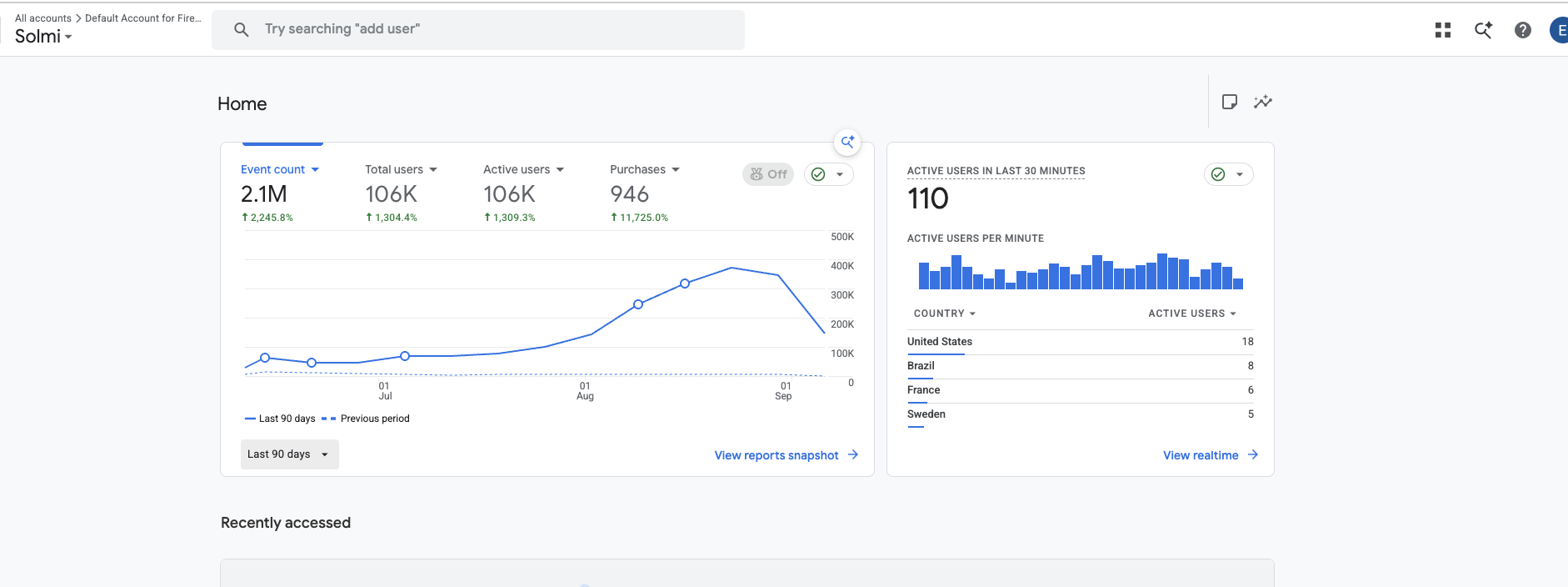
- 106K total users (+1,304%) and 2.1M events across the window
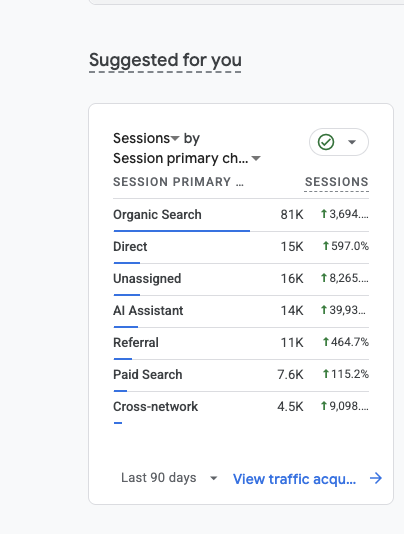
- 81K organic search sessions (+3,694%) and 14K sessions from AI assistants (+39,930%)
- 946 purchases (+11,725%) — the programme tracked to revenue, not traffic; Solmi reached US$1M ARR
The Challenge
AI tooling is a category where new competitors launch weekly and where the traditional SEO playbook is only half the game. Two things had to be true at once. First, Solmi had to rank in Google for the commercial-intent queries that precede a signup. Second — and this is where most SaaS SEO stops short — it had to be citable by AI assistants, because a growing share of its buyers were asking an LLM “what’s the best tool for X” before they ever reached a search box. Winning one surface and losing the other would have capped growth.
Our Approach
- Commercial-intent SEO — prioritised the queries a buyer runs when they are comparing and ready to try, not top-of-funnel volume, so the traffic carried purchase intent.
- AEO/GEO — built to be cited — structured, factual, well-sourced content with clean schema and answer-shaped formatting, so large language models could quote Solmi confidently. The 14K sessions from AI assistants (+39,930%) are the direct evidence this worked.
- Conversion-aware architecture — pages engineered so a ranking became a session and a session became a signup or purchase, with measurement wired to revenue from day one.
The Results
Across the 90-day window:
- 106K total users (+1,304%) and 106K active users (+1,309%)
- 81K organic search sessions (+3,694%) from a near-zero baseline
- 14K sessions from AI assistants (+39,930%) — the GEO play, visible in the data
- 946 purchases (+11,725%), tracked to revenue
- The business outcome behind the traffic: Solmi.ai reached US$1M ARR
Why This Worked
Most SaaS SEO optimises for one search box. Solmi’s category demanded two: Google’s, and the answer box inside every major AI assistant. The engagement treated AI-search visibility as a first-class objective rather than an afterthought — content was written to be genuinely citable by an LLM (clear claims, real evidence, structured markup), which is what turned 14K assistant-referred sessions from a rounding error into a growth channel.
The second decision that mattered was refusing vanity traffic. Every target query was chosen for how close it sat to a signup, and measurement ran to purchases and revenue from the first day. That is why a 3,694% jump in organic sessions showed up downstream as 946 purchases and a run to US$1M ARR, rather than a traffic chart with nothing underneath it.
Key Takeaways
- For SaaS in 2026, AI-search visibility (AEO/GEO) is not optional — a meaningful share of buyers now discover tools through assistants before they ever open Google.
- Being citable by an LLM is an engineering and content discipline: clear claims, real evidence, clean schema, answer-shaped structure.
- Commercial-intent targeting is what converts a traffic spike into revenue — measure to purchases, not sessions.
- Winning both surfaces at once compounds: organic and AI-assistant demand reinforce each other.
Frequently Asked Questions
What is AEO/GEO, and why did it matter for a SaaS product?
Answer Engine Optimisation and Generative Engine Optimisation are the practice of making content citable by AI assistants like ChatGPT, Claude and Perplexity. For Solmi it mattered because a large and growing share of SaaS buyers now ask an assistant for recommendations before searching — and the 14K AI-assistant sessions (+39,930%) show that demand is real and capturable.
How do you make a page an AI assistant will actually cite?
Clear, verifiable claims; genuine evidence and sourcing; clean schema markup; and answer-shaped structure that maps to how a model composes a response. Assistants cite content they can quote confidently — the discipline is closer to technical writing than to keyword stuffing.
Was the growth just the product going viral, or the SEO?
The measurement separates them: 81K sessions came through organic search and 14K through AI assistants, both attributable by source, both from a near-zero baseline. Those are earned search channels, tracked to 946 purchases — not undifferentiated word-of-mouth.
Does this transfer to other SaaS companies?
Directly. Any SaaS in a comparison-driven category faces the same two-surface problem: rank in Google and get cited by AI assistants. The playbook — commercial-intent targeting, citable content, revenue-tracked measurement — is category-agnostic.