Part of our Advertising in Singapore guide →
Table of Contents
What Is OOH Advertising?
OOH advertising Singapore refers to any form of advertising that reaches consumers while they are outside their homes. This includes billboards along expressways, posters in MRT stations, digital screens in shopping malls, bus wraps, taxi top ads and many other formats that form part of the urban landscape.
If you would rather have specialists run this for you, see our digital OOH advertising services.
Out-of-home advertising has been a cornerstone of brand communication for decades, but it has evolved dramatically. Traditional static billboards now sit alongside programmatic digital screens that can change creative in real time based on audience data, weather or time of day. In a small, densely populated city-state like Singapore, OOH remains one of the most efficient ways to achieve mass reach quickly.
The global OOH industry has rebounded strongly since 2022, and Singapore is no exception. Brands across finance, retail, travel and technology are investing heavily in outdoor formats because they offer something digital channels cannot: unavoidable, large-format visibility in the physical world where consumers spend most of their waking hours.
Why OOH Advertising Works in Singapore
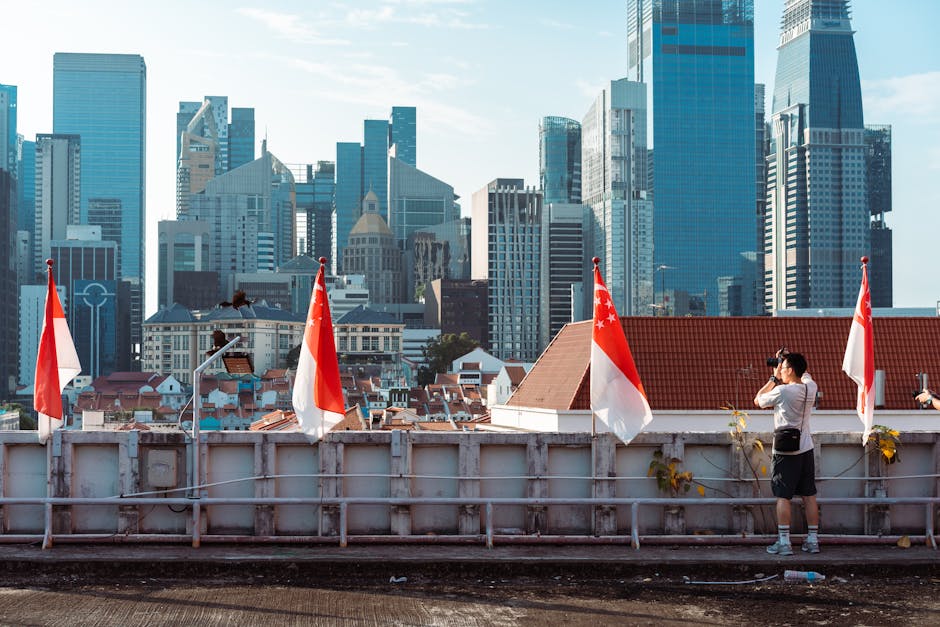
Singapore’s compact geography and world-class public transport infrastructure make it uniquely suited for OOH campaigns. Over three million people ride the MRT daily, and major expressways like the CTE, PIE and AYE carry hundreds of thousands of vehicles. This concentration of eyeballs in predictable locations means advertisers can achieve significant reach with relatively few placements.
Several factors make Singapore an OOH-friendly market:
- High urbanisation rate of 100 percent, meaning the entire population is exposed to outdoor media
- Average daily commute of 67 minutes gives extended exposure time to transit advertising
- Low ad avoidance compared to digital channels where ad blockers and skip buttons reduce visibility
- Strong consumer trust in brands that invest in premium outdoor placements
- Year-round warm weather means pedestrian traffic remains consistent outside of occasional rain
For brands looking to build awareness quickly, OOH is often the fastest path. A well-placed billboard on the AYE or a full train wrap on the North-South Line can generate millions of impressions within a single month. When combined with a solid digital marketing strategy, the impact multiplies further.
Major OOH Advertising Formats
Singapore offers a wide variety of OOH formats to suit different campaign objectives, budgets and target audiences. Understanding the strengths of each format helps you allocate budget effectively.
Billboards and Large-Format Displays
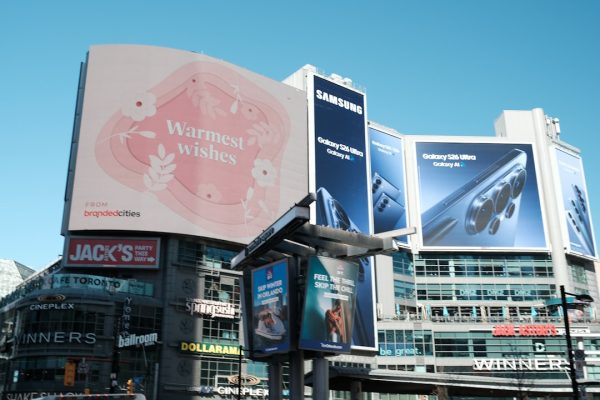
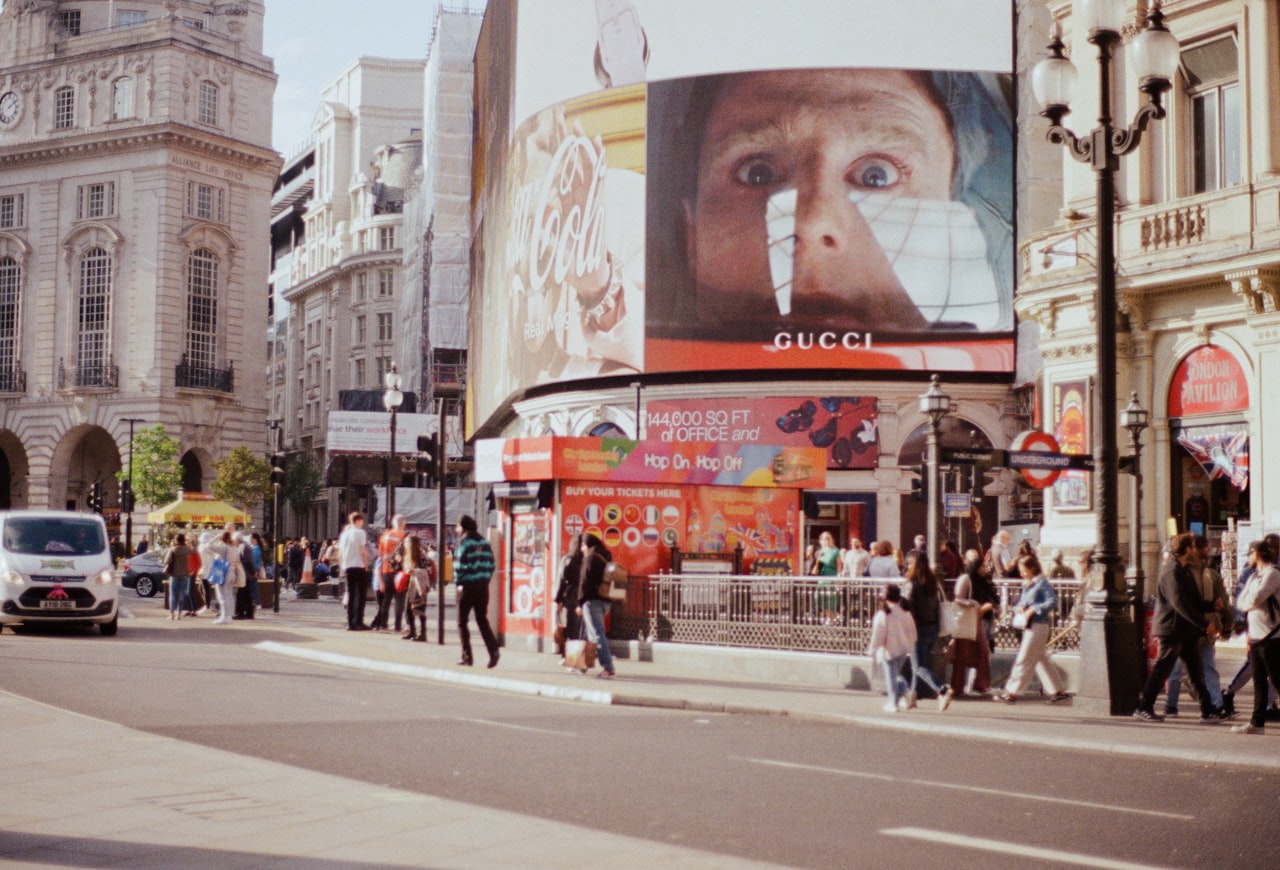
Static and digital billboards remain the most visible form of OOH. Premium locations along Orchard Road, the CBD, Marina Bay and major expressways command the highest rates but deliver unmatched visibility. Digital billboards allow creative rotation and can be booked in shorter time slots. For a deeper dive, see our guide to billboard advertising in Singapore.
MRT and Transit Advertising
With six MRT lines and over 140 stations, transit advertising is one of the most scalable OOH formats. Options include platform screen door panels, station wall murals, escalator panels, in-train posters and full train wraps. The captive audience environment means dwell times are high, and repeated daily exposure builds strong brand recall. Learn more in our MRT advertising guide.
Bus Advertising
Bus wraps, rear panels and interior cards turn Singapore’s extensive bus fleet into mobile billboards that travel through residential estates, commercial districts and industrial areas. Bus advertising is particularly effective for reaching heartland audiences that may not frequent Orchard Road or the CBD.
Digital Out-of-Home (DOOH)
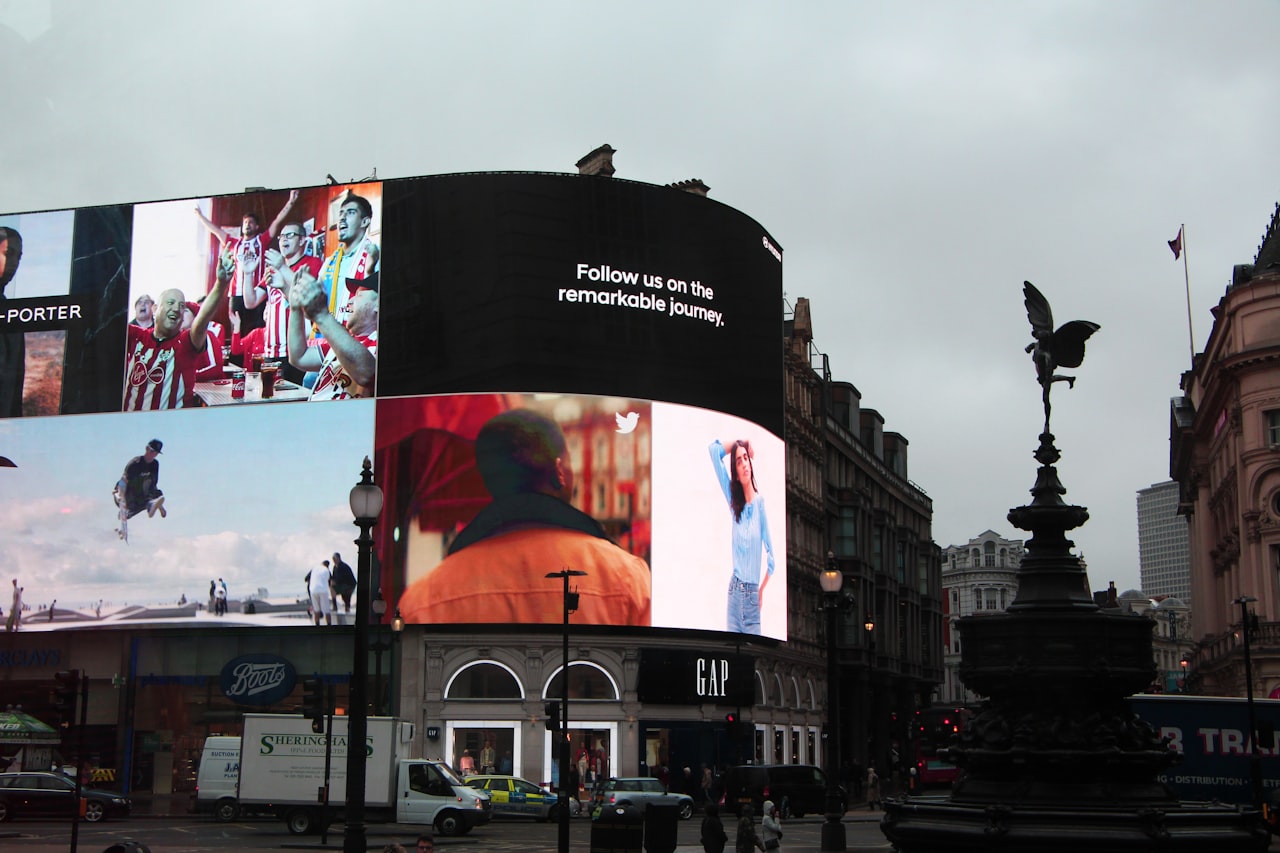
Programmatic DOOH is the fastest-growing segment. Digital screens in malls, lifts, cinemas and transit hubs can serve targeted creative based on time, location and audience data. Digital out-of-home advertising bridges the gap between traditional outdoor and digital marketing, offering both scale and precision.
Digital screens now replace static panels across MRT stations, bus shelters, malls and office buildings. Beyond animation and video, they allow dayparting (different creative by time of day), instant content changes with no reprinting, and data-triggered creative that responds to weather, time or foot traffic. Key Singapore networks include SPH Media’s screens across commercial and residential areas, Clear Channel’s digital bus shelters, JCDecaux panels in MRT stations and Focus Media screens in office lobbies and lifts. DOOH costs more per unit than static, but programmatic buying lets you purchase outdoor inventory like online display, with real-time bidding and audience targeting at CPMs of roughly $8 to $25, which opens the channel to smaller budgets.
Place-Based Media
This category covers advertising in specific environments such as shopping malls, Changi Airport, cinemas, gyms and offices. These formats reach audiences in specific mindsets, whether they are shopping, travelling or working, allowing for more contextually relevant messaging.
OOH Advertising Costs in Singapore
OOH pricing in Singapore varies enormously depending on format, location, duration and whether the placement is static or digital. Here is a general guide to help you budget:
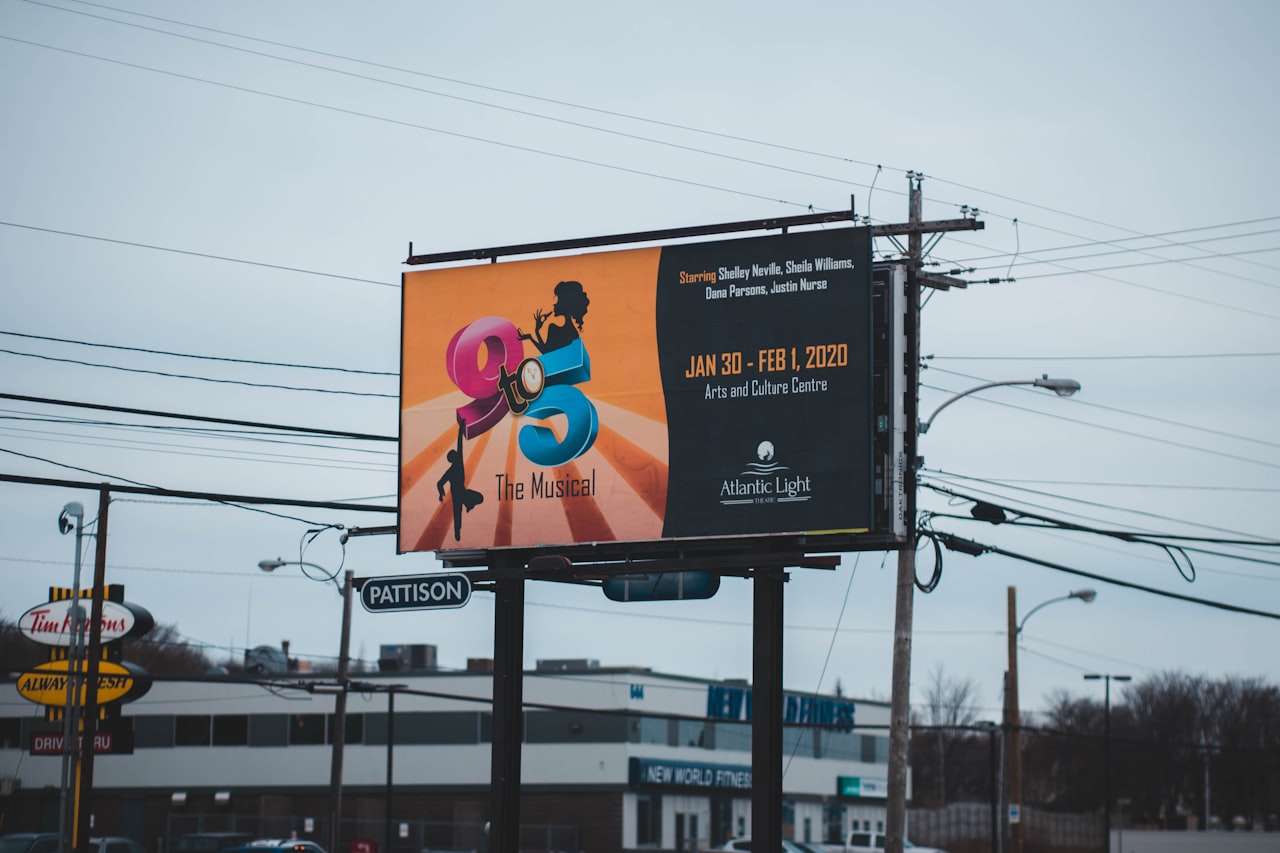
- Expressway billboards: S$8,000 to S$50,000 per month for static; S$3,000 to S$15,000 per month for a share of voice on digital
- MRT platform screen door panels: S$400 to S$3,000 per panel per four-week cycle depending on station tier
- Full train wraps: S$50,000 to S$120,000 for a four-week campaign
- Bus wraps: S$3,000 to S$6,000 per bus per month
- Mall digital screens: S$1,500 to S$8,000 per screen per month
- Lift screens: S$300 to S$2,500 per screen per month (HDB lift lobbies at the low end, office buildings at the top)
- Cinema on-screen ads: S$3,000 to S$15,000 per screen per month
Production costs are additional. Printing a large-format billboard can cost S$1,500 to S$5,000, while bus wraps may run S$2,000 to S$4,000 per vehicle for materials and installation. Digital creative production is typically more affordable but may require multiple versions for different screen formats.
Most OOH campaigns in Singapore run for a minimum of two to four weeks. Shorter durations are possible with digital formats, where some platforms allow weekly or even daily bookings through programmatic buying.
Planning an OOH Campaign
A successful OOH campaign starts with clear objectives. Are you building brand awareness, driving foot traffic to a retail location, promoting a limited-time offer, or reinforcing messaging from other channels? Your objective determines format selection, location strategy and creative approach.
Follow these steps to plan effectively:
- Define your target audience and understand their movement patterns. Where do they live, work, commute and shop?
- Select formats that match your objectives. Billboards for awareness, transit for frequency, place-based for contextual relevance.
- Choose locations strategically. High-traffic does not always mean high-relevance. A panel near your store may outperform a billboard on the expressway.
- Design creative for the format. OOH creative should communicate in three seconds or fewer. Use bold visuals, minimal text and a clear call to action.
- Integrate with digital channels. Use QR codes, unique URLs or social media hashtags to bridge offline and online. Your social media marketing should amplify the outdoor campaign.
- Plan measurement from the start. Define KPIs and set up tracking before launch.
For a complete framework, read our OOH media planning guide which covers location selection, budget allocation and campaign scheduling in detail.
Integrating OOH With Digital Marketing
The most effective modern campaigns combine OOH with digital channels. This is not about choosing one over the other but using each for what it does best. OOH builds broad awareness and credibility, while digital channels like Google Ads and SEO capture the demand that OOH generates.
Proven integration strategies include:
- Running retargeting ads to mobile devices that have been exposed to your OOH placements using geofencing technology
- Using OOH to drive branded search volume, then capturing those searches with paid and organic listings
- Adding QR codes to static OOH placements that direct to landing pages with special offers
- Creating social-media-worthy OOH installations that generate earned media and user-generated content
- Coordinating OOH flight dates with digital campaign launches for maximum impact
Research consistently shows that OOH amplifies the effectiveness of other channels. Campaigns that include OOH alongside digital see higher brand recall, stronger purchase intent and improved return on overall marketing spend.
Measuring OOH Effectiveness
No single method captures the full impact of an outdoor campaign, so combine several:
- Estimated impressions: media owners estimate audiences from foot traffic, vehicle traffic and dwell time. They are estimates, but a fair basis for comparing locations and working out cost per thousand impressions.
- Brand lift studies: pre- and post-campaign surveys measure changes in awareness, recall and consideration, the most direct read on branding impact.
- Foot traffic analysis: mobile device data shows store visits rising during and after the campaign, which is especially useful for directional ads near your outlet.
- Digital lift: track branded search, website traffic and social mentions during flight dates. QR codes and unique URLs work best on formats with longer dwell times, such as bus shelters and MRT platforms.
For clearer attribution, line up OOH flight dates against branded search volume in your Google Ads account.
Regulations and Permits
OOH advertising in Singapore is regulated by several government agencies. The Building and Construction Authority (BCA) oversees structural approvals for billboards and signs. The Urban Redevelopment Authority (URA) controls signage in conservation areas and certain zones. The Land Transport Authority (LTA) regulates advertising on public transport and along roads.
Key regulatory considerations include:
- All outdoor advertisements require an advertising licence from the relevant authority
- Content must comply with the Advertising Standards Authority of Singapore (ASAS) code
- Certain products such as tobacco, e-cigarettes and gambling have advertising restrictions
- Digital billboards near roads must meet brightness and animation standards to avoid distracting drivers
- Temporary campaign structures may require additional permits from BCA
Most OOH media owners handle permit applications as part of their service, but advertisers should confirm this during the booking process to avoid delays.
Ready to put this into practice? Explore our digital OOH advertising services or talk to our team.
Frequently Asked Questions
What is the minimum budget for an OOH campaign in Singapore?
You can start a basic OOH campaign with as little as S$3,000 to S$5,000 per month using formats like bus shelter panels or HDB lift screens. However, meaningful impact typically requires a budget of S$15,000 to S$30,000 per month across multiple touchpoints.
How long should an OOH campaign run?
Most OOH campaigns run for four to twelve weeks. Brand awareness campaigns benefit from longer flights of eight to twelve weeks, while tactical promotions may only need two to four weeks. Consistency matters more than short bursts of high spending.
Can OOH advertising be targeted to specific audiences?
Yes, through location selection and timing. You can target professionals by advertising near the CBD during peak hours, families by choosing heartland locations on weekends, or travellers by booking placements at Changi Airport. Programmatic DOOH adds further targeting through data-driven creative triggers.
How do I measure the effectiveness of OOH advertising?
Common measurement methods include footfall tracking, brand lift studies, QR code scans, unique URL visits, search volume increases and mobile device exposure data. Read our detailed guide on OOH advertising measurement for proven frameworks.
Is OOH advertising still relevant in the digital age?
Absolutely. OOH is one of the few advertising channels that continues to grow. It offers unskippable visibility, builds trust through physical presence and amplifies the performance of digital campaigns. In Singapore, OOH reach remains strong due to the population’s high mobility and reliance on public transport.
Is OOH effective for small businesses?
Yes, when it is hyper-local. Bus shelters near your shop, MRT panels at the nearest station and screens in the neighbourhood mall build awareness within your trading area. Choose locations from your actual customer geography rather than chasing national reach.
Does OOH work for B2B companies?
Yes, particularly in the CBD, where professionals are concentrated. MRT station ads at Raffles Place, Tanjong Pagar and Marina Bay reach a dense business audience, and office lobby screens target specific buildings. B2B OOH works best for awareness and consideration rather than direct response.
What makes a good OOH creative?
Effective OOH creative communicates one message in three seconds or fewer. Use large, bold visuals, limit text to seven words or fewer, ensure high contrast for readability, and include a clear call to action. The creative should work at the distance and speed at which your audience will view it.
Should I use static or digital OOH formats?
Static formats offer 100 percent share of voice and are cost-effective for long-term campaigns. Digital formats offer flexibility, dynamic creative and shorter booking periods. Many campaigns benefit from a mix of both, using static for anchor placements and digital for tactical messaging.
How far in advance should I book OOH placements?
Premium locations such as Orchard Road billboards and MRT station dominations should be booked two to three months in advance. Standard placements typically need four to six weeks lead time. Programmatic DOOH can sometimes be booked with just days of notice.