OOH Advertising Guide for Singapore: Billboards, Transit Ads and Beyond
Table of Contents
What Is OOH Advertising
In a city-state where 5.9 million people navigate a compact, highly connected urban environment daily, OOH advertising singapore remains one of the most effective ways to build brand awareness at scale. You cannot skip a billboard. You cannot block a bus shelter ad. You cannot scroll past an MRT platform poster. In a world of ad fatigue and banner blindness, this physical, unavoidable presence has renewed value.
Out-of-home advertising encompasses billboards, transit advertising on MRT trains and buses, street furniture like bus shelters and lamp posts, mall advertising and digital screens in public spaces. It is fundamentally a reach and frequency medium. The commuter passing the same MRT platform ad twice daily builds significant brand recall over a four-week campaign.
Singapore’s geography gives OOH specific advantages. The country is compact, highly urbanised and has exceptional public transport usage with around 4.3 million passenger trips daily. This concentration of people along defined routes makes OOH planning more precise than in larger, more dispersed markets. OOH advertising singapore targets locations rather than individuals, complementing the behavioural targeting of digital marketing campaigns with mass awareness that digital channels alone often cannot achieve.
OOH Formats Available in Singapore
MRT advertising is the backbone of OOH in Singapore. Formats include platform posters, train wraps, in-train panel ads, station domination and digital screens. MRT delivers high frequency as commuters use the same stations daily, creating repeated exposure that compounds brand recall.
Bus advertising offers broad geographic coverage through body wraps, interior panels and digital screens across over 5,800 buses. Full wraps function as mobile billboards travelling through multiple neighbourhoods daily, providing island-wide visibility.
Bus shelter advertising covers approximately 5,000 shelters across Singapore. Ads are positioned at eye level, well-lit at night and can be booked by specific shelter for precise geographic targeting. This format is accessible to SME budgets while delivering strong pedestrian visibility.
Billboards along expressways (PIE, AYE, CTE, ECP) and on building facades deliver massive visibility. They are particularly effective for brand building and product launches, reaching hundreds of thousands of daily commuters.
Mall advertising through digital screens, escalator panels and atrium banners reaches consumers in a retail mindset. Major centres like ION Orchard, VivoCity and Jewel Changi Airport offer extensive options targeting high-spending audiences.
Taxi and private-hire vehicle advertising on taxis and Grab/Gojek vehicles provides mobile coverage across the island through top-of-vehicle screens, body wraps and in-vehicle displays.
Digital OOH Advertising
Digital OOH (DOOH) is the fastest-growing segment, replacing static panels across MRT stations, bus shelters, malls and commercial buildings. Key advantages include dynamic content with animation and video, dayparting to display different ads at different times, instant content updates without printing costs, programmatic buying through automated platforms and data-triggered content responding to weather, time or foot traffic patterns.
Key Singapore DOOH networks include SPH Media digital screens across commercial and residential areas, Clear Channel digital bus shelters, JCDecaux panels in MRT stations and Focus Media screens in office lobbies and lifts. DOOH costs more per unit than static OOH but the flexibility and attention capture often deliver better value per impression.
Programmatic DOOH allows buying digital outdoor inventory like online display using real-time bidding and audience targeting. CPMs for programmatic DOOH in Singapore range from $8 to $25, making it accessible to smaller budgets. For brands already investing in social media marketing, DOOH creates a powerful amplification channel when running complementary creative across social and outdoor touchpoints.
Planning an OOH Campaign
Define your objective. Brand awareness campaigns need the widest possible reach. Product promotions drive consideration among specific audiences. Directional advertising guides people to a nearby location. Your objective determines format, location and creative approach.

Identify target locations. Where does your audience live, work, commute and spend leisure time? Young professionals warrant CBD and Tanjong Pagar MRT stations. Families respond to HDB heartland bus shelters and suburban malls. Map your audience’s daily routes to identify the highest-impact placements.
Select formats. Match format to objective. Billboards for mass awareness. Bus shelters for local promotions. MRT ads for commuter frequency. Digital screens for dynamic or frequently updated content. The most effective campaigns layer multiple formats for compounding impact.
Design for the medium. OOH creative differs fundamentally from digital or print. Keep messaging to seven words or fewer for formats viewed at speed. Use high contrast colours and large fonts. Include one clear, simple call to action. Detail and complexity are the enemy of outdoor effectiveness.
Determine duration. Most campaigns run in two or four-week cycles. Brand awareness needs a minimum of four weeks for meaningful frequency. Promotional campaigns can be shorter. Longer commitments of three to six months secure reduced rates. Integrate OOH with broader brand-building strategies for maximum cumulative impact.
Costs and Budgeting
MRT: Platform posters at S$300 to S$800 per panel per two weeks. Station domination at S$15,000 to S$60,000 per station monthly. Train wraps at S$20,000 to S$80,000 per train monthly.
Bus: Full wraps at S$3,000 to S$6,000 per bus monthly. Partial wraps at S$1,500 to S$3,000. Most campaigns require 10 to 50 buses for meaningful coverage.
Bus shelters: Static panels at S$500 to S$2,000 per shelter per two weeks. Digital panels at S$1,000 to S$4,000. Packages of 10, 20 or 50 shelters attract per-unit discounts.
Billboards: Expressway sites at S$8,000 to S$30,000 monthly. Building facades at S$10,000 to S$50,000. LED digital billboards at S$15,000 to S$60,000.
Additional costs: Creative design at S$1,000 to S$5,000. Printing and installation for static OOH at S$200 to S$1,000 per unit. Agency fees typically run 10 to 15 per cent of media spend.
For smaller businesses, targeted bus shelter advertising in your trading area or digital screens in relevant malls provides a cost-effective entry into OOH advertising singapore without requiring the investment of expressway billboards.
Measuring OOH Effectiveness
Estimated impressions. Media owners provide data based on foot traffic, vehicular traffic and dwell time. While estimates, they provide a reasonable basis for comparing locations and calculating cost-per-thousand impressions.
Brand lift studies. Pre and post-campaign surveys measure changes in brand awareness, recall and consideration. The most direct method for quantifying OOH branding impact.
Foot traffic analysis. Mobile device data measures store visit increases during and after campaign periods, particularly useful for directional campaigns promoting nearby locations.
Digital integration tracking. Measuring increases in branded search queries, website traffic and social media mentions during campaign periods provides strong circumstantial evidence of OOH impact. QR codes and unique URLs work best for formats with longer dwell times where people have time to engage.
No single method captures the full impact. Combine multiple approaches for a comprehensive performance picture. Work with your Google Ads team to correlate OOH flight dates with branded search volume changes for clearer attribution.
Integrating OOH with Digital Campaigns
OOH and digital marketing are complementary forces. OOH exposure increases mobile search by up to 38 per cent. Running OOH alongside paid search captures this intent at the moment it is generated. Mobile location data identifies devices near OOH placements, enabling retargeting of those audiences with digital ads for a sequential messaging journey.
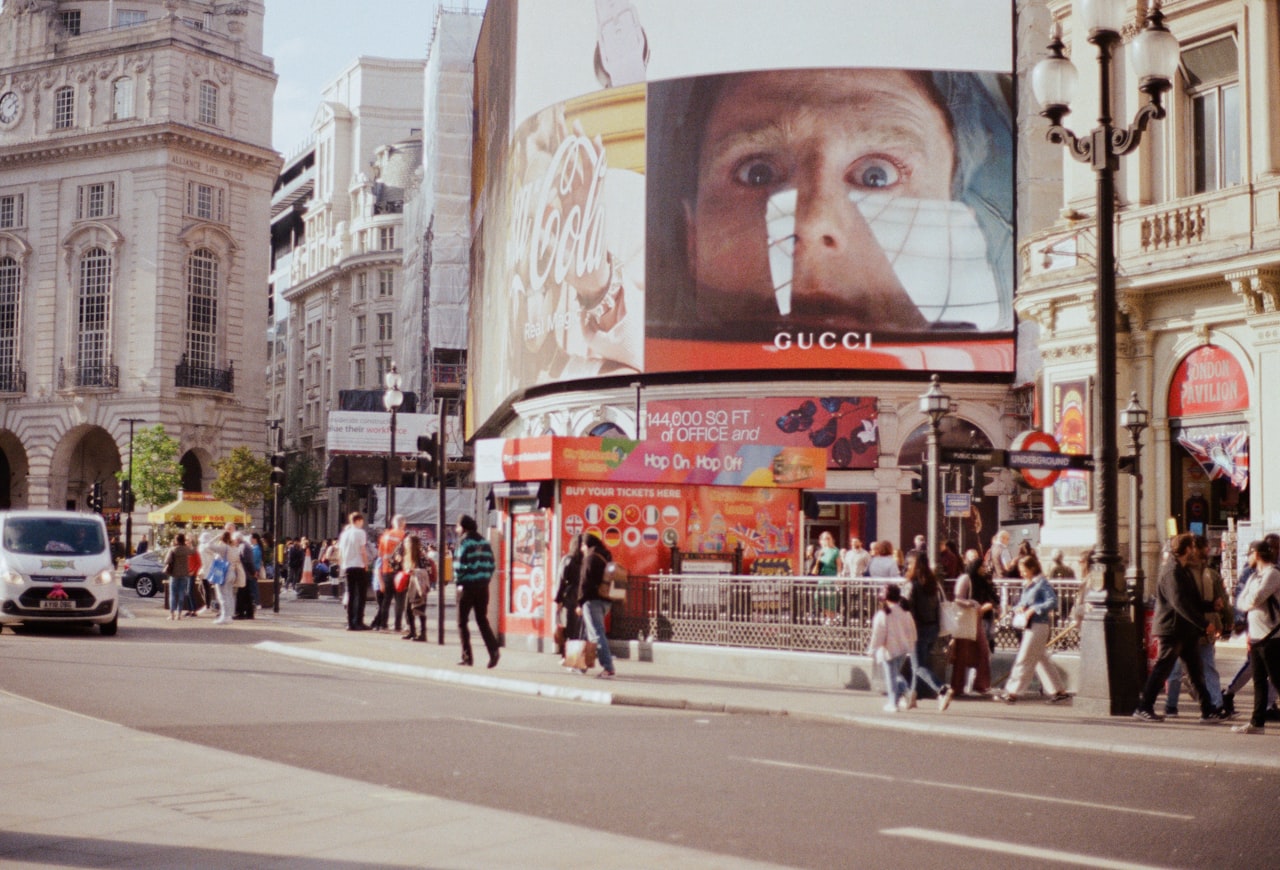
Consistent visual creative across OOH and digital reinforces recognition. Eye-catching outdoor campaigns generate social media sharing, earning organic reach beyond the original placement. The cumulative effect of integrated campaigns consistently outperforms either channel deployed in isolation.
Frequently Asked Questions
How much does OOH advertising cost in Singapore?
Costs vary by format and location. Bus shelter ads start from S$500 per panel per two weeks. MRT panels range from S$300 to S$800. Expressway billboards cost S$8,000 to S$30,000 monthly. A modest localised campaign starts from S$5,000 to S$10,000. National impact campaigns typically require S$50,000 or more.
What is the minimum campaign duration?
Two weeks for bus shelters and MRT panels. Monthly for billboards. Digital OOH may offer weekly options. Four weeks is the minimum for meaningful brand awareness frequency. Shorter durations suit event promotions or time-sensitive campaigns.
Is OOH effective for small businesses?
Yes, when used strategically with hyper-local focus. Bus shelters near your store, MRT panels at the nearest station and digital screens in the local mall build awareness within your trading area. Select locations based on your specific customer geography rather than attempting broad national reach.
How do I choose between static and digital OOH?
Static is more affordable, available in more locations and provides 100 per cent display time. Digital offers motion, time-based scheduling and easy content updates. Choose static for budget-conscious, long-duration presence. Choose digital when creative benefits from animation or dayparting adds value.
Can OOH be targeted to specific demographics?
OOH targets locations rather than individuals, but location-based targeting effectively reaches demographics. University areas reach younger audiences. CBD locations reach professionals. Heartland locations reach families. Digital OOH adds time-based targeting: commute hours for professionals, afternoons for retirees.
How far in advance should I book?
Premium locations like Orchard Road billboards require three to six months advance booking. MRT and bus advertising needs four to eight weeks. Bus shelters can often be booked with two to four weeks notice. Digital OOH, particularly programmatic, can be booked with as little as one week lead time.
What creative guidelines should I follow?
Seven words or fewer for formats viewed at speed. One clear message per ad. High contrast for readability. Large imagery and minimal detail. A single call to action. All creative must comply with ASAS Singapore Code of Advertising Practice and IMDA advertising standards.
Does OOH work for B2B companies?
Yes, particularly in Singapore’s CBD where professionals are concentrated. MRT station ads at Raffles Place, Tanjong Pagar and Marina Bay reach a dense business audience. Office lobby digital screens target specific building populations. B2B OOH works best for brand awareness and consideration rather than direct response.