
North Star Metric: Choose the One Metric That Drives Your Business Growth
Table of Contents
What Is a North Star Metric
This north star metric guide will help you identify the single metric that best captures the core value your product or service delivers to customers. Coined by Silicon Valley growth teams, the concept has since been adopted by businesses of all sizes worldwide, including many forward-thinking companies in Singapore.
A north star metric is not revenue, although revenue often correlates with it. It is the measure of the value exchange between your business and your customers. When this metric grows, everything else—revenue, retention, referrals—tends to follow.
For example, Airbnb’s north star metric is nights booked. Facebook’s is daily active users. Spotify’s is time spent listening. Each of these metrics captures the moment a customer receives value from the platform. Your business, regardless of size, has an equivalent moment worth measuring.
Why Every Singapore Business Needs One
Singapore’s business environment is characterised by speed, efficiency and intense competition. Without a unifying metric, marketing teams chase vanity numbers—social media followers, page views, impressions—that look good in reports but do not drive growth.

A north star metric solves three problems simultaneously. First, it aligns the entire organisation around a shared definition of success. Marketing, sales, product and customer service all pull in the same direction. Second, it simplifies decision-making. When faced with trade-offs, ask which option moves the north star metric. Third, it creates accountability. Progress is visible, measurable and impossible to hide behind vague claims of “brand awareness.”
Companies that adopt a north star metric often find their digital marketing efforts become more focused and effective within weeks. The clarity cascades through every campaign, channel and budget decision.
Characteristics of a Good North Star Metric
Not every metric qualifies as a north star. The best ones share six characteristics.
1. It reflects customer value. The metric should increase when customers get more value from your product or service. Revenue alone does not qualify because you can increase revenue through price hikes that do not add value.
2. It is a leading indicator. Revenue is a lagging indicator—it tells you what already happened. A good north star metric predicts future revenue by measuring the behaviours that precede purchases.
3. It is measurable. You must be able to track it accurately and frequently. If the metric requires a quarterly survey to measure, it is too slow to guide daily decisions.
4. It is actionable. Your team must be able to influence the metric through their work. “Market size” is not actionable because your team cannot control it.
5. It is simple to understand. Every team member, from the CEO to the newest intern, should understand what the metric means and why it matters.
6. It is not easily gamed. If the metric can be inflated through tactics that do not create real value, it will incentivise the wrong behaviour. Track this alongside your marketing dashboards to spot anomalies early.
How to Choose Your North Star Metric
Choosing the right north star metric requires understanding your business model, your customer journey and the moment when value is delivered. Follow these four steps.

Step 1—Map the customer journey. Document every stage from first awareness to long-term retention. Identify the key actions customers take at each stage: visiting your website, signing up, making a purchase, returning for a second purchase, referring a friend.
Step 2—Identify the value moment. At which point does the customer first experience the core value of your product or service? For a SaaS company, it might be when the user completes their first workflow. For an e-commerce store, it might be when the customer receives their order and is satisfied.
Step 3—Find the measurable proxy. The value moment itself may be hard to measure directly. Find a proxy that correlates strongly with it. If customer satisfaction after delivery is your value moment, repeat purchase rate within 60 days might be your measurable proxy.
Step 4—Validate with data. Check that your chosen metric correlates with revenue growth, customer retention and referral rates. If moving the metric does not move these business outcomes, you have picked the wrong one. Use data-driven marketing principles to validate your choice rigorously.
North Star Metric Examples by Industry
Here are north star metric examples relevant to common Singapore business types.
E-commerce: Weekly repeat customers. This metric captures both acquisition and retention in a single number. It grows when you attract the right customers and deliver a great experience.
SaaS: Weekly active users who complete a core action. This ensures you are measuring engagement depth, not just logins. Define “core action” based on your product’s value proposition.
Professional services (law firms, agencies, consultancies): Monthly qualified leads from organic and referral channels. This metric reflects brand strength and client satisfaction, both of which drive sustainable growth.
F&B and retail: Monthly transactions per customer. This measures loyalty and repeat behaviour, which is more predictive of long-term revenue than total footfall.
B2B services: Monthly recurring revenue from accounts active for more than 90 days. This filters out one-time projects and focuses on sustainable client relationships. Pair this with SEO to drive consistent inbound pipeline.
Input Metrics That Drive the North Star
Your north star metric is the output. To move it, you need to identify and optimise the input metrics—the levers your team can pull daily.
For an e-commerce business whose north star is weekly repeat customers, input metrics might include: email open rate for post-purchase sequences, customer satisfaction score, delivery time, product page conversion rate and referral programme sign-ups.
Each input metric should be owned by a specific team or individual. Marketing might own email open rates, operations might own delivery time and product might own the on-site experience. This distributed ownership ensures that improving the north star is a company-wide effort, not just a marketing responsibility.
Set targets for each input metric using OKRs for marketing. Each quarter, define two to three key results per input metric and track progress weekly. This creates a clear line of sight from daily activities to the north star.
Visualise the relationship between input metrics and the north star in a metric tree diagram. This tool helps the entire team understand how their work contributes to the overarching goal. Invest in proper web design to optimise the digital touchpoints that influence your input metrics.
Common Mistakes to Avoid
Choosing and implementing a north star metric sounds straightforward, but several pitfalls trap even experienced teams.
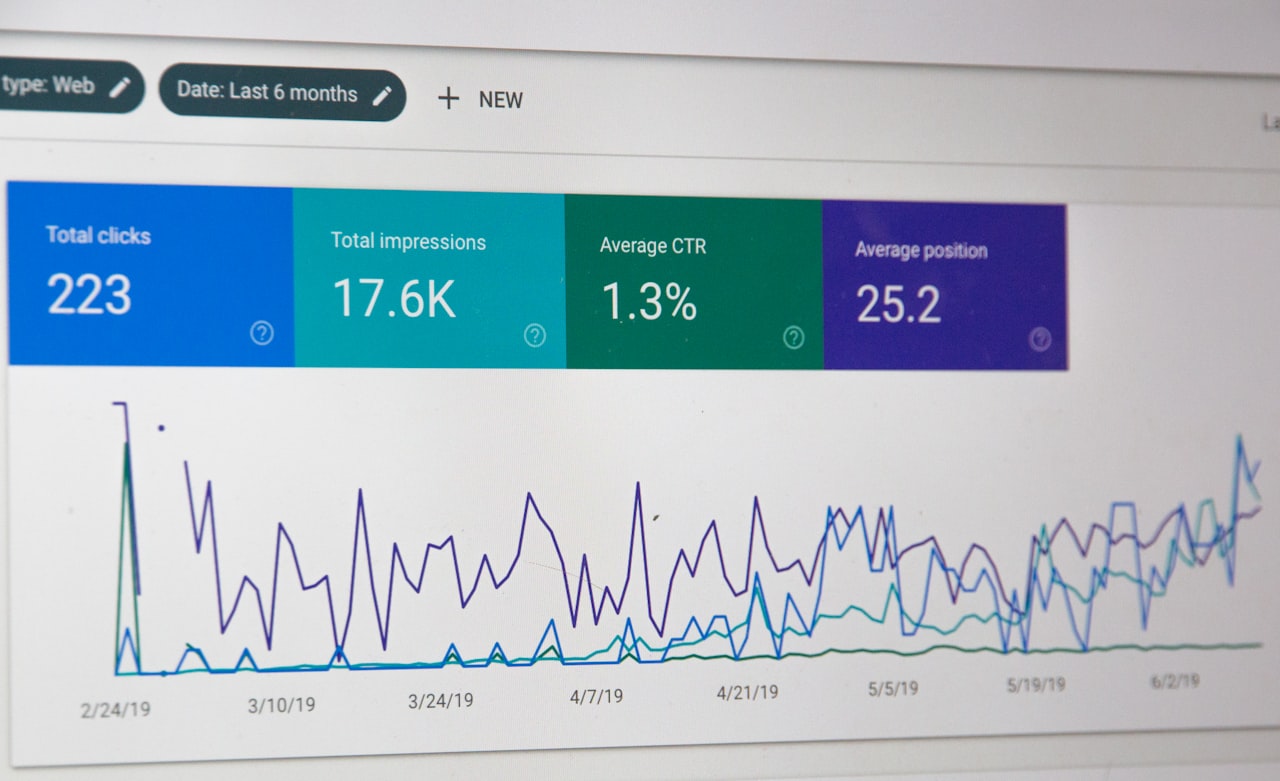
Choosing revenue as the north star: Revenue is the result, not the driver. It does not tell you what to do differently. Pick a metric that precedes revenue and predicts it.
Changing the metric too often: Commit to your north star for at least six months. Frequent changes prevent you from building the systems, processes and institutional knowledge needed to move it consistently.
Ignoring qualitative context: Numbers tell you what is happening; qualitative research tells you why. Supplement your north star metric with customer interviews, reviews and support ticket analysis.
Optimising one input metric at the expense of others: If you focus solely on acquisition without investing in retention, your north star will plateau. Balance your efforts across all input metrics.
Failing to communicate the metric: If only the leadership team knows the north star, it cannot align the organisation. Share it in every team meeting, every dashboard and every performance review. Use Google Ads and social media marketing reporting to connect campaign performance back to the north star.
Frequently Asked Questions
Can a business have more than one north star metric?
Ideally, no. The power of the north star metric lies in its singularity—it forces alignment. If you have two metrics, teams will optimise for whichever is easier, defeating the purpose. However, large organisations with distinct business units may have one per unit.
How is a north star metric different from a KPI?
KPIs are performance indicators at various levels of the organisation. The north star metric is the single most important KPI that sits at the top of your metric hierarchy. All other KPIs should ladder up to it.
How often should we review our north star metric?
Track it weekly, review trends monthly and evaluate whether it is still the right metric annually. If your business model changes fundamentally—for example, shifting from one-time sales to a subscription model—revisit the metric sooner.
What if our north star metric is declining?
Diagnose which input metrics are underperforming. Use cohort analysis to identify whether the decline is driven by new customer behaviour, existing customer churn or both. Our guide to cohort analysis for marketing covers this in detail.
Is the north star metric relevant for small businesses?
Absolutely. In fact, small businesses benefit the most because resources are limited. A north star metric ensures every dollar and every hour is directed toward the outcome that matters most.
How do we get buy-in from leadership?
Present the north star metric alongside data showing its correlation with revenue. Leaders care about financial outcomes—show them how moving the north star predicts top-line growth, and buy-in will follow.
Should our north star metric include a time dimension?
Yes. Measure it over a defined period—weekly or monthly—to smooth out daily fluctuations and reveal meaningful trends. Weekly is usually the best cadence for most Singapore businesses.
Can the north star metric apply to non-profit organisations?
Yes. For non-profits, the north star metric captures the core impact delivered to beneficiaries—for example, number of students completing a training programme per quarter. The principle of aligning around a single value-delivery metric applies universally.