
OKRs for Marketing: Set Objectives and Key Results That Drive Performance
Table of Contents
- What Are OKRs and Why Marketing Teams Need Them
- Anatomy of a Marketing OKR
- Setting Ambitious Yet Achievable Objectives
- Defining Key Results That Measure Progress
- OKR Examples for Common Marketing Functions
- Tracking and Scoring OKRs
- Common OKR Pitfalls and How to Avoid Them
- Frequently Asked Questions
What Are OKRs and Why Marketing Teams Need Them
OKRs for marketing provide a goal-setting framework that connects ambitious objectives with measurable key results. Originally popularised by Intel and later adopted by Google, OKRs have become the standard for high-performing organisations across every industry, including digital marketing agencies and in-house teams in Singapore.
The framework is deceptively simple. An Objective describes what you want to achieve—it should be qualitative, inspiring and time-bound. Key Results describe how you will measure progress—they should be quantitative, specific and verifiable. Together, they create clarity about direction and progress.
Marketing teams benefit from OKRs because marketing work is inherently broad. Without a structured goal framework, teams scatter their efforts across dozens of tactics without a clear sense of priority. OKRs force you to decide what matters most this quarter and commit to measuring outcomes, not just activities.
Anatomy of a Marketing OKR
A well-written marketing OKR has three components: one objective and two to five key results. Here is the structure.

Objective: A qualitative statement that describes the desired outcome. It should be aspirational but achievable. Avoid vague objectives like “improve marketing”—instead, write “establish our brand as the go-to resource for digital marketing education in Singapore.”
Key Results: Quantitative measures that indicate progress toward the objective. Each key result should have a starting value, a target value and a deadline. For example: “Increase organic blog traffic from 8,000 to 15,000 monthly sessions by end of Q2.”
Initiatives: While not technically part of the OKR, many teams add a list of initiatives—the projects and tasks that will move the key results. This bridges the gap between strategy and execution.
A complete OKR might look like this. Objective: Become the most trusted digital marketing resource for Singapore SMEs. Key Result 1: Increase newsletter subscribers from 2,000 to 5,000. Key Result 2: Achieve a domain authority score of 45 or above. Key Result 3: Generate 50 qualified inbound leads per month from content.
Setting Ambitious Yet Achievable Objectives
The best marketing objectives sit at the intersection of ambition and realism. Google recommends that teams should achieve about 70 percent of their OKRs—if you hit 100 percent every quarter, your objectives are not ambitious enough.
Start by reviewing your business strategy. What are the company-level objectives for this quarter? Marketing OKRs should cascade from these, ensuring alignment between what the business needs and what marketing delivers.
Next, consider your current position. If your SEO programme generates 500 leads per quarter, an objective to generate 5,000 next quarter is unrealistic. An objective to reach 800 is challenging but attainable with focused effort.
Use the “newspaper test” for your objectives. If your objective appeared as a headline in a Singapore business publication, would it sound meaningful? “Marketing team increases lead volume by 60 percent” passes the test. “Marketing team sends more emails” does not.
Limit yourself to three to five marketing objectives per quarter. More than five creates fragmentation. Fewer than three may indicate you are not pushing hard enough. Align these with your north star metric to ensure everything ladders up to business growth.
Defining Key Results That Measure Progress
Key results are where most teams struggle. The common mistake is confusing outputs with outcomes. “Publish 12 blog posts” is an output. “Increase organic traffic by 25 percent” is an outcome. OKRs should measure outcomes.

Each key result must pass four tests. Is it specific? Can you verify it with data? Does it have a clear target number? Is it achievable within the quarter?
Here are examples of strong key results for marketing teams.
For brand awareness: Increase branded search volume from 1,200 to 2,000 monthly searches. Grow social media share of voice from 8 percent to 15 percent in the Singapore market.
For lead generation: Generate 200 marketing qualified leads per month through Google Ads campaigns. Achieve a cost per lead below $45 across all paid channels.
For content performance: Increase average time on page from 1 minute 40 seconds to 2 minutes 30 seconds. Grow email subscriber list from 3,000 to 5,000 through content marketing lead magnets.
For retention: Improve customer email engagement rate from 18 percent to 28 percent. Increase repeat purchase rate from 22 percent to 30 percent within 90 days of first purchase.
OKR Examples for Common Marketing Functions
Here are complete OKR sets for different marketing functions, tailored to the Singapore context.
SEO Team OKR
Objective: Dominate organic search for high-intent digital marketing keywords in Singapore.
KR1: Rank in the top 3 for 15 target keywords, up from 6.
KR2: Increase organic traffic from Singapore by 40 percent.
KR3: Improve crawl health score to above 90 in Google Search Console.
Paid Media Team OKR
Objective: Maximise return on ad spend while scaling lead volume.
KR1: Achieve a return on ad spend of 4:1 or better across all campaigns.
KR2: Increase monthly lead volume from 150 to 250.
KR3: Reduce cost per acquisition by 20 percent through ad creative testing.
Social Media Team OKR
Objective: Build an engaged community of Singapore business owners on social media.
KR1: Grow LinkedIn followers from 3,000 to 6,000.
KR2: Achieve an average engagement rate of 4 percent on Instagram posts.
KR3: Generate 30 qualified leads per month through social media marketing efforts.
Tracking and Scoring OKRs
Setting OKRs is pointless without a cadence for tracking and scoring them. Implement the following rhythm.
Weekly check-ins: Each team member updates the status of their key results. Use a simple traffic light system—green for on track, amber for at risk, red for off track. This takes five minutes per person and surfaces issues early.
Monthly reviews: The marketing lead reviews all OKRs with the team, discusses blockers and adjusts initiatives if needed. Note that you should adjust initiatives, not the OKRs themselves—moving the goalposts defeats the purpose.
Quarterly scoring: At the end of the quarter, score each key result on a scale from 0.0 to 1.0. A score of 0.7 or above is considered successful. Average the key result scores to get the objective score.
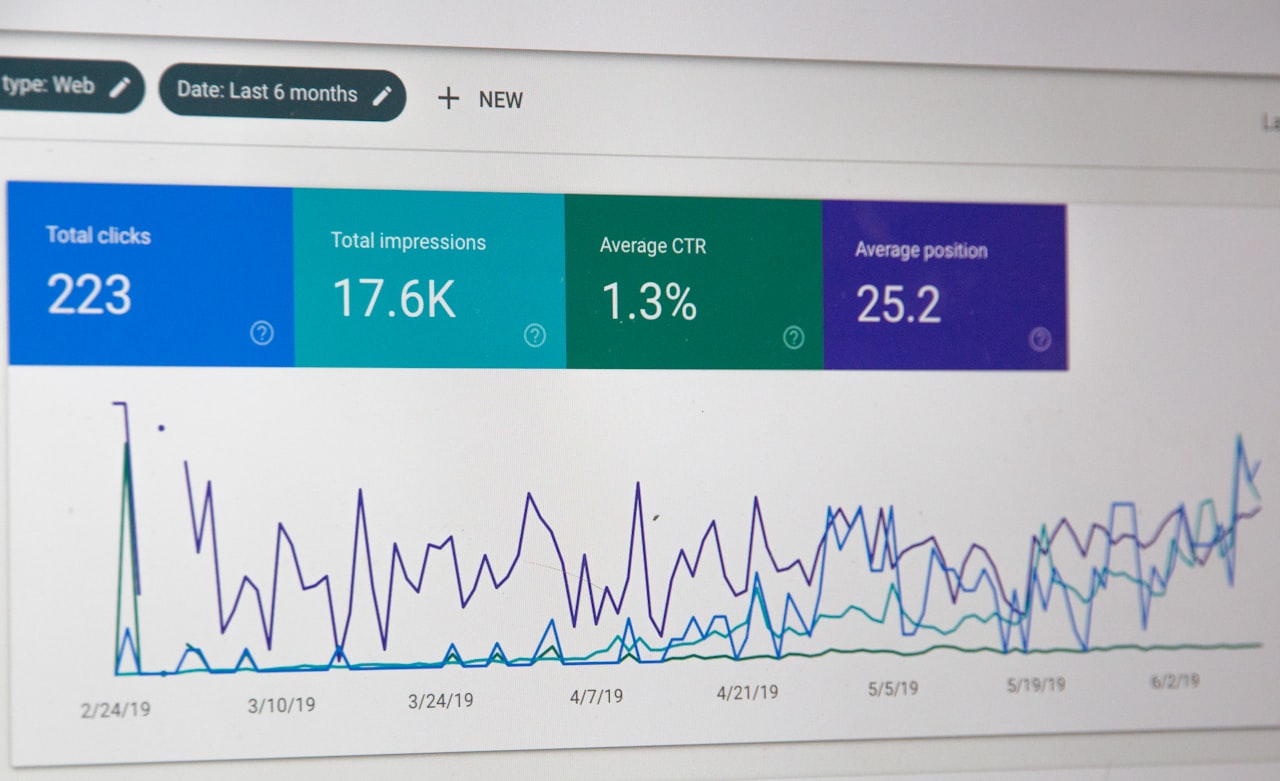
Use marketing dashboards to automate tracking wherever possible. Manual updates are prone to delays and inaccuracies. Connect your dashboard directly to Google Analytics, your CRM and your ad platforms for real-time visibility.
Share OKR progress transparently across the organisation. When other departments can see marketing’s progress, it builds trust and creates opportunities for cross-functional collaboration.
Common OKR Pitfalls and How to Avoid Them
After working with dozens of Singapore marketing teams, we have identified the most common OKR mistakes.
Too many OKRs: If your team has 10 objectives with 40 key results, nothing is a priority. Ruthlessly cut to three to five objectives maximum.
Confusing tasks with key results: “Launch new website” is a task. “Increase website conversion rate from 2 percent to 4 percent” is a key result. OKRs measure outcomes, not activities. Pair website improvements with professional web design to achieve conversion-focused outcomes.
Setting and forgetting: OKRs that are written in January and reviewed in March are useless. The weekly check-in cadence is non-negotiable.
No connection to company strategy: Marketing OKRs must cascade from business objectives. If the company’s top priority is entering a new market segment, marketing OKRs should reflect that.
Punishing missed targets: OKRs are a learning tool, not a performance management weapon. If teams are punished for missing stretch goals, they will set easy targets, and the framework loses its value. Use experimentation culture principles to celebrate learning from ambitious goals.
Frequently Asked Questions
How are OKRs different from KPIs?
KPIs are ongoing health metrics that you monitor continuously—like website uptime or customer satisfaction score. OKRs are time-bound goals that drive change. You track KPIs forever; you set new OKRs each quarter.
Should every team member have their own OKRs?
In small teams, shared OKRs work best. In larger teams, individual OKRs can drive accountability, but they should always ladder up to team and company objectives. Avoid creating OKR silos.
What is the right cadence for marketing OKRs?
Quarterly is the standard cadence for most Singapore businesses. It is long enough to achieve meaningful progress but short enough to adapt to market changes. Some fast-moving startups use six-week cycles.
Can we change OKRs mid-quarter?
Avoid changing objectives mid-quarter unless there is a fundamental shift in business strategy. You can adjust initiatives—the tactics you use to pursue the key results—but the targets themselves should remain fixed.
How do we align marketing OKRs with sales OKRs?
Create shared key results at the marketing-sales boundary. For example, both teams might share a key result around marketing qualified leads that convert to sales meetings. This forces collaboration and reduces finger-pointing.
What percentage of OKRs should we achieve?
Aim for 60 to 70 percent achievement across your OKR portfolio. If you consistently hit 100 percent, your targets are not ambitious enough. If you consistently hit below 40 percent, they are unrealistic.
How do OKRs work with agile marketing?
OKRs set the quarterly direction; agile sprints execute the work. Each sprint should include tasks that move key results forward. Review OKR progress at sprint retrospectives to maintain alignment.
Do OKRs work for freelance marketers?
Yes. Freelancers benefit from the focus and discipline that OKRs bring. Set two to three personal OKRs per quarter to guide your professional development and client delivery. Even a solo branding consultant can use OKRs to stay focused on high-impact work.