Marketing to Thailand from Singapore: Digital Channels and Localisation
Table of Contents
- Why Thailand Is a Strategic Market for Singapore Businesses
- Understanding Thai Consumer Behaviour
- Digital Platforms and Social Media in Thailand
- Localisation Essentials: Language, Culture and Content
- Advertising Channels and Campaign Strategy
- E-Commerce, Payments and Logistics
- Practical Market Entry Approach
- Frequently Asked Questions
Why Thailand Is a Strategic Market for Singapore Businesses
Marketing to Thailand from Singapore opens access to Southeast Asia’s second-largest economy, with 72 million consumers and a digital economy growing at over 15 percent annually. Thailand’s well-developed infrastructure, strong tourism sector, and increasingly digital consumer base make it an attractive expansion target for Singapore businesses.
Thailand’s digital economy is projected to exceed $35 billion in 2026, driven by e-commerce, digital media, and online services. The country has one of the highest social media usage rates in the world, with Thai consumers spending an average of nearly three hours daily on social platforms. This digital engagement creates numerous opportunities for Singapore brands to reach and convert Thai consumers.
Singapore businesses benefit from Thailand’s positive perception of foreign brands, particularly in premium and technology segments. Thailand’s proximity, well-established logistics infrastructure, and the presence of many Singaporean companies in the market provide a foundation for expansion.
However, Thailand presents distinct challenges including a language barrier (Thai script and limited English proficiency outside Bangkok), unique platform preferences, and cultural nuances that require careful navigation. A tailored digital marketing strategy is essential rather than a simple adaptation of your Singapore approach.
Understanding Thai Consumer Behaviour
Thai consumers exhibit distinct purchasing patterns and preferences that Singapore marketers must understand to succeed in the market.

Social commerce is deeply ingrained in Thai consumer culture. Thailand is one of the world’s leading markets for social commerce, with a significant percentage of online purchases happening through social media platforms — particularly Facebook, Instagram, and LINE. Thai consumers are comfortable purchasing through chat conversations, live streams, and social media storefronts.
Brand loyalty is relatively strong among Thai consumers, but trust must be earned through consistent quality and authentic communication. Thai consumers respond positively to brands that show respect for Thai culture, speak their language, and demonstrate long-term commitment to the market. Short-term promotional campaigns without relationship building yield diminishing returns.
Visual and emotional content outperforms rational, feature-based messaging in Thailand. Thai advertising is known globally for its emotional storytelling, and consumers respond strongly to content that entertains, inspires, or evokes feelings. Dry, informational marketing that works in Singapore may underperform in Thailand.
Price comparison is common, and Thai consumers are deal-seekers. Flash sales, discount campaigns, and promotional events drive significant purchasing behaviour. The monthly Shopee campaigns (9.9, 10.10, 11.11, 12.12) and Lazada sales events are major commercial occasions. Timing your market entry around these events can accelerate initial traction.
Mobile-first is not just a preference — it is the reality. Thailand has approximately 90 million mobile connections for 72 million people. Desktop usage is declining rapidly, and the majority of digital commerce, social media, and content consumption happens on smartphones. Every aspect of your marketing must be optimised for mobile.
Digital Platforms and Social Media in Thailand
Thailand’s social media landscape has unique characteristics that differ significantly from Singapore and other Southeast Asian markets.
LINE is Thailand’s dominant messaging platform, with approximately 54 million users — nearly the entire connected population. Unlike Singapore where WhatsApp dominates, LINE is the essential communication platform in Thailand. LINE Official Accounts, LINE Shopping, and LINE Ads are critical marketing channels. Any business entering Thailand must establish a LINE presence for customer communication and commerce.
Facebook remains the most widely used social media platform with approximately 56 million users. Facebook Groups and Facebook Marketplace are particularly important for commerce. Thai consumers use Facebook for product discovery, brand research, and direct purchasing through Messenger conversations.
Instagram has approximately 20 million users, skewing toward urban, younger demographics. Instagram Shopping and Reels are growing in importance. For fashion, beauty, food, and lifestyle brands, Instagram is an essential platform for brand building and direct commerce.
TikTok has rapidly grown to approximately 40 million users in Thailand, with particularly strong engagement among consumers under 35. TikTok Shop (operating in Thailand) combines entertainment and commerce in a format that Thai consumers have enthusiastically adopted. Live commerce on TikTok generates substantial sales volume.
YouTube is widely used for entertainment and product research. Thai-language YouTube content creators have massive followings, and product review videos significantly influence purchasing decisions. YouTube advertising offers effective reach at competitive costs. Understanding platform preferences is as important as your social media marketing execution.
Twitter (X) has a dedicated Thai user base, particularly for trending topics, entertainment, and current events. While not a primary commerce platform, it influences trends and public conversation that can affect brand perception.
Localisation Essentials: Language, Culture and Content
Thailand presents one of the most significant localisation challenges in Southeast Asia due to the Thai language, script, and cultural specificity.
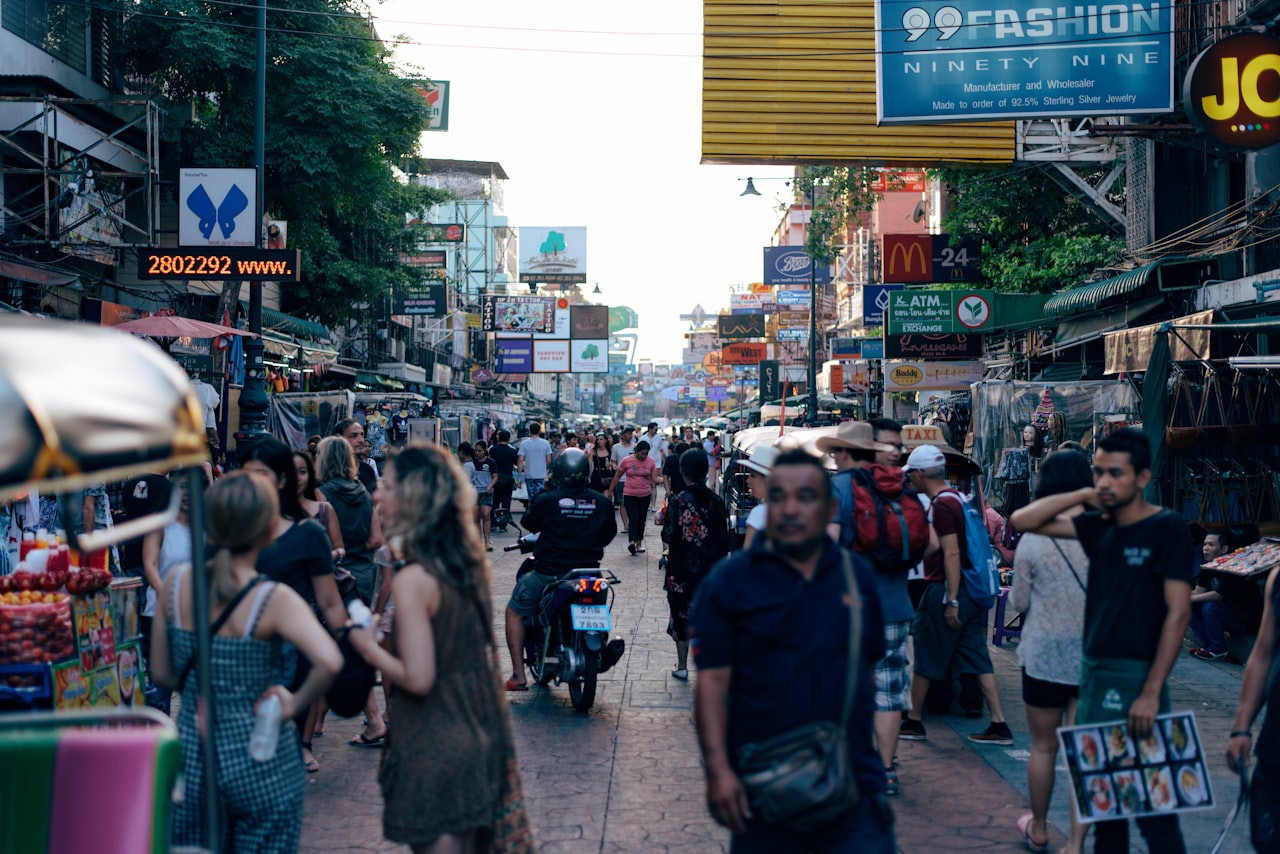
Thai language content is mandatory for consumer marketing. Unlike Malaysia or the Philippines where English content can reach significant segments, Thailand requires Thai-language content to reach the majority of consumers. Only approximately 27 percent of Thais speak English, and even among English speakers, Thai-language content is strongly preferred for commercial interactions.
Thai script requires specific design and typographic considerations. Ensure your website, advertising creative, and printed materials are designed to display Thai script correctly. Font selection, text sizing, and layout all require adjustment — Thai characters are taller and more complex than Latin script, affecting visual design.
Cultural considerations shape effective marketing in Thailand. Respect for the monarchy, Buddhism (practised by approximately 94 percent of the population), and Thai cultural values must be reflected in all communications. Images of Buddha should never be used for commercial purposes. The head is considered sacred and the feet profane — visual content should be sensitive to these beliefs.
Hire native Thai speakers for content creation and community management. Thai humour, slang, and communication styles are highly specific and evolve rapidly. Content that sounds natural and culturally relevant requires native expertise. Invest in Thai copywriters who understand your brand voice and can adapt it authentically for local audiences.
Adapt your visual identity for the Thai market while maintaining brand consistency. Colour preferences, design aesthetics, and visual storytelling conventions in Thailand may differ from your Singapore brand assets. Test creative variations with Thai audiences before committing to campaign-scale production.
Localise your customer experience end-to-end. Thai-language customer service through LINE and social media, Thai-language website content, and Thai payment methods are all essential. Partial localisation — a Thai-language ad leading to an English-language website — creates friction that kills conversion rates. Your content marketing must be fully adapted for the local audience.
Advertising Channels and Campaign Strategy
Thailand’s digital advertising market offers strong reach at costs that are generally 50 to 75 percent lower than Singapore.
Google Ads is effective for reaching Thai consumers through search and YouTube. Thai-language keyword research is essential — even English brand names are often searched in Thai transliteration. Cost per click is significantly lower than Singapore, making Google Ads an efficient acquisition channel. Consult with an experienced Google Ads team for Thai market keyword strategy.
LINE Ads Platform provides access to Thailand’s most-used messaging app. Ad formats include display ads in the LINE timeline, sponsored stickers, and smart channel ads. LINE’s advertising platform offers detailed targeting based on user behaviour, demographics, and interests. For brands building a LINE Official Account, advertising drives follower growth that builds a direct communication channel with Thai consumers.
Meta advertising (Facebook and Instagram) delivers broad reach and strong targeting capabilities. Facebook remains the most cost-effective platform for awareness and conversion campaigns. Instagram excels for visual brands and younger demographics. Combine both platforms in your media plan for comprehensive Meta coverage.
TikTok Ads reach Thailand’s most engaged digital audience, particularly consumers under 35. Spark Ads (boosted organic content) and in-feed ads perform well when creative is authentic and entertaining. Partner with Thai TikTok creators to produce ad content that matches the platform’s native format.
Influencer partnerships are essential for Thailand market entry. Thai KOLs (Key Opinion Leaders) significantly influence purchasing decisions across all categories. Rates are competitive, with micro-influencers charging as little as 3,000 to 10,000 THB (approximately $120 to $400 SGD) per post. Focus on engagement quality and audience alignment rather than follower count.
E-Commerce, Payments and Logistics
Thailand’s e-commerce ecosystem is well-developed with strong platform infrastructure and growing consumer adoption.
Shopee Thailand and Lazada Thailand are the dominant marketplace platforms. Both offer cross-border seller programmes that allow Singapore businesses to sell into Thailand without a local entity. Marketplace presence provides immediate access to millions of Thai consumers with built-in trust, payment processing, and logistics.
TikTok Shop Thailand combines content and commerce, allowing consumers to purchase products directly from TikTok videos and live streams. For consumer products with visual appeal, TikTok Shop can be a high-volume sales channel. The platform’s algorithm-driven discovery means new brands can achieve visibility without an existing following.
Payment preferences in Thailand include bank transfers (the most common method), PromptPay (Thailand’s national QR payment system), credit and debit cards, e-wallets (TrueMoney, Rabbit LINE Pay), and cash-on-delivery. Cash-on-delivery remains important, particularly outside Bangkok. Offering comprehensive payment options is essential for conversion.
Logistics in Thailand are well-developed on the mainland but require planning for delivery speed expectations. Major carriers include Kerry Express, Flash Express, J&T Express, and Thailand Post. Same-day and next-day delivery in Bangkok is expected by consumers accustomed to marketplace fulfilment standards. Warehousing in Thailand reduces delivery times and shipping costs compared to cross-border fulfilment.
Build your own website with Thai-language capability as a brand-building complement to marketplace selling. Thai consumers who become loyal to your brand will seek you out directly, and your website provides a controlled environment for storytelling, customer education, and premium positioning.
Practical Market Entry Approach
A phased approach to Thailand market entry manages risk while building sustainable growth.
 Market Entry Approach — Marketing to Thailand from Singapore: Digital Channels and Localisation” loading=”lazy” class=”wp-image-21768″>
Phase one (months one to three): Market testing. Set up marketplace presence on Shopee Thailand and/or Lazada Thailand through their cross-border programmes. Launch targeted digital advertising campaigns on Facebook and Google to test demand, messaging, and pricing. Engage two to three Thai micro-influencers for initial content and social proof.
Phase two (months four to six): Channel expansion. Establish a LINE Official Account and begin building a direct audience. Launch TikTok presence with Thai-language content. Expand influencer partnerships based on phase-one learnings. Test additional product lines or service offerings based on market response. Apply SEO best practices for Thai-language organic visibility.
Phase three (months seven to twelve): Scale and optimise. Increase advertising spend on proven channels. Consider local warehousing for faster delivery and better margins. Explore partnerships with Thai distributors or retailers. Build a Thai-language content library for ongoing organic marketing. Evaluate the need for a local entity based on revenue trajectory.
Partner with a Thai marketing agency or consultant for local expertise, especially during the initial entry phase. Thai-language content creation, cultural navigation, and local media relationships all benefit from on-ground expertise. Even experienced cross-border marketers benefit from local partners who understand Thailand’s specific dynamics.
Learn from other cross-border successes. Singapore businesses that have effectively entered regional markets like Malaysia and Indonesia often find transferable strategies, though each market requires its own tailored approach.
Frequently Asked Questions
What budget do I need to start marketing in Thailand?
Initial market testing can begin with $3,000 to $7,000 SGD monthly for advertising, content localisation, and marketplace setup. Thailand’s lower advertising costs mean this budget delivers significant reach. Add $1,500 to $3,000 for Thai content creation and influencer partnerships. Scale based on performance data.
Do I need a Thai entity to market in Thailand?
You can sell through marketplace cross-border programmes and run digital advertising without a Thai entity. However, operating a local website with Thai payment processing, hiring local staff, and certain business activities require a Thai company registration. The Foreign Business Act restricts foreign ownership in certain sectors.
How important is LINE for marketing in Thailand?
Essential. LINE is Thailand’s primary messaging platform and an increasingly important commerce channel. Any business serious about the Thai market must establish a LINE Official Account for customer communication, promotions, and commerce. Neglecting LINE in Thailand is equivalent to neglecting WhatsApp in Singapore.
Can I use English for advertising in Thailand?
English can work for premium positioning in Bangkok targeting affluent, international consumers. However, for broad market reach, Thai-language content is mandatory. Even in English-friendly Bangkok, Thai-language ads consistently outperform English ads in engagement and conversion rates.
What are the biggest mistakes Singapore businesses make in Thailand?
Underestimating the language barrier, ignoring LINE as a platform, applying Singapore pricing without adjustment, using non-native Thai content, and neglecting the importance of emotional storytelling in Thai advertising. Thailand requires genuine localisation, not minor adaptation.
Is Thailand’s e-commerce market growing?
Yes, rapidly. Thailand’s e-commerce market grows at over 15 percent annually, driven by marketplace adoption, social commerce, and improving logistics infrastructure. Mobile commerce dominates, and live-streaming commerce is one of the fastest-growing segments.
How do I find reliable Thai marketing partners?
Research agencies through industry directories, ask for recommendations from other Singapore businesses operating in Thailand, and check agency portfolios for relevant market experience. Start with a small project to evaluate capabilities before committing to long-term partnerships. Singapore’s Enterprise Singapore (EnterpriseSG) office in Bangkok can also provide referrals and market guidance.