Digital Marketing Trends Singapore 2026: What Every Business Needs to Know
Table of Contents
- AI in Marketing: From Experimentation to Integration
- Short-Form Video Dominance and Social Commerce
- The Evolution of Search: AI Overviews and Zero-Click
- Privacy-First Marketing and First-Party Data
- B2B Marketing Shifts in Singapore
- Local SEO and Hyperlocal Targeting
- Emerging Channels and Opportunities
- Frequently Asked Questions
AI in Marketing: From Experimentation to Integration
The most significant of all digital marketing trends singapore 2026 is the maturation of artificial intelligence from experimental tool to integrated marketing infrastructure. In 2024 and 2025, Singapore businesses explored AI through chatbots, content generation experiments, and basic automation. In 2026, AI has become embedded in every layer of marketing operations.
AI-powered content creation has evolved beyond simple text generation. Marketing teams now use AI for initial content drafts, creative concepting, data analysis, audience segmentation, and campaign optimisation — but the most effective teams use AI to augment human creativity rather than replace it. The quality gap between AI-assisted human content and purely AI-generated content has widened, making the human element more valuable, not less.
Predictive analytics and AI-driven personalisation have become standard practice for larger Singapore businesses. AI models analyse customer behaviour patterns to predict purchase intent, churn risk, and optimal messaging timing. This enables marketing that feels personalised and relevant rather than generic — a significant advantage in Singapore’s competitive market.
Conversational AI has transformed customer engagement. AI-powered chatbots and virtual assistants handle increasingly complex customer interactions, from product recommendations to complaint resolution. Singapore consumers have become comfortable with AI interactions, expecting instant, accurate responses across all digital touchpoints.
For Singapore SMEs, AI has democratised capabilities that were previously available only to enterprises with large marketing teams. AI tools for SEO research, ad copy generation, social media scheduling, and analytics are now affordable and accessible. The competitive advantage has shifted from who can access AI tools to who can use them most effectively as part of a strategic digital marketing approach.
Short-Form Video Dominance and Social Commerce
Short-form video has moved from a growing trend to the dominant content format for reaching Singapore consumers, particularly those under 40. TikTok, Instagram Reels, and YouTube Shorts collectively command more daily attention than any other content format.

The implications for Singapore businesses are substantial. Brands that cannot produce engaging short-form video content are increasingly invisible to younger demographics. This does not require Hollywood-level production — authentic, informative, and entertaining content shot on smartphones often outperforms polished corporate video. The barrier is creative capability, not production budget.
Social commerce — the integration of shopping directly within social media platforms — has gained significant traction in Singapore. TikTok Shop, Instagram Shopping, and Facebook Marketplace have normalised purchasing products without leaving social apps. The discovery-to-purchase journey has shortened dramatically: a consumer sees a product in a TikTok video, taps to view details, and completes purchase within the same app.
Live selling has emerged as a meaningful revenue channel for Singapore businesses in certain categories — beauty, fashion, food, and electronics in particular. Live commerce combines entertainment, product demonstration, and real-time purchasing in a format that generates higher conversion rates than standard e-commerce. Brands investing in live selling capability are seeing strong returns, following a trend that has been established in China and Southeast Asian markets.
For businesses building their social media marketing strategy in 2026, short-form video production capability and social commerce integration are no longer optional components — they are core requirements.
The Evolution of Search: AI Overviews and Zero-Click
Google’s search results have undergone their most significant transformation in years with the expansion of AI Overviews (formerly Search Generative Experience). These AI-generated summaries appear at the top of search results for many queries, providing direct answers without requiring users to click through to websites.
For Singapore businesses relying on organic search traffic, this shift demands strategic adaptation. Zero-click searches — where users get their answer directly from Google without clicking any result — have increased. This means that ranking on page one is necessary but may not generate the traffic volumes it once did for certain query types.
The SEO response to this trend involves several strategic shifts. First, focus on queries where AI Overviews are less likely to appear — complex, nuanced, and opinion-based queries that AI cannot adequately summarise. Second, optimise for inclusion within AI Overviews themselves — content that Google’s AI cites as a source receives brand visibility even in zero-click scenarios. Third, invest in content types that drive direct traffic: tools, calculators, templates, and interactive resources that require website visits.
Voice search and multimodal search continue to grow. Google Lens visual search, voice queries through smart speakers and smartphones, and conversational search patterns are changing how Singaporeans interact with search engines. Optimising for natural language queries and visual search capabilities is increasingly important.
The fundamentals of SEO — quality content, technical excellence, and authoritative backlinks — remain important. But the tactics and measurements are evolving. Brand visibility within AI Overviews, featured snippets, and knowledge panels are becoming as important as traditional organic ranking positions. An effective E-E-A-T content strategy helps ensure your content is the type Google’s AI trusts and cites.
Privacy-First Marketing and First-Party Data
The privacy landscape has continued to evolve in 2026, with third-party cookie restrictions now fully implemented across major browsers and Singapore’s PDPA enforcement becoming more active. For marketers, this means the old model of tracking users across the web through third-party cookies is effectively over.
First-party data — information collected directly from your customers and website visitors with their consent — has become the most valuable marketing asset. Businesses that invested early in building first-party data infrastructure (email lists, customer databases, loyalty programmes, app users) are now reaping significant competitive advantages.
Building a first-party data strategy involves several key elements. Create value exchanges that motivate customers to share their data — loyalty programmes, exclusive content, personalised recommendations, and premium experiences. Implement robust consent management that complies with PDPA and builds consumer trust. Invest in customer data platforms (CDPs) that unify data from multiple touchpoints into actionable customer profiles.
Contextual advertising — targeting ads based on the content being viewed rather than the user viewing it — has experienced a renaissance. Without third-party cookies for behavioural targeting, contextual targeting provides a privacy-compliant alternative that performs well for many campaign types. Google Ads has expanded its contextual targeting capabilities significantly.
Privacy-first marketing is not just a compliance requirement — it is becoming a brand differentiator. Singapore consumers are increasingly aware of data privacy and favour brands that respect their data. Transparent data practices, clear privacy policies, and consent-first approaches build the trust that drives long-term customer relationships.
B2B Marketing Shifts in Singapore
B2B marketing in Singapore has undergone notable shifts in 2026. The lines between B2B and B2C marketing continue to blur, as B2B buyers expect the same quality of digital experience they encounter as consumers.
LinkedIn has solidified its position as the primary B2B marketing platform in Singapore. The platform’s advertising capabilities, content ecosystem, and professional networking features make it the centre of gravity for B2B demand generation. Thought leadership content on LinkedIn — particularly personal posts from executives and subject matter experts — generates more engagement and leads than traditional advertising for many B2B businesses.
Account-based marketing (ABM) has moved from buzzword to standard practice for Singapore B2B companies targeting enterprise clients. ABM platforms, combined with intent data, enable highly targeted campaigns that focus marketing resources on the specific accounts most likely to convert. The efficiency gains over broad-reach demand generation are substantial.
Webinars and virtual events remain important lead generation channels, though formats have evolved. Shorter, more focused sessions (30-45 minutes) outperform lengthy presentations. Interactive formats with live Q&A, polls, and breakout discussions generate higher engagement. For detailed guidance, our article on webinar marketing strategy covers the current best practices.
B2B content marketing has shifted toward higher-quality, lower-frequency output. Rather than publishing daily blog posts of modest quality, effective B2B marketers in Singapore are publishing fewer, more comprehensive pieces — detailed guides, original research, whitepapers, and case studies — that demonstrate genuine expertise and generate leads over extended periods.
Local SEO and Hyperlocal Targeting
Local SEO has become even more important for Singapore businesses in 2026 as Google continues to prioritise local results for commercial queries. The local pack — the map and business listings that appear for “near me” and location-based searches — captures a growing share of search clicks.
Google Business Profile optimisation remains the foundation of local SEO. Businesses that maintain complete, accurate, and regularly updated profiles significantly outperform those with neglected listings. Customer reviews continue to be a powerful ranking factor — both the quantity and recency of reviews impact local visibility.
Hyperlocal targeting has matured beyond simple neighbourhood targeting. Google’s ability to serve different results for users in Tanjong Pagar versus Jurong means that businesses can — and should — optimise for specific micro-locations within Singapore. This is particularly relevant for retail, F&B, professional services, and any business serving walk-in customers.
Google Maps and navigation integration have become increasingly important. Businesses optimised for Google Maps visibility benefit from not just search traffic but from navigation and “explore” features that drive foot traffic. Ensuring accurate location data, business hours, and category information across all platforms is essential.
Multi-location businesses need sophisticated local SEO strategies that optimise each location independently while maintaining brand consistency. Working with a branding specialist ensures that your multi-location presence is both locally optimised and brand-consistent across all touchpoints.
Emerging Channels and Opportunities
Beyond the major trends, several emerging channels and opportunities are worth attention for forward-thinking Singapore businesses in 2026.
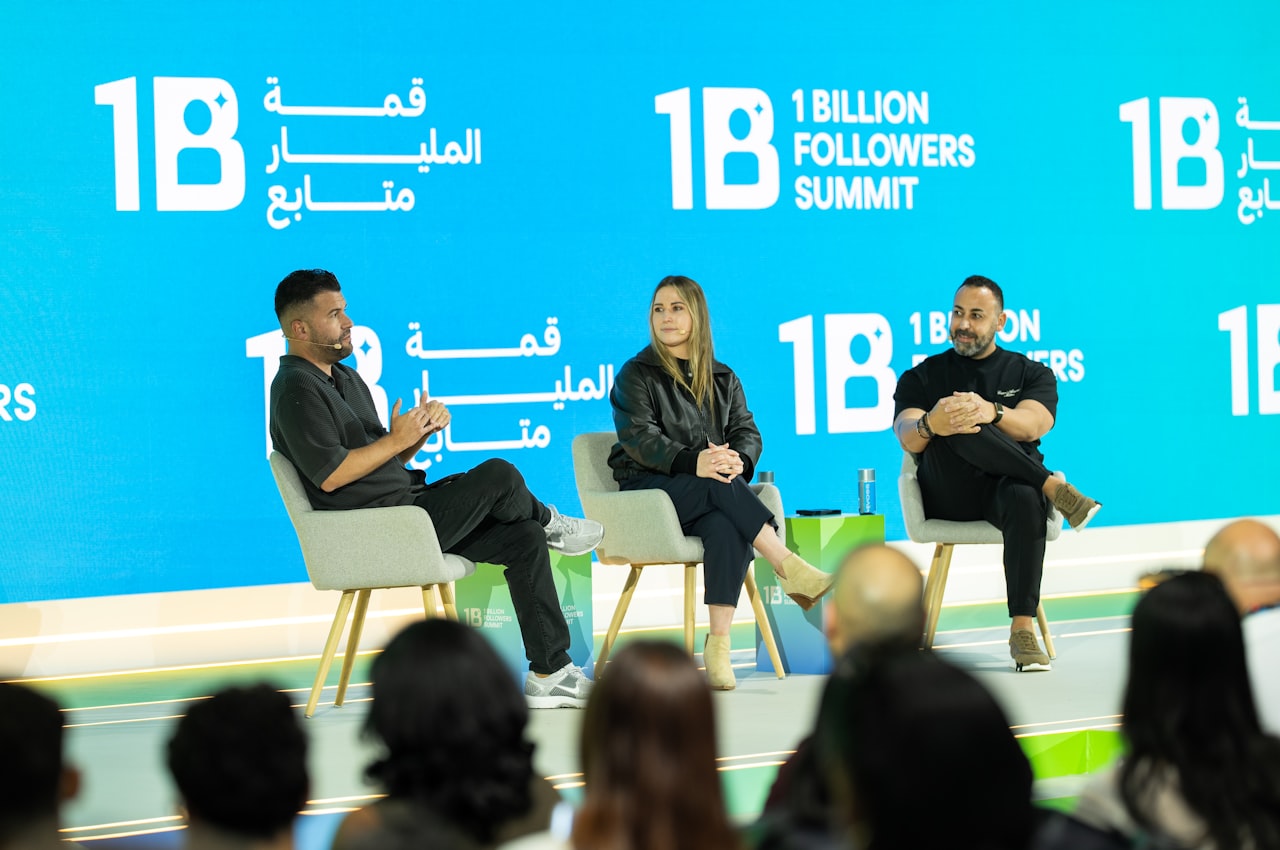
Community-led growth: Building owned communities — through Telegram groups, Discord servers, WhatsApp groups, or dedicated forums — has become an increasingly popular strategy. Owned communities provide direct access to customers and prospects, generate valuable feedback and insights, and create advocacy networks. Unlike social media followers, community members represent a deeper level of engagement and loyalty.
Podcast advertising: As podcast listenership in Singapore grows, so does the advertising opportunity. Podcast ads — particularly host-read endorsements — deliver strong engagement and trust metrics. Sponsoring relevant Singapore business podcasts or launching your own (see our guide on launching a business podcast) can reach engaged professional audiences.
Connected TV and streaming ads: Advertising on streaming platforms (YouTube TV, Netflix ad tier, Disney+ ad tier) is becoming accessible to Singapore advertisers. These platforms offer the targeting precision of digital advertising with the brand-building impact of television. As Singapore households continue shifting from traditional TV to streaming, this channel grows in relevance.
Sustainability marketing: Singapore consumers — particularly younger demographics — increasingly factor sustainability into purchasing decisions. Brands that authentically communicate their sustainability practices and environmental commitments are gaining competitive advantage. However, greenwashing is quickly identified and punished by savvy consumers; only genuine sustainability efforts should be marketed.
Southeast Asian expansion: Singapore businesses are increasingly looking beyond the domestic market for growth. The Southeast Asian digital economy continues to expand, and Singapore’s position as a regional hub makes cross-border expansion more accessible than ever. Our guides on the SEA digital marketing landscape and APAC marketing strategy provide frameworks for regional expansion.
Frequently Asked Questions
What is the single most important digital marketing trend for Singapore businesses in 2026?
AI integration across marketing operations is the most transformative trend. Businesses that effectively integrate AI into their content creation, advertising optimisation, customer engagement, and analytics workflows gain significant efficiency and performance advantages. However, the key word is “effectively” — AI is a tool that amplifies human strategy and creativity, not a replacement for it.
Is SEO still worth investing in with AI Overviews reducing click-through rates?
Yes. While AI Overviews have changed the click dynamics for some queries, organic search remains one of the highest-ROI marketing channels. The strategy needs adaptation — focusing on complex queries, optimising for AI Overview citations, and creating content that requires website visits — but the fundamental value of ranking well on Google for relevant queries remains strong.
How should Singapore SMEs prioritise their marketing budget in 2026?
For most SMEs, the priority hierarchy should be: first, a strong website optimised for conversions; second, Google Business Profile and local SEO; third, a focused Google Ads strategy for high-intent keywords; fourth, social media presence on one to two platforms where your audience is active; fifth, content marketing that builds authority over time. Do fewer things well rather than spreading across every channel.
Is TikTok necessary for every Singapore business?
Not every business, but most consumer-facing businesses should have a TikTok strategy. If your target audience includes anyone under 45, TikTok is increasingly where they discover products and brands. B2B businesses and those targeting older demographics may find LinkedIn, Google, and email more effective. Evaluate based on where your specific audience spends their time.
How is privacy regulation affecting digital marketing in Singapore?
PDPA enforcement is becoming more active, and global privacy trends (GDPR, cookie deprecation) are influencing Singapore marketing practices. The practical impact is a shift from third-party data reliance to first-party data strategies. Build your email list, implement consent-first data collection, and invest in contextual rather than behavioural targeting where possible.
What marketing skills are most valuable in 2026?
The most valuable skills combine strategic thinking with technical capability: data analysis and interpretation, AI tool proficiency, video content creation, performance marketing management, and the ability to connect marketing activities to business outcomes. Generalists who can work across channels and use AI tools effectively are in high demand, as are specialists with deep expertise in SEO, paid media, or content strategy.
Should Singapore businesses invest in regional expansion marketing?
If your product or service has potential demand beyond Singapore, yes. Singapore’s domestic market of 6 million people limits growth for many businesses. Southeast Asian markets — particularly Malaysia, Indonesia, the Philippines, Thailand, and Vietnam — offer significantly larger consumer bases at lower advertising costs. Start with one or two markets, validate demand, then scale based on results.
How do I stay current with digital marketing changes?
Follow authoritative industry sources (Search Engine Journal, Search Engine Land, HubSpot Blog, Think with Google), subscribe to newsletters from leading marketing practitioners, attend Singapore marketing events and conferences, and experiment continuously with new channels and tactics. Working with a knowledgeable digital marketing agency also provides access to current best practices and emerging trends.