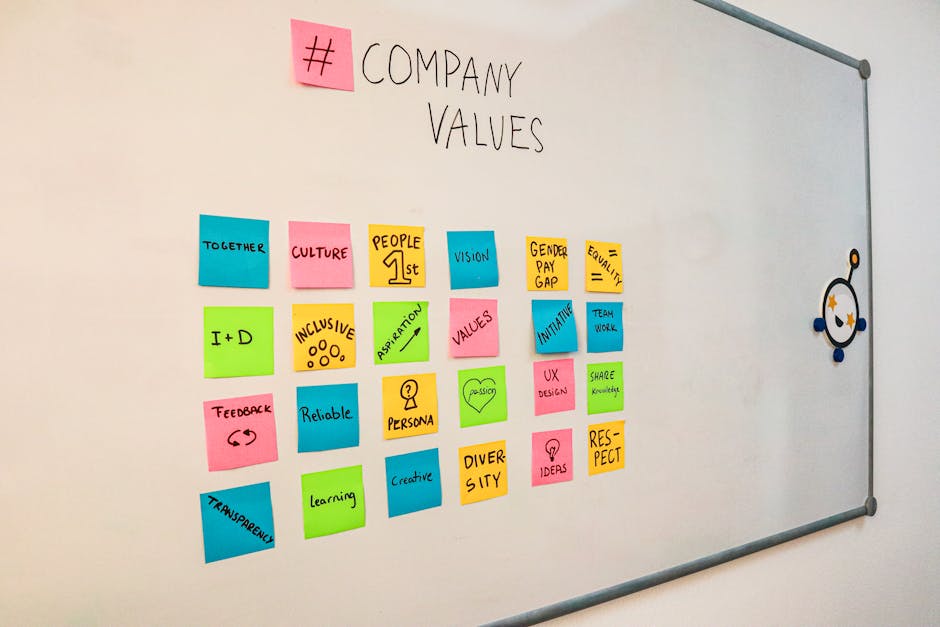
Employer Value Proposition: Craft an EVP That Attracts the Right Candidates
Table of Contents
- What Is an Employer Value Proposition
- Why Your EVP Matters in Singapore’s Job Market
- A Step-by-Step Framework for Crafting Your EVP
- The Five Pillars of a Compelling EVP
- Communicating Your EVP Across Channels
- EVP Examples From Singapore Companies
- Common EVP Pitfalls and How to Avoid Them
- Frequently Asked Questions
What Is an Employer Value Proposition
An employer value proposition guide starts with understanding what an EVP actually is. Your Employer Value Proposition is the unique combination of rewards, benefits, culture, and opportunities that your organisation offers to employees in return for their skills, capabilities, and commitment. Think of it as the answer to the question every candidate asks: why should I work here instead of somewhere else?
Unlike a mission statement that speaks to customers and stakeholders, or a set of corporate values that guide business decisions, an EVP speaks directly to current and potential employees. It encapsulates the employment experience, from compensation and career growth to work environment and company purpose.
A well-defined EVP acts as a filter. It attracts candidates who genuinely align with your organisation and naturally filters out those who do not. This results in higher quality applications, better cultural fit, and ultimately stronger retention. Companies with a clearly articulated EVP see significantly lower turnover than those without one.
Why Your EVP Matters in Singapore’s Job Market
Singapore’s labour market presents unique challenges. A small domestic population, high cost of living, and intense competition among employers mean that talent has leverage. Candidates research companies thoroughly before applying, using platforms like Glassdoor, LinkedIn, and even Reddit to form impressions.

The COMPASS framework for Employment Passes has further tightened access to foreign talent. Companies that relied on overseas hiring now need to work harder to attract local candidates. A compelling EVP helps you stand out in a crowded market where many companies are chasing the same pool of skilled professionals.
Younger workers in Singapore are particularly values-driven. They want to understand not just what they will be paid but what they will learn, how they will grow, and whether their work has meaning. An EVP that speaks to these deeper motivations creates an emotional connection that salary alone cannot achieve.
Building a strong EVP is one component of a broader employer branding strategy in Singapore. When combined with effective digital marketing services, your EVP can reach and resonate with exactly the talent you need.
A Step-by-Step Framework for Crafting Your EVP
Creating an EVP requires a structured approach that begins with research and ends with activation. Here is a proven framework.
Step one is internal discovery. Conduct surveys and focus groups with employees across all levels and departments. Ask what they value most about working at your company, what made them join, and what keeps them staying. Use anonymous surveys to encourage honest feedback. The goal is to uncover the genuine strengths of your employment experience.
Step two is external research. Analyse your competitors’ EVPs. Review their careers pages, job postings, and Glassdoor profiles. Identify what they emphasise and where gaps exist. Understanding the competitive landscape helps you differentiate. A thorough employer brand audit can provide the foundation for this research.
Step three is candidate research. If possible, survey recent applicants, both those who accepted offers and those who declined. Understanding why candidates choose or reject your company provides invaluable insight into how your EVP is perceived externally.
Step four is synthesis. Bring together the findings from internal, external, and candidate research. Identify the themes that are both authentic to your company and differentiated from competitors. These become the pillars of your EVP.
Step five is articulation. Write your EVP in clear, compelling language. Avoid corporate jargon. Speak in the language your target candidates use. Test the messaging with a small group of employees and trusted external contacts before finalising.
Step six is activation. Deploy your EVP across all touchpoints, from your careers page and job postings to interview scripts and onboarding materials. Ensure every candidate interaction reflects your EVP consistently.
The Five Pillars of a Compelling EVP
Most effective EVPs are built around five core pillars. Not every company will emphasise all five equally, but addressing each one creates a comprehensive proposition.

Compensation and benefits form the first pillar. This includes salary, bonuses, CPF contributions, health insurance, and any additional financial benefits. In Singapore, where the cost of living is high, competitive compensation remains a baseline expectation. However, compensation alone rarely differentiates.
Career development is the second pillar. Candidates want to know how they will grow. What training programmes exist? Is there a clear progression path? Does the company support further education or professional certifications? In Singapore, SkillsFuture credits and company-sponsored learning signal a commitment to development.
Work environment and culture form the third pillar. This encompasses everything from office design and remote work policies to team dynamics and management style. Candidates want to understand the day-to-day experience of working at your company. Authentic stories and employer brand content bring this pillar to life.
Purpose and meaning represent the fourth pillar. Does the company’s work contribute to something larger? Is there a commitment to sustainability, social impact, or innovation? Younger candidates in particular are drawn to employers whose purpose resonates with their personal values.
People and leadership form the fifth pillar. The quality of colleagues and leaders matters enormously. Candidates want to work alongside talented, collaborative people and for leaders who are accessible, supportive, and visionary.
Communicating Your EVP Across Channels
An EVP that exists only in an HR document serves no purpose. It needs to be communicated consistently across every channel where candidates interact with your brand.
Your careers page is the primary home for your EVP. It should feature prominently with clear messaging, supported by employee testimonials, team photos, and information about benefits and culture. A well-designed careers page translates your EVP into a visual and interactive experience.
Job postings should reflect your EVP in both tone and content. Move beyond generic descriptions and weave your EVP pillars into the language. Instead of listing requirements, frame the role around what the candidate will achieve, learn, and experience.
LinkedIn is essential for EVP communication in Singapore. Your company page, employee posts, and LinkedIn Life section all contribute to how your EVP is perceived. Our guide to LinkedIn employer branding covers specific techniques for maximising this platform.
Encourage employees to share their genuine experiences on social media. Employee-generated content is often more credible than corporate communications and can bring your EVP to life in authentic ways.
During the interview process, ensure that interviewers communicate the EVP consistently. Train hiring managers to articulate what makes your company a great place to work, using real examples rather than scripted talking points. A consistent approach supported by strong branding reinforces your EVP at every touchpoint.
EVP Examples From Singapore Companies
Looking at how successful Singapore companies articulate their EVPs can provide inspiration for your own.
Technology companies in Singapore often lead with innovation and impact. Their EVPs emphasise the opportunity to work on cutting-edge projects, the calibre of colleagues, and the global reach of their products. They back this up with generous learning budgets and exposure to international teams.
Government-linked companies often emphasise stability, purpose, and contribution to national development. Their EVPs highlight the opportunity to shape policies that affect millions, strong career development frameworks, and competitive benefits packages.
Startups take a different approach, leading with speed, ownership, and growth. Their EVPs acknowledge that the environment is fast-paced and sometimes chaotic but frame this as an opportunity for rapid learning and outsized impact. If you are building an EVP for a smaller company, our article on employer branding for startups offers tailored advice.
Financial services firms in Singapore often emphasise career progression, global mobility, and the prestige of their brand. Their EVPs are targeted at ambitious professionals who value structured advancement and international exposure.
Across all these examples, the best EVPs share common traits. They are specific rather than generic, authentic rather than aspirational, and communicated consistently across all channels. They also evolve over time to reflect changes in the organisation and the market.
Common EVP Pitfalls and How to Avoid Them
The most common pitfall is creating an aspirational EVP that does not reflect reality. If your EVP promises innovation but employees spend their days on bureaucratic processes, the disconnect will surface in reviews and word-of-mouth. Always ground your EVP in the genuine employee experience.
Another mistake is making your EVP too generic. Phrases like we value our people or we offer a dynamic work environment say nothing meaningful. Every company claims these things. Your EVP needs to be specific enough that it could not be applied to your competitor.
Neglecting to segment your EVP is also problematic. Different talent groups may value different aspects of your proposition. A software engineer and a finance manager might both work at your company, but they likely prioritise different benefits. Consider creating tailored versions of your EVP for key talent segments while maintaining a consistent core message.
Failing to involve leadership is another trap. Your EVP needs buy-in from the top. If leaders do not embody and communicate the EVP, it rings hollow. Ensure your leadership team understands and champions the proposition.
Finally, treating the EVP as a static document rather than a living asset limits its impact. Review and refresh your EVP annually based on employee feedback, market changes, and business evolution. Use content marketing to keep your EVP messaging fresh and visible. Track your progress with the right employer branding metrics to ensure continuous improvement.
Frequently Asked Questions
What is the difference between an EVP and an employer brand?
Your EVP is the core promise you make to employees, the what of your employment offer. Your employer brand is the broader perception of your company as an employer, the how your EVP is perceived and experienced. The EVP informs and shapes the employer brand.
How often should we update our EVP?
Review your EVP annually at minimum. Major changes such as mergers, leadership transitions, or shifts in company strategy should trigger an immediate review. Small refinements based on employee feedback can be made more frequently.
Can a company have different EVPs for different roles?
Yes. While your core EVP should remain consistent, you can create tailored messaging for different talent segments. A technology team might emphasise innovation and autonomy, while a sales team might focus on earning potential and career progression.
How do we validate that our EVP is working?
Track metrics including application volume and quality, offer acceptance rates, time-to-fill, employee retention, and eNPS scores. Qualitative indicators like Glassdoor review sentiment and candidate feedback during interviews also provide valuable validation.
Should our EVP mention salary and benefits specifically?
Your EVP should address compensation and benefits as one pillar, but it does not need to list specific numbers. Focus on the overall value proposition rather than granular details, which are better communicated during the recruitment process itself.
How do we get leadership buy-in for the EVP process?
Present the business case using data. Show how a strong EVP reduces cost-per-hire, improves retention, and enhances productivity. Share benchmarks from competitors and case studies from similar companies. Frame the EVP as a business investment rather than an HR initiative.
What role does SEO play in communicating our EVP?
Candidates search for information about potential employers online. Optimising your careers page and employer brand content for search ensures your EVP reaches candidates during their research phase. Strong SEO services help your employer brand content rank for terms candidates are searching for.
How long does the EVP development process take?
A thorough EVP development process, from research through articulation and initial activation, typically takes eight to twelve weeks. Rushing the process risks producing a generic or inauthentic proposition. Investing adequate time in research and validation ensures a stronger result.