Virtual reality has moved past the novelty stage. In 2026, virtual reality marketing is no longer about strapping headsets on trade show visitors for a gimmicky 360-degree video. Brands in Singapore and globally are deploying VR as a functional marketing channel — one that generates measurable engagement, accelerates purchase decisions, and creates experiences that flat media simply cannot replicate.
The shift is driven by falling headset costs, web-based VR that eliminates app downloads, and analytics platforms that tie VR engagement to business outcomes. This guide covers how businesses use VR for marketing, which applications deliver genuine ROI, and how to evaluate whether virtual reality is right for your brand.
The VR Marketing Landscape in 2026
The virtual reality marketing market has matured significantly, with Asia-Pacific the fastest-growing region. Singapore has become a testing ground for VR marketing initiatives across Southeast Asia. Several developments have made VR marketing more accessible.
Hardware accessibility: Meta Quest devices dominate the consumer market, with Apple Vision Pro establishing the premium tier. The primary access point for most consumers remains smartphone-based or web-based VR experiences rather than dedicated headsets.
WebXR maturation: Browser-based VR experiences now run smoothly on most modern smartphones and desktop browsers, eliminating app download friction. A customer can access a VR showroom by clicking a link on your website — no headset required.
Analytics and content tools: Modern VR platforms provide detailed behavioural analytics — where users look, how long they engage, which interactions lead to conversions. Meanwhile, content creation tools have become more accessible, reducing production costs significantly.
For an overview of how VR fits into the broader immersive technology landscape, our extended reality services page explains the spectrum from augmented to fully immersive virtual experiences.
Proven VR Marketing Use Cases
Not every VR application delivers marketing value. The use cases that consistently generate ROI share a common trait: they solve a real problem that traditional media cannot address effectively.
Spatial products and environments
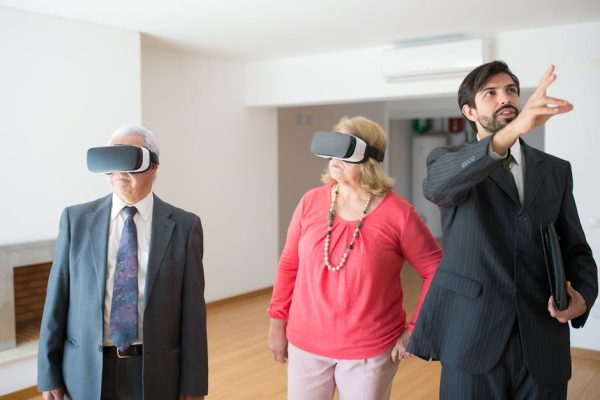
Real estate, architecture, interior design, hospitality, and retail environments benefit enormously from VR. These industries sell spaces, and VR lets potential customers experience those spaces before they exist or before they can visit in person. A property developer in Singapore showing off-plan units in VR consistently reports higher conversion rates than those relying on floor plans and renderings alone.
Complex products requiring demonstration
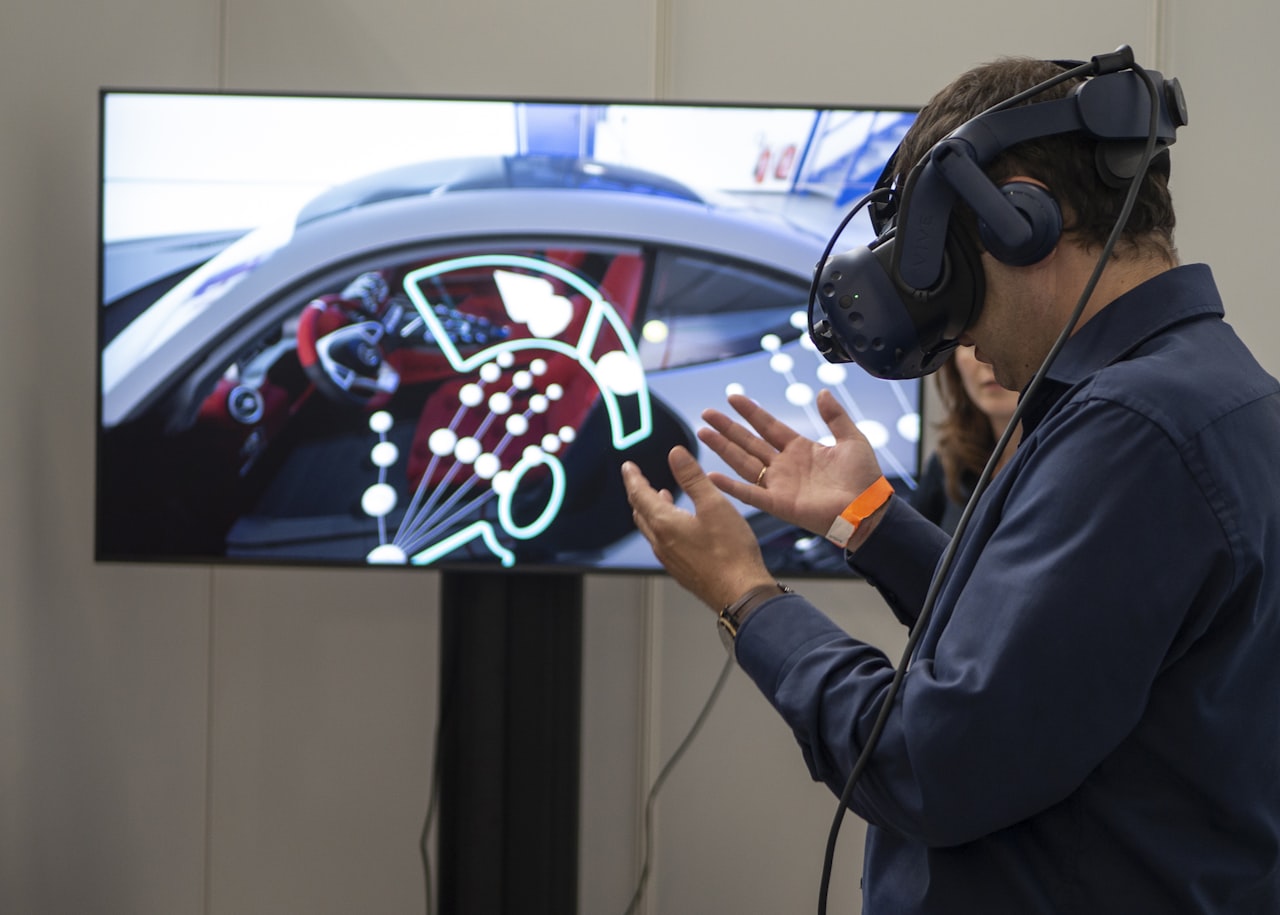
Industrial equipment, medical devices, automotive interiors, and technology products that are difficult to demonstrate in a sales meeting or showroom. VR allows prospects to interact with these products in ways that brochures, videos, and even physical demos cannot match.
Experiential brand storytelling
Tourism boards, luxury brands, automotive manufacturers, and lifestyle brands use VR to create emotional experiences that build brand affinity. The key distinction is between experiences that genuinely enhance brand perception and those that are technology for technology’s sake.
Training and education marketing
Educational institutions, professional training providers, and companies selling complex services use VR to demonstrate their expertise and methodology. A training company that lets prospects experience a VR sample of their programme creates a more compelling sales proposition than a brochure ever could.
Use cases that typically underperform
- VR experiences that replicate what a website already does well (e.g., virtual stores that are slower and harder to navigate than e-commerce sites)
- One-off event activations with no ongoing strategy or content reuse plan
- VR content that requires specialised hardware your target audience does not own
- Experiences that prioritise visual spectacle over utility or information delivery
VR Showrooms and Product Visualisation
Virtual showrooms represent the most commercially proven application of virtual reality marketing. They allow customers to explore products and spaces in three dimensions, at their own pace, from anywhere in the world.
How VR showrooms work
A VR showroom is a three-dimensional digital environment that users can navigate and interact with. At the basic level, this might be a 360-degree photographic tour (similar to Google Street View but within a branded space). At the advanced level, it is a fully interactive 3D environment where users can examine products, customise options, and even complete purchases.
Real estate applications
Singapore’s property market has embraced VR more aggressively than most sectors. Developers use VR showrooms for off-plan property marketing, allowing potential buyers to walk through apartments that have not been built yet. The experience goes beyond static renderings — buyers can open doors, look out windows at the actual view from their chosen unit, change finishes and furniture layouts, and experience the space at different times of day.
This application directly addresses a purchase barrier. Buying a $1.5 million apartment based on floor plans requires imagination and trust. Walking through a realistic VR representation reduces uncertainty and accelerates decision-making. Similarly, furniture retailers and automotive brands use VR showrooms to display their entire catalogue without the constraints of physical floor space.
Technical considerations
- Web-based VR showrooms (WebXR) maximise accessibility but have graphical limitations compared to headset-native experiences
- High-fidelity showrooms require 3D modelling of products, which adds to production costs
- Loading times and performance optimisation are critical — users abandon slow experiences quickly
- Mobile-first design is essential, as most users will access via smartphone rather than headset
Our VR services page provides details on showroom development, including platform options and typical project scopes.
Virtual Events and Experiential Marketing
Virtual events evolved rapidly during the pandemic years, but most settled into a video-conferencing-with-extras format that felt flat and uninspiring. VR events represent the next evolution — immersive gatherings that recreate the spatial, social, and experiential qualities of in-person events.
Types of VR events for marketing
Product launches: Attendees from across Asia-Pacific can gather in a virtual venue, interact with products in 3D, and network — all without travel costs. Trade show activations: VR at exhibition booths demonstrates products, transports visitors to project sites, and creates shareable social media moments. Corporate showcases: Investor presentations and partner conferences use VR to walk stakeholders through projects or demonstrate platform capabilities interactively.
Hybrid event strategy
The most effective approach in Singapore is hybrid — combining physical presence with VR-enhanced elements. A property launch might feature physical showflat tours alongside VR experiences of unbuilt phases.
For brands exploring immersive environments beyond standard VR, our VR CAVE services offer room-scale installations suitable for permanent showrooms and major event activations.
Measuring event VR effectiveness
- Dwell time within VR experiences (average versus target)
- Interaction rates with specific elements or products
- Post-experience actions (enquiries, downloads, purchases)
- Social sharing and user-generated content
- Attendee feedback and Net Promoter Score comparisons with non-VR events
VR for Training and Brand Education
Training-oriented VR serves a dual purpose in marketing. It delivers genuine educational value while positioning your brand as an expert and innovator. Several Singapore industries are using VR training as a marketing differentiator.
Safety and compliance training
Construction, manufacturing, and logistics companies use VR training modules to demonstrate their commitment to workplace safety. These experiences serve internal training purposes while also functioning as marketing tools — showing prospective clients and partners that the company invests seriously in safety culture.
Product training and onboarding
B2B companies selling complex products — industrial equipment, software platforms, medical devices — use VR to train customers on product usage. This approach reduces support costs, improves customer satisfaction, and creates a premium onboarding experience that differentiates from competitors offering PDF manuals.
Other training applications
Non-profit organisations use VR to create empathetic experiences that connect donors with causes. Sales teams trained in VR scenarios — handling objections, demonstrating products — perform measurably better in real-world selling situations. These applications serve dual purposes: delivering genuine value while positioning the brand as an innovator.
Implementing a VR Marketing Campaign
A successful virtual reality marketing campaign requires planning that goes beyond creative production. Here is the implementation framework.
Define the strategic objective
Start with the business problem, not the technology. What are you trying to achieve — faster sales cycles, broader geographic reach, deeper engagement, competitive differentiation? VR should be the answer to a specific question, not a solution looking for a problem.
Identify the audience and access method
How will your target audience access the VR experience? If you are marketing to enterprise decision-makers, they are unlikely to own VR headsets — your experience needs to work on web browsers and smartphones. If you are targeting gamers or tech enthusiasts, headset-native experiences are viable. The access method determines the technical approach, budget, and quality ceiling.
Choose the right format
- 360-degree video: Lowest cost, broadest accessibility, but limited interactivity. Best for location showcases, event replays, and brand storytelling.
- Virtual tour (photographic): Mid-range cost, good accessibility. Ideal for real estate, hospitality, and retail environments.
- Interactive 3D environment: Higher cost, requires more development, but offers full interactivity. Best for product configurators, virtual showrooms, and training simulations.
- Fully immersive VR experience: Highest cost, headset-dependent, but delivers the most impactful experience. Best for premium brand activations and flagship installations.
Content production
VR content production involves 3D modelling, environment design, interaction programming, audio design, and testing across multiple devices. The production timeline typically ranges from four weeks for a basic 360-degree tour to six months for a complex interactive experience. Our VR app development services cover the full spectrum from concept to deployment.
Distribution and testing
Creating a VR experience without a distribution plan is like producing a television commercial without buying media time. Plan how users will discover the experience — website integration, social media, event deployment, and sales team usage. Test across devices, browsers, and connection speeds before launch, and build in analytics from day one.
Costs and ROI Considerations
VR marketing investment in Singapore ranges widely based on scope, quality, and distribution model.
Production cost ranges
- 360-degree video production (single location): $3,000–$10,000
- Virtual tour (photographic, 10–20 rooms/areas): $5,000–$15,000
- Interactive 3D showroom: $15,000–$60,000
- Custom VR application: $30,000–$150,000+
- VR CAVE or room-scale installation: $50,000–$300,000+
Ongoing costs
- Hosting and platform fees: $100–$1,000 per month
- Content updates and maintenance: $500–$5,000 per month
- Hardware (if providing headsets for events/showrooms): $300–$3,500 per device
- Analytics and reporting: typically included in platform fees
Measuring ROI
VR ROI measurement depends on your strategic objective. Common metrics include:
- Sales acceleration: Compare time-to-close for leads exposed to VR versus those who were not
- Engagement depth: Average session duration, interaction count, return visits
- Lead generation: Contact form submissions and enquiries generated through VR experiences
- Cost per engagement: Total VR investment divided by unique users, compared against alternative channels
- Brand metrics: Awareness, consideration, and preference shifts measured through surveys
VR tends to deliver the strongest returns when transaction values are high, physical demonstration is impractical, or emotional engagement significantly influences purchase decisions. For low-value consumer goods, the ROI calculation is harder to justify.
Choosing a VR Marketing Partner
The VR industry in Singapore includes pure technology studios, creative agencies with VR capabilities, and specialist immersive experience firms. Choosing the right partner depends on what you need.
Technical capability
Evaluate their development expertise across platforms (WebXR, Meta Quest, Apple Vision Pro). Ask about their technical stack, performance optimisation practices, and cross-device testing processes. Request demos of previous work on the specific devices your audience will use.
Creative and strategic thinking
The best VR experiences are not just technically proficient — they are thoughtfully designed to serve a marketing objective. Look for a partner who asks about your business goals before discussing technology specifications. Our immersive experience agency page outlines how strategic planning integrates with technical VR development.
Portfolio relevance
Has the partner produced VR experiences in your industry or for similar marketing objectives? Industry-specific experience significantly reduces the risk of misaligned expectations and production delays.
Post-launch support and scalability
VR experiences require ongoing maintenance — platform updates, compatibility patches, and content refreshes. Ensure your partner offers post-launch support. If your pilot succeeds, can they scale across markets and languages? Southeast Asian deployment often requires localisation for Singapore, Malaysia, Thailand, Indonesia, and Vietnam.
Frequently Asked Questions
Do customers need VR headsets to experience our VR marketing content?
No. Most modern VR marketing experiences are designed to work across multiple access points. Web-based VR (WebXR) runs in standard browsers on smartphones, tablets, and desktops. Headsets provide a more immersive experience but are not required. The best approach is to design for the broadest possible access — browser-first — with enhanced experiences for users who do have headsets.
How long does it take to produce a VR marketing experience?
Timelines range from two to three weeks for a 360-degree video tour to four to six months for a complex interactive VR application. A typical interactive showroom project takes eight to twelve weeks from brief to launch. The planning and strategy phase (four to six weeks) is as important as the production phase and should not be compressed to meet arbitrary deadlines.
Is VR marketing suitable for small businesses in Singapore?
It can be, but only if the use case genuinely serves a business need. A boutique hotel creating a VR tour of its rooms and facilities for $5,000 to $8,000 can generate significant booking uplift, especially from international guests who cannot visit before booking. A small F&B business spending the same amount on a VR experience is unlikely to see meaningful returns. Evaluate whether VR solves a real problem for your customers before investing.
What is the difference between VR, AR, and mixed reality for marketing?
Virtual reality (VR) replaces the user’s environment entirely with a digital one — they are fully immersed. Augmented reality (AR) overlays digital elements on the real world — think furniture placement apps or Instagram filters. Mixed reality (MR) blends virtual and real elements so they interact — virtual objects can sit on real surfaces and respond to real-world conditions. Each technology suits different marketing applications. VR excels for spatial experiences and storytelling. AR excels for product visualisation in context. MR is emerging for collaborative and industrial applications.
How do we measure the success of a VR marketing campaign?
Define success metrics before launch based on your strategic objectives. For lead generation, track enquiries and conversions attributable to VR engagement. For brand awareness, measure reach, session duration, and social sharing. For sales acceleration, compare close rates and time-to-purchase for VR-exposed leads versus a control group. Modern VR platforms provide detailed behavioural analytics — heatmaps, gaze tracking, interaction logs — that give you far more granular data than traditional marketing channels.