Overview
Project Green Ribbon is a Singapore non-profit dedicated to mental health support through a family-based approach. For World Mental Health Day 2021 they planned a livestream — The Unheard: Human Library, 10 October 2021, with keynotes from advocates with lived experience and panels with mental health professionals — and needed digital PR that would carry the conversation beyond their existing supporters into the wider Singapore audience the cause needed to reach.
Project Snapshot
- Sector: Non-profit — mental health, Singapore
- Engagement: Digital PR and media outreach for a livestream event
- Timeline: Campaign window around World Mental Health Day 2021
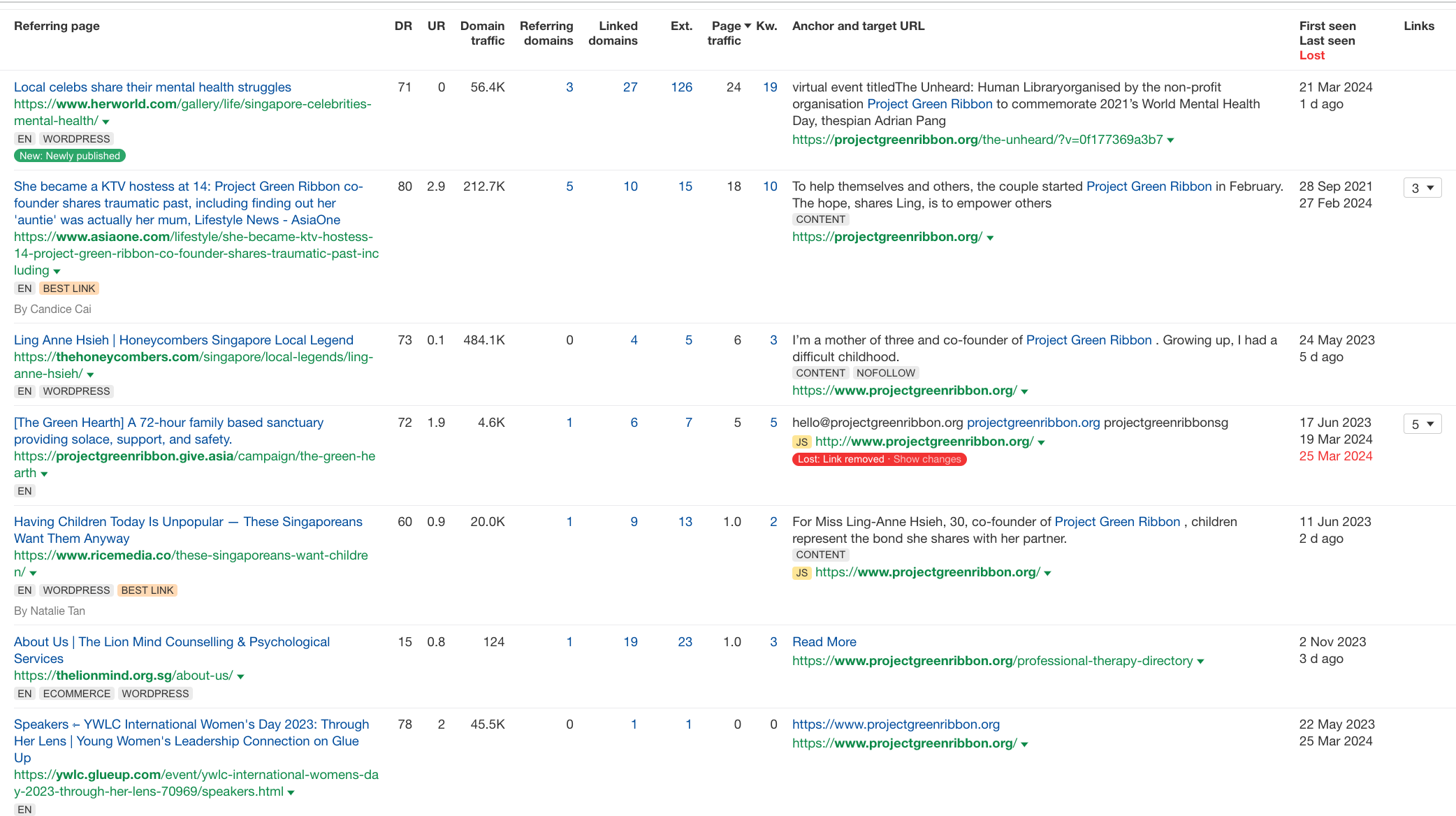
- Coverage earned across Singapore digital media — AsiaOne and RICE Media among the named outlets — plus amplification from wellness and mental-health community publications and influencers
- Strong attendance for a free community livestream of this format
The Challenge
Mental health editorial space in Singapore is genuinely competitive — publications run mental-health pieces routinely, and Mental Health Day generates dozens of similar event pitches every year. The event was free with optional donations, so this wasn’t commercial PR: it needed earned coverage on its own merits, doing two jobs at once — driving registrations, and building the institutional credibility that feeds fundraising and grant applications long after the event.
Our Approach
- Editorial mapping — the Singapore publications and journalists actively covering mental health, community and youth wellness, including the digital-first outlets (RICE Media, Mothership, AsiaOne) where the under-35 audience actually reads.
- Pitches tailored per outlet — structured event briefs with quotes and interview availability for mainstream media; longer narrative angles (the Human Library concept, lived-experience speakers, the cultural moment) for digital-first publications.
- Editor-ready assets — event imagery, speaker bios and headshots, organisational background, and liftable founder quotes prepared in advance.
- Sequenced outreach and event-day support — coverage built in waves as faster digital outlets moved first, with real-time social coordination on event day surfacing the most quotable moments for follow-up interest.
The Results
- Coverage earned across Singapore digital media — AsiaOne and RICE Media among the named outlets — plus amplification from wellness and mental-health community publications and influencers
- Strong attendance for a free community livestream of this format
- The downstream effect mattered most: the demonstrated public reach strengthened the organisation’s institutional credibility, feeding directly into subsequent grant applications — and Project Green Ribbon went on to secure government grant support that would have been considerably harder to win without it
Why This Worked
Non-profit PR carries a constraint commercial campaigns don’t: the story has to earn coverage entirely on its merits, with no ad-spend safety net. This campaign worked because it respected how Singapore’s editorial landscape actually processes mental-health stories — competitive, routinely covered, and generating dozens of near-identical event pitches every World Mental Health Day. Differentiation came from the event’s genuine substance: the Human Library concept, keynote speakers with lived experience, and the family-based, non-clinical positioning that distinguished Project Green Ribbon from clinical-establishment voices.
The pitch architecture matched outlet to angle: structured event briefs with quotes and interview availability for mainstream desks; longer narrative pitches — the cultural moment, the lived-experience voices — for digital-first outlets like RICE Media and Mothership, where Singapore’s under-35 audience actually reads. Editor-ready assets (imagery, bios, liftable founder quotes) removed every friction an interested journalist might hit, and sequenced outreach let coverage build in waves as faster digital outlets moved first.
The downstream effect is the real lesson: earned coverage plus demonstrated attendance became institutional credibility, which fed directly into subsequent grant applications and government funding conversations. For a non-profit, media coverage isn’t the outcome — it’s collateral for the funding that is.
Key Takeaways
- Cause-adjacent coverage is competitive; differentiation must come from the event’s genuine substance, not the cause’s importance.
- Match pitch format to outlet type — briefs for newsrooms, narratives for digital-first publications.
- Editor-ready assets convert journalist interest into published coverage; friction kills marginal stories.
- For non-profits, earned media compounds into grants and institutional credibility — plan for the downstream use from the start.
Frequently Asked Questions
What was The Unheard: Human Library?
Project Green Ribbon’s World Mental Health Day 2021 livestream — 10 October 2021, 3.30–5.30pm — built on the human-library format: advocates with lived experience as the “books”, alongside panel discussions with mental health professionals and community contributions.
Why did digital-first outlets matter more than mainstream press?
Audience fit: the under-35 Singaporeans most reachable on mental-health conversations read RICE, Mothership and AsiaOne. Mainstream coverage added institutional weight; digital-first coverage delivered the actual audience — the campaign needed both, in that order of urgency.
How does event PR support grant applications?
Grant assessors weigh demonstrated public reach and third-party validation. Named-outlet coverage plus attendance data turns “we do important work” into documented public traction — which is why the coverage kept paying long after the livestream ended.
What made this harder than commercial event PR?
No paid amplification to guarantee reach, a crowded editorial moment, and framing constraints (a free community event can’t be pitched with commercial hooks). Every placement had to be genuinely earned — which is also why the credibility it produced was worth so much.
Which outlets covered the event?
AsiaOne and RICE Media among named outlets, with additional amplification from wellness and mental-health community publications and influencers — a spread matched to where Singapore’s under-35 audience actually reads.
What assets were prepared for editors?
Event imagery, speaker bios and headshots, organisational background and liftable founder quotes — the package that lets an interested journalist publish without friction, which is what converts interest into coverage.
What is the human-library format?
An event structure where people with lived experience become the ‘books’ that attendees engage with directly — for The Unheard, advocates sharing mental-health journeys alongside professional panels, chosen because it differentiated the pitch in a crowded editorial moment.
What should other Singapore non-profits take from this campaign?
That earned media is a funding strategy, not a vanity exercise: documented public reach converts directly into grant-application evidence. The practical playbook — differentiate on the event’s substance, match pitch format to outlet type, prepare editor-ready assets, sequence outreach in waves — costs discipline rather than budget, which is exactly what a non-profit can afford.