Table of Contents
- Omnichannel vs Multichannel: Understanding the Difference
- Why Omnichannel Matters for Singapore Businesses
- Conducting a Channel Audit
- Building a Unified Customer Data Foundation
- Integrating Channels for Seamless Handoffs
- Key Channels for the Singapore Market
- Measuring Omnichannel Performance
- Frequently Asked Questions
Omnichannel vs Multichannel: Understanding the Difference
Many businesses claim to be omnichannel when they are actually multichannel. The distinction matters because it defines the quality of experience your customers receive. An omnichannel customer experience means every channel is connected and context flows seamlessly between them. Multichannel simply means you are present on multiple channels — but each operates independently.
Consider a practical example. A multichannel retailer has a website, a physical store, and a social media presence. A customer who browses products on the website, visits the store to try them, and then messages on Instagram gets three disconnected experiences. The store associate does not know what the customer viewed online. The Instagram team has no record of the store visit.
An omnichannel version of the same retailer connects all three touchpoints. The store associate can see the customer’s online browsing history and make relevant recommendations. The Instagram team knows about the store visit and can follow up on the products the customer tried. The customer feels known and valued across every interaction.
This connected experience is what modern Singapore consumers expect. They do not think in channels — they think in needs. They want to research, buy, get support, and engage in whatever way is most convenient at any given moment. Your job is to make that seamless.
True omnichannel requires three things: unified customer data that is accessible across all channels, consistent brand experience regardless of where the interaction happens, and the ability for customers to start an interaction in one channel and continue it in another without losing context.
Why Omnichannel Matters for Singapore Businesses
Singapore’s unique market characteristics make omnichannel particularly important. The city-state has one of the highest smartphone penetration rates globally, a population comfortable with digital payments, and physical retail density that means online and offline experiences constantly overlap.

Singaporean consumers routinely use five to six channels before making a purchase decision. They might discover a brand through social media, research on the website, check reviews on Google, visit a showroom, ask a question on WhatsApp, and complete the purchase through a mobile app. Any break in this chain risks losing the sale.
The financial case is compelling. Research from Harvard Business Review shows that omnichannel customers spend 4 percent more in-store and 10 percent more online compared to single-channel customers. They also have a 30 percent higher lifetime value. For Singapore businesses operating in a high-cost environment, this incremental value matters significantly.
Omnichannel also reduces operational costs over time. When channels share data and systems, you eliminate duplicate work, reduce the need for customers to repeat information, and enable more efficient resource allocation. A support team with full customer context resolves issues faster, which reduces cost per interaction.
Competitive pressure is accelerating. Singapore’s leading retailers — including DBS, NTUC FairPrice, and Sephora — have invested heavily in omnichannel infrastructure. As consumer expectations are shaped by these experiences, businesses that remain siloed will struggle to compete regardless of their product quality or pricing.
Building an omnichannel experience should be part of your broader customer experience strategy, ensuring that channel integration serves the overall journey rather than existing as a technical project disconnected from customer outcomes.
Conducting a Channel Audit
Before you can integrate channels, you need to understand what you have. A channel audit documents every touchpoint where customers interact with your brand, assesses the current experience on each, and identifies gaps in connectivity.
Start by listing every channel: website, mobile app, physical locations, phone, email, live chat, WhatsApp, social media platforms, marketplaces, and any other interaction points. Include channels you may not have considered, like invoicing, delivery tracking, and review platforms — customers experience these as part of your brand even if you do not manage them directly.
For each channel, assess five dimensions. Accessibility: how easy is it for customers to find and use this channel? Responsiveness: how quickly does the customer receive a response or resolution? Consistency: does the brand voice, visual identity, and information match other channels? Capability: what can the customer accomplish on this channel? Connectivity: does this channel share data with other channels?
Rate each dimension on a simple scale and create a heat map that visually shows where your strongest and weakest channels are. This becomes your prioritisation tool — focus integration efforts on the channels that customers use most frequently and where experience gaps are largest.
Map the common channel-switching patterns your customers follow. Use your customer journey maps and analytics data to identify the most frequent paths. If 60 percent of your customers research online and purchase in-store, that online-to-offline handoff is your highest-priority integration point.
Document the systems and data that each channel currently uses. This technical inventory reveals integration opportunities and challenges. If your website CRM and your in-store POS system use different customer identifiers, that is a fundamental barrier to omnichannel that needs to be resolved before any other improvements can work.
Building a Unified Customer Data Foundation
Unified customer data is the backbone of omnichannel. Without it, channels cannot share context, personalisation falls flat, and the experience remains fragmented regardless of how well-designed individual touchpoints are.

The goal is a single customer view — one record per customer that aggregates data from every channel and interaction. This record should include identity data (who they are), behavioural data (what they do), transactional data (what they buy), and preference data (how they want to interact).
Start with identity resolution. Customers often interact through different identifiers across channels — an email address online, a phone number in-store, a social media handle on Instagram. You need a system that recognises these as the same person. Customer data platforms like Segment, Treasure Data, or even a well-configured CRM can handle this matching.
Implement consistent data capture across channels. Every interaction should be recorded in a format that feeds into your unified customer profile. This requires discipline across teams — your sales team, support team, and retail staff all need to log interactions consistently.
Address data quality systematically. Duplicate records, outdated information, and inconsistent formatting undermine your omnichannel efforts. Establish data governance practices including regular deduplication, mandatory fields at data entry points, and periodic quality audits.
Consider Singapore’s PDPA requirements when building your data infrastructure. Customer data unification must comply with consent requirements, purpose limitation, and data protection standards. Ensure you have appropriate consent for cross-channel data usage and clear privacy policies that explain how customer information is shared across your organisation.
Your personalisation efforts depend entirely on the quality of this unified data. Clean, connected data enables relevant experiences. Fragmented, dirty data leads to embarrassing personalisation failures — like sending a promotional email for a product a customer already purchased yesterday.
Integrating Channels for Seamless Handoffs
Channel handoffs are where omnichannel experiences succeed or fail. A handoff occurs when a customer moves from one channel to another — from website to phone, from social media to email, from online to in-store. Every handoff is a moment of vulnerability where context can be lost.
Design handoffs intentionally rather than letting them happen by accident. For each common channel switch, define what information should transfer, how the customer initiates the transition, and what the receiving channel should do with the context.
For online-to-offline transitions, consider solutions like saved carts that staff can access in-store, appointment booking that pre-populates customer preferences, and QR codes that link physical products to detailed online information. Singapore retailers like Courts and Harvey Norman have successfully implemented these connections.
For offline-to-online transitions, capture in-store interactions digitally. When a customer visits your showroom but does not purchase, enable follow-up through digital channels with relevant product information. Digital receipts that link to online accounts create a bridge between physical and digital experiences.
For channel transitions within digital, implement features like persistent shopping carts across devices, conversation history that carries over from chat to email, and account-based experiences that remember preferences regardless of which platform the customer uses.
Integrate your support channels so that customer history follows every interaction. If a customer emails about an issue and then calls to follow up, the phone agent should see the email thread. This eliminates the number one customer frustration: having to repeat information. Tools like Zendesk, Freshdesk, and HubSpot Service Hub support this kind of cross-channel ticket management.
Test handoffs regularly. Create test scenarios that follow common customer paths across channels and measure whether context transfers correctly. Many omnichannel failures are not architectural — they are operational gaps where processes break down at transition points.
Key Channels for the Singapore Market
While the principles of omnichannel are universal, channel priorities vary by market. In Singapore, certain channels carry outsized importance and should be prioritised in your integration strategy.
WhatsApp Business is essential. With over 80 percent of Singapore’s population using WhatsApp, it is the default communication channel for many consumers. Integrate WhatsApp into your customer service, appointment booking, and order updates. The WhatsApp Business API allows for automated responses, chatbots, and CRM integration that make it a powerful omnichannel component.
Google Search and Maps drive significant offline traffic. Many Singapore consumers search online before visiting a physical location. Ensure your SEO strategy connects seamlessly to your in-store experience. Accurate Google Business profiles with real-time information on stock availability, wait times, and booking options bridge the online-to-offline gap.
Social commerce through Instagram and TikTok is growing rapidly among Singapore consumers under 40. These platforms are no longer just awareness channels — they are transaction platforms. Integrate social commerce with your inventory management, CRM, and fulfilment systems so that a purchase through Instagram has the same post-purchase experience as one through your website.
Messaging apps beyond WhatsApp also matter. Telegram has a substantial Singapore user base, particularly in specific communities. Facebook Messenger remains relevant for older demographics. Consider which messaging platforms your specific customer segments prefer and integrate those channels.
Physical retail remains important despite digital growth. Singapore consumers value the ability to see and touch products, especially for higher-value purchases. The winning strategy is not physical versus digital but physical enhanced by digital — interactive displays, mobile checkout in-store, and seamless returns across channels.
Email remains the backbone of lifecycle communication. While response rates vary, email excels at structured communications like order confirmations, account updates, and content distribution. Ensure email integrates with your broader channel data so communications reflect the customer’s full cross-channel history.
Measuring Omnichannel Performance
Measuring omnichannel requires metrics that evaluate the connected experience, not just individual channel performance. Traditional channel-specific metrics miss the point — a high-performing website and a high-performing store do not automatically create a good omnichannel experience.
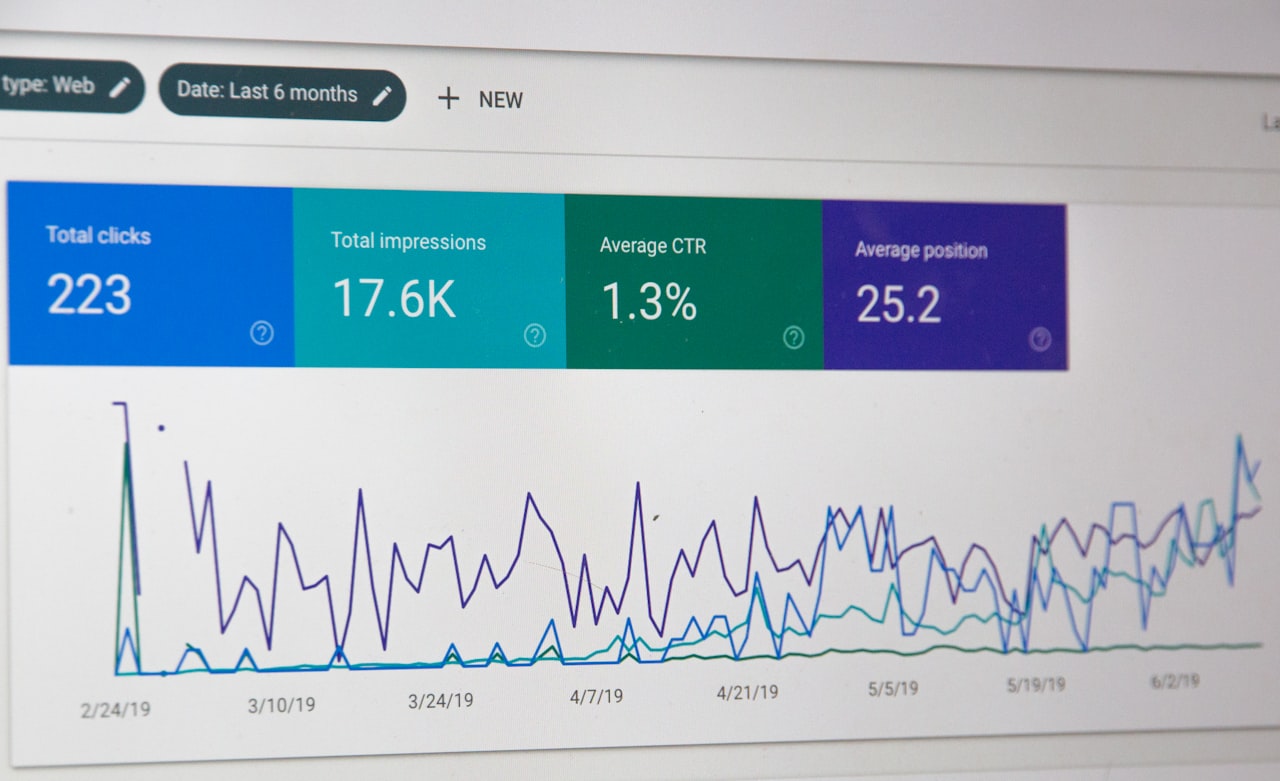
Track cross-channel conversion rates. What percentage of customers who start in one channel complete their goal in another? If 70 percent of your online researchers visit your store but only 20 percent purchase, there is a conversion gap at the handoff that needs investigation.
Measure channel switching friction. How much effort does it take for a customer to move between channels? Survey customers at transition points and track abandonment rates at handoffs. Any point where customers drop off during a channel switch signals integration problems.
Monitor customer identification rates across channels. What percentage of interactions can you match to a known customer? If 90 percent of website visitors are anonymous and 80 percent of store visitors are unidentifiable, your single customer view is incomplete and your omnichannel capability is limited.
Use CX metrics that evaluate the overall experience rather than individual touchpoints. Customer Effort Score measured across an entire journey reveals whether your omnichannel strategy is reducing friction. Net Promoter Score segments by channel usage patterns show whether omnichannel customers are more loyal than single-channel customers.
Track operational efficiency gains. Omnichannel should reduce duplicate effort and improve resource utilisation over time. Measure average handling time for cross-channel support interactions, inventory accuracy across channels, and marketing spend efficiency when campaigns are coordinated across channels rather than siloed.
Build a cross-channel attribution model that fairly credits each touchpoint in the customer journey. Last-click attribution systematically undervalues awareness and consideration channels, leading to misallocated advertising budgets. Multi-touch attribution gives you a more accurate picture of how channels work together to drive conversions.
Frequently Asked Questions
How much does an omnichannel strategy cost to implement?
Costs vary enormously based on your starting point. Basic integration using existing tools and APIs can cost as little as a few thousand dollars. Enterprise-grade omnichannel platforms with custom integration can cost hundreds of thousands. Start small with your highest-impact channel handoffs and expand as ROI justifies further investment.
What is the first step towards omnichannel?
Unify your customer data. Everything else — personalisation, seamless handoffs, consistent experiences — depends on knowing who your customer is across channels. Start with a CRM or customer data platform that can match customer identities across your key channels.
Can small businesses in Singapore achieve omnichannel?
Yes. Small businesses actually have an advantage because they have fewer systems to integrate and smaller teams that can coordinate more easily. A small retailer that connects their Shopify store with WhatsApp Business and their POS system achieves functional omnichannel that many large companies still struggle with.
How long does omnichannel implementation take?
Basic channel integration can be achieved in two to three months. A comprehensive omnichannel transformation typically takes 12 to 24 months. Implement incrementally — connect your two most important channels first, prove the value, then expand to additional channels.
What is the biggest barrier to omnichannel?
Organisational silos are the biggest barrier, not technology. When different teams own different channels and have separate budgets, KPIs, and incentives, omnichannel integration is politically difficult regardless of how good your technology is. Executive sponsorship and cross-functional governance are essential.
Do we need a single platform for all channels?
No. While a unified platform simplifies integration, most successful omnichannel implementations use best-of-breed tools connected through APIs and middleware. The key is data connectivity — your tools need to share customer data, not necessarily be the same product.
How do we handle PDPA compliance in omnichannel?
Collect consent at the first point of interaction and be transparent about how customer data is used across channels. Implement consent management that is consistent across all touchpoints. Ensure your data sharing between channels complies with the purpose limitation obligation — only use data for the purposes you collected it for.
Which industries benefit most from omnichannel in Singapore?
Retail, financial services, healthcare, and hospitality see the highest ROI from omnichannel because their customers frequently switch between online and offline channels. However, any business with multiple customer touchpoints benefits. Even B2B companies gain from connecting their sales, support, and digital channels.