Marketing Funnel Optimisation: How to Fix Drop-Off Points and Increase Conversions
Table of Contents
- Why Funnel Optimisation Matters More Than Traffic Growth
- Diagnosing Funnel Problems with Data
- Top-of-Funnel Fixes: Attracting Better Prospects
- Mid-Funnel Optimisation: Building Trust and Interest
- Bottom-of-Funnel Conversion: Removing Final Barriers
- Testing and Experimentation Frameworks
- Post-Conversion Optimisation
- Frequently Asked Questions
Why Funnel Optimisation Matters More Than Traffic Growth
Most Singapore businesses focus on driving more traffic when they want more conversions. Marketing funnel optimisation takes a different approach: extracting more value from the traffic you already have. If your website converts at 2%, doubling traffic from 10,000 to 20,000 visitors gives you the same result as keeping traffic at 10,000 and improving conversion to 4%. The second approach costs far less and produces a permanent improvement.
Every percentage point improvement in a funnel stage compounds through subsequent stages. If you improve your landing page conversion rate by 20%, your add-to-cart rate by 15% and your checkout completion rate by 10%, the cumulative effect is far greater than any single improvement suggests. This compounding effect is what makes funnel optimisation the highest-leverage activity in digital marketing.
For businesses operating in Singapore’s competitive landscape, funnel optimisation is a sustainable advantage. Competitors can match your ad spend and copy your content, but a well-optimised funnel built through months of testing and refinement is difficult to replicate. It becomes an operational asset that improves the return on every marketing dollar you invest.
Diagnosing Funnel Problems with Data
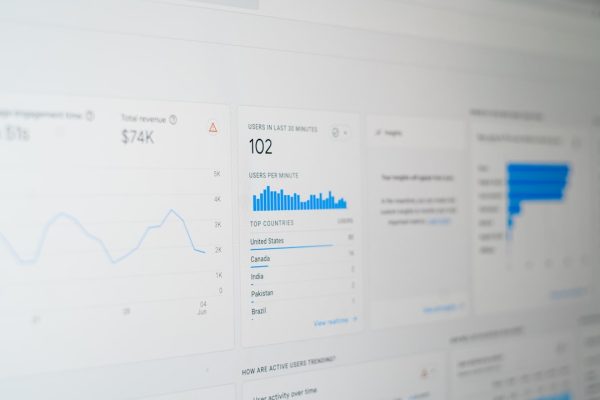
Begin with a funnel audit that quantifies the drop-off rate at every stage. Pull data from Google Analytics 4 using funnel exploration reports. Calculate the stage-to-stage conversion rate and flag any stage where more than 80% of visitors drop off. These are your highest-priority optimisation targets because fixing them will move the needle most significantly.
Segment your funnel data by traffic source, device, geographic location and audience demographic. A funnel that appears healthy at the aggregate level may hide serious problems for specific segments. Mobile users might have three times the drop-off rate at checkout compared to desktop users. Paid search visitors might convert at half the rate of organic visitors. These segment-level insights direct your optimisation efforts where they will have the greatest impact.
Combine quantitative data with qualitative research. Install heatmap tracking on your critical funnel pages to see where visitors click, how far they scroll and where they hesitate. Review session recordings of visitors who dropped off at problem stages. Run on-page surveys asking “What almost stopped you from completing this step?” The combination of numbers and user feedback gives you both the diagnosis and the prescription.
Benchmark your funnel against industry standards to calibrate expectations. E-commerce cart abandonment rates in Southeast Asia average around 70-80%. B2B landing page conversion rates typically range from 2% to 5%. If your metrics are significantly below these benchmarks, the funnel stage is underperforming and warrants immediate attention.
Top-of-Funnel Fixes: Attracting Better Prospects
Top-of-funnel marketing funnel optimisation is not about getting more visitors — it is about getting the right visitors. Review your paid ad targeting to ensure you are reaching people with genuine purchase intent. Tighten keyword match types, refine audience segments and use negative keywords aggressively to filter out irrelevant traffic. A smaller but more qualified audience consistently outperforms a large unqualified one.
Audit the alignment between your ads and your landing pages. If an ad promises “affordable web design packages” but the landing page leads with enterprise-level pricing, the disconnect causes immediate bounce. Every ad-to-landing-page combination should deliver on its specific promise within the first two seconds of page load. Work with your paid search team to ensure message match across all campaigns.
Improve your organic traffic quality through better keyword targeting. Rank for keywords that reflect buyer intent rather than just information-seeking. A blog post targeting “best CRM for Singapore SMEs” attracts more purchase-ready visitors than one targeting “what is a CRM.” Refine your SEO approach to prioritise commercial and transactional keywords alongside informational ones.
Landing page load speed has a direct impact on top-of-funnel conversion. Pages that take more than three seconds to load lose a significant percentage of visitors before they even see the content. Compress images, enable browser caching, minimise JavaScript and consider a content delivery network with nodes in Singapore. Every second saved reduces bounce rates measurably.
Mid-Funnel Optimisation: Building Trust and Interest
The mid-funnel is where prospects evaluate whether your offering is credible and worth their time. Trust signals are the primary lever here. Add client logos, testimonials with real names and companies, case study summaries, industry certifications and review platform ratings to your key pages. Singapore consumers and business buyers are particularly influenced by social proof from recognisable local brands.
Content quality determines whether visitors engage deeply or leave after a surface-level scan. Every content piece in your mid-funnel — product pages, comparison guides, case studies, FAQ sections — should demonstrate genuine expertise and provide practical value. Generic content that could apply to any business in any market does not build the confidence needed to move prospects forward.
Navigation and user experience either support or sabotage the mid-funnel journey. Ensure visitors can easily find the information they need to make a decision. Clear category navigation, on-page search, comparison tools and well-structured information architecture reduce the cognitive load on prospects. A confusing website makes people leave, not because your product is wrong but because finding the answer takes too much effort.
Retargeting campaigns re-engage mid-funnel visitors who left without converting. Serve case studies, testimonials and comparison content to people who visited product pages but did not take the next step. Sequential retargeting — where the content evolves based on which pages the visitor has already seen — is particularly effective for moving prospects through the consideration stage.
Bottom-of-Funnel Conversion: Removing Final Barriers
Form optimisation is the quickest win at the bottom of the funnel. Every additional form field reduces completion rates. Remove any field that is not essential for the conversion. For B2B enquiry forms, name, email, company name and a brief message are typically sufficient. For e-commerce checkout, offer guest checkout and auto-fill wherever possible.
Address objections directly on the conversion page. If price is a common hesitation, show a clear value comparison or offer a money-back guarantee. If implementation complexity is a concern, describe your onboarding process in simple terms. If security worries prevent form submission, display SSL certificates, privacy policy links and data protection statements prominently.
Payment and checkout friction kills e-commerce conversions. Offer multiple payment methods including credit cards, PayNow, GrabPay and bank transfers. Display total costs including shipping and taxes before the final step — unexpected costs at checkout are the number one reason for cart abandonment in Singapore. Make the return and refund policy clearly visible to reduce purchase anxiety.
Urgency and scarcity can boost bottom-of-funnel conversions when used honestly. Limited-time offers, low stock indicators and registration deadlines create motivation to act now rather than later. Do not fabricate urgency — Singapore consumers are savvy enough to recognise fake countdown timers and it damages trust. Use genuine deadline-driven offers tied to real inventory or promotional periods.
Testing and Experimentation Frameworks
A/B testing is the most reliable method for funnel optimisation. Test one variable at a time — headline, call-to-action text, form length, page layout — and measure the impact on the specific conversion metric for that funnel stage. Run tests until you reach statistical significance, which typically requires at least 100 conversions per variation for reliable results.
Prioritise tests using an impact-effort framework. Estimate the potential conversion lift and the effort required to implement each test. High-impact, low-effort tests go first. Changing a call-to-action button colour is low effort but usually low impact. Rewriting an entire landing page value proposition is higher effort but potentially high impact. Focus your testing resources on changes that address diagnosed problems rather than random guesses.
Document every test, including hypothesis, variables, duration, sample size and results. Build a testing knowledge base that prevents your team from repeating failed experiments and preserves institutional knowledge about what works for your audience. Over time, this knowledge base becomes an invaluable asset for your conversion rate optimisation programme.
Test across the entire funnel, not just the bottom. Many teams focus exclusively on checkout optimisation because it is closest to revenue. But a 20% improvement in mid-funnel engagement sends 20% more prospects to the checkout in the first place, amplifying the impact of every bottom-of-funnel improvement you have already made.
Post-Conversion Optimisation
The funnel does not end at the first conversion. Post-conversion optimisation focuses on turning one-time buyers into repeat customers and advocates. An effective onboarding sequence — whether for a product purchase, a software subscription or a service engagement — sets the tone for the entire customer relationship.
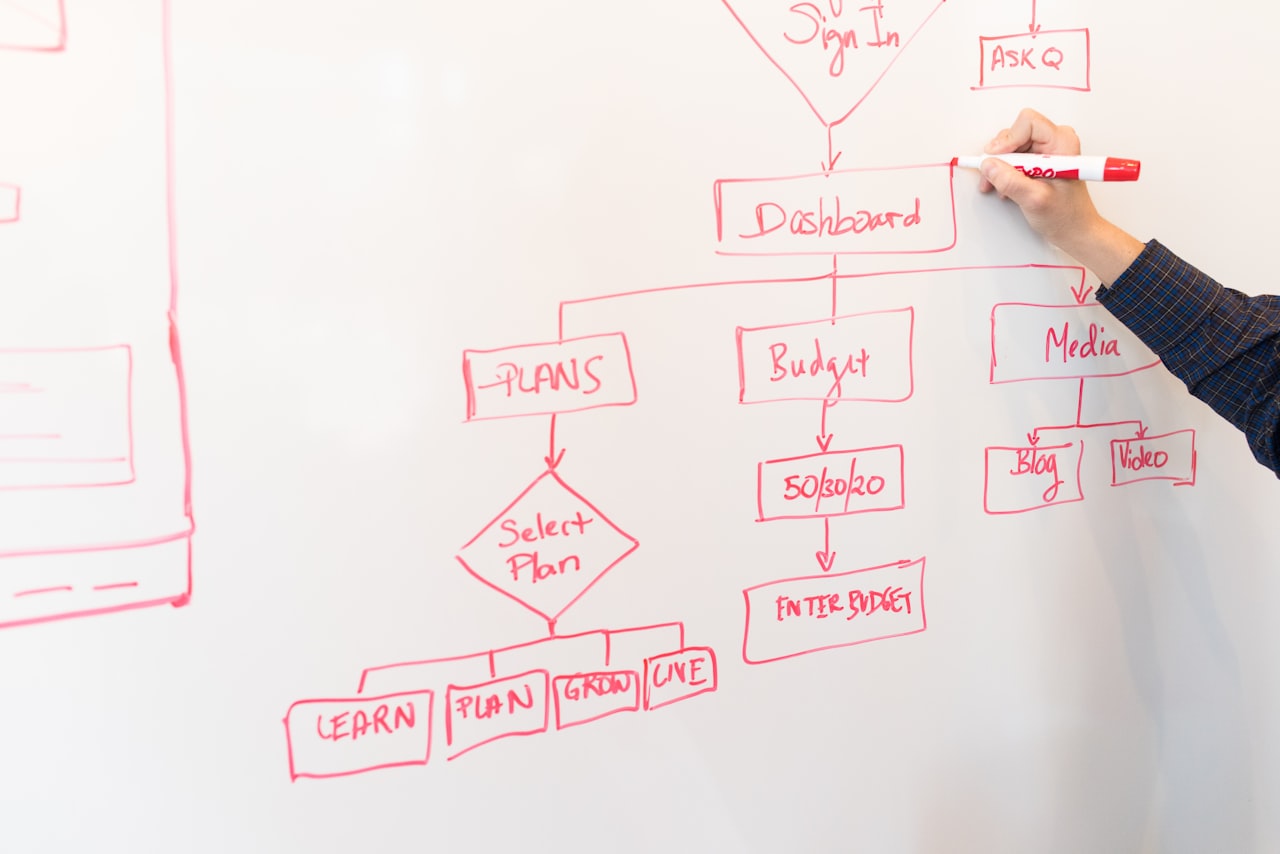
Cross-sell and upsell strategies increase average customer value without additional acquisition costs. E-commerce businesses should implement product recommendation engines based on purchase history. B2B companies should identify expansion opportunities within existing accounts. The cost of retaining and growing an existing customer is a fraction of acquiring a new one.
Customer feedback loops inform funnel improvements from the post-conversion stage backward. Survey customers about their buying experience. Ask what almost stopped them from purchasing. Use Net Promoter Score to identify promoters who can provide testimonials and detractors whose concerns reveal funnel weaknesses.
Referral programmes turn satisfied customers into a top-of-funnel acquisition channel. Customers acquired through referrals typically convert faster and have higher lifetime values because they enter the funnel with pre-built trust. Design a referral programme that rewards both the referrer and the new customer to maximise participation.
Frequently Asked Questions
What is the first step in marketing funnel optimisation?
Map your current funnel stages and measure the conversion rate at each stage transition. This audit reveals where the biggest drop-offs occur, which tells you where optimisation will have the greatest impact. Start with data before making any changes.
How long does funnel optimisation take to show results?
Quick wins like form simplification and page speed improvements can show results within days. Broader optimisation programmes involving A/B testing, content improvements and user experience changes typically take two to three months to produce statistically significant and sustained improvements.
What tools do I need for funnel optimisation?
At minimum, you need Google Analytics 4 for funnel data, a heatmap tool like Hotjar or Microsoft Clarity for qualitative insights, and an A/B testing platform for experimentation. As you advance, a CRM platform and marketing automation tool help connect funnel performance to revenue outcomes.
Should I optimise the top or bottom of the funnel first?
Start at the bottom and work upward. Optimising the bottom first ensures that any additional traffic you drive through top-of-funnel improvements converts at a higher rate. There is no point increasing traffic to a checkout process that loses 90% of visitors.
How do I know if a funnel change actually improved performance?
Use A/B testing to measure the impact of specific changes with statistical confidence. If A/B testing is not feasible, compare conversion rates for equal time periods before and after the change, controlling for seasonality and external factors. Never assume a change worked without measuring it.
What is the most common funnel mistake Singapore businesses make?
The most common mistake is focusing exclusively on driving traffic without optimising the conversion path. Many businesses spend thousands monthly on ads while their website has slow load times, confusing navigation and friction-filled checkout processes. Fixing the funnel first makes every marketing dollar more effective.
How does funnel optimisation differ for B2B and B2C?
B2C funnels are typically shorter with lower friction tolerance, so optimisation focuses on speed, simplicity and emotional triggers. B2B funnels are longer with more stakeholders, so optimisation focuses on trust-building content, multi-touch nurture sequences and reducing perceived risk through case studies and guarantees.
Can I optimise a funnel with low traffic?
Yes, but A/B testing requires significant traffic to reach statistical significance. With low traffic, focus on qualitative methods — session recordings, user interviews and heatmaps — to identify and fix obvious problems. Once traffic grows, move to structured A/B testing for more nuanced optimisation.
What conversion rate improvement should I target?
Aim for 10% to 20% relative improvement per quarter through sustained optimisation efforts. For example, improving a 2% conversion rate to 2.2%-2.4% is a realistic quarterly target. Avoid expecting overnight transformations — funnel optimisation is an ongoing discipline, not a one-time project.
How often should I audit my marketing funnel?
Conduct a comprehensive funnel audit quarterly. Monitor key funnel metrics weekly and investigate any sudden drops immediately. Major website changes, new product launches and seasonal shifts should all trigger a fresh funnel review to ensure performance remains on track.