
Marketing for Printing Companies: B2B and B2C Growth Strategies for Singapore
The Printing Industry Marketing Challenge
Printing companies in Singapore face a paradox — they help other businesses market themselves, yet many struggle to market their own services effectively. The industry is fragmented, with hundreds of printers competing on price in a market where customers often view printing as a commodity. Breaking out of this price-driven competition requires strategic printing company marketing that differentiates your business on value, not just cost.
The printing landscape has shifted. Digital communication has reduced some traditional volumes, but it has also created opportunities — personalised printing, short-run speciality products, and packaging for e-commerce businesses. Companies that position themselves around these growth areas can thrive.
Singapore’s printing market serves two distinct audiences. B2B clients need reliable production partners. B2C customers want convenience, quick turnaround, and competitive pricing. Your marketing strategy must address both through different channels and messaging.
This guide covers the full spectrum of marketing strategies for printing companies. Whether you are a large offset printer or a small digital print shop, these strategies can help you grow. For a comprehensive approach, our digital marketing services can provide the strategic framework your business needs.
SEO for Print Services
Search engine optimisation is one of the most effective long-term marketing investments for printing companies. When a business needs namecards, a school needs yearbooks, or a startup needs packaging, they search on Google. Ranking for these searches delivers a steady stream of enquiries without ongoing ad spend.
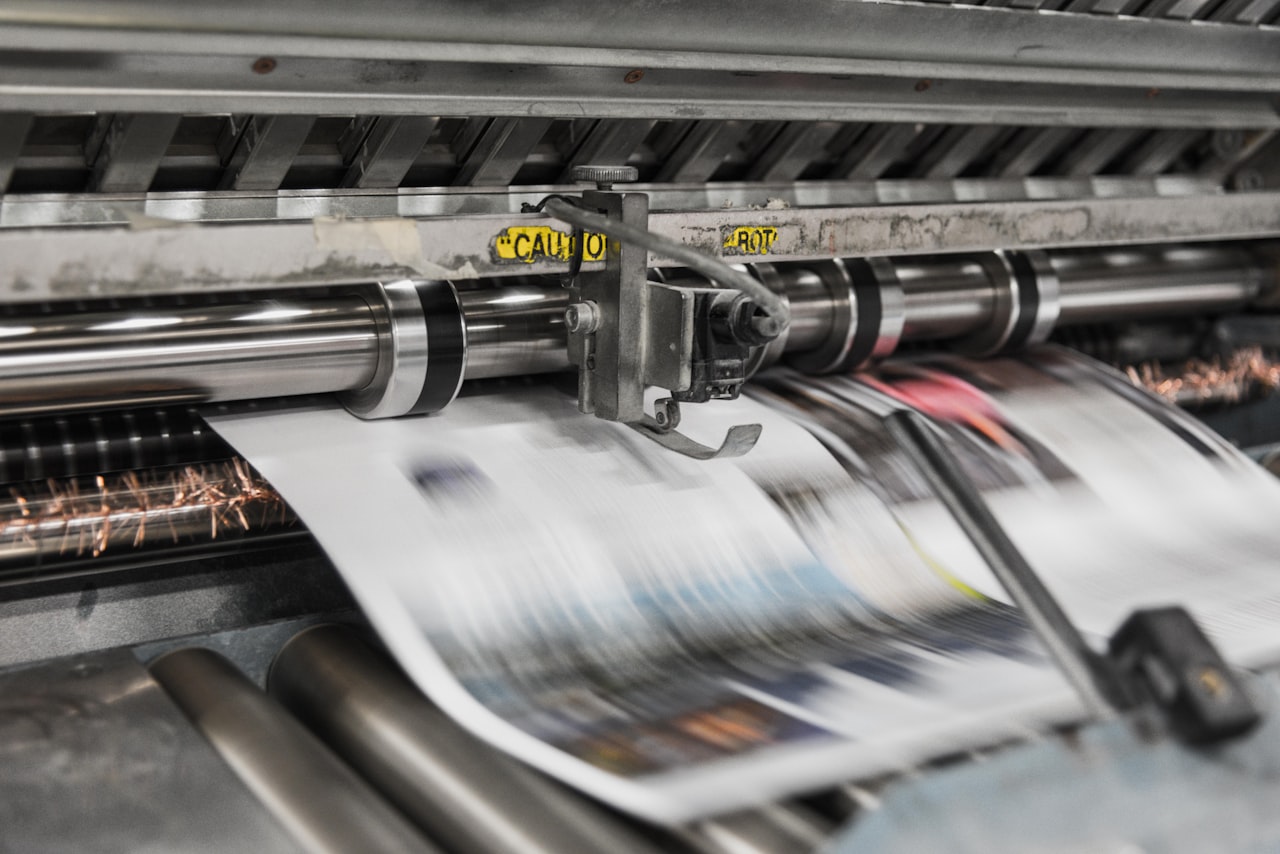
Keyword strategy for printing companies should cover three main categories:
Product-specific keywords — these are your highest-value targets:
- Namecard printing Singapore
- Brochure printing Singapore
- Banner printing Singapore
- Flyer printing Singapore
- Sticker printing Singapore
- Packaging printing Singapore
- T-shirt printing Singapore
- Large format printing Singapore
Industry-specific keywords capture clients from particular sectors:
- Corporate printing services
- Event printing Singapore (banners, programmes, badges)
- Restaurant menu printing
- Real estate brochure printing
- Wedding invitation printing Singapore
Service-feature keywords target specific capabilities:
- Same day printing Singapore
- Urgent printing services
- Eco-friendly printing Singapore
- UV printing services
- Embossing and foil stamping Singapore
- Short run printing Singapore
Create dedicated landing pages for each product and service. A page for “namecard printing Singapore” should cover paper options, finishes, turnaround times, pricing tiers, design services, and delivery options. This depth of content signals expertise to Google and provides the information potential customers need to make a decision.
Your SEO strategy should also include competitor analysis. Identify which competitors rank for your target keywords and find gaps in their coverage that you can fill with better content.
Google Ads for Printing Companies
Google Ads delivers immediate visibility for printing companies, particularly for high-intent, time-sensitive searches. When someone searches “urgent namecard printing” or “same day banner printing Singapore,” they are ready to buy. Being there at that moment is worth the click cost.
Campaign structure should mirror your product categories. Create separate campaigns for:
- Namecards and stationery
- Marketing materials (brochures, flyers, posters)
- Large format printing (banners, signage, displays)
- Packaging and labels
- Custom merchandise (t-shirts, mugs, corporate gifts)
- Speciality printing (wedding, events, personalised items)
This separation allows you to control budgets, bids, and messaging independently. A $3 click for “cheap flyer printing” has different unit economics than an $8 click for “corporate annual report printing.”
Ad copy that converts for printing companies should include:
- Turnaround time — “Same Day Available” or “3-Day Express”
- Price anchoring — “From $28/100pcs” or “Free Delivery Over $50”
- Quality signals — “Premium 300gsm Card” or “Eco-Friendly Inks”
- Convenience factors — “Free Delivery” or “Online Ordering”
- Trust signals — “15 Years in Business” or “5,000+ Corporate Clients”
Negative keywords are critical. Without them, your ads show for irrelevant searches like “printer repair,” “buy printer,” or “3D printing.” Build a comprehensive negative keyword list from the start. Our Google Ads services team typically identifies 200-300 negative keywords for printing companies in the first month.
Remarketing campaigns are effective because printing decisions often involve multiple stakeholders. Remarketing keeps your company visible during the decision process and brings visitors back when they are ready to order.
E-Commerce and Online Ordering
Online ordering capability is rapidly becoming a baseline expectation for printing companies. Customers — particularly younger business owners and marketing professionals — want to upload files, select specifications, see pricing, and place orders without picking up the phone.
Essential e-commerce features for printers:
- Product configurator — let customers select size, paper type, quantity, and finish
- Real-time pricing that updates as specifications change
- File upload with format and resolution validation
- Online proofing system for design approval
- Multiple payment options (credit card, PayNow, bank transfer)
- Order tracking from production to delivery
- Reorder functionality for repeat customers
Template-based ordering lowers the barrier for B2C customers. Offer namecard templates and marketing material layouts that customers can customise online. This captures customers who do not have their own designs and increases average order values.
B2B ordering portals serve corporate clients differently. Large companies need brand-controlled templates, approval workflows, and cost centre billing. A dedicated portal that stores brand assets and pricing agreements makes reordering seamless and builds switching costs.
SEO for your e-commerce pages requires product schema markup, optimised product descriptions, and clear category navigation. Each product page should function as both a shopping page and a landing page for organic search. Our e-commerce marketing services can help you build an online ordering system that ranks and converts.
Mobile ordering must work flawlessly. Your entire ordering flow — from product selection to payment — must be smooth on mobile devices. Test regularly and fix friction points immediately.
Corporate Client Acquisition
Corporate clients are the backbone of most successful printing companies. A single corporate account can generate more annual revenue than hundreds of individual orders. Acquiring and retaining these clients requires a different marketing approach than attracting B2C customers.

Identify your ideal corporate clients. Not all corporate accounts are equal. Some prioritise price above everything else and will switch printers for a 5% discount. Others value reliability, quality, and service. Target the latter — they are more profitable and more loyal. Industries with high print needs include:
- Real estate agencies — brochures, flyers, signage for every listing
- Event management companies — programmes, banners, name badges, signage
- Hotels and hospitality — menus, tent cards, promotional materials, stationery
- Educational institutions — prospectuses, newsletters, certificates, event materials
- Financial services — reports, prospectuses, client presentations
- F&B chains — menus, packaging, promotional materials across multiple outlets
Content marketing for B2B positions you as a knowledgeable partner, not just a vendor. Create case studies showing how you have solved printing challenges for corporate clients. Write guides on print specifications and paper selection. This builds trust before the first sales conversation. For a deeper strategy, our B2B marketing Singapore guide covers the fundamentals.
LinkedIn marketing reaches corporate decision-makers directly. Share case studies and production content. Connect with marketing managers, procurement officers, and business owners in your target industries. LinkedIn’s targeting allows you to reach specific job titles at specific company sizes — ideal for B2B printing sales.
Outbound marketing still works for corporate printing sales. Build a targeted prospect list and reach out with personalised proposals. Offer a sample pack of your work relevant to their sector. Follow up consistently — corporate printing decisions often take weeks or months to finalise.
Retention strategies are as important as acquisition. Assign dedicated account managers, provide proactive reorder reminders, offer loyalty pricing, and deliver consistently excellent quality. A client retained for five years is worth far more than five one-time orders.
Content Marketing Strategy
Content marketing for printing companies builds organic traffic, establishes expertise, and supports both SEO and sales efforts. The key is creating content that your target customers actually search for and find valuable.
Educational content topics:
- Paper types and weights explained — what is 300gsm, when to use art card versus textured stock
- Print finishes guide — matte versus gloss lamination, spot UV, embossing, foil stamping
- File preparation guide — resolution requirements, bleed settings, colour modes (CMYK versus RGB)
- Namecard design tips — layout, typography, paper selection for different industries
- Sustainable printing options — recycled paper, soy-based inks, FSC certification
- Print versus digital — when physical materials still outperform digital alternatives
Comparison and buying guide content:
- Offset versus digital printing — when to use each and cost comparisons
- Namecard printing cost guide Singapore — transparent pricing information builds trust
- How to choose a printing company — criteria, questions to ask, red flags
- Printing turnaround times — what to expect for different products
Industry-specific content targets particular customer segments:
- Printing essentials for new businesses — namecards, letterheads, envelopes, folders
- Event printing checklist — everything you need printed for a corporate event
- Restaurant menu printing guide — materials, sizes, durability considerations
- Retail packaging trends — unboxing experience, sustainable packaging, custom boxes
Portfolio and case study content shows your capabilities in action. Document notable projects with client challenges, your solution, and the results. These case studies serve as both marketing content and sales tools.
Every content piece should include clear calls to action — request a quote, view products, or contact for corporate enquiries.
Social Media and Portfolio Marketing
Social media for printing companies serves a dual purpose — it builds brand awareness and functions as a living portfolio of your work. Every project you complete is potential content that showcases your capabilities to future clients.
Instagram is the most natural platform for printing companies. Print products are visual by nature — the texture of a letterpress card, the vivid colours of a large-format banner. Content ideas include:
- Close-up shots of finished products highlighting print quality and finishes
- Before-and-after comparisons showing design files versus printed output
- Behind-the-scenes footage of production — presses running, cutting, binding
- Time-lapse videos of complex print jobs from start to finish
- Client spotlight posts showcasing how businesses use your printed materials
- Paper and finish swatches showing different options side by side
LinkedIn is essential for B2B printing companies. Share corporate case studies and industry insights. Engage with posts from your corporate clients and prospects — LinkedIn is where purchasing managers and marketing directors spend their professional time.
Video content performs well across all platforms. The printing process is inherently fascinating — watching paper transform into finished products is visually satisfying content. Invest in short production videos that showcase your equipment and your team’s craftsmanship. These videos humanise your brand and differentiate you from online-only competitors.
User-generated content from satisfied clients provides authentic social proof. Encourage clients to share photos of their printed materials in use — namecards at networking events, banners at exhibitions, packaging being unboxed. Repost this content with permission to fill your feed with real-world applications of your work.
Local SEO and Google Business Profile
Many printing orders, particularly for businesses and individuals, go to local providers. Convenience, the ability to visit for proofing, and quick pickup or delivery make location relevant for printing customers. Local SEO ensures you capture these nearby searches.
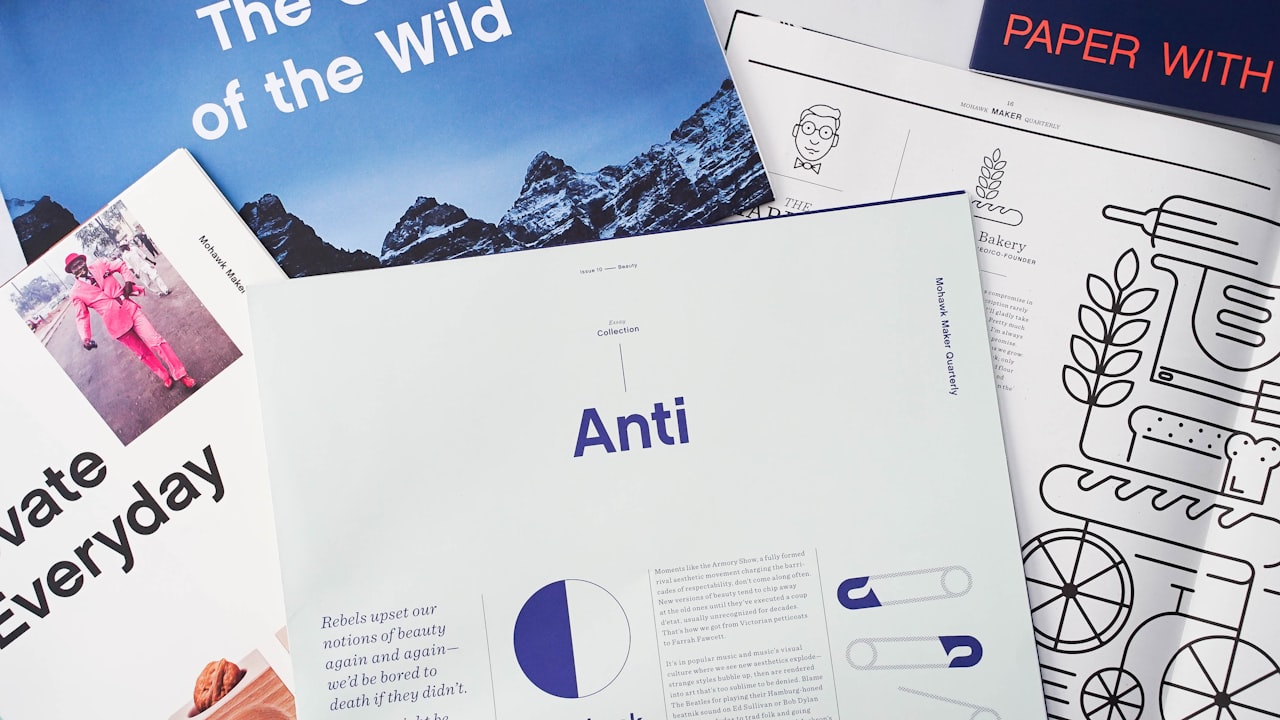
Google Business Profile optimisation for printing companies:
- Select the correct primary category — “Printing Service” or “Print Shop”
- Add comprehensive service lists — every product category you offer
- Upload photos of your shop, equipment, and sample products regularly
- Post weekly updates about promotions, new capabilities, or featured products
- Respond to all reviews promptly and professionally
- Add products directly to your GBP listing with photos and prices
Follow our Google Business Profile guide for a complete setup walkthrough.
Reviews heavily influence which printing company a searcher chooses from local results. Implement a systematic review request process — send a follow-up email or WhatsApp message after order completion with a direct link to your Google review page. Corporate clients who leave reviews mentioning specific products or projects add keyword-rich content to your listing.
Local citations reinforce your business information across the web. Ensure your company is listed consistently on Singapore business directories, industry-specific directories, B2B procurement portals, and Google Maps.
Location-based content strengthens your local relevance. If you operate in an industrial area like Ubi, Tai Seng, or Kaki Bukit, create content that references your area and its convenience — proximity to MRT stations, parking availability, and collection and delivery advantages.
Service area coverage should be clearly communicated on your website and GBP listing. If you offer delivery across Singapore or free delivery above a certain order value, highlight this prominently. Many corporate clients factor delivery convenience into their printer selection.
Frequently Asked Questions
How much should a printing company spend on digital marketing?
Allocate 5-10% of annual revenue to marketing, with the majority going to digital channels. For a company generating $500,000 annually, that is $25,000-$50,000 per year across SEO, Google Ads, social media, and content marketing. Start with SEO and Google Ads for immediate and long-term lead generation, then layer in social media as budget allows. Track cost per lead and cost per acquisition to ensure positive return on investment.
Should a printing company invest in e-commerce?
Yes, if you serve B2C customers or handle standardised B2B orders. Start with your highest-volume products that have standard specifications and predictable pricing. Solutions like WooCommerce or Shopify can get you started. For complex B2B orders requiring custom quoting, an enquiry form is more appropriate than a shopping cart.
What SEO keywords should a printing company target first?
Begin with your highest-revenue products combined with “Singapore” as a geographic modifier — “namecard printing Singapore,” “brochure printing Singapore,” “banner printing Singapore.” These product-specific keywords carry strong commercial intent and lead directly to orders. Next, target feature-based keywords like “same day printing Singapore” or “cheap flyer printing Singapore” that capture urgent or price-sensitive buyers. Finally, build out industry-specific and educational content to capture broader search traffic and establish topical authority.
How can a printing company differentiate from competitors who compete on price?
Shift the conversation from price to value. Highlight your quality through close-up product photos, your service through dedicated account managers, your expertise through design advice, and your convenience through online ordering and fast turnaround. Content marketing is particularly effective — educational content about paper quality and print finishes positions you as an expert partner rather than a commodity supplier.
Is social media marketing effective for printing companies?
Social media is effective when used strategically for brand awareness and portfolio showcasing. Instagram is the strongest platform because print products are inherently visual. LinkedIn is essential for B2B lead generation. However, social media alone rarely drives direct orders. It works best as part of a broader strategy where social builds awareness, SEO and Google Ads capture demand, and your website converts enquiries into orders.