GWP (Gift With Purchase) Marketing: How to Design Promotions That Drive Sales
Table of Contents
What Is GWP (Gift With Purchase) Marketing?
GWP gift with purchase marketing is a promotional strategy where customers receive a free item when they buy a qualifying product or spend a minimum amount. It is one of the oldest and most effective sales promotion mechanics, used extensively across beauty, fashion, food and beverage, electronics, and luxury goods.
The concept is simple: buy this, get that free. A cosmetics brand offers a free makeup pouch with any purchase over SGD 80. A coffee brand includes a free travel mug with purchase of a holiday gift set. A tech brand bundles a free protective case with a new phone purchase. In each case, the perceived value of the gift incentivises the purchase or increases the order value.
GWP promotions are particularly powerful because they add value without discounting. Unlike price promotions that erode margin and brand perception, a well-designed GWP maintains full pricing while giving customers a compelling reason to buy now. The gift feels like a reward rather than a markdown, preserving brand equity while driving commercial results.
For Singapore businesses competing in a promotion-heavy market — where consumers are savvy deal-seekers and competition for attention is intense — GWP campaigns offer a way to stand out, drive urgency, and create memorable brand experiences.
The Psychology Behind Why GWP Works
Several psychological principles explain why GWP gift with purchase marketing consistently drives consumer behaviour.
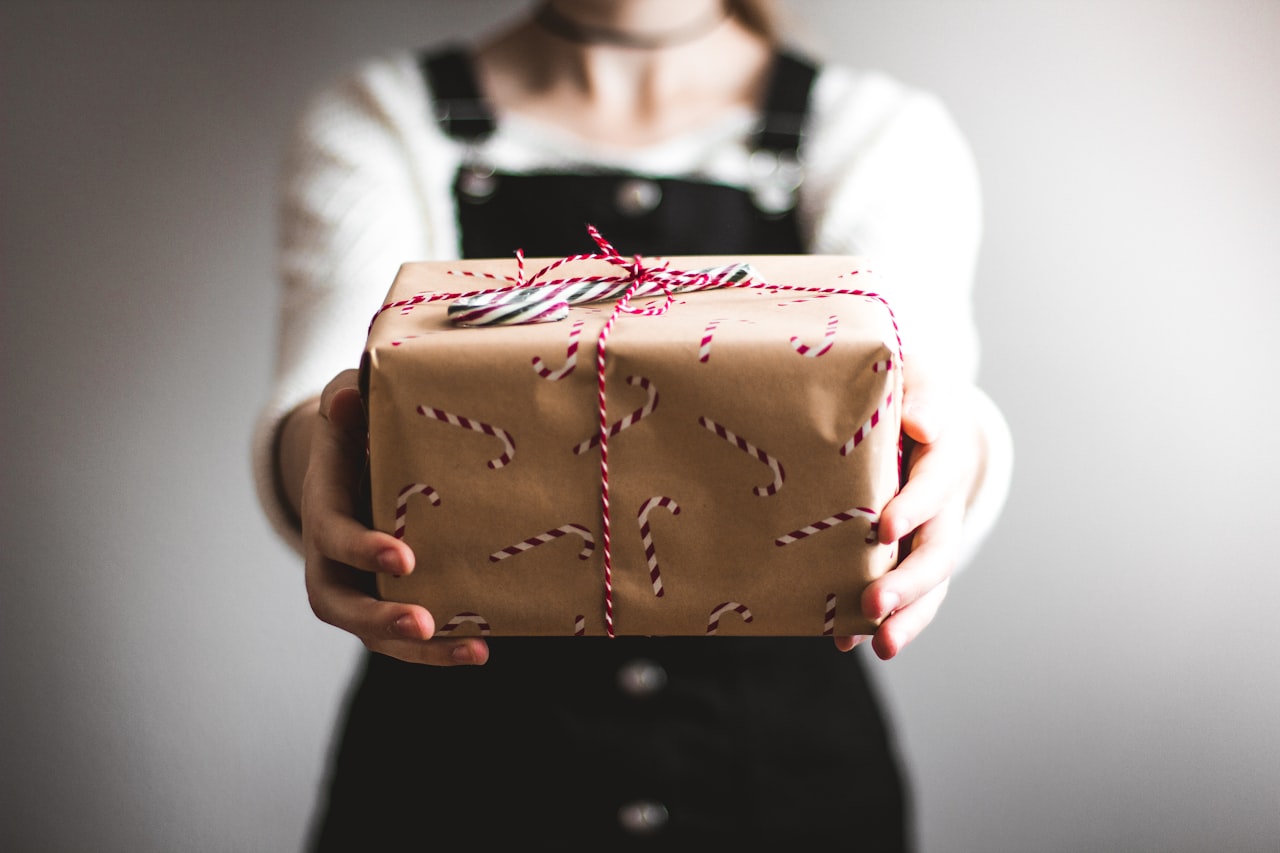
Reciprocity: When someone gives us something, we feel compelled to give something in return. A free gift, even one that accompanies a purchase, triggers the reciprocity instinct. Customers who receive a GWP feel more positively toward the brand and are more likely to make future purchases, leave positive reviews, and recommend the brand to others.
Loss aversion: People are more motivated by the fear of losing something than the prospect of gaining something of equal value. A limited-time GWP (“Free tote bag with purchase — while stocks last”) creates urgency because the customer fears missing out on the gift. This fear of loss drives faster purchase decisions.
Perceived value: Customers evaluate GWP offers based on the gift’s perceived value, which often exceeds its actual cost to the brand. A branded canvas tote bag might cost SGD 5 to produce but have a perceived value of SGD 20 to the customer. This gap between cost and perceived value makes GWP promotions highly efficient.
Anchoring: The GWP sets a perceived value anchor that makes the total transaction feel like a better deal. If a customer is considering a SGD 100 purchase and sees it comes with a “free gift worth SGD 30,” the perceived total value is SGD 130, making the SGD 100 price feel like 23 per cent savings.
Endowment effect: Once customers own the gift, they value it more highly than before receiving it. This positive association transfers to the brand — the gift becomes a tangible reminder of a positive purchasing experience, keeping the brand top of mind.
Types of GWP Promotions
GWP campaigns come in several formats, each suited to different objectives and contexts.
Minimum spend threshold GWP: Customers receive a gift when their order exceeds a certain value. “Spend SGD 80 and receive a free cosmetics bag.” This format is designed to increase average order value by encouraging customers to add items to reach the threshold.
Product-specific GWP: The gift is tied to the purchase of a specific product. “Buy the new XYZ moisturiser and receive a free travel-size serum.” This format drives sales of specific products — new launches, slow movers, or strategic items.
Tiered GWP: Different gifts at different spending levels. “Spend SGD 60 for Gift A, SGD 100 for Gift B, SGD 150 for the full gift set.” Tiered GWPs create an escalating incentive that pushes average order value higher as customers stretch to reach the next tier.
Time-limited GWP: A gift available only during a specific promotional period or while stocks last. The time limitation creates urgency and can drive traffic to stores or websites during target periods. This works well alongside your social media marketing campaigns that can amplify the urgency.
Exclusive or collectible GWP: Limited-edition gifts that customers cannot buy separately. Fashion and beauty brands excel at this — exclusive-design pouches, limited-edition colours, or collectible items that create desirability beyond the gift’s functional value. Collectible series encourage repeat purchases as customers seek to complete their collection.
Sample-based GWP: Instead of a non-product gift, customers receive samples of other products from the brand. This is a trial-generation tactic — the “gift” introduces customers to products they might not have tried, creating future purchase opportunities.
How to Design Effective GWP Campaigns
A successful GWP campaign requires careful planning across several dimensions.

Define your objective: What is the primary goal? Increase average order value? Drive sales of a specific product? Generate trial of a new line? Clear excess inventory? Your objective shapes every other decision — the gift selection, the qualification mechanic, the budget, and the measurement approach.
Set the qualification threshold: If using a minimum spend mechanic, set the threshold above your current average order value but within reasonable reach. A good rule of thumb is 15 to 30 per cent above average order value. Too high and customers will not stretch; too low and you are giving gifts to customers who would have spent that amount anyway.
Budget the promotion: Calculate total cost including gift production, packaging, distribution, and promotional materials. Divide by the expected number of qualifying transactions to get cost per GWP. Ensure the incremental revenue or margin from higher order values justifies this cost.
Create compelling creative: Your promotional materials — in-store signage, website banners, email campaigns, and social posts — must showcase the gift attractively. Photography matters. The gift should look desirable, and the qualifying conditions should be crystal clear.
Train retail staff: If you sell through physical retail, ensure store staff understand the promotion mechanics, can explain it to customers, and are motivated to promote it. In-store staff can actively upsell to help customers reach GWP thresholds.
Plan inventory carefully: Running out of GWP gifts while the promotion is still active creates customer disappointment and potential complaints. Order sufficient stock with a buffer, and have a plan for what happens when the gift runs out — either end the promotion or substitute an equivalent gift.
Choosing the Right Gift: What Works and What Doesn’t
The gift selection is the most critical decision in any GWP campaign. A desirable gift can make a campaign wildly successful; a poor choice can waste your entire promotional budget.
What works:
Gifts that are useful in daily life — tote bags, water bottles, pouches, notebooks, phone accessories. These items get used repeatedly, keeping your brand visible.
Gifts that complement the purchased product — a brush set with makeup, a protective case with electronics, a recipe book with cookware. Complementary gifts enhance the product experience.
Branded luxury items that feel premium — high-quality materials, attractive design, good packaging. The gift should feel like it could be sold, not given away.
Exclusive items not available for separate purchase. Exclusivity creates desire and collectibility.
What does not work:
Cheap, generic items that feel like throwaway merchandise. Flimsy keychains, low-quality pens, and generic branded items that nobody wants to use damage your brand perception.
Gifts unrelated to your brand or product category. A random gift creates confusion rather than brand reinforcement.
Gifts that are too large or impractical for customers to carry home, especially in Singapore where many shoppers use public transport.
Gifts with an obviously low perceived value relative to the qualification spend. If customers need to spend SGD 100 and the gift looks like it cost SGD 2 to produce, the promotion feels insulting rather than generous.
GWP Marketing in Singapore’s Retail Landscape
Singapore consumers are highly responsive to GWP promotions, making this market particularly fertile for GWP gift with purchase marketing campaigns.
Beauty and skincare: This category dominates GWP marketing in Singapore. Brands at Sephora, Tangs, Metro, and department store beauty counters run near-continuous GWP campaigns. Singaporean beauty consumers actively seek out GWP offers and will time purchases to coincide with promotions. Successful beauty GWPs include branded pouches, travel-size product sets, and limited-edition accessories.
F&B and coffee: Coffee chains and F&B brands in Singapore use GWP to drive repeat visits and seasonal sales. Branded tumblers, mugs, and collectible figurines generate enthusiasm and social media buzz. The annual Starbucks planner campaign demonstrates how a well-designed GWP can become a cultural moment.
Festive and seasonal opportunities: Chinese New Year, Hari Raya, Christmas, and National Day are prime GWP periods in Singapore. Festive-themed gifts tap into the gift-giving culture and create urgency around specific dates. Chinese New Year GWP campaigns are particularly important for beauty, wine and spirits, and premium food brands.
E-commerce GWP: Online retailers use GWP to increase cart values during promotional events like 11.11, 12.12, and Great Singapore Sale periods. Digital platforms can automatically display GWP offers and progress toward qualification thresholds in the shopping cart, making the upsell mechanic transparent and effective.
Sustainability considerations: Increasingly, Singapore consumers value sustainable GWP items — reusable bags, bamboo utensils, and recyclable packaging. Brands that align GWP choices with sustainability values resonate with environmentally conscious shoppers. Avoid single-use plastic items that create negative perception among this growing consumer segment.
When planning campaigns, your digital marketing strategy should include social media amplification, email campaigns to existing customers, and website promotion to maximise GWP campaign visibility and redemption rates.
Measuring GWP Campaign Success
Rigorous measurement ensures your GWP investments deliver genuine commercial returns rather than simply distributing free merchandise.
Key metrics:
Average order value (AOV) lift: Compare AOV during the GWP period against the baseline period. A successful campaign should show a meaningful AOV increase — ideally exceeding the cost of the gift.
Incremental revenue: Total revenue during the GWP campaign minus the revenue you would have generated without the promotion. Use historical data and control groups to estimate the baseline.
Redemption rate: The percentage of qualifying transactions that actually claim the GWP. Low redemption might indicate insufficient promotion awareness, while very high redemption could mean the threshold was set too low.
New customer acquisition: Did the GWP attract customers who had not purchased from your brand before? Track first-time buyer rates during the campaign.
Post-promotion retention: Do GWP customers return for future purchases? Compare the repeat purchase rate of GWP customers against non-GWP customers.
ROI calculation: Calculate GWP ROI as: (Incremental gross profit – Total GWP costs) / Total GWP costs. Total costs include gift production, additional packaging, distribution, promotional materials, and any agency or creative fees. A positive ROI means the campaign generated more incremental profit than it cost to execute.
Qualitative feedback: Monitor social media mentions, customer reviews, and frontline staff feedback for qualitative signals about how the GWP was received. Strong GWP campaigns generate organic social sharing — customers posting photos of their gifts — which provides additional brand exposure at no cost.
Compare results across different campaigns over time to build institutional knowledge about what types of gifts, qualification mechanics, and promotion periods work best for your specific brand and audience. Track these insights alongside your broader marketing collateral performance to understand which promotional materials drive the strongest results.
Frequently Asked Questions
What does GWP mean in marketing?
GWP stands for Gift With Purchase. It is a promotional strategy where customers receive a free item when they buy a qualifying product or spend above a minimum amount. GWP campaigns are widely used in beauty, fashion, food and beverage, and luxury goods marketing.
How do I choose the right gift for a GWP campaign?
Choose gifts that are useful, desirable, and relevant to your brand. The gift should have a high perceived value relative to its production cost, align with your brand identity, and be practical for customers to use or display. Test gift concepts with a small audience sample before committing to large production runs.
What is a good minimum spend threshold for a GWP promotion?
Set the threshold 15 to 30 per cent above your current average order value. This encourages customers to spend more to qualify without setting the bar so high that it discourages participation. Analyse your order distribution data to find the sweet spot.
How much should I budget for GWP gifts?
A common guideline is that the gift cost should be 5 to 15 per cent of the qualifying purchase value. For a SGD 100 minimum spend promotion, the gift cost (including production and packaging) should ideally be SGD 5 to SGD 15 while having a perceived value significantly higher.
Can GWP campaigns work for online businesses?
Absolutely. E-commerce GWP campaigns can be automated through shopping cart rules that display the gift offer and track qualification progress. Online GWP campaigns benefit from lower distribution costs (the gift ships with the order) and precise tracking of redemption rates and order value impact.
How long should a GWP promotion run?
Most GWP promotions run for two to four weeks — long enough to build awareness and generate results but short enough to maintain urgency. Seasonal or festive GWPs may run for four to six weeks to cover the full shopping period. Avoid running GWP continuously, as perpetual promotions lose their urgency.
Is GWP better than giving a discount?
GWP and discounts serve different purposes. GWP adds value without reducing price, preserving brand perception and margins. Discounts reduce price, which can erode brand equity if used too frequently. GWP generally works better for premium brands, while discounts may be more effective for mass-market products competing primarily on price.
How do I promote a GWP campaign effectively?
Promote across multiple channels: in-store signage and staff recommendations, email marketing to existing customers, social media posts showcasing the gift, website banners and pop-ups, and targeted digital advertising. Photography that makes the gift look desirable is essential.
What happens if the GWP gift runs out during the promotion?
Plan for this contingency. Options include ending the promotion early with clear communication, substituting an equivalent gift, offering a rain check or voucher for future redemption, or having backup stock available. Running out of GWP gifts without a plan damages customer trust.
How do I measure whether my GWP campaign was successful?
Measure average order value lift, incremental revenue, redemption rate, new customer acquisition, and post-promotion retention. Calculate ROI by comparing incremental gross profit against total campaign costs including gift production, packaging, and promotional expenses.