
Campus Recruitment Marketing: Attract Fresh Graduates in Singapore
Table of Contents
- Why Campus Recruitment Marketing Matters
- Singapore’s University Landscape
- Digital Strategies for Reaching Students
- On-Campus Events and Partnerships
- Building an Employer Brand That Resonates With Graduates
- Using Internships as a Recruitment Pipeline
- Measuring Campus Recruitment Marketing ROI
- Frequently Asked Questions
Why Campus Recruitment Marketing Matters
Campus recruitment marketing singapore is a critical strategy for organisations that need a steady pipeline of fresh talent. With roughly thirty thousand graduates entering Singapore’s workforce each year from local universities alone, the competition to attract the best is intense — and it begins long before graduation day.
The most sought-after graduates receive multiple offers. Companies like Google, DBS, Shopee and the big consulting firms run sophisticated campus marketing programmes that build brand awareness from the freshman year. By the time these students graduate, they already have strong preferences about where to work. Companies that start recruiting only when graduates hit the job market are competing for whoever is left.
Campus recruitment marketing applies recruitment marketing principles to the university environment. It combines digital campaigns, on-campus events, internship programmes and content strategies to build awareness, engagement and preference among students long before they become active job seekers.
For Singapore employers, the stakes are particularly high. The government’s focus on developing local talent, restrictions on foreign worker passes and growing expectations from graduates about employer quality mean that building strong university relationships is a long-term competitive advantage.
Singapore’s University Landscape
Understanding Singapore’s university ecosystem helps you allocate campus marketing resources effectively. Each institution has a distinct culture, academic strengths and career services infrastructure.

The National University of Singapore and Nanyang Technological University are the two largest, producing the bulk of graduates across engineering, business, computing, sciences and humanities. Both have active career centres that facilitate employer engagement through career fairs, company presentations, workshops and networking events.
Singapore Management University has a strong reputation for business, law and information systems, with a mandatory internship programme that creates natural recruitment pipelines. Its city-centre location makes it convenient for employer engagement activities.
The Singapore University of Technology and Design focuses on engineering and architecture with a design-thinking approach. Its cohort-based, project-driven curriculum produces graduates who are well-suited for product development and innovation roles.
Singapore University of Social Sciences serves a growing population of adult learners and working professionals pursuing part-time degrees. This is a valuable but often overlooked talent pool for companies seeking candidates with real-world experience alongside academic qualifications.
The polytechnics — Ngee Ann, Singapore, Temasek, Republic and Nanyang — produce diploma holders who form the backbone of Singapore’s technical workforce. Many polytechnic graduates are highly skilled in applied fields and represent excellent value for roles that do not require a degree.
Digital Strategies for Reaching Students
Today’s university students live on their phones. Effective campus recruitment marketing must meet them on the platforms they use daily, with content that feels native to each channel.
Instagram and TikTok are the dominant platforms among university students in Singapore. Use these channels to showcase your workplace culture, introduce team members, share day-in-the-life content and promote internship and graduate programmes. Short-form video content that is authentic and personality-driven performs far better than polished corporate material. Our guide on social media recruiting provides platform-specific tactics.
University-specific digital channels offer targeted reach. Most Singapore universities have active student forums, Telegram groups and Instagram pages run by student organisations. Partnering with these channels — through sponsored posts, event promotions or content collaborations — puts your brand directly in front of your target audience.
Paid digital marketing campaigns can target students with precision. Use demographic targeting on Meta platforms to reach users aged twenty to twenty-six in Singapore with interests aligned to your industry. LinkedIn allows targeting by specific university, field of study and graduation year.
Build a talent community for students. Create a sign-up page where interested students can register to receive updates about internships, graduate programmes and events. Use recruitment email marketing to nurture this community with valuable content — career advice, industry insights and early access to opportunities.
On-Campus Events and Partnerships
Despite the digital shift, on-campus presence remains one of the most effective ways to build relationships with students and career services teams. Physical interactions create memorable impressions that digital alone cannot match.
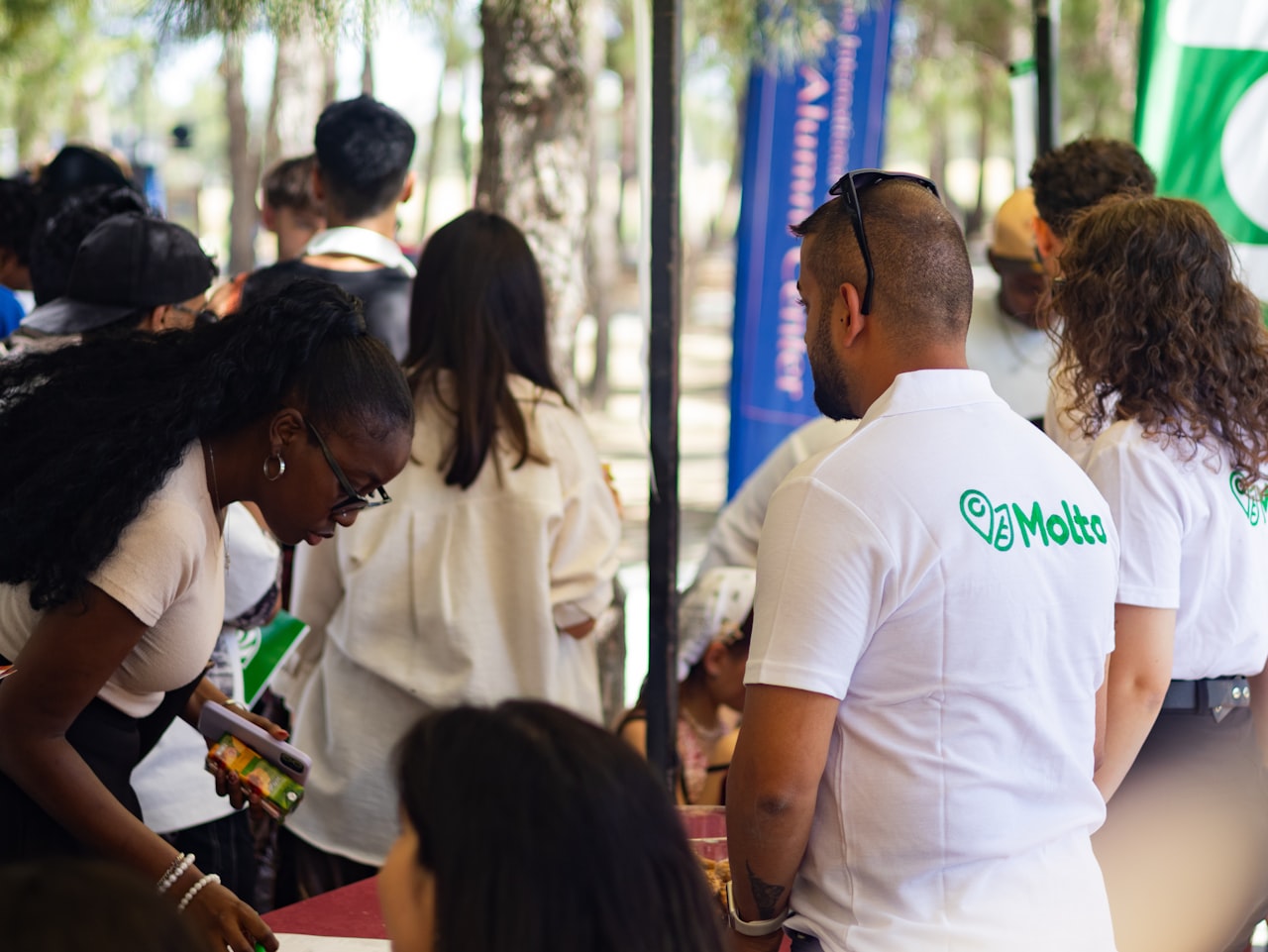
Career fairs are the most visible on-campus activity. NUS, NTU and SMU each host multiple career fairs annually, attracting thousands of students. To stand out, go beyond a standard booth — offer interactive demonstrations, skill assessments or mini-workshops that give students a taste of what your work involves.
Company presentations and information sessions provide deeper engagement. Invite your junior employees — ideally alumni of the university — to share their experiences. Students relate more to near-peers who recently navigated the same career decisions than to senior executives delivering corporate pitches.
Workshops and hackathons demonstrate your expertise while providing value to students. A data analytics workshop, a design thinking session or a coding hackathon positions your company as a knowledge leader and gives you direct exposure to talented participants. These events also serve as informal screening — you can identify strong candidates through their performance and engagement.
Sponsor student clubs and organisations aligned with your industry. Engineering societies, marketing clubs, entrepreneurship groups and computing associations have engaged memberships that overlap with your target candidate profiles. Sponsorship builds ongoing visibility and creates natural touchpoints throughout the academic year.
Establish relationships with career services offices. These teams influence how students perceive employers and which companies get prime event slots. Regular communication, feedback sharing and genuine partnership — rather than transactional engagement — build the kind of institutional relationships that pay dividends over years.
Building an Employer Brand That Resonates With Graduates
What graduates value in an employer is often different from what mid-career professionals prioritise. Your employer branding for campus recruitment should address the specific concerns and aspirations of early-career talent.
Learning and development is consistently the top priority for Singapore graduates. They want to know what they will learn in their first year, what training programmes are available and how the company invests in career growth. Companies that can articulate a clear learning journey — structured onboarding, mentorship, skills training, rotation programmes — have a significant advantage.
Career progression matters deeply. Graduates want to see a path from entry level to senior roles, with concrete examples of people who have made that journey. Feature stories of employees who joined as fresh graduates and have since advanced into leadership positions.
Culture and team dynamics are evaluated carefully. Graduates look for inclusive, collaborative environments where they will be supported as they transition from university to professional life. Content that shows real team interactions, social events and mentoring relationships resonates strongly.
Purpose and impact are increasingly important. Graduates want to work for organisations that contribute positively to society and align with their values. Sustainability initiatives, community programmes and social impact projects should be prominently featured in your campus recruitment marketing.
Compensation transparency builds trust. Singapore graduates are well-informed about market rates through platforms like NodeFlair, Glassdoor and university salary surveys. Being upfront about compensation — including bonuses, benefits and progression — signals confidence and fairness.
Using Internships as a Recruitment Pipeline
Internships are the most effective campus recruitment pipeline in Singapore. Most universities require or strongly encourage internships, and the best graduates use their internship experiences to make full-time employment decisions.
Design internship programmes that give students meaningful work. Assignments that involve real projects, measurable outcomes and exposure to different teams create a compelling experience that converts interns to full-time hires. Avoid make-work tasks that leave interns feeling underutilised — they will share their experience with peers, and negative word-of-mouth spreads quickly on campus.
Structure a conversion process. At the end of the internship, provide formal feedback, discuss the intern’s performance and extend pre-graduation offers to top performers. Companies that make offers during or immediately after internships capture candidates before competitors enter the picture.
Maintain relationships with interns who do not receive or accept offers. They may be strong candidates for future roles, and they remain influential voices on campus. Add them to your talent community to stay connected.
Track intern-to-hire conversion rates and compare the performance and retention of hires who came through internships versus other channels. In most organisations, intern conversions outperform on both metrics, justifying continued investment in internship programmes.
Measuring Campus Recruitment Marketing ROI
Campus recruitment marketing requires sustained investment, so measuring return is essential to justify and optimise your budget.

Track awareness metrics: event attendance, social media reach among student demographics, talent community sign-ups from university email domains and careers page traffic from campus IP ranges. These indicate whether your marketing is reaching the target audience.
Measure pipeline metrics: applications received from target universities, quality ratings of campus-sourced candidates, interview-to-offer ratios and offer acceptance rates. Compare these against other sourcing channels to assess relative effectiveness.
Calculate cost per hire for campus-sourced hires. Include all campus marketing costs — event sponsorship, travel, content creation, paid media, recruiter time — and divide by the number of hires. Compare this against agency fees and job advertising costs for similar entry-level roles.
Track long-term outcomes: performance ratings, promotion velocity and retention rates of campus hires versus other sources. If campus hires consistently outperform, the ROI case for increasing investment becomes compelling.
Use recruitment analytics tools to consolidate these metrics into a dashboard that shows campus recruitment performance at a glance. Review quarterly and adjust your university prioritisation, event calendar and marketing mix based on what the data reveals.
Frequently Asked Questions
When should campus recruitment marketing activities begin?
Start building awareness from the second or third year of study. Career fairs and information sessions typically run in the first semester for summer internships and in the second semester for graduate roles. However, brand-building through social media and content should be ongoing throughout the academic year.
Which Singapore universities should I target?
This depends on your industry and role requirements. NUS and NTU offer the broadest talent pools. SMU is strong for business and tech roles. SUTD excels in engineering and design. Polytechnics provide skilled diploma holders for technical roles. Analyse your best-performing employees to identify which institutions produce candidates that thrive in your organisation.
How much should I budget for campus recruitment marketing?
Budgets vary widely. A basic programme covering career fair participation, social media content and a talent community might cost ten to twenty thousand dollars per year. Comprehensive programmes with multiple events, hackathons, sponsorships and paid media can reach fifty to one hundred thousand dollars or more for large employers.
How do I compete with big brands for graduates?
Emphasise what big brands often cannot offer — faster career progression, broader exposure, direct access to leadership and the opportunity to make a visible impact. Many graduates prefer smaller organisations once they understand the trade-offs. Authentic employee stories from recent graduates are your most powerful tool.
Should I attend every career fair?
No. Be selective based on your target universities and the return from previous events. It is better to have a strong, well-staffed presence at three career fairs than a mediocre showing at eight. Focus on events where your target student segments are most concentrated.
How do I maintain engagement with students between events?
Build a talent community with regular email updates. Post consistently on social media with content relevant to students. Offer ongoing value through webinars, mentorship programmes, skill workshops and industry insights. The goal is to stay top of mind throughout the academic year, not just during recruitment season.
What do Singapore graduates value most in an employer?
Research consistently shows that learning and development, career progression, compensation competitiveness, work-life balance and team culture are the top five factors. Purpose and social impact are growing in importance, particularly among younger cohorts.
How effective are virtual career events?
Virtual events expanded significantly during the pandemic and remain part of the mix. They offer convenience and scale but generate lower engagement than in-person events. A hybrid approach — in-person flagship events supplemented by virtual sessions — tends to deliver the best results in Singapore’s current environment.