Part of our Marketing by Industry & Audience guide →
Automotive Marketing in Singapore: Digital Strategies for Car Dealers
Singapore’s automotive market is unlike any other in the world. The Certificate of Entitlement (COE) system, among the highest car prices globally, a compact geography and a highly digital consumer base create a unique marketing environment. Car buyers in Singapore conduct extensive online research — browsing listings on sgCarMart and CarBuyer, watching video reviews, comparing prices and reading forums — long before visiting a showroom.
For car dealers, this means the digital experience often determines whether a potential buyer ever walks through your door. A dealer with compelling online listings, informative video content, strong Google presence and responsive digital communication will consistently outperform one relying solely on their showroom location and traditional advertising.
This guide covers the full spectrum of automotive marketing strategies tailored for Singapore’s unique market in 2026. We address marketplace optimisation, Google Ads targeting COE-related keywords, video content strategy, social media advertising, lead generation and the distinct approaches required for new versus used car marketing. Whether you are an authorised distributor, a parallel importer or a used car dealer, these strategies will help you generate more qualified leads and close more sales.
sgCarMart, CarBuyer and Marketplace Optimisation
sgCarMart is the dominant automotive marketplace in Singapore, and for most car dealers, it is the single largest source of leads. CarBuyer Singapore is a growing alternative, offering editorial content alongside listings. Optimising your presence on these platforms is fundamental to automotive marketing in Singapore.
Your sgCarMart listings must be meticulously crafted. Each listing should include: comprehensive vehicle details (make, model, year, mileage, COE expiry, registration date, engine specifications), a detailed description highlighting key features and selling points, the asking price (competitively positioned), and high-quality photographs — a minimum of 15-20 images covering the exterior from multiple angles, interior, dashboard, engine bay, boot and any notable features or imperfections.
Photography quality directly impacts enquiry rates. Invest in proper lighting (ideally shoot in a clean, well-lit environment), ensure vehicles are thoroughly cleaned before photographing and use consistent backgrounds across your listings. Some dealers hire professional photographers for their inventory — the investment pays for itself through increased enquiry rates.
Response speed to marketplace enquiries is critical. Car buyers on sgCarMart typically contact multiple dealers simultaneously. The dealer who responds fastest has a significant advantage. Aim to respond to all enquiries within 15 minutes during business hours. Use automated acknowledgement messages to buy time if immediate detailed responses are not possible.
CarBuyer Singapore offers a different approach with more editorial and review content. Having your vehicles featured in CarBuyer’s editorial content (comparison reviews, “best of” lists) provides credibility beyond a standard listing. Engage with CarBuyer’s team about sponsorship and feature opportunities that align with your inventory.
Track your marketplace performance metrics: views per listing, enquiry rate, response time and conversion rate from enquiry to showroom visit. These metrics identify underperforming listings that need better photos, descriptions or pricing adjustments. A well-optimised listing on sgCarMart can generate 50-100+ enquiries per month for popular models. Complement your marketplace presence with your own dealer website for brand building.
Google Ads and COE-Related Keyword Targeting
Google Ads captures car buyers at the moment of highest intent. When someone searches “buy Toyota Corolla Singapore,” “used BMW 3 Series price” or “COE renewal worth it,” they are actively in the market. Appearing at the top of these searches drives qualified traffic to your website and listings.

Singapore’s automotive market introduces unique keyword opportunities related to COE. Target keywords like “COE price today,” “COE renewal calculator,” “should I renew COE,” “new car COE price” and “COE bidding results.” Create dedicated landing pages with useful COE information — current COE prices, historical trends, renewal calculators and guidance. This captures high-intent traffic from car buyers navigating the COE system.
Structure your campaigns by vehicle category: new cars by brand, used cars by segment (sedan, SUV, hatchback), certified pre-owned and COE-related content. Each campaign should have tightly themed ad groups. For example, a “Used BMW” campaign might include ad groups for “BMW 3 Series,” “BMW 5 Series,” “BMW X3” and “BMW X5,” each with model-specific keywords and ad copy.
Use price extensions, callout extensions and structured snippet extensions to maximise your ad real estate. Display key information: “COE Included,” “Financing Available,” “Trade-In Accepted,” “Test Drive Available.” These extensions differentiate your ads from competitors and provide useful information that encourages clicks.
Automotive keywords in Singapore can be expensive, with CPCs ranging from $2 to $12 depending on the make, model and keyword specificity. However, with an average car sale value of tens of thousands of dollars, even a relatively high cost per lead is justified. Track your cost per showroom visit and cost per sale to calculate true ROI. Our guide on Google Ads costs in Singapore provides broader context for ad spend planning.
Remarketing is essential for automotive. Car buying decisions take weeks or months. A buyer who researched a specific model on your site should see your remarketing ads as they browse other websites, watch YouTube and scroll social media. Dynamic remarketing showing the specific vehicles they viewed keeps your dealership top of mind throughout their decision process.
SEO for Automotive Keywords in Singapore
SEO provides sustainable organic traffic for automotive businesses. While marketplace listings capture immediate demand, strong SEO rankings on your own website build brand authority and generate leads you own rather than rent from platforms.
Target informational keywords that car buyers search during their research phase. Create comprehensive content: “Best Family Cars in Singapore 2026,” “Cheapest Cars to Own in Singapore (Including COE and Running Costs),” “Hybrid vs Electric Cars: What Singapore Drivers Need to Know,” “Complete Guide to Buying a Used Car in Singapore” and “COE Renewal: A Step-by-Step Guide.”
These informational pages attract substantial traffic and position your dealership as a helpful, authoritative resource. Readers who find your content genuinely useful are more likely to consider your dealership when they are ready to purchase. Include strategic calls-to-action within the content — links to your inventory, test drive bookings and consultation requests.
Optimise vehicle listing pages for SEO. Each model you stock should have a dedicated page with comprehensive information: specifications, pricing, comparison with competitors, ownership costs and available variants. Title these pages descriptively: “Toyota Corolla Cross Hybrid 2026 Price Singapore — Specifications, Features and Review.”
Local SEO matters for dealerships with physical showrooms. Optimise your Google Business Profile with your showroom location, hours, photos, services (test drives, financing, trade-in) and reviews. Appearing in local search results for “car dealer near me” or “used car dealer [neighbourhood]” drives foot traffic to your showroom.
Technical SEO for automotive websites requires attention to site structure, page speed and mobile optimisation. Inventory pages with dozens of high-resolution images need proper optimisation (lazy loading, compressed images, WebP format) to maintain fast loading speeds. A slow website frustrates users and hurts both search rankings and conversion rates.
Video Content: Walkarounds, Test Drives and Reviews
Video content has become indispensable for automotive marketing. Singapore car buyers watch vehicle walkarounds, test drive videos and reviews extensively before visiting a showroom. A strong video presence builds familiarity with your inventory and accelerates the buyer’s decision process.
Create video walkarounds for every vehicle in your inventory. A three to five minute video covering the exterior design, interior features, boot space, technology, driver’s seat perspective and key selling points gives buyers a comprehensive virtual experience. These videos can be embedded in your marketplace listings, website and social media profiles.
Test drive videos provide experiential content that photos cannot. Film test drives covering city driving (relevant for Singapore’s urban environment), highway performance, parking manoeuvrability (important for HDB car parks and tight multi-storey car parks) and technology features in use (parking cameras, adaptive cruise control, infotainment systems). Add commentary explaining the driving experience.
YouTube is the primary platform for automotive video content. Create a YouTube channel for your dealership and publish consistently. Optimise video titles and descriptions with searchable keywords: “2026 Mazda CX-5 Review Singapore — Is It Worth the COE?” or “Used BMW 320i Walkaround — Low Mileage, Full Service History.” These videos rank in both YouTube and Google search results.
Short-form video for TikTok and Instagram Reels captures attention with quick, punchy content. Trending formats include: “Car of the day” showcasing a featured vehicle in 30 seconds, “How much does it cost to own a [car model] in Singapore?” breakdowns, before-and-after detailing transformations and behind-the-scenes showroom content. These platforms attract a younger demographic of first-time car buyers and upgraders.
Invest in production quality proportionate to your positioning. Luxury brand dealerships should produce polished, cinematic content. Volume used car dealers can use authentic, personality-driven content that feels approachable. The key is consistency — publishing weekly builds an audience and creates a content library that works for you 24/7.
Facebook and Instagram Advertising for Car Dealers
Social media advertising allows car dealers to target potential buyers with precision and showcase inventory visually. Facebook and Instagram advertising are particularly effective for automotive because of the visual nature of car marketing and the platforms’ detailed targeting options.
Facebook’s Automotive Inventory Ads dynamically showcase your vehicle inventory to relevant audiences. Connected to your vehicle catalogue, these ads automatically display relevant vehicles to users based on their interests, search behaviour and demographics. Users see specific cars with photos, prices and key details — a highly personalised ad experience that drives qualified leads.
Target audiences strategically. Facebook allows targeting by vehicle purchase intent, income bracket, life events (new job, moving house — potential triggers for car purchases), interests (specific car brands, automotive publications) and custom audiences (website visitors, lead form responders, existing customer lists). Layer these targeting options to reach high-probability buyers.
Carousel ads work excellently for showcasing multiple vehicles. A carousel featuring five to six vehicles from your inventory — each with an image, model name and price — allows buyers to browse directly in their social feed. Video ads showing walkarounds or highlight reels generate high engagement and shares.
Lead generation ads with Facebook Lead Forms simplify the enquiry process. Keep forms short: name, phone number and “Which vehicle are you interested in?” Auto-fill functionality reduces friction. Follow up on leads within minutes — automotive leads are highly time-sensitive, and the first dealer to respond often wins the appointment.
Budget allocation for automotive social media advertising typically ranges from $2,000 to $8,000 per month for mid-sized dealerships. Track metrics beyond cost per lead: cost per showroom visit, cost per test drive and cost per vehicle sold. This full-funnel measurement reveals the true value of your social media investment.
Lead Generation and WhatsApp Follow-Up
Lead generation is the lifeblood of automotive sales, and in Singapore, WhatsApp has become the preferred communication channel for lead follow-up. Integrating robust lead capture with responsive WhatsApp communication creates a powerful sales pipeline.
Capture leads from every channel: marketplace enquiries, Google Ads landing pages, social media lead forms, website enquiry forms and phone calls. Centralise all leads in a CRM system (tools like Salesforce, HubSpot or automotive-specific CRMs like DealerSocket) to ensure no lead falls through the cracks. Assign leads to sales consultants immediately and track response times.
WhatsApp is the dominant follow-up channel in Singapore. Over 85 per cent of Singaporeans use WhatsApp daily, and most prefer it over email or phone calls for business communication. After capturing a lead, send a personalised WhatsApp message within minutes: introduce yourself, reference the specific vehicle they enquired about and invite them to ask any questions or arrange a viewing.
Create a structured WhatsApp follow-up sequence. Day one: personalised introduction and vehicle details. Day two: additional information (specifications sheet, pricing breakdown, financing options). Day three to four: invitation for a test drive. Day seven: check-in if no response. Day fourteen: alternative vehicle suggestion. Adjust timing based on the lead’s engagement level.
WhatsApp Business features streamline communication. Set up quick replies for common questions (pricing, availability, financing, trade-in process), catalogue your inventory for easy sharing and use labels to categorise leads by stage (new lead, in discussion, test drive booked, negotiation, closed). Automated away messages handle enquiries outside business hours.
LTA and COE timing creates natural marketing triggers. When COE results are announced (first and third Wednesday of each month), there is a surge of buying and selling activity. Time your marketing pushes around these dates — send WhatsApp broadcasts to your lead database with COE result commentary and relevant vehicle offers. This timely outreach demonstrates market awareness and can trigger buying decisions. A comprehensive digital marketing strategy coordinates all these touchpoints.
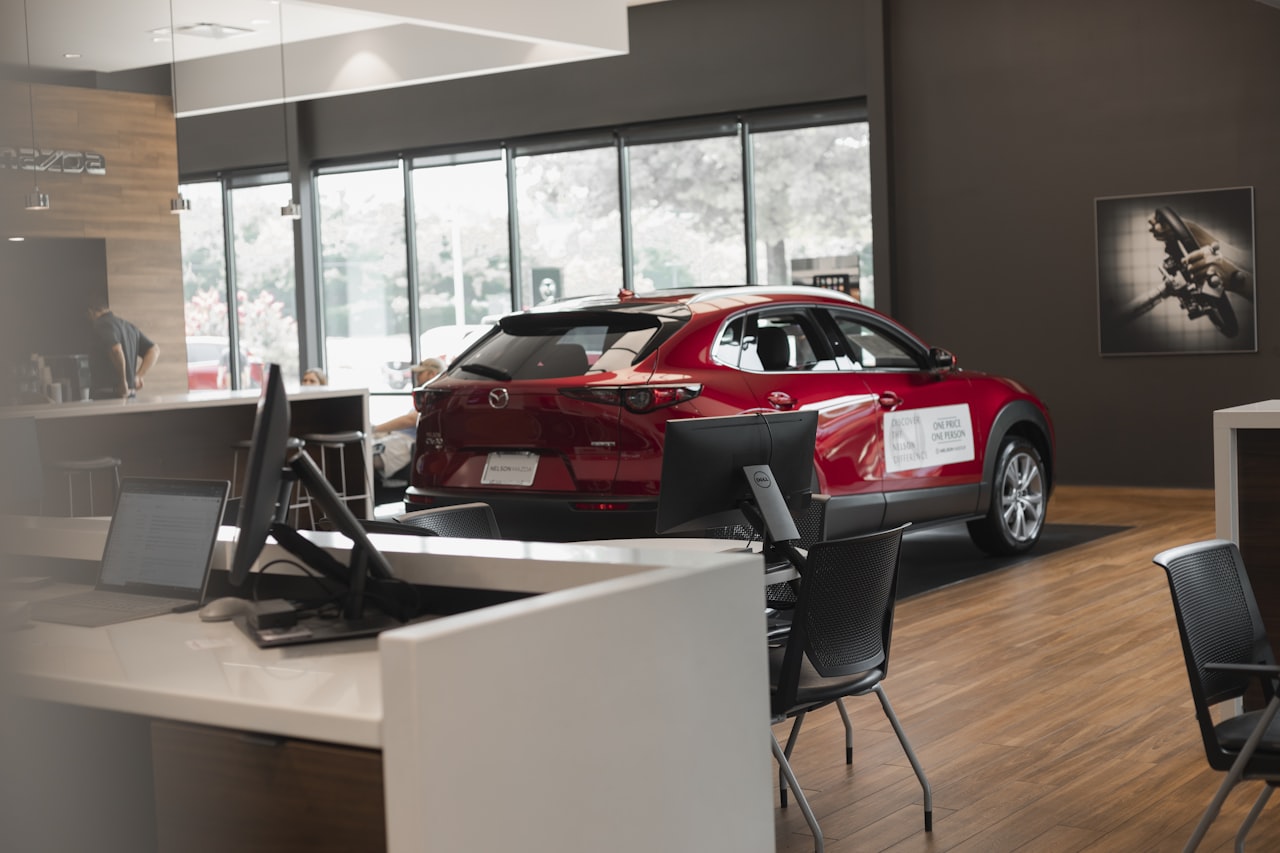
Showroom Digital Experience
The physical showroom remains central to the car buying experience in Singapore, but integrating digital elements enhances the experience and supports your marketing efforts.
Digital signage and interactive displays bring your inventory to life. Touchscreen kiosks where visitors can browse your full inventory, view specifications, compare models and configure options provide a self-service experience for visitors who prefer to research independently before engaging with a sales consultant.
Vehicle configuration tools — either on in-showroom tablets or your website — allow buyers to customise their preferred variant, colour, accessories and options, and see real-time pricing. For new car dealers, this interactive experience engages buyers and generates leads (save your configuration for follow-up).
QR codes on each display vehicle link to the vehicle’s detailed listing page, walkaround video or financing calculator. This allows visitors to access additional information on their own phones while examining the car in person. It also creates a bridge between the physical and digital experience.
Virtual showroom experiences — 360-degree vehicle tours, AR (augmented reality) visualisation of vehicles in the buyer’s environment and live video consultations — extend your showroom’s reach to buyers who cannot visit in person. While most Singapore car buyers will ultimately visit a showroom, virtual tools accelerate the research phase and qualify leads before they arrive.
Capture visitor data digitally. Instead of paper sign-in sheets, use tablet-based registration that captures name, email, phone number and vehicle interests. This data feeds into your CRM for automated follow-up. Offer WiFi with a simple registration process to capture data from visitors who browse independently.
New Car vs Used Car Marketing Strategies
New car and used car marketing in Singapore require distinct approaches, driven by different buyer psychology, competitive dynamics and sales processes.

New car marketing benefits from manufacturer brand equity but faces constraints — pricing is relatively transparent, model options are fixed and competition between authorised dealers is intense. Differentiate through service experience (best test drive experience, most knowledgeable consultants, superior after-sales), promotional packages (accessories, extended warranties, servicing packages) and digital convenience (online booking, home test drives).
New car SEO should target model-specific keywords: “[Make Model] price Singapore 2026,” “[Make Model] review Singapore” and “best [segment] car Singapore.” Create detailed model pages with specifications, comparison tables, pricing breakdowns (including COE, ARF, registration fees) and genuine reviews. Buyers researching new cars want comprehensive information in one place.
Used car marketing requires building trust, as buyers face greater uncertainty. High-quality photography, detailed vehicle history documentation, transparent condition reporting and comprehensive warranties differentiate reputable dealers from the market’s less scrupulous operators. Marketing messaging should emphasise trust signals: inspection reports, warranty coverage, service history verification and money-back guarantees.
Used car SEO targets broader queries: “used car Singapore,” “cheapest used cars Singapore,” “used [Make] for sale Singapore,” and COE-related queries like “5-year COE car worth buying.” Content that helps used car buyers make informed decisions — inspection checklists, ownership cost comparisons, depreciation analysis — attracts organic traffic and builds authority.
Parallel importers occupy a unique position. Marketing should educate buyers on the benefits (typically lower prices for popular models) while addressing concerns (warranty coverage, servicing, resale value). Transparent comparison content — “Authorised vs Parallel Import: Toyota RAV4 Price Comparison Singapore” — resonates with price-conscious buyers who want to understand the trade-offs.
For all segments, lead generation and systematic follow-up are the determinants of sales success. The dealer who captures the most leads and follows up most effectively will outsell competitors with larger budgets but weaker processes.
Frequently Asked Questions
How much should a car dealer spend on digital marketing in Singapore?
Mid-sized dealerships typically invest $5,000-$15,000 per month across all digital channels: marketplace listings ($1,000-$3,000), Google Ads ($2,000-$5,000), social media advertising ($1,000-$4,000), content creation ($500-$2,000) and website/SEO ($500-$1,000). With average car sale values in the tens of thousands, even moderate marketing budgets can deliver strong ROI when managed effectively.
Is sgCarMart still the most important platform for car dealers?
Yes, sgCarMart remains the dominant platform for automotive leads in Singapore. However, dependence on a single platform is risky. Build your own digital presence through SEO, Google Ads and social media to diversify your lead sources. Direct leads from your own website typically convert at higher rates because buyers have already engaged with your brand specifically.
What type of video content works best for car dealers?
Vehicle walkaround videos generate the most direct leads. Detailed reviews with test drive footage build authority and attract organic YouTube traffic. Short-form content (TikTok, Reels) generates awareness and reaches younger buyers. The most effective approach combines all three: quick social clips for awareness, walkarounds for consideration and comprehensive reviews for decision-making.
How do I generate leads for used cars online?
Optimise sgCarMart listings with professional photos and detailed descriptions. Run Google Ads targeting specific model keywords. Create Facebook/Instagram inventory ads showcasing your stock. Publish SEO content about used car buying in Singapore. Build a WhatsApp broadcast list for inventory updates. The combination of marketplace presence, paid advertising and organic content creates a multi-channel lead generation engine.
How important is COE timing for automotive marketing?
Very important. COE bidding results (announced bi-monthly) influence buyer sentiment and urgency. When COE premiums drop, buying interest surges — ramp up advertising spend and outreach during these periods. When COE premiums are high, shift messaging toward value propositions: used cars as alternatives, COE renewal analysis and total cost of ownership comparisons. Align your marketing calendar with the COE bidding schedule for maximum relevance.