Agile Marketing: How to Run Sprints, Test Faster and Improve Campaign Performance
Table of Contents
What Is Agile Marketing
Agile marketing is an approach to marketing work that borrows principles from agile software development. Instead of planning large campaigns months in advance and executing them in a waterfall sequence, agile marketing teams work in short cycles called sprints, test ideas quickly, measure results and iterate based on data.
The core idea is simple: reduce the time between having an idea and learning whether it works. Traditional marketing often operates on quarterly or annual planning cycles, where campaigns are conceived, approved, created and launched over weeks or months. By the time results come in, the market may have shifted. Agile marketing compresses this cycle to one or two weeks, so teams can respond to opportunities and course-correct much faster.
For Singapore businesses operating in a fast-moving digital landscape, agility is not optional — it is a competitive requirement. Consumer behaviour shifts rapidly, platform algorithms change frequently and new channels emerge constantly. Teams that can test, learn and adapt quickly consistently outperform those locked into rigid long-term plans. This does not mean abandoning strategy. It means executing strategy through short, focused bursts of work that generate learning along the way.
Why Marketing Teams Go Agile
The biggest driver is speed to market. Agile teams ship campaigns in days rather than weeks. When a competitor launches a new offer, a trending topic emerges or a market opportunity opens up, agile teams can respond immediately rather than waiting for the next planning cycle.
Improved focus is another major benefit. By working in sprints with a defined backlog, teams stop trying to do everything at once and concentrate on the highest-priority items. This reduces context switching — one of the biggest productivity killers in marketing — and ensures the most impactful work gets done first.
Agile marketing also reduces waste. Traditional campaigns invest heavily upfront in creative production, media buying and launch preparation. If the campaign underperforms, most of that investment is lost. Agile teams invest incrementally, testing small before scaling. A campaign concept that fails after a one-week test costs far less than one that fails after a three-month production cycle.
Data-driven decision-making becomes the norm rather than the exception. When you run weekly sprints with built-in review cycles, every piece of work produces data that informs the next piece of work. Over time, this compounds into significantly better digital marketing performance because decisions are based on evidence rather than assumptions.
Agile Frameworks for Marketing
Scrum is the most popular agile framework adapted for marketing. It structures work into fixed-length sprints (usually two weeks), with defined roles (sprint owner, team members), ceremonies (sprint planning, daily standups, sprint review, retrospective) and artefacts (backlog, sprint board). Scrum works best for teams of four to nine people with a mix of skills.
Kanban is a more flexible alternative that focuses on visualising work and limiting work in progress. Instead of fixed sprints, work flows continuously through stages (To Do, In Progress, Review, Done). Kanban suits teams that handle a mix of planned work and reactive requests — common in marketing departments that balance campaigns with ad hoc stakeholder requests.
Scrumban combines elements of both. It uses a Kanban board for workflow visualisation and work-in-progress limits, but adds sprint planning and review ceremonies from Scrum. Many marketing teams find Scrumban the most practical starting point because it offers structure without being overly prescriptive.
The right framework depends on your team’s size, workload mix and organisational culture. Do not get stuck debating frameworks — pick one, run it for a month and adapt based on what works. The principles matter more than the specific methodology.
Running Marketing Sprints
A marketing sprint starts with sprint planning. The team reviews the backlog — a prioritised list of marketing tasks and campaign ideas — and selects items to complete during the sprint. For a two-week sprint, a team of five might take on eight to twelve items, depending on complexity. Each item should be small enough to complete within the sprint.
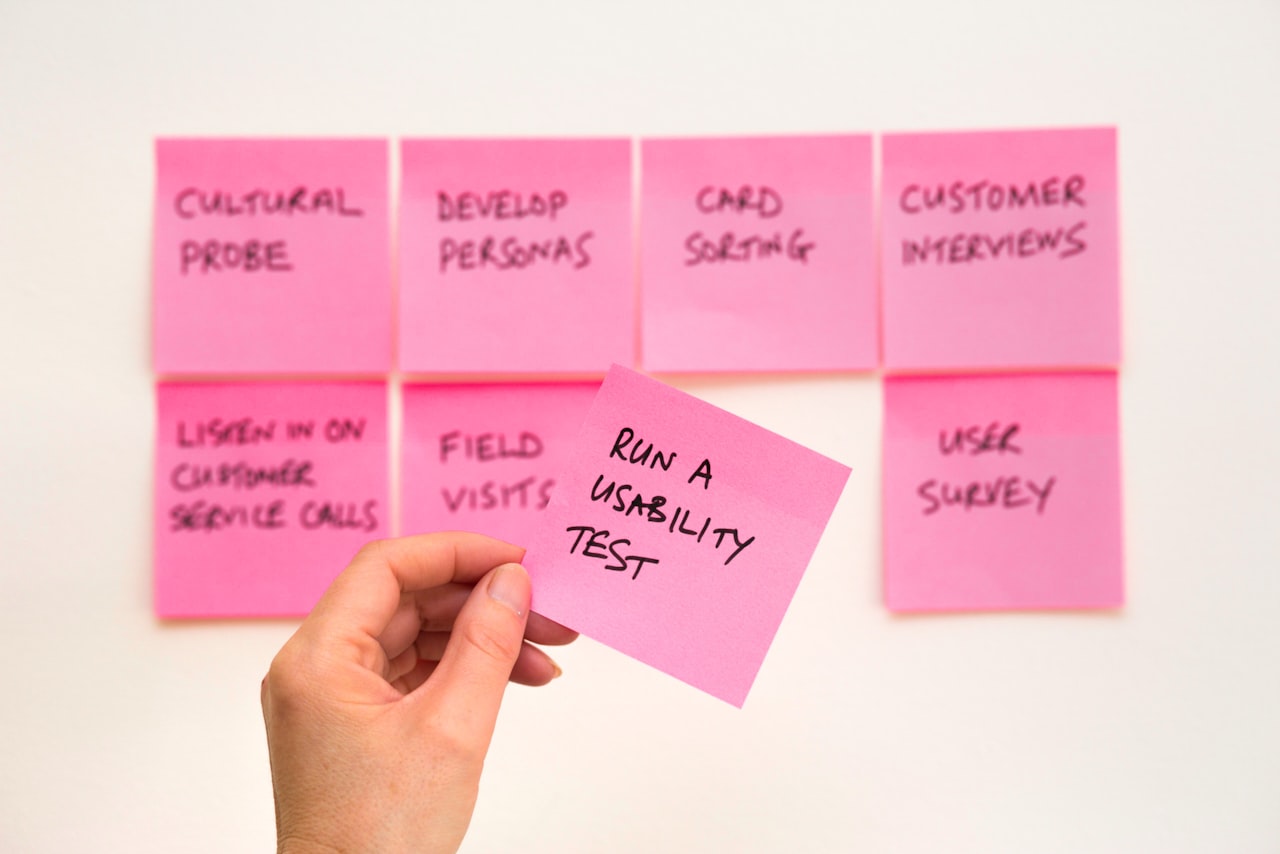
Break large campaigns into sprint-sized pieces. Instead of “Launch new brand campaign” (which could take months), break it into “Write three ad copy variations,” “Design landing page,” “Set up A/B test” and “Analyse week-one results.” Each piece delivers value independently and generates learning that informs the next piece.
Run daily standups — brief 15-minute meetings where each team member shares what they completed yesterday, what they are working on today and what is blocking them. Keep these meetings short and focused. They are for coordination, not problem-solving. Move detailed discussions to separate conversations.
End each sprint with a review and retrospective. The review examines results: what was shipped, what performed well, what data did we gather. The retrospective examines the process: what worked well in our workflow, what could be improved, what should we change next sprint. Both ceremonies are essential for continuous improvement.
Testing and Iteration in Agile Marketing
Every sprint should include at least one test. Testing is not a separate activity in agile marketing — it is woven into daily work. Run A/B tests on ad copy, email subject lines, landing page layouts, CTAs and audience targeting. Small, frequent tests generate more learning than occasional large-scale experiments.
Define your hypothesis before testing. “We believe that adding social proof to our landing page will increase conversions by 15 per cent” is a testable hypothesis. “Let us try a new design” is not. Clear hypotheses ensure you know what you are measuring and can draw meaningful conclusions from results.
Use the Build-Measure-Learn cycle for each test. Build the minimum version needed to test your hypothesis. Measure the results against a clear success metric. Learn from the data and decide whether to scale, iterate or abandon. This cycle typically takes one to two weeks for digital marketing tests, which aligns naturally with sprint cadences.
Document your learnings in a shared knowledge base. Every test — whether it succeeds or fails — produces insights that benefit the entire team. Track hypotheses, results and decisions in a simple spreadsheet or project management tool. Over six months, this learning library becomes one of your most valuable strategic assets for improving your conversion rate optimisation efforts.
Tools for Agile Marketing Teams
Trello is the simplest tool for getting started with agile marketing. Its card-based Kanban boards are intuitive for visual thinkers and require no training. Create columns for Backlog, This Sprint, In Progress, Review and Done. Move cards through the columns as work progresses. Trello’s free tier is sufficient for small teams.
Asana and Monday.com offer more structure with sprint planning, workload management, custom workflows and reporting features. These are better suited for teams of five or more who need to coordinate across multiple workstreams and projects. Both integrate well with marketing tools like Google Analytics, HubSpot and Slack.
For teams that take agile seriously, Jira (adapted from software development) provides the most comprehensive sprint management capabilities. It supports Scrum, Kanban and Scrumban workflows with velocity tracking, burndown charts and sprint reports. The learning curve is steeper, but the analytics capabilities help teams improve their processes over time.
Regardless of which tool you choose, the key is transparency. Everyone on the team should be able to see what everyone else is working on, what is blocked and what is coming next. The tool is just a means to that end. Combine your project management tool with a solid marketing automation platform to streamline execution alongside planning.
Overcoming Common Challenges
Stakeholder resistance is the most common challenge. Senior leaders accustomed to seeing detailed quarterly plans may be uncomfortable with sprint-based planning. Address this by showing early results — even a few weeks of agile work typically produces tangible improvements in output speed and campaign performance. Share sprint review outcomes with stakeholders to build confidence.

Balancing planned work with urgent requests is another common friction point. Reserve 20-30 per cent of each sprint’s capacity for unplanned work. This buffer absorbs reactive requests without derailing sprint commitments. If urgent requests consistently exceed this buffer, it signals a prioritisation problem that needs to be addressed at the leadership level.
Some agile marketing work does not fit neatly into sprints. Brand campaigns, event planning and content strategies require longer timelines. Handle these through epics — larger initiatives broken into sprint-sized tasks. The strategic direction is set quarterly, but execution happens in sprints. This preserves the long-term vision while maintaining short-term agility.
Team burnout is a risk if sprints are treated as a reason to work faster indefinitely. Agile is about working smarter, not harder. Sustainable pace is a core agile principle. If your team is consistently unable to complete sprint commitments, you are taking on too much work per sprint. Reduce scope until the team can deliver consistently without overtime.
Frequently Asked Questions
How long should a marketing sprint be?
Two weeks is the most common sprint length for marketing teams. One-week sprints work for small teams focused on rapid testing. Three-week or four-week sprints suit teams with longer production cycles, such as video or print content. Start with two weeks and adjust based on your team’s rhythm.
Can a small marketing team use agile?
Yes. Agile works for teams as small as two or three people. In fact, small teams often adopt agile more easily because there is less coordination overhead. Even a solo marketer can benefit from sprint-based planning, backlog prioritisation and regular retrospectives.
Do I need to certify my team in agile?
Certification is not necessary to start practising agile marketing. Most teams learn by doing. However, having one team member attend an agile marketing workshop or certification programme (like ICAgile’s Agile Marketing certification) can accelerate adoption and help the team avoid common mistakes.
How does agile marketing work with agencies?
Invite your agency to participate in sprint planning and review ceremonies. Share your sprint board with them and include their deliverables in your sprint backlog. The best agency relationships in an agile context are collaborative, with the agency functioning as an extension of your team rather than a separate entity.
What metrics should I track for agile marketing?
Track velocity (amount of work completed per sprint), cycle time (how long tasks take from start to finish), throughput (number of items completed) and sprint completion rate. Also track business outcome metrics like conversion rates, lead volume and revenue to ensure agile processes translate to better results.
How do I prioritise the marketing backlog?
Use a scoring framework like ICE (Impact, Confidence, Ease) or RICE (Reach, Impact, Confidence, Effort). Score each backlog item and rank by total score. Review and re-prioritise the backlog at the start of each sprint. The highest-scoring items should align with your quarterly marketing objectives.
Can content marketing be agile?
Absolutely. Plan your content calendar in sprint cycles rather than monthly or quarterly. Write, publish and promote one or two articles per sprint, measure performance, and use those insights to inform the next sprint’s content topics and formats. This iterative approach produces better content over time than rigid editorial calendars.
What is the biggest mistake teams make when adopting agile?
Adopting the ceremonies without embracing the mindset. Running standups and sprints without genuine commitment to testing, learning and adapting is just waterfall marketing with more meetings. The value of agile comes from the feedback loops and willingness to change direction based on data.
How do I get buy-in from leadership for agile marketing?
Start with a pilot. Run one team or one campaign using agile for four to six sprints. Document the results — speed improvements, cost savings, performance gains. Present these results to leadership with a clear comparison to previous approaches. Data-driven evidence is the most persuasive argument.
Does agile mean we stop doing long-term planning?
No. Agile marketing still requires strategic direction. Set quarterly or annual objectives and key results. The difference is that you execute toward those objectives through sprints rather than rigid project plans. Strategy provides the destination. Agile provides the route — one that can adapt to obstacles and opportunities along the way.