Table of Contents
Sessions and Users: Understanding Traffic Volume
Understanding website analytics metrics begins with two foundational measurements: sessions and users. A session is a group of interactions a single visitor takes within a given timeframe — by default, it expires after 30 minutes of inactivity. A user represents a unique visitor identified by a cookie or device identifier. One user can generate multiple sessions across different visits.
In GA4, the metric active users has replaced total users, focusing on users who had an engaged session. Tracking both metrics over time reveals the health of your digital presence. Steady user growth suggests your SEO efforts and campaigns are reaching new audiences. A high sessions-to-users ratio indicates strong return visit behaviour — typically positive for content-heavy or e-commerce sites.
A healthy benchmark for most Singapore SME websites is 1.4 to 2.0 sessions per user. If yours falls significantly below 1.4, visitors are arriving once and never returning, signalling a content or experience problem worth investigating.
Page Views and Pages Per Session
A page view is recorded each time a page loads in a browser. Pages per session measures the average number of pages viewed during a single visit. This metric reveals whether users are exploring your site or bouncing after one page.

When paired with site structure, this metric becomes actionable. If you have designed clear navigation paths — blog article to service page to contact form — a higher count suggests users are following that journey. For most Singapore business websites, 2.0 to 3.5 pages per session is a reasonable benchmark.
Context matters. A landing page designed for Google Ads campaigns might intentionally have a low count because all information and the conversion action sit on one page. Always interpret this metric in light of your architecture and campaign objectives.
Bounce Rate and Engagement Rate
Bounce rate is among the most misunderstood website analytics metrics. In GA4, bounce rate is the inverse of engagement rate. An engaged session lasts longer than ten seconds, includes a conversion event or involves at least two page views. Bounce rate equals the percentage of non-engaged sessions.
A high bounce rate is not always bad. Blog articles that fully answer a query can have elevated rates while serving their purpose perfectly. Conversely, a high rate on a product or pricing page signals content or experience issues needing attention.
For Singapore websites, average bounce rates range from 40 to 65 per cent depending on industry. Service businesses tend lower because visitors navigate multiple pages to evaluate offerings. If your rate exceeds 70 per cent, audit your content strategy and page load experience. Always combine bounce rate with engagement time for a complete picture.
Session Duration and Engagement Time
GA4’s preferred metric is average engagement time per session, which only counts time when your site is in the user’s active browser foreground — far more accurate than the older session duration metric.
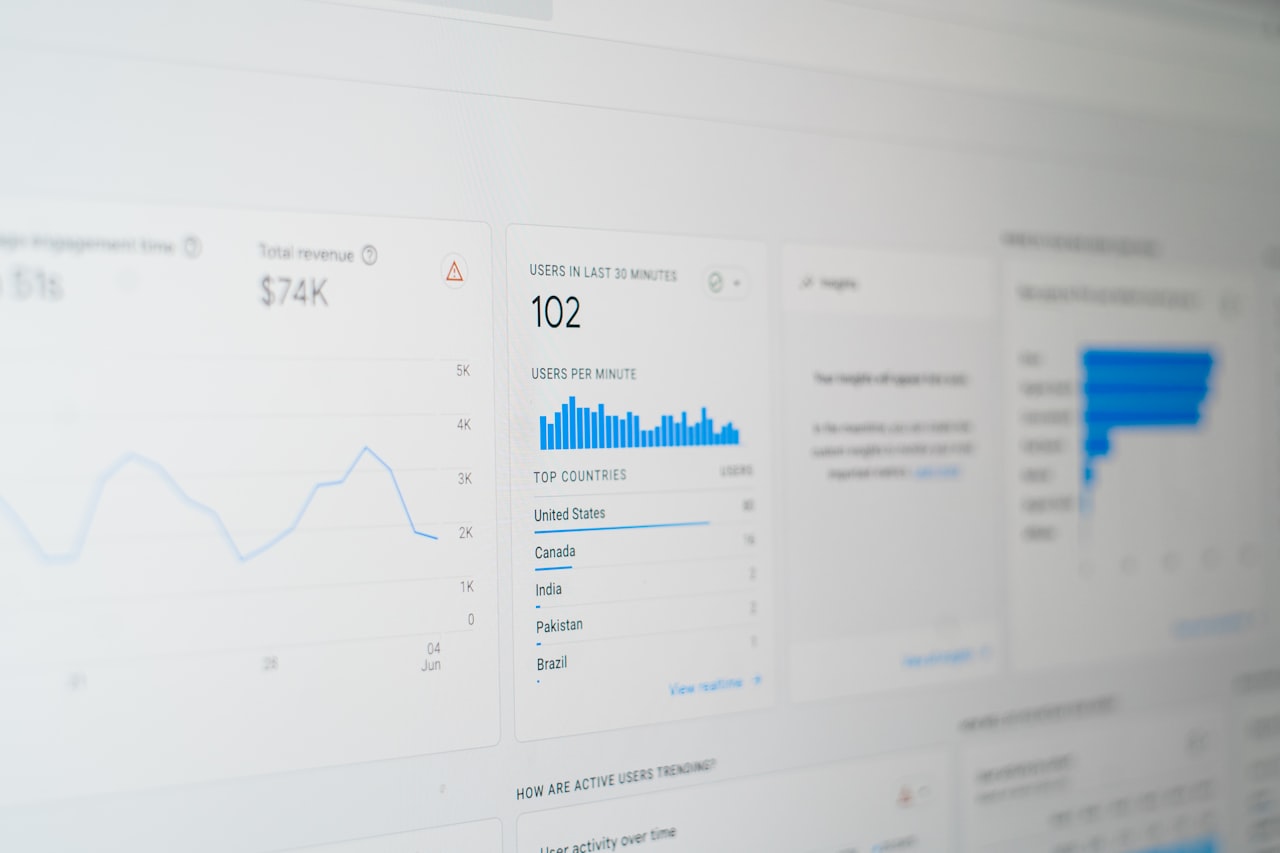
For content-rich websites, longer engagement time correlates with higher content quality. Singapore B2B companies typically see 1.5 to 3 minutes on service pages and 2 to 5 minutes on thorough blog content. Low engagement time paired with high traffic volumes often indicates a mismatch between user expectations and page content — a common pitfall when ad copy or meta descriptions overpromise what the landing page delivers.
This metric is particularly useful for evaluating digital marketing campaigns. If paid traffic shows significantly lower engagement time than organic, the targeting or messaging may be attracting the wrong audience.
Traffic Sources and Channel Groupings
Understanding where visitors originate is as important as knowing how many you have. GA4 groups traffic into default channels: Organic Search, Paid Search, Direct, Referral, Organic Social, Paid Social and Email.
For most Singapore businesses, Organic Search reflects SEO strength. Paid Search tracks Google Ads performance. Direct traffic (users typing your URL) indicates brand recognition. Organic Social measures unpaid social media reach. Email tracks email marketing click-throughs.
Tracking channel performance over time informs budget allocation. If organic search delivers the highest conversion rate, doubling down on SEO content makes sense. If paid social drives volume but few conversions, revisit targeting or creative. The most valuable view is conversion rate by channel — it reveals which sources deliver visitors who actually take action.
New vs Returning Visitors
The balance between new and returning visitors reveals the health of both acquisition and retention. A healthy Singapore business site typically sees 60 to 75 per cent new visitors. Above 85 per cent suggests a retention problem — people arrive but never return. Below 50 per cent suggests acquisition channels are underperforming.
Returning visitors convert at higher rates because they already know your brand. Segmenting analytics by visitor type reveals whether social media campaigns are better at attracting new audiences while email excels at bringing people back. Use this insight to balance your marketing spend between acquisition and retention activities.
Core Web Vitals and Site Speed
Site speed directly impacts user experience and search rankings. Singapore users — accustomed to some of the fastest internet speeds globally — have exceptionally low tolerance for slow pages. Google’s Core Web Vitals remain a ranking factor in 2026.

The three vitals to monitor: Largest Contentful Paint (LCP) measures loading — aim for under 2.5 seconds. Interaction to Next Paint (INP) measures responsiveness — aim for under 200 milliseconds. Cumulative Layout Shift (CLS) measures visual stability — aim for 0.1 or less.
Monitor through Google Search Console, PageSpeed Insights and GA4’s Web Vitals report. Test from Singapore-based servers — a site hosted in the US may lag for local visitors. Improving speed often requires collaboration between marketing and your web design partner, focusing on image compression, lazy loading, render-blocking JavaScript reduction and hosting upgrades with regional data centres.
Frequently Asked Questions
What is the most important website analytics metric for Singapore SMEs?
Conversion rate by traffic source is arguably the most actionable metric. It tells you which channels deliver visitors who take desired actions — filling in forms, making purchases or calling your office — enabling you to allocate budget to what actually works.
How often should I check my analytics?
Weekly reviews of key metrics are sufficient for most businesses, with thorough monthly analysis. Avoid daily checks unless running time-sensitive campaigns, as daily fluctuations lead to reactive decisions based on noise rather than trends.
Why does GA4 show different numbers from Universal Analytics?
GA4 uses an event-based data model rather than sessions. Metrics are defined differently — bounce rate is now the inverse of engagement rate. The platforms are not directly comparable. Establish new baselines in GA4 rather than matching old figures.
What is a good bounce rate for a Singapore business website?
40 to 60 per cent is generally healthy. Landing pages and blog content may reach 70 per cent without concern. Product and service pages should ideally stay below 50 per cent. Compare against your own historical data rather than relying solely on benchmarks.
How does site speed affect search rankings in Singapore?
Core Web Vitals are a global ranking signal. A slow site is penalised relative to faster competitors. With Singapore’s high mobile penetration, mobile speed is especially important for local SEO performance.
Should I track mobile and desktop separately?
Yes. Mobile traffic accounts for 65 to 75 per cent of visits in Singapore. Mobile sessions tend to be shorter with fewer pages per session. Segmenting by device identifies UX issues specific to each platform and helps prioritise improvements.
What tools do I need beyond Google Analytics?
Google Search Console for search performance, PageSpeed Insights for speed, and a heatmap tool like Hotjar for understanding how users interact with your pages. These three tools plus GA4 provide a comprehensive analytics stack for most Singapore businesses.
How do I track conversions in GA4?
Set up key events (formerly goals) for actions that matter — form submissions, phone clicks, purchases and downloads. Mark these as conversions in GA4’s admin settings. Without conversion tracking, you are measuring traffic without understanding business impact.
What does high direct traffic indicate?
Direct traffic comes from users typing your URL or using bookmarks. High direct traffic suggests strong brand recognition. However, some traffic labelled “direct” is actually from untagged sources — ensure all campaigns use UTM parameters to prevent misattribution.
How long should I collect data before making decisions?
Collect at least four weeks of data before drawing conclusions, and ideally compare month-over-month or year-over-year. Seasonal variations, public holidays and campaign timing all affect metrics. Short-term data is unreliable for strategic decisions.