
Value Proposition Design: Communicate Why Customers Should Choose You
Table of Contents
What Is a Value Proposition and Why Does It Matter?
A value proposition is the clear statement of why a customer should choose your product or service over every alternative, including doing nothing. It is the single most important piece of copy on your website, yet most Singapore businesses get it wrong or skip it entirely. Getting value proposition design right changes everything about how your business communicates and converts.
Your value proposition is not your tagline, your mission statement or your list of features. It is a specific, benefit-driven explanation of the unique value you deliver to a defined audience. Think of it as the answer to the question every visitor asks within three seconds of landing on your website: “Why should I care?”
In Singapore’s dense competitive landscape, a clear value proposition is your primary differentiator. When five agencies offer SEO services, ten clinics offer aesthetic treatments or twenty software companies offer CRM solutions, the business with the clearest articulation of its unique value wins the customer’s attention and eventually their business.
Research consistently shows that a strong value proposition is the single biggest influence on conversion rates. It shapes everything downstream: your headlines, your ad copy, your sales conversations and your customer retention. Get this right and every other piece of your digital marketing becomes more effective.
Common Value Proposition Mistakes
Before building your value proposition, it helps to understand what does not work. These mistakes are pervasive across Singapore business websites.

The first mistake is being generic. “We provide quality services at competitive prices” could describe any business in any industry in any country. It says nothing specific and therefore means nothing to anyone. If your competitor could copy your value proposition word for word and it would still make sense for them, it is too generic.
The second mistake is leading with features instead of benefits. “We use AI-powered analytics” is a feature. “Know exactly which marketing channels drive your revenue so you stop wasting budget on what doesn’t work” is the benefit. Customers do not buy features; they buy outcomes.
The third mistake is trying to be everything to everyone. A value proposition that appeals to enterprise clients and solopreneurs, or to budget-conscious buyers and premium seekers, appeals to nobody effectively. Specificity requires courage, but it is what makes your message resonate.
The fourth mistake is hiding behind jargon. Terms like “synergistic solutions,” “paradigm-shifting innovation” and “holistic ecosystem” create distance between you and your audience. If your value proposition needs a glossary, rewrite it in plain language.
The fifth mistake is focusing on yourself rather than the customer. “We are an award-winning agency with 15 years of experience” centres your company. “Grow your revenue by 30 percent or more with marketing strategies proven across 200 Singapore businesses” centres the customer. The difference matters enormously.
Building the Research Foundation
A strong value proposition cannot be brainstormed in a conference room. It must be built on a foundation of customer research, competitive analysis and honest self-assessment.
Start with your customers. Interview your ten best customers and ask: Why did you choose us? What problem were you trying to solve? What alternatives did you consider? What would you tell a friend about working with us? The answers reveal what your customers actually value, which is often different from what you assume they value.
Analyse your reviews and testimonials for patterns. When multiple customers independently mention the same benefit, that benefit is a strong candidate for your value proposition. If six clients mention your responsiveness and only one mentions your technology stack, responsiveness is clearly more valued.
Study your competitors rigorously. Visit their websites, read their marketing materials and note their positioning. Create a matrix comparing their stated value propositions. This reveals gaps in the market, claims nobody else is making that you can credibly own. Your content marketing and brand messaging should exploit these gaps.
Conduct an honest capabilities assessment. What do you genuinely do better than anyone else? Where do you have unfair advantages? This could be proprietary technology, unique expertise, a specific process, geographic specialisation, team composition or accumulated data. Your value proposition must be something you can consistently deliver, not an aspiration.
Map your customer’s decision journey. At each stage, what are they worried about? What information do they need? What would make them choose you? Your value proposition should address the concerns that matter most at the moment of decision. Understanding objection handling feeds directly into this process.
Value Proposition Frameworks That Work
Several proven frameworks can structure your thinking and produce a clear, compelling value proposition.
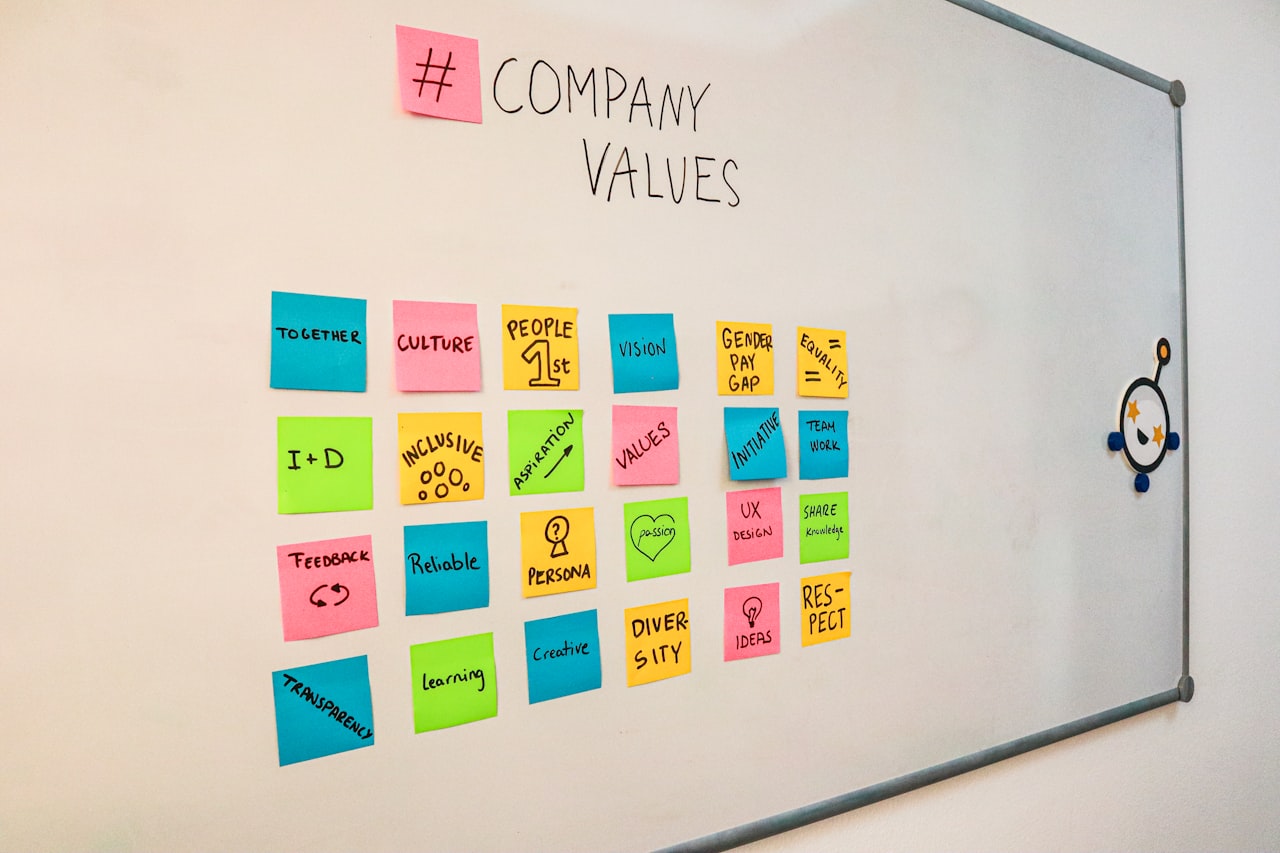
The Value Proposition Canvas, developed by Alexander Osterwalder, maps customer jobs, pains and gains against your products, pain relievers and gain creators. This visual framework ensures your value proposition addresses what customers actually need rather than what you want to sell. It is particularly useful for Singapore businesses entering new markets or launching new services.
Steve Blank’s XYZ formula provides a simple structure: “We help [X] do [Y] by doing [Z].” For example: “We help Singapore e-commerce businesses increase repeat purchases by 40 percent through automated email sequences personalised to buying behaviour.” This formula forces specificity in audience, outcome and method.
The Unique Value Proposition formula goes: “[End result customer wants] + [Specific time period] + [Address the objections].” Example: “Generate 50 qualified leads per month within 90 days, or we continue working for free until you do.” This formula builds in proof and risk reversal.
Geoff Moore’s positioning statement follows: “For [target customer] who [statement of need], [your product/service] is a [category] that [statement of key benefit]. Unlike [competitor], we [statement of primary differentiation].” This framework explicitly positions you against alternatives, which is useful in crowded Singapore markets.
Choose the framework that best fits your business model and audience. The framework is a thinking tool, not the finished product. Your final value proposition should feel natural and conversational, not formulaic.
Writing Your Value Proposition
With research completed and a framework selected, you can now write your value proposition. The goal is a clear, specific statement that communicates your unique value within five seconds of reading.
Your value proposition typically consists of three elements: a headline, a supporting paragraph and three to four bullet points. The headline is the primary claim in one sentence. The paragraph adds context and detail. The bullet points highlight specific benefits or features that support the claim.
For the headline, aim for ten words or fewer that communicate your core benefit. “Double Your Website Conversions in 90 Days” is direct and specific. “Better Marketing for Better Results” is vague and forgettable. Apply the headline formulas you know to craft multiple variations.
The supporting paragraph should explain who you serve, what you do differently and why it matters. Keep it to two or three sentences. “We build data-driven marketing systems for Singapore professional services firms. Our proprietary process identifies your highest-value channels, eliminates wasted spend and delivers measurable ROI within the first quarter. Over 150 firms trust us to grow their client pipeline.”
Bullet points should be benefit-focused with supporting specifics. Not “24/7 support” but “24/7 response team so your campaigns never stall waiting for answers.” Not “experienced team” but “Strategists with an average of 12 years in Singapore digital marketing.” Each bullet should make the reader think “I want that.”
Write at least five versions of your complete value proposition before choosing one. Read each version aloud. Share them with people outside your company and ask: “What do you think we do? Who do you think this is for? Would this make you want to learn more?” Their honest feedback is more valuable than your team’s internal opinions.
Testing and Refinement
Your first value proposition is a hypothesis, not a final answer. Testing reveals whether your hypothesis resonates with your actual market.
The simplest test is the five-second test. Show your website to someone unfamiliar with your business for five seconds, then ask them what you do, who you serve and why someone would choose you. If they cannot answer these questions, your value proposition needs work.
A/B testing your value proposition on your homepage or landing pages provides quantitative validation. Test different headlines, different benefit emphasis and different levels of specificity. Even small changes in wording can produce significant conversion differences. Tools like Google Optimize make this accessible for businesses of all sizes.
Use your value proposition in sales conversations and note which versions generate the most engaged responses. When a prospect leans forward or asks a follow-up question, that version is working. When they nod politely and change the subject, it is not.
Test your value proposition in Google Ads headlines. The ad platform provides rapid feedback through click-through rates. If one version of your value proposition consistently generates higher CTR, it likely resonates more strongly with your target audience.
Revisit your value proposition at least annually. Markets shift, competitors evolve and your own capabilities develop. A value proposition that was differentiated two years ago may have been copied by competitors since then. Stay current by monitoring competitive positioning and continuing customer research.
Applying Your Value Proposition Across Channels
A well-crafted value proposition is not just homepage copy. It is the strategic foundation that informs every customer touchpoint.

On your website, the full value proposition belongs on your homepage above the fold. Service pages should feature adapted versions relevant to each specific offering. Your about page should reinforce the proposition through your story and credentials. Even your microcopy and UX elements should echo the core message.
In advertising, your value proposition should inform every ad you run. Google Ads headlines and descriptions should reflect your key differentiators. Social media ads should communicate your unique value visually and textually. Display ads should reinforce your positioning through consistent messaging.
For email marketing, your value proposition shapes your welcome sequence, your nurture campaigns and your promotional emails. New subscribers should immediately understand why your business is different and why they made a good decision joining your list.
In sales conversations, your value proposition becomes your elevator pitch. Train your team to articulate it consistently and naturally. Role-play different scenarios where the value proposition needs to be adapted for different audience concerns while maintaining its core message.
Your brand identity and visual design should reinforce your value proposition. If you claim to be the most professional option, your design must reflect professionalism. If you claim to be the most innovative, your visual identity should feel modern and forward-thinking. Misalignment between your stated value proposition and visual presentation creates cognitive dissonance that undermines trust.
Content marketing should consistently demonstrate your value proposition through proof. If you claim superior expertise, publish content that demonstrates it. If you claim better results, share case studies that prove it. Every piece of content is an opportunity to reinforce why customers should choose you.
Frequently Asked Questions
How long should a value proposition be?
The headline should be one sentence of ten words or fewer. The supporting paragraph should be two to three sentences. Bullet points should number three to four, each one line. The entire value proposition should be readable in under ten seconds. If it takes longer, simplify.
Can a business have multiple value propositions?
Yes, but you should have one primary value proposition for your brand and adapted versions for specific products, services or audience segments. Each version should ladder up to the core brand proposition. A web design service and an SEO service from the same agency may emphasise different benefits while sharing the same core positioning.
How is a value proposition different from a unique selling proposition?
A unique selling proposition (USP) focuses on what makes you different from competitors. A value proposition focuses on the value you deliver to customers. The best value propositions incorporate differentiation but lead with customer benefit rather than competitive comparison.
What if my business is not truly unique?
Every business has something that differentiates it, even if it is not a revolutionary product feature. Your process, your team’s expertise, your customer service approach, your local knowledge, your pricing model or your guarantee can all be differentiators. Dig deeper into what customers value about working with you specifically.
Should I mention pricing in my value proposition?
Only if price is a genuine differentiator and you want to attract price-sensitive customers. If you compete on value rather than price, focus on outcomes and benefits instead. Mentioning pricing too early can anchor the conversation around cost rather than value.
How do I know if my value proposition is working?
Measure website conversion rates, bounce rates on key pages, time on site and the quality of enquiries you receive. If visitors quickly understand what you do and take action, your value proposition is working. If bounce rates are high and enquiries are vague or misaligned, it needs improvement.
What is the biggest mistake in value proposition design?
Writing it from your perspective rather than your customer’s. The most common pattern is businesses listing their capabilities and credentials rather than explaining how those translate into customer benefits. Always write from the customer’s point of view: what do they get, how does it help them and why should they believe you?
How often should I update my value proposition?
Review it at least annually or whenever there is a significant change in your market, competitive landscape or service offerings. If competitors start making similar claims, you need to evolve your positioning. If customer feedback reveals new priorities, your value proposition should reflect them.