Part of our Marketing Costs & Pricing guide →
Table of Contents
UI/UX Design Cost Overview
User interface and user experience design are competitive necessities in Singapore’s digitally mature market. Consumers expect seamless online experiences, and the quality of your UI/UX directly impacts conversion rates, customer satisfaction, brand perception and revenue. Understanding UI/UX design cost Singapore benchmarks helps you budget accurately and evaluate proposals with confidence.
UI/UX design typically accounts for 15 to 30 per cent of a total digital product budget. A simple website (5 to 10 pages) costs $3,000 to $10,000 for design. A corporate website (15 to 30 pages) runs $8,000 to $25,000. E-commerce sites range from $12,000 to $40,000. Mobile apps cost $10,000 to $60,000 depending on platform count. SaaS and enterprise applications can reach $20,000 to $150,000 or more.
The most significant cost drivers are the number of unique screens, the complexity of user interactions and the depth of research required. Changes during design cost a fraction of changes during development, which is why investing properly at this stage saves money downstream. For businesses ready to engage professional help, our web design services cover the full design-to-development process.
UX Research Costs
UX research ensures design decisions are grounded in real user needs rather than assumptions. Skipping research is the costliest mistake businesses make — it leads to products that look polished but fail to meet user needs, resulting in low adoption and expensive redesigns.

Stakeholder interviews cost $1,000 to $3,000. User interviews with 6 to 10 participants run $3,000 to $8,000. Online surveys cost $1,000 to $4,000. Competitive analysis ranges from $1,500 to $4,000. A UX audit of an existing product costs $2,000 to $8,000. Persona development and journey mapping each run $1,500 to $5,000.
A typical research phase for a mid-sized project — stakeholder interviews, user interviews, competitive analysis and persona development — costs $5,000 to $15,000 and takes three to six weeks. For budget-conscious projects, “guerrilla research” — quick informal interviews and observations — costs $2,000 to $5,000 and provides directional insights that are significantly better than no research at all.
UI/UX design cost Singapore includes research as a standard phase for any agency worth engaging. Firms that skip research to reduce quotes often deliver work that requires costly revisions later.
Wireframing and Information Architecture
Wireframing translates research insights into structural layouts defining hierarchy, content placement and functionality for each screen. Information architecture organises content so users find what they need efficiently.
Site maps and app architecture cost $500 to $2,000. User flow diagrams run $500 to $2,000. Low-fidelity wireframes cost $100 to $300 per screen. Mid-fidelity wireframes run $200 to $500 per screen. A wireframe set of 10 to 20 screens costs $2,000 to $8,000; 30 to 50 screens costs $5,000 to $15,000. Interactive wireframe prototypes add $1,000 to $4,000.
Most Singapore designers quote wireframing as a project fee rather than per screen, because complexity varies enormously. A simple “About Us” page takes an hour while a complex dashboard with data visualisations might take two to three days. If content strategy support is needed, engaging content marketing professionals alongside your designer at this stage ensures wireframes accommodate actual content structures.
Prototyping Costs
Prototyping creates interactive simulations that stakeholders and users click through as if using the final product. Prototypes validate design decisions, test user flows and communicate intent to development teams.
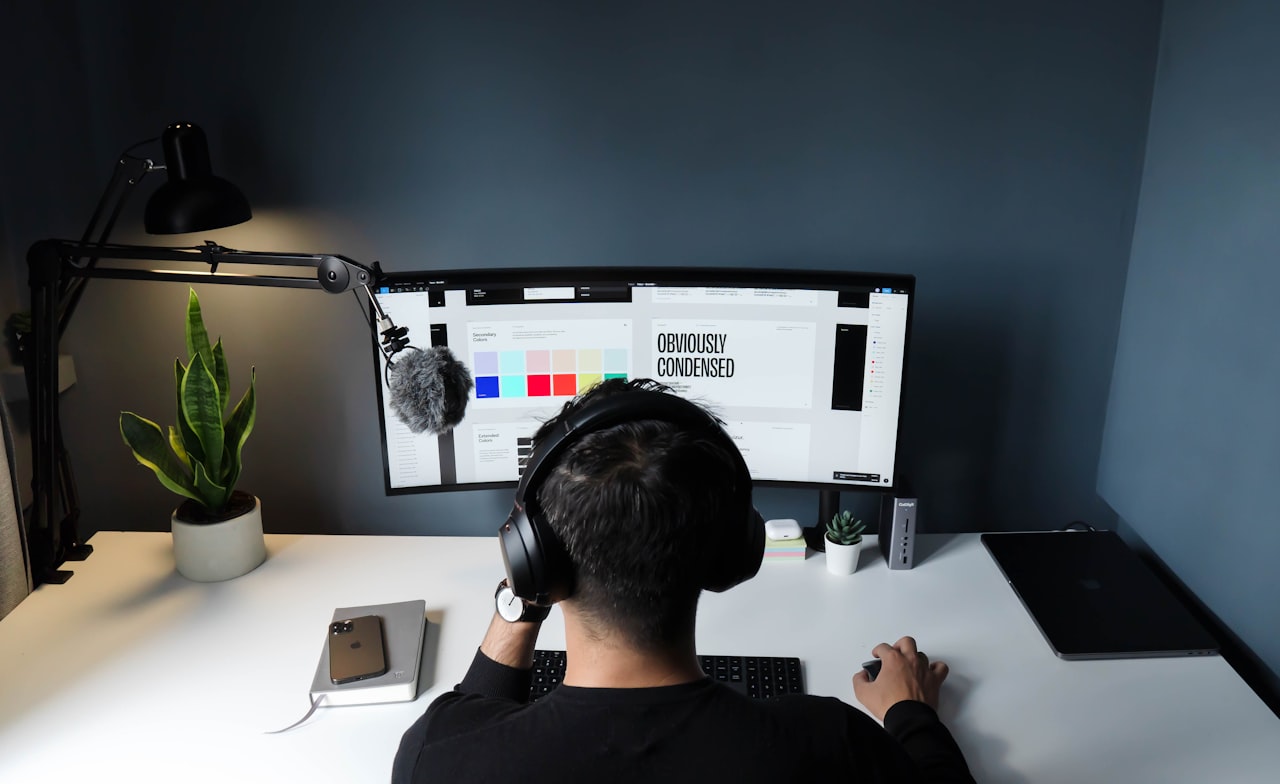
Low-fidelity clickable wireframes cost $1,000 to $4,000 using tools like Figma or Balsamiq. Mid-fidelity styled wireframes run $3,000 to $8,000. High-fidelity pixel-perfect prototypes cost $5,000 to $20,000. Coded HTML/CSS prototypes for complex interactions range from $8,000 to $30,000.
Figma has become the industry standard in Singapore’s design community, largely replacing Adobe XD and Sketch. Its collaborative features allow designers, developers and stakeholders to comment on prototypes in real time through a web browser. A high-fidelity prototype of a 20 to 30 screen mobile app typically costs $8,000 to $15,000 and serves multiple purposes: usability testing, stakeholder presentations, investor pitches and developer handoff.
UI and Visual Design Costs
UI design transforms wireframes into visually polished, branded interfaces. This encompasses colour application, typography, icon design, imagery, micro-interactions and design system creation.
UI design per web screen costs $200 to $600; per mobile screen $250 to $700. Style guides and brand application run $1,500 to $5,000. A comprehensive design system with components and documentation costs $5,000 to $20,000. Custom icon sets (20 to 40 icons) run $1,000 to $4,000. Micro-interaction design costs $500 to $3,000.
A design system is a significant investment but pays for itself by accelerating development, ensuring consistency and reducing future design costs. Any project with more than 20 to 30 screens should include one. For projects where brand identity needs development before UI design, budget an additional $3,000 to $10,000 for brand guidelines.
Mobile app UI typically costs 10 to 20 per cent more than web UI for comparable screen counts, reflecting the precision required for touch targets, platform-specific patterns (iOS HIG, Android Material Design) and adaptive layouts.
Usability Testing Costs
Usability testing validates design by observing real users interacting with your prototype. It catches friction points and confusing elements before development — saving significant money by identifying issues early.
Moderated in-person testing with 5 to 8 users costs $5,000 to $15,000. Remote moderated testing runs $3,000 to $10,000. Unmoderated remote testing costs $1,500 to $5,000 for 10 to 20 users. Expert heuristic evaluations cost $2,000 to $6,000. Accessibility audits (WCAG compliance) run $2,000 to $8,000.
Research shows that testing with just five users uncovers approximately 85 per cent of usability issues. Even a modest $3,000 to $8,000 investment identifies most problems before they become expensive development issues. Participant recruitment in Singapore typically adds $100 to $300 per participant through research agencies.
Agency vs Freelancer Pricing
The choice between agency and freelancer significantly affects both cost and service scope for UI/UX design cost Singapore budgeting.

Freelance designers with 3 to 5 years of experience charge $80 to $150 per hour or $3,000 to $8,000 for small projects (5 to 15 screens). Senior freelancers with 8-plus years command $150 to $250 per hour. Freelancers suit projects with clear scope where the primary need is visual execution.
Agencies charge $120 to $350 per hour but bring integrated capabilities: UX researchers, interaction designers, visual designers and project managers. For comprehensive UX research, complex interaction design, usability testing and polished design systems, agencies deliver a more complete solution. They also provide continuity — if one team member is unavailable, others step in.
For projects requiring both design and development, a digital agency offering integrated services eliminates handoff friction and often produces better outcomes than separate design and development teams.
Frequently Asked Questions
How much does UX/UI design cost for a mobile app in Singapore?
$10,000 to $60,000 depending on complexity. A simple app (15 to 25 screens) with basic UX work costs $10,000 to $20,000. A moderately complex app (25 to 40 screens) with research and prototyping costs $20,000 to $40,000. A complex app (40-plus screens) with comprehensive research and testing costs $40,000 to $60,000 or more. Add 30 to 50 per cent for both iOS and Android.
What is the difference between UI and UX design?
UX focuses on how a product works — structure, user flows, information architecture and usability. UI focuses on how it looks — visual design, colour palette, typography and aesthetic details. Both are essential. Good UX with poor UI looks unprofessional; good UI with poor UX is beautiful but frustrating to use.
Should I hire a UX designer or a UI designer?
Many Singapore designers offer both skills. For projects where usability and research are critical (complex applications, e-commerce, SaaS), hire a dedicated UX specialist or agency. For straightforward projects needing visual polish (simple websites, landing pages), a UI-focused designer may suffice.
How long does a typical project take?
A simple website redesign takes 3 to 6 weeks. A mid-complexity mobile app takes 8 to 12 weeks. A complex enterprise application takes 12 to 24 weeks. Client feedback delays are the most common cause of overruns — build one week of buffer for every four weeks planned.
Can I do UI/UX design in-house?
Yes, if you have skilled designers. A mid-level designer in Singapore earns $5,000 to $8,000 monthly; senior designers $8,000 to $14,000. In-house suits ongoing product development, while agencies suit project-based work or specialist capabilities like user research.
Why does UX research add so much to the cost?
Research involves recruiting participants, conducting interviews or tests, analysing findings and synthesising insights. The investment prevents far larger costs: redesigning a product that users reject is exponentially more expensive than researching their needs before design begins.
What is a design system and do I need one?
A design system is a library of reusable UI components with documentation. Projects with 20-plus screens benefit significantly — the upfront $5,000 to $20,000 investment is recovered through faster, cheaper design and development for all subsequent work.
How do I evaluate a UI/UX design proposal?
Look for clearly defined phases (research, wireframing, design, testing), realistic timelines, named deliverables, revision round limits and a project fee rather than open-ended hourly billing. Proposals that skip research or promise unrealistically fast timelines are red flags.