Trade Show Marketing: How to Maximise ROI Before, During and After the Event
Table of Contents
Why Trade Shows Remain Valuable
Despite the rise of digital marketing, trade show marketing continues to deliver unique advantages that no online channel can fully replicate. Trade shows put you face to face with hundreds or thousands of potential customers, partners and industry influencers within a condensed timeframe. The ability to demonstrate products, answer questions in real time and build rapport through personal interaction makes trade shows one of the most effective B2B marketing channels available.
For Singapore businesses, trade shows offer access to regional and international audiences that would otherwise require extensive travel. Singapore hosts more than 200 major trade exhibitions annually across industries from technology and finance to food and healthcare. Events like CommunicAsia, FHA-Food and Hotel Asia and Singapore Airshow draw global audiences to your doorstep.
The challenge is that trade shows are expensive. Between booth costs, design, travel, staffing and collateral, a single show can consume a significant portion of your annual marketing budget. This makes trade show marketing strategy essential. Without a clear plan for before, during and after the event, your investment yields a box of business cards rather than a pipeline of qualified opportunities.
Choosing the Right Trade Shows
Not all trade shows deserve your investment. Evaluate each show based on audience quality, not just size. A niche show with 2,000 highly targeted attendees may deliver better ROI than a massive expo with 50,000 people, most of whom are irrelevant to your business.
Request attendee demographics from the show organiser. Look for data on job titles, company sizes, industries and purchasing authority. If the audience profile matches your ideal customer, the show is worth investigating. If the data is vague or unavailable, that is a warning sign.
Talk to past exhibitors. Ask about lead quality, foot traffic, organiser support and whether they would exhibit again. This first-hand feedback is more valuable than any media kit. Check online reviews and industry forums for unfiltered opinions about specific shows.
Consider the competitive landscape at each show. If every major competitor exhibits at a particular event, your absence might be conspicuous. Conversely, exhibiting at a show where competitors are absent gives you a share of voice advantage. Factor both scenarios into your decision alongside your broader digital marketing strategy.
Pre-Show Marketing Strategy
The most successful exhibitors begin marketing four to six weeks before the show. Your goal is to drive qualified traffic to your booth rather than relying on walk-by traffic. Start by announcing your participation across all owned channels: email list, social media, website banner and blog post.
Request the attendee list from the organiser if available. Identify high-value prospects and reach out directly with personalised invitations to visit your booth. Offer something specific: a product demo, an exclusive preview, a consultation session or a meeting with a senior team member. Generic “come visit us at booth 42” messages get ignored.
Create a landing page dedicated to your trade show presence. Include your booth number, what visitors will experience, any presentations or demos you are hosting, and a scheduling tool for booking meetings. Promote this page through paid search targeting event-related keywords and through social media ads targeting attendee profiles.
Prepare your team with clear roles and messaging. Everyone staffing the booth should know the show objectives, key talking points, qualifying questions to ask visitors and the lead capture process. Role-play common scenarios and objections. A well-prepared team converts three to five times more leads than an unprepared one.
Booth Design and Engagement Tactics
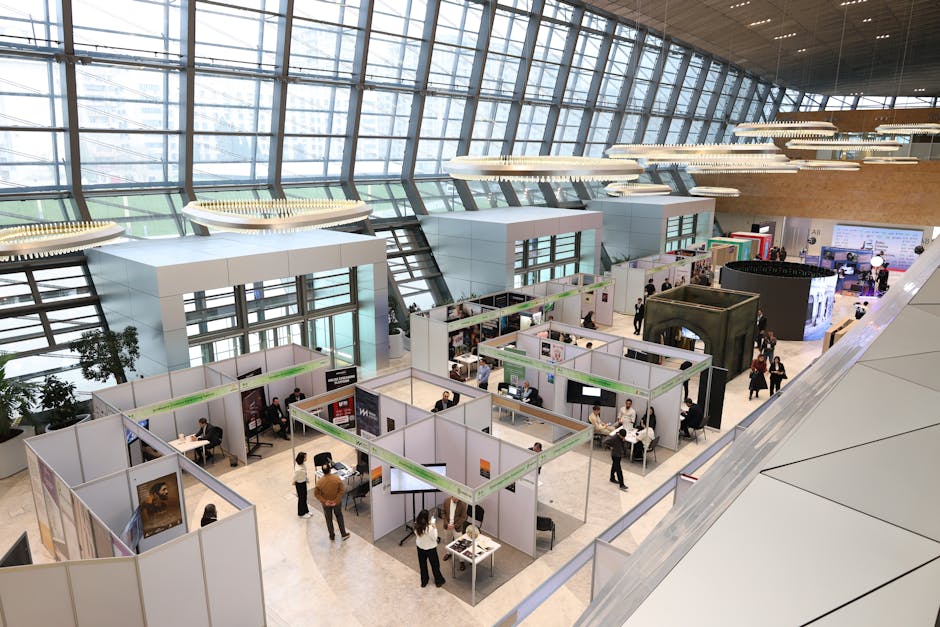
Your booth is a three-dimensional advertisement. It must communicate who you are, what you offer and why someone should stop within three seconds of walking past. Use clear, large-format messaging with a single headline that states your value proposition. Avoid cluttering the booth with multiple messages that compete for attention.
Interactive elements draw visitors in and keep them engaged. Live product demonstrations, touchscreen displays, interactive games and hands-on experiences all increase dwell time and create opportunities for conversation. The longer someone stays at your booth, the more likely they are to convert to a lead.
Giveaways and prizes generate traffic but use them strategically. A prize draw that requires visitors to scan a badge and answer qualifying questions captures data while creating buzz. Avoid generic giveaways like pens and stress balls that attract freebie collectors rather than genuine prospects. Offer items with perceived value that relate to your business.
Staff placement matters. Position your most engaging team members at the front of the booth to initiate conversations. Have technical experts available deeper in the booth for detailed discussions. Avoid the common trap of booth staff huddling together, checking phones or eating lunch at the booth. These behaviours create an invisible barrier that discourages visitors from approaching.
Lead Capture at the Event
Efficient lead capture is the difference between a successful show and a wasted one. Use badge scanning technology provided by the event organiser or bring your own lead capture app. Tools like iCapture, Leadature and Cvent LeadCapture allow you to scan badges, add notes and rate lead quality in real time.
Qualify leads on the spot. Not every visitor to your booth is a prospect. Develop a simple scoring system: hot leads who have budget, authority and timeline; warm leads who are interested but not ready; and cold leads who are just browsing. This scoring determines your follow-up priority and approach.
Capture context alongside contact details. Note what the visitor was interested in, what questions they asked, what solutions they are currently using and any specific pain points they mentioned. This context transforms generic follow-up into personalised conversations that convert. A note like “interested in our analytics platform, currently using Tableau, frustrated with licensing costs” is worth more than a name and email alone.
Set a daily lead review ritual. At the end of each show day, have your team review all captured leads, fill in missing details while memories are fresh and identify priority follow-ups. Do not wait until after the show to sort through leads. Speed matters, and details fade quickly. Feed this data into your marketing automation system for structured follow-up.
Post-Show Follow-Up That Converts
Post-show follow-up is where most exhibitors fail. Research consistently shows that 80 per cent of trade show leads never receive a follow-up. This represents an enormous waste of the investment made in attending the show. Your follow-up plan should be ready before the show starts, not assembled afterwards.
Contact hot leads within 24-48 hours of the show ending. Reference your conversation, reiterate the value proposition and propose a specific next step: a call, a demo or a meeting. Speed is critical because your competitors are contacting the same prospects. Being first creates an advantage.
Warm leads enter a nurture sequence. Send a thank-you email with valuable content related to their stated interests. Follow up with a series of emails over two to four weeks that educate, build trust and guide them toward a conversion action. Personalise based on the notes captured at the booth.
Cold leads receive a general follow-up email with broad content and an invitation to stay connected. Some will engage and warm up over time. Others will unsubscribe. Both outcomes are fine. The goal is to extract maximum value from every interaction without wasting sales resources on unqualified prospects.
Measuring Trade Show ROI
Calculate total show costs including booth space, design and build, shipping, travel, accommodation, staffing, marketing and collateral. For Singapore shows, booth space typically costs $500-1,500 per square metre, with total costs for a mid-sized booth ranging from $15,000 to $50,000 depending on the show and your setup.
Track leads through your CRM from capture to close. Measure the number of leads captured, the number that convert to opportunities, the number that close and the total revenue generated. Apply realistic timelines: B2B trade show leads often take three to twelve months to close, so measure ROI at 6 and 12-month intervals.
Calculate cost per lead and cost per acquisition for each show. Compare these metrics against your other marketing channels. Trade show marketing typically has a higher cost per lead than digital channels but a higher conversion rate because of the personal interaction involved. The net cost per acquisition may be comparable or even lower.
Factor in intangible benefits that are harder to quantify: brand visibility, competitive intelligence gathered, partnerships initiated, media coverage received and team morale from event participation. While these do not appear on a spreadsheet, they contribute to long-term business growth and should inform your decision about future shows. Compare your event performance against your overall marketing ROI benchmarks.
Frequently Asked Questions
How much does it cost to exhibit at a trade show in Singapore?
Booth space costs $500-1,500 per square metre depending on the show. A 9-square-metre shell scheme booth typically costs $5,000-15,000 for space alone. Add booth design, furniture, AV, staffing and marketing for a total investment of $15,000-50,000 for a mid-sized setup.
What are the best trade shows in Singapore?
Top shows by industry include CommunicAsia for technology, FHA for food and hospitality, Singapore FinTech Festival for financial services, BuildTech Asia for construction, and FIND Design Fair Asia for design. The best show for your business depends on where your target customers gather.
How do I stand out in a crowded trade show?
Invest in booth design that communicates your value proposition clearly. Use interactive demonstrations, live presentations and engaging staff. Pre-show marketing drives traffic to your booth. An activity or experience that draws attention, like a live demo or competition, creates natural foot traffic.
Should I sponsor a trade show or just exhibit?
Sponsorship increases visibility through logo placement, speaking opportunities and premium booth locations. It makes sense when the show audience closely matches your target market and you want to position your brand as an industry leader. For first-time exhibitors, starting with a standard booth is more cost-effective until you validate the show’s value.
How many staff should I send to a trade show?
Plan for at least two people per booth shift to allow breaks and handle multiple visitors simultaneously. For a standard 9-square-metre booth, two to three staff is typical. For larger booths with demonstration areas, four to six staff ensures coverage throughout the day.
What should I bring to a trade show?
Essentials include business cards, lead capture technology, product demonstrations or samples, branded collateral, booth accessories like charging stations and refreshments, and a repair kit for last-minute fixes. Create a packing checklist and verify everything two weeks before the show.
How do I generate leads if I cannot afford a booth?
Attend as a visitor and network strategically. Participate in conference sessions and networking events. Host a fringe event like a dinner or workshop near the venue. Partner with an exhibitor to share their booth space. Some shows offer startup pavilions at reduced rates.
What is the biggest trade show marketing mistake?
Failing to follow up with leads after the show. Studies show that 80 per cent of trade show leads never receive a follow-up. All the investment in booth design, travel and staffing is wasted if you do not convert leads into opportunities through timely, personalised follow-up.
How far in advance should I book trade show space?
Book six to twelve months in advance for major shows where premium locations sell out quickly. For smaller regional shows, three to six months is typically sufficient. Early booking often comes with discounts and better booth placement options.
Can I measure trade show ROI accurately?
Yes, with proper tracking. Use a unique lead source in your CRM for each show. Track leads from capture through to closed revenue. Measure at 6 and 12-month intervals to account for longer B2B sales cycles. Compare cost per acquisition against other marketing channels for a true ROI picture.