Part of our Marketing by Industry & Audience guide →
The SaaS GTM Landscape in Singapore
Singapore has become Southeast Asia’s primary SaaS hub. The combination of a mature digital infrastructure, strong intellectual property protections, government support for technology companies and access to regional capital has created a thriving ecosystem. Companies like Grab, Carousell, PatSnap and Nium built their SaaS foundations in Singapore before expanding globally. For SaaS founders building their go-to-market strategy, Singapore offers both opportunity and challenge.
The opportunity: Singapore businesses are highly receptive to SaaS adoption. Cloud spending in Singapore grew by approximately 25% year-on-year through 2025, and the government’s Smart Nation initiative actively promotes digital tool adoption across industries. Enterprise Singapore grants can subsidise up to 50% of qualifying SaaS solution costs, making procurement easier for your target customers.
The challenge: Singapore’s domestic market is small. With roughly 300,000 registered businesses, the total addressable market for most B2B SaaS products in Singapore alone is limited. This means your SaaS go-to-market strategy must be designed with regional or global expansion in mind from day one, even if Singapore is your initial launch market. The GTM decisions you make in Singapore — pricing model, product architecture, support infrastructure — set the template for how you scale.
What Makes SaaS GTM Unique
SaaS GTM differs from traditional software or product GTM in several critical ways. Revenue is recurring, which means customer retention matters as much as acquisition. The product can be updated continuously, so your GTM strategy evolves with your product. Distribution is digital by default, eliminating physical logistics but creating intense competition for online attention. And usage data provides real-time signals about customer health, enabling proactive intervention that physical product companies can only dream of.
These characteristics create a flywheel effect: the better your product, the more users engage; the more users engage, the more data you have to improve; the more you improve, the more users you retain and attract. Your SaaS GTM strategy must be designed to spin this flywheel from the earliest stages.
Choosing Your GTM Model: PLG, Sales-Led or Hybrid
The most consequential decision in your SaaS go-to-market strategy is choosing your GTM motion. This decision affects your product design, team structure, pricing, metrics and growth trajectory.

Product-Led Growth (PLG)
In PLG, the product itself is the primary vehicle for customer acquisition, conversion and expansion. Users discover your product through search, word of mouth or content marketing. They sign up for a free trial or freemium tier. They experience value before speaking to anyone from your company. They convert to paid plans through self-serve purchasing. And they expand their usage (and spend) organically as they discover more features or invite team members.
PLG works best when your product solves a clear problem that individual users can experience independently, the time-to-value is short (minutes to hours, not days to weeks), the product is intuitive enough to use without training, the price point is low enough for individual or team-level purchasing authority and the product has natural viral or collaborative properties.
Sales-Led Growth
In a sales-led model, human salespeople drive customer acquisition. Prospects are identified through outbound prospecting, inbound lead generation or partnerships. They are qualified through discovery calls, engaged through demos and proposals, and closed through negotiation. Post-sale, account managers handle onboarding, upselling and renewal.
Sales-led GTM works best when your product is complex and requires configuration or integration, deal sizes are large (above SGD 20,000 annually), the buying process involves multiple stakeholders, customers need customisation or professional services and trust and relationship are critical to the purchase decision.
Hybrid Model
Most successful SaaS companies eventually operate a hybrid model, using PLG for smaller customers and sales-assisted motions for larger accounts. The hybrid model captures the efficiency of PLG at the bottom of the market while capturing the deal sizes and retention rates that sales relationships enable at the top.
Choosing your starting point depends on your product, market and resources. If you have limited capital and a product with natural self-serve potential, start with PLG. If you are targeting enterprise customers with complex needs, start sales-led. If you have both the product and the team, consider hybrid from day one. Your digital marketing strategy should align with whichever model you choose.
Product-Led Growth: Strategy and Execution
PLG is deceptively simple in concept but demanding in execution. Making your product the primary growth engine requires deep alignment between product design, marketing and growth experimentation.
Designing for PLG
Your product must deliver a meaningful “aha moment” quickly. This is the point where a new user first experiences the core value of your product. For Slack, it was sending the first message and getting a reply. For Canva, it was creating a professional-looking design in minutes. For your product, identify the shortest path from signup to value delivery and remove every obstacle in between.
Self-serve onboarding is non-negotiable in PLG. Users must be able to sign up, configure the product and start using it without human assistance. This requires intuitive UX design, contextual help content, progressive disclosure (showing features gradually rather than overwhelming users upfront) and smart defaults that make the product useful immediately. Every additional step in your onboarding flow reduces activation by 10–20%.
The PLG Funnel
The PLG funnel has five stages: Acquisition (visitors arrive at your site or app store listing), Activation (users sign up and experience the core value), Revenue (users convert from free to paid), Retention (users continue using and paying) and Referral (users invite others or advocate for your product). This is the AARRR framework, and each stage requires specific optimisation.
Acquisition in PLG relies heavily on organic channels. SEO is typically the highest-leverage channel because it captures users actively searching for solutions to problems your product solves. Content marketing, community building, social media and viral loops within the product complement organic search. Paid acquisition can accelerate PLG but must be justified by unit economics — your CAC must be recoverable within a reasonable payback period (typically under 12 months).
Free Trial vs Freemium
Free trials offer full product access for a limited time (typically 7, 14 or 30 days). They create urgency but also create a cliff where users must decide to pay or leave. Freemium offers limited product access indefinitely, with premium features behind a paywall. Freemium builds a larger user base but conversion rates are typically lower (2–5%) compared to free trials (10–25%).
For Singapore SaaS companies, the choice depends on your product’s stickiness and time-to-value. If users can experience meaningful value in under a week, a 14-day free trial works well. If your product requires weeks of usage to demonstrate full value (such as analytics or project management tools), freemium allows users to build habits before being asked to pay. Many successful SaaS companies use a hybrid: freemium for individuals and free trials for team or business features.
PLG Metrics
The critical PLG metrics are: visitor-to-signup conversion (benchmark: 2–5% for websites), signup-to-activation rate (target: 20–40%), free-to-paid conversion (benchmark: 2–5% for freemium, 10–25% for trials), time-to-value (shorter is better), natural rate of expansion (how quickly do accounts grow their usage?), and viral coefficient (how many new users does each existing user bring?). Track these metrics daily and run continuous experiments to improve them.
Sales-Led Growth: Strategy and Execution
Sales-led SaaS GTM in Singapore requires building a pipeline engine, training a sales team and creating repeatable processes for converting prospects into customers.
Building the Pipeline
Sales-led SaaS companies need a consistent flow of qualified leads. In Singapore, the most effective pipeline sources are: inbound marketing (content, SEO, Google Ads), LinkedIn outreach (highly targeted to ICP), referrals from existing customers, technology partner referrals and event networking. Plan for a blended pipeline where no single source accounts for more than 40% of total pipeline — this prevents catastrophic revenue impact if any single channel underperforms.
Outbound prospecting in Singapore requires a respectful, value-led approach. Aggressive cold calling and spammy email sequences damage your brand in Singapore’s tight-knit business community. Instead, focus on warm introductions through mutual connections, personalised outreach that demonstrates genuine understanding of the prospect’s business and thought leadership content that positions your founders as industry experts.
The Sales Process
Design a sales process that matches your buyer’s journey, not your internal convenience. A typical enterprise SaaS sales process in Singapore includes: initial outreach or inbound inquiry, discovery call (understanding the prospect’s problems, priorities and process), tailored demo (showing how your product solves their specific problems), proposal and pricing discussion, security and compliance review, procurement negotiation and close. Each stage should have defined entry criteria, exit criteria and expected duration.
Enterprise Selling in Singapore
Enterprise sales in Singapore have specific characteristics. Decision-making often involves consensus among multiple stakeholders — pushing one champion without engaging the broader buying committee leads to stalled deals. Procurement processes at large companies and GLCs are formal, often involving vendor assessments, security questionnaires and legal review. Data residency is a common concern — enterprise buyers want assurance that data is stored in Singapore or within approved jurisdictions. Budget cycles are typically annual, meaning timing your sales efforts to align with budget planning (usually Q3–Q4 for the following year) significantly improves close rates.
The Hybrid Model: Combining PLG and Sales
The hybrid model is increasingly becoming the default for high-growth SaaS companies. It uses PLG to efficiently acquire and activate users, then layers sales assistance on top for accounts that show expansion potential.

Product-Qualified Leads
The bridge between PLG and sales is the product-qualified lead (PQL). A PQL is a user or account that has demonstrated through product usage that they are likely to convert to a paid plan or expand their current plan. PQL signals include: hitting usage limits on a free tier, inviting multiple team members, using advanced features, integrating with other tools or spending significant time in the product. These signals are far more predictive of purchase intent than traditional MQLs based on content downloads or webinar attendance.
Set up automated PQL identification using your product analytics. When an account triggers PQL criteria, route them to sales for a personalised outreach that builds on their existing product experience. This outreach is highly effective because the prospect has already experienced your product’s value — the salesperson’s role is to help them envision expanded usage and handle procurement logistics, not to convince them the product works.
Self-Serve to Sales-Assisted Transition
Design clear upgrade paths within your product that naturally lead users toward sales engagement. Usage-based limits that trigger conversations about enterprise plans, in-app prompts to “talk to an expert about team features,” and customer success check-ins triggered by usage milestones all create natural bridges from self-serve to sales-assisted relationships. The transition should feel helpful, not pushy — you are offering additional value, not interrupting their experience.
Team Structure for Hybrid
A hybrid SaaS GTM team typically includes: growth/product marketing (driving acquisition and activation), self-serve customer success (managing free and small paid accounts through automation and content), sales development representatives (qualifying PQLs and inbound leads), account executives (closing mid-market and enterprise deals), and customer success managers (managing relationship accounts post-sale). Start lean and add roles as volume justifies them — most Singapore SaaS startups can run a hybrid model with five to ten people initially.
SaaS Pricing Strategy
SaaS pricing is a lever that directly affects every GTM metric: conversion rates, average revenue per account, expansion revenue, churn and competitive positioning. Getting pricing right (or at least less wrong) is one of the highest-impact activities in your GTM planning.
Pricing Models
Per-seat pricing charges based on the number of users and is simple to understand but can create adoption barriers (companies limit seats to save money, reducing product stickiness). Usage-based pricing charges based on consumption metrics (API calls, messages sent, storage used) and aligns cost with value but creates budget unpredictability. Flat-rate pricing charges a single price for full access and is the simplest model but does not capture value from power users. Tiered pricing offers multiple plans at different price points with progressively more features or capacity and is the most common SaaS pricing structure because it captures different segments.
For Singapore SaaS companies, tiered pricing with three to four plans (Free/Starter, Professional, Business, Enterprise) is the safest starting point. This structure accommodates self-serve buyers at the lower end and sales-assisted buyers at the upper end, aligning with a hybrid GTM model.
Pricing for the Singapore Market
Singapore SaaS pricing typically falls between US and Southeast Asian benchmarks. Enterprise SaaS buyers in Singapore expect pricing comparable to global alternatives (they will not pay a premium for a local product, but they also do not expect deep discounts). SME buyers are more price-sensitive and compare against regional alternatives from India, the Philippines and other lower-cost markets.
Price in USD for global products or SGD for Singapore-specific products. Display prices excluding GST with a clear note that 9% GST applies — this is the standard practice in Singapore B2B transactions. Offer annual billing with a 15–20% discount over monthly pricing to improve cash flow and reduce churn (annual customers churn at roughly half the rate of monthly customers).
When to Change Pricing
Review pricing every six to twelve months and do not be afraid to adjust. Most SaaS companies underprice initially. If you are closing more than 50% of proposals without negotiation, you are probably too cheap. If your churn is very low and customers frequently say you are “great value,” you have room to increase prices. Grandfather existing customers on their current pricing for six to twelve months when you increase prices — this is both fair and reduces churn from price changes.
Onboarding and Activation
Onboarding is where most SaaS GTM strategies succeed or fail. You can acquire users efficiently, but if they do not activate — if they do not experience your product’s core value — they churn before generating revenue.
Defining Your Activation Metric
Identify the specific action or set of actions that correlate with long-term retention. This is your activation metric. For a project management tool, activation might be “created a project with three or more tasks and invited at least one team member.” For an analytics tool, it might be “connected a data source and viewed the first dashboard.” For a communication tool, it might be “sent and received at least ten messages.” Analyse your existing user data to find the actions that best predict retention, then optimise your onboarding to drive users toward those actions.
Onboarding Best Practices
Reduce time-to-value aggressively. Every minute between signup and activation is a minute where users can get distracted, confused or discouraged. Use progressive onboarding that guides users through essential actions without overwhelming them. Provide templates, sample data and pre-configured settings that let users experience value immediately rather than starting from a blank slate.
Personalise onboarding based on user role, company size and stated goals. A marketing manager and a finance director using the same tool need different onboarding flows. Use a short signup questionnaire (two to three questions maximum) to segment users and serve relevant onboarding paths. Combine in-app guidance with email sequences that provide tips, use cases and encouragement during the first 14 days.
Measuring Onboarding Effectiveness
Track onboarding completion rate (percentage of signups who complete the onboarding flow), time-to-activation (how long from signup to activation action), and activation rate (percentage of signups who reach your activation metric). Benchmark: aim for 30–50% activation rate for PLG products and 60–80% for sales-led products (where customers have already been pre-qualified). If your activation rate is below 20%, onboarding is your most critical GTM bottleneck.
Scaling Your SaaS GTM
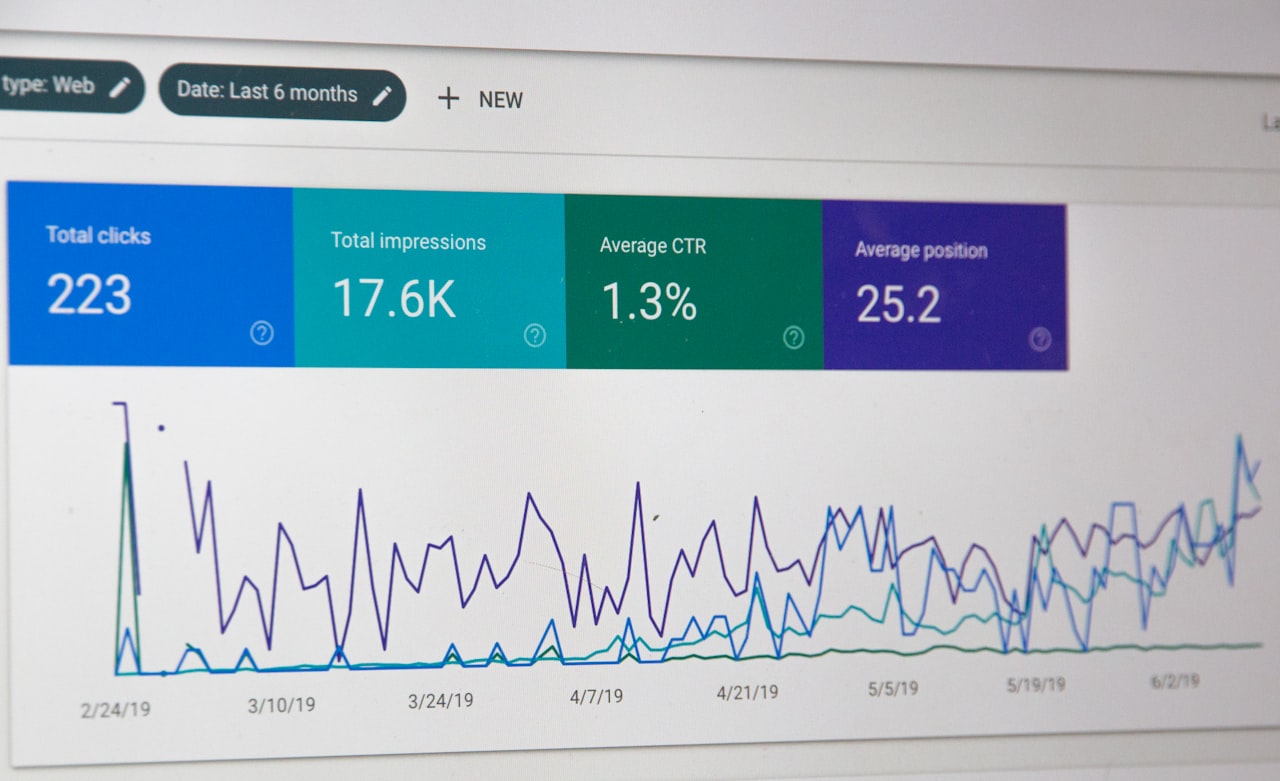
Scaling SaaS GTM means growing revenue predictably while maintaining or improving efficiency metrics. This requires systematic investment across acquisition, conversion, retention and expansion.
The Path to SGD 1 Million ARR
For most Singapore SaaS startups, the first SGD 1 million in annual recurring revenue (ARR) comes from a combination of founder-led sales, early adopter evangelism and one or two marketing channels that produce consistent leads. At this stage, the GTM is not scalable — it depends heavily on founder energy and relationships. The goal is not efficiency but learning: understanding your ICP, refining your messaging, proving your sales process and validating your pricing.
SGD 1 Million to SGD 5 Million ARR
This stage requires building repeatable processes and hiring specialists. Add dedicated salespeople, build out content marketing and SEO for compounding organic acquisition, invest in marketing automation and develop a customer success function to reduce churn. At this stage, your key metrics are: CAC payback period (target under 12 months), net revenue retention (target above 100%, meaning expansion exceeds churn), and sales efficiency (new ARR generated per dollar of sales and marketing spend, target above 0.8).
Beyond SGD 5 Million ARR
At this stage, you are building a growth machine. Invest in brand, expand into new markets (regionally from Singapore into Southeast Asia, or vertically into new industries), build partnerships and channel sales, consider adding new product lines and optimise every stage of the customer lifecycle for efficiency. Most SaaS companies at this scale are spending 40–60% of revenue on sales and marketing — this is normal and necessary for growth-stage companies.
Regional Expansion from Singapore
Singapore is a launchpad, not a destination, for most SaaS companies. When expanding regionally, prioritise markets where your product has natural demand. For B2B SaaS, Malaysia and Hong Kong are typically the easiest initial expansion markets due to English-language business environments. Indonesia and Thailand offer larger addressable markets but require product localisation (language, payment methods, compliance). Australia and Japan are lucrative but culturally distinct markets that require dedicated local teams.
Frequently Asked Questions
What is the best GTM model for an early-stage SaaS startup in Singapore?
If your product has a short time-to-value and can be used independently by individual users, start with product-led growth — it is the most capital-efficient GTM model. If your product is complex, requires integration or targets enterprise buyers, start sales-led. Most SaaS companies should plan to evolve toward a hybrid model as they grow, using PLG for efficient acquisition at the bottom of the market and sales for larger deals at the top.
How much should a Singapore SaaS startup spend on GTM?
Growth-stage SaaS companies typically spend 40–60% of revenue on sales and marketing. For pre-revenue or early-revenue startups, budget SGD 10,000–30,000 per month for marketing activities (content, ads, events, tools) plus the cost of any sales hires. If you are venture-funded, your investors likely expect you to spend aggressively on GTM — discuss spending targets with your board. If you are bootstrapped, focus on high-ROI organic channels (SEO, content, community) and be disciplined about paid spend.
How do I choose between freemium and free trial?
Choose freemium if your product has strong network effects (more users equals more value), your marginal cost per user is very low, and you can clearly differentiate free and paid tiers. Choose free trial if your product’s value is difficult to experience in a limited version, your ideal customer is evaluating seriously (not casually browsing), and you need a shorter path to revenue. Many SaaS companies test both models and let data decide — run a 30-day experiment and compare activation and conversion rates.
What is a good SaaS churn rate?
For B2B SaaS, monthly churn below 2% (less than 22% annual) is acceptable for SME-focused products. Enterprise-focused SaaS should target monthly churn below 1% (less than 11% annual). Best-in-class SaaS companies achieve net negative churn, meaning expansion revenue from existing customers exceeds revenue lost from churned customers. If your churn exceeds 3% monthly, it is a GTM emergency — you are either acquiring the wrong customers or your product is not delivering sufficient value.
How do I compete with global SaaS companies in Singapore?
Compete on local relevance, not feature parity. Build integrations with Singapore-specific platforms (IRAS for tax, PayNow for payments, SingPass for identity verification, GovTech APIs). Provide local support in Singapore business hours. Understand Singapore regulatory requirements (PDPA, MAS regulations, ACRA compliance) and build them into your product. Price competitively but do not race to the bottom — compete on value delivered, not on being the cheapest option.
When should I hire a head of sales for my SaaS company?
Hire a head of sales after you (as founder) have personally closed at least 10–20 customers and developed a repeatable sales process with documented playbook, clear ICP definition and predictable conversion rates. Hiring a sales leader too early — before you understand your own sales process — leads to expensive failure because they will build a team around assumptions rather than validated knowledge. In Singapore, an experienced SaaS sales leader commands SGD 150,000–250,000 in total compensation.
How important is content marketing for SaaS GTM?
Content marketing is one of the most important long-term investments in SaaS GTM. It drives organic acquisition through SEO, educates prospects during the consideration phase, supports sales enablement and builds brand authority. However, content takes time to produce results — expect six to twelve months before SEO-driven content generates meaningful traffic. Start creating content on day one of your GTM but do not rely on it as your primary acquisition channel in the first six months.
What SaaS metrics should I track from day one?
From day one, track: Monthly Recurring Revenue (MRR), number of paying customers, churn rate (customers and revenue), activation rate, CAC by channel and average revenue per account (ARPA). As you scale, add: LTV-to-CAC ratio, CAC payback period, net revenue retention, expansion MRR, sales cycle length and pipeline coverage ratio. Set up analytics infrastructure before launch — retrofitting measurement after launch means you lose critical early-stage data.
Is Singapore a good market to validate a SaaS product before going global?
Singapore is an excellent validation market for several reasons: sophisticated, tech-savvy buyers who provide high-quality feedback; English as the primary business language (eliminating localisation needs); strong IP protections; and a compact market where you can achieve meaningful penetration quickly. The main limitation is that Singapore’s small market size means achieving large-scale revenue locally is difficult. Use Singapore to validate product-market fit, pricing and sales processes, then expand regionally or globally for scale.
How do I handle SaaS pricing for different Southeast Asian markets?
Purchasing power parity across Southeast Asia varies enormously — Singapore’s GDP per capita is roughly 10x that of Indonesia or the Philippines. Most SaaS companies use regional pricing tiers: Singapore/Hong Kong pricing at or near global rates, Malaysia/Thailand at 30–50% discount, and Indonesia/Philippines/Vietnam at 50–70% discount. Implement geo-based pricing carefully to prevent arbitrage (customers using VPNs to access cheaper pricing). Consider different product tiers for different markets rather than simply discounting your full product.