Overview
Little Shepherds’ Schoolhouse is a Singapore preschool with a clear pedagogical identity — nurturing, faith-informed, strongly child-centred — that was invisible in its own website. The previous site carried the formal corporate-template aesthetic that defaults across the Singapore preschool category, reading like an administration portal rather than a place parents would trust with their three-year-old. We rebuilt the site to carry the school’s identity properly, on an SEO foundation strong enough that prospective parents could actually find it.
Project Snapshot
- Sector: Early childhood education, Singapore
- Engagement: Full website rebuild with local SEO foundation
- Timeline: Design-to-launch with structured revision rounds
- The rebuilt site is live at littleshepherdsschoolhouse.edu.sg, indexed, and operating as the primary digital touchpoint for prospective families
- The design pivot — corporate template to child-centred storytelling — gives the school a digital presence that finally matches the in-person experience parents cite in feedback
The Challenge
Preschool decisions are emotionally loaded, and the website does a disproportionate share of trust-building before a tour is ever booked. The old site failed predictably: adult-corporate aesthetics signalling administration rather than education; curriculum buried under enrolment process; the faith dimension inconsistently handled page to page; and minimal SEO, so the school wasn’t found even by parents searching its own neighbourhood.
Our Approach
- Discovery and positioning — sessions with the leadership team to separate the values that genuinely shape the school’s culture from the ones that appear on every preschool website without operational backing.
- Child-centred design language — vibrant palette, typography and imagery direction resonating with children and parents alike, including point-of-view storytelling narrating parts of the school from the children’s perspective.
- Architecture with proper weighting — curriculum and pedagogy surfaced front and centre as the differentiators they are; enrolment, fees, faculty and testimonials each given their place without burying the story.
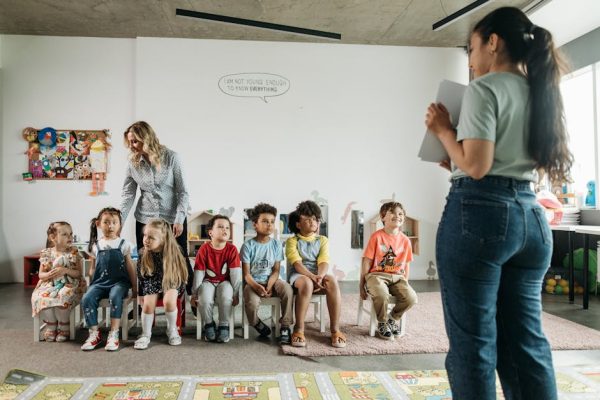
- Authentic imagery — actual classrooms, children and faculty wherever possible; stock-only preschool sites read as inauthentic and damage trust.
- SEO foundation — mobile-first responsive WordPress build, fast loading, educational-organisation schema, NAP-consistent local presence, and post-launch on-page work covering local preschool and curriculum queries.
The Results
- The rebuilt site is live at littleshepherdsschoolhouse.edu.sg, indexed, and operating as the primary digital touchpoint for prospective families
- The design pivot — corporate template to child-centred storytelling — gives the school a digital presence that finally matches the in-person experience parents cite in feedback
- Structured revision rounds kept the build aligned with the school’s vision through design, development, review and launch

Why This Worked
Preschool websites in Singapore default to a corporate-administrative register — formal templates, enrolment procedure front and centre, stock photography of generic classrooms. That default fails the actual job: parents choosing where their three-year-old will spend most waking hours for two formative years are making an emotional decision, and the website does most of the trust-building before any tour is booked. The rebuild worked because it took that emotional job seriously as a design brief.
The discovery phase separated genuine culture from website boilerplate — the specific daily-experience details parents cited in feedback became the content spine, and the values framework that actually shaped the school’s operations (rather than the values every preschool lists) got confident, unhedged treatment. The point-of-view storytelling — narrating parts of the site from the children’s perspective — made the school’s warmth tangible instead of claimed.
None of that came at SEO’s expense: mobile-first build, fast templates, educational-organisation schema, consistent local presence and post-launch on-page work covering local and curriculum queries. Emotional design and search discipline are usually presented as a trade-off; this build treated them as the same project.
Key Takeaways
- For preschools, the website’s job is emotional trust-building — administration information comes second.
- Authentic imagery is non-negotiable in early childhood: stock-only sites read as inauthentic and cost tours.
- Values content only works when it reflects real operations; hedged or boilerplate values are invisible.
- Design warmth and SEO discipline are compatible — schema, speed and local signals don’t show in the aesthetic.
- Structured revision rounds keep a strongly-opinionated design aligned with the client’s vision.
Frequently Asked Questions
Why does point-of-view storytelling matter on a preschool site?
Because parents can’t visit every shortlisted school, and paragraphs of pedagogy jargon don’t transmit atmosphere. Narrating the environment from the child’s perspective lets a parent feel a morning at the school — which is the decision they’re really making.
How should a preschool handle faith positioning online?
With confidence and clarity. Overstating alienates secular families who’d otherwise thrive there; understating surprises families later. Little Shepherds’ rebuild stated the faith-informed dimension plainly and let parents self-select — which improves both enquiry quality and eventual fit.
What SEO foundations matter most for a preschool website?
Local search signals above all: educational-organisation schema, name-address-phone consistency across directories, area-specific page content, and fast mobile performance — because “preschool near me” and neighbourhood queries are where enrolment decisions start.
What was in the site architecture?
Curriculum detail, enrolment procedures, fees, faculty introductions, testimonials and extracurricular programmes — each surfaced with deliberate weight, so parents move from first impression to operational detail without friction or burial.
What was wrong with the previous website?
Adult-corporate aesthetics signalling administration rather than education, curriculum buried under enrolment process, inconsistent handling of the school’s faith dimension, and minimal SEO — so even neighbourhood searches weren’t finding the school.
How were three revision rounds used?
As structured checkpoints across design, development and review — keeping a strongly opinionated, child-centred design aligned with the leadership’s vision without endless unstructured iteration.
What schema and local signals were implemented?
Educational-organisation schema, NAP-consistent local citations, mobile-first fast templates and social integration — the technical layer beneath the storytelling that makes the site findable for local preschool queries.
How does the site support enrolment operations beyond marketing?
The architecture pre-answers the questions that consumed staff time — curriculum detail, fees, enrolment procedure, faculty backgrounds — so tour conversations start further along, and enquiry forms arrive from parents who already understand the school’s approach. Front-office load went down as enquiry quality went up.