Marketing for Landscaping: How to Get More Clients in Singapore in 2026
Why Landscaping Marketing Matters in Singapore
Singapore’s identity as a Garden City creates consistent demand for landscaping services. From HDB town councils maintaining communal gardens to private condominium developments investing in grounds upkeep, from landed property owners redesigning their gardens to commercial developments creating green walls and rooftop gardens, the market is substantial and growing.
Yet most landscaping businesses in Singapore rely almost entirely on referrals and word of mouth. While referrals are valuable, they are unpredictable and difficult to scale. A deliberate digital marketing strategy supplements referrals with a consistent, controllable pipeline of new enquiries.
The challenge for most landscapers is not the quality of their work but their visibility. The work is inherently visual, the services are local, and the customer journey maps neatly onto digital marketing channels. Potential clients searching for “landscaper near me” or browsing Instagram for garden inspiration cannot hire you if they cannot find you. This guide addresses that gap.
Local SEO for Landscaping Businesses
Landscaping is a local service. Your clients are property owners, estate managers, and businesses within a serviceable radius. Local SEO ensures your business appears when these prospects search for landscaping services in their area.

Your Google Business Profile is the starting point. Optimise it specifically for landscaping:
- Primary category: “Landscaper” — this is a specific Google category available in Singapore
- Secondary categories: Add “Garden Centre,” “Landscape Designer,” “Tree Service,” or “Lawn Care Service” as applicable to your business
- Services: List every service with descriptions — landscape design, garden maintenance, tree pruning, turfing, irrigation system installation, hardscaping, vertical gardens, and any specialised services
- Service area: Define your coverage area accurately. If you serve all of Singapore, say so. If you focus on specific regions, define those boundaries
- Photos: Upload your best project photos. Before-and-after comparisons work particularly well on Google Business Profile. Add photos regularly — monthly uploads signal an active business
For landscaping businesses, the local SEO fundamentals are straightforward to implement but rarely done well by competitors. Most landscaping companies have either no Google Business Profile or a neglected one with minimal information and few reviews. This represents an opportunity — thorough optimisation can quickly move you ahead of competitors in local search results.
Build location-specific content on your website. If you serve distinct areas of Singapore, create pages that target those areas — “landscaping services in Bukit Timah,” “garden maintenance in Sentosa Cove,” “commercial landscaping in Changi Business Park.” Each page should reference the specific types of properties and landscaping needs common in that area.
NAP (name, address, phone) consistency across your website, Google Business Profile, and all directory listings is fundamental. Ensure your business details are identical everywhere they appear online. List your business in relevant directories — NParks landscape industry directory, Singapore Landscape Architecture Association, and general business directories like Yellow Pages Singapore.
Before-and-After Portfolio Content
Before-and-after content is the most powerful marketing asset a landscaping business can create. Nothing demonstrates your capability more convincingly than visual proof of transformation. This content performs across every marketing channel — your website, social media, Google Business Profile, and email marketing.
Building an effective portfolio requires a systematic approach:
Documentation discipline: Photograph every project at the same stages — before work begins, during key milestones, and after completion. Use the same camera angles for before and after shots. Capture wide shots of the full landscape and close-ups of details like planting, hardscaping, and water features.
Project case studies: Go beyond simple before-and-after images. Create detailed case studies for your best projects that cover the client’s brief and requirements, site challenges and how you addressed them, design rationale and plant selection, materials used and why, project timeline, and the client’s feedback. These case studies serve as both marketing content and SEO assets — they target long-tail keywords like “condo rooftop garden design Singapore” or “landed property landscape renovation.”
Categorise your portfolio: Organise projects by property type (landed house, condo, commercial, HDB), by service type (full landscape design, garden maintenance, hardscaping, vertical gardens), and by style (tropical, minimalist, Japanese-inspired, edible gardens). This categorisation helps potential clients find relevant examples and allows you to create category pages that target specific search queries.
Video content: Time-lapse videos of landscaping projects perform exceptionally well on Instagram Reels, TikTok, and YouTube Shorts. Set up a camera to capture the transformation and condense it into a 30 to 60-second video.
Always get written permission from clients before using their property in your marketing materials. Include the client’s testimonial alongside the project photos for maximum impact.
Google Ads for Landscaping Companies
Google Ads can generate immediate enquiries while your organic SEO strategy builds momentum. For landscaping businesses, Google Ads works best when targeting high-intent, service-specific keywords.
Structure your campaigns around service types:
- Landscape design and renovation: Target keywords like “landscape designer Singapore,” “garden renovation,” “backyard makeover Singapore.” These are high-value projects with strong margins
- Garden maintenance: Target “garden maintenance Singapore,” “lawn mowing service,” “tree pruning service.” These are recurring revenue opportunities — a single client may provide monthly income for years
- Specific services: Target niche keywords like “turfing service Singapore,” “irrigation installation,” “vertical garden installation.” These attract prospects with specific, immediate needs
- Commercial landscaping: Target “commercial landscaping Singapore,” “office garden maintenance,” “condo landscape contractor.” Commercial projects tend to be larger in value and longer in duration
Set geographic targeting appropriately. If you are based in the east but serve all of Singapore, you may choose to bid higher for areas closer to your base (lower travel costs, higher margins) and lower for distant areas. Use location bid adjustments rather than excluding areas entirely — you do not want to miss a large commercial project simply because it is across the island.
Landing pages for landscaping Google Ads should feature your best project photos prominently. Unlike many service industries where text-heavy landing pages perform well, landscaping prospects want to see your work. Combine strong visuals with clear calls to action — “Get a Free Site Assessment” or “Request a Design Consultation” — and a simple contact form.
Track your cost per lead and cost per acquired client. Landscaping projects vary enormously in value — a one-time garden clean-up might be $300 while a full landscape design and installation could be $30,000. Segment your tracking by service type to understand which campaigns are genuinely profitable, not just which generate the most leads.
Social Media Strategy
Landscaping is one of the most social media-friendly industries. The visual nature of the work, the seasonal variety, and the aspirational appeal of beautiful outdoor spaces create natural content opportunities.
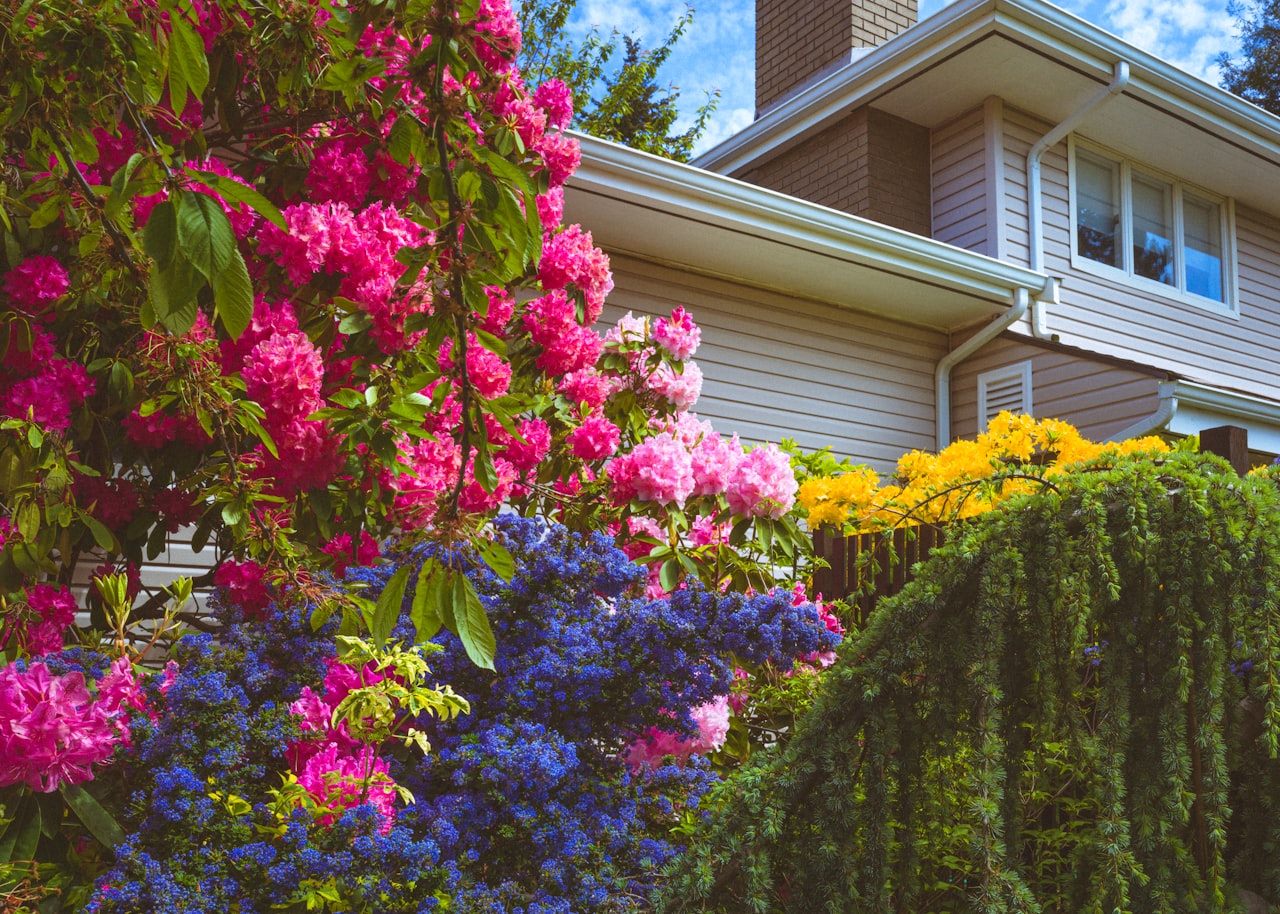
Instagram is your primary platform. Effective Instagram content for landscaping includes:
- Before-and-after carousel posts showing complete transformations
- Reels showing time-lapse project progress
- Plant identification and care tips specific to Singapore’s climate
- Behind-the-scenes content of your team at work
- Seasonal planting guides and garden inspiration
- Stories featuring daily work, site visits, and nursery trips
Facebook serves a different purpose — engage with community groups, condo residents’ groups, and home improvement forums. Provide helpful advice without overtly selling, and your profile will attract enquiries naturally.
YouTube is underutilised by landscapers but offers significant potential. Longer-form video content — garden design walkthroughs and plant selection guides for Singapore’s climate — builds authority and attracts search traffic from the second-largest search engine.
Consistency matters more than volume. Posting three high-quality Instagram posts per week with strong imagery and thoughtful captions outperforms daily posts with mediocre content. Batch your content creation — spend one day per month photographing recent projects and creating enough content for the following weeks.
Seasonal Promotions and Campaign Planning
While Singapore lacks dramatic seasonal changes, landscaping demand does follow predictable patterns. Aligning your marketing campaigns with these patterns maximises their impact.
Pre-Chinese New Year (December to January): Many property owners want their gardens looking pristine for the new year. Promote garden clean-up packages, new plantings, and general maintenance services. This is your busiest period for residential maintenance — market early to fill your schedule before competitors claim the bookings.
Post-monsoon (February to March): Heavy rains during the monsoon season can damage gardens, wash out soil, and encourage overgrowth. Market garden restoration, drainage improvement, and replanting services to property owners dealing with monsoon aftermath.
Mid-year (May to July): This is historically a slower period for residential landscaping. Use this time to push commercial landscaping services, offer promotions for garden design consultations, or run Google Ads campaigns at lower costs due to reduced competition.
National Day and year-end period (August to December): Condo management committees often plan landscaping upgrades ahead of AGMs or year-end social events. Target condo MCSTs and property managers with commercial landscape proposals during this period.
Create seasonal content that aligns with these periods. Blog posts about “preparing your garden for Chinese New Year” or “monsoon-proofing your landscape” attract timely search traffic and position your business as the natural service provider. Publish this content four to six weeks before the relevant season to allow time for indexing and ranking.
Email marketing is effective for seasonal promotions. Send quarterly newsletters with seasonal gardening tips, project showcases, and relevant promotions. Past clients who receive a well-timed “pre-CNY garden refresh” email often rebook without shopping around.
Marketing to Commercial Clients
Commercial landscaping contracts — condominiums, office buildings, shopping centres, hotels, and industrial estates — provide stable, recurring revenue. Marketing to commercial clients requires different strategies than marketing to homeowners.
Website content for commercial clients: Create a dedicated commercial services section on your website. Commercial decision-makers — property managers, MCST committee members, facility managers — evaluate landscapers differently than homeowners. They want to see your commercial portfolio, understand your maintenance capabilities, know your team size and equipment inventory, and review your safety and compliance credentials.
Proposal and tender readiness: Many commercial landscaping contracts are awarded through tenders. Ensure your website communicates your capability — relevant certifications (BCA, NParks), insurance coverage, team qualifications, and project management methodology.
LinkedIn and industry partnerships: For commercial client acquisition, LinkedIn is more effective than Instagram. Connect with property managers, facility management companies, and real estate developers. Build relationships with architects and interior designers who generate referrals for commercial projects. Attend industry events hosted by the Singapore Institute of Landscape Architects and BCA.
Integrate your commercial marketing with your home services SEO strategy. While the audience is different, the SEO principles — local optimisation, service-specific content, and trust signals — remain consistent. Commercial prospects research online just as thoroughly as residential clients.
Reputation Management and Reviews
Landscaping is a high-trust service. Clients are inviting you onto their property, trusting you with their outdoor spaces, and often committing to significant expenditure. Your online reputation directly influences whether prospects choose to contact you or move on to a competitor.

Build a systematic review collection process:
Timing: Request reviews at the moment of maximum satisfaction — typically when you complete a project and the client sees the finished result for the first time. The emotional impact of a transformed garden creates the strongest motivation to leave a positive review.
Method: Send a direct link to your Google review page via WhatsApp or SMS. Verbal requests work, but follow-up messages with direct links convert at significantly higher rates.
What to ask for: Guide clients on what to mention — the specific service, the property type, and what they valued most. Encourage photo uploads with reviews, as these attract more attention and provide visual proof of your work quality.
Respond to every review within 48 hours. Thank positive reviewers specifically and address any concerns raised in negative reviews professionally and constructively. Your responses are visible to every potential client who reads your reviews — they are evaluating how you handle both praise and criticism.
Monitor your online reputation beyond Google. Set up Google Alerts for your business name and check Facebook recommendations and community groups for mentions. Proactive monitoring lets you address issues before they escalate.
Frequently Asked Questions
How much should a landscaping business spend on marketing?
Most landscaping businesses in Singapore should allocate between 5% and 12% of their annual revenue to marketing. New businesses or those aggressively pursuing growth should be at the higher end. Established businesses with strong referral networks can operate closer to 5%. Within that budget, allocate roughly 40% to digital advertising (Google Ads and social media ads), 30% to website and SEO, and 30% to content creation and social media management. Track your cost per acquired client across each channel and shift budget towards what produces the best return on investment.
Which social media platform is best for landscaping businesses?
Instagram is the most effective platform for residential landscaping marketing due to its visual nature and the aspirational appeal of beautiful gardens. For commercial landscaping, LinkedIn produces better results because your target audience — property managers, facility managers, and developers — is actively engaged there. Facebook remains valuable for community engagement and local group participation. The pragmatic approach is to focus primarily on Instagram for residential and LinkedIn for commercial, rather than trying to maintain a strong presence across every platform simultaneously.
How can I get more landscaping clients during slow periods?
Slow periods typically coincide with specific seasonal patterns in Singapore. During these times, shift your marketing towards commercial clients (who plan maintenance contracts year-round), promote services less affected by seasonality (like hardscaping and irrigation installation), run Google Ads promotions with reduced competition (lower cost per click), and invest in content creation and SEO work that will generate results when demand returns. Use quieter months to photograph completed projects, create case studies, and build your content library. Offering garden design consultations at a reduced rate during slow periods can also generate leads that convert to full projects when the season picks up.
Should I focus on residential or commercial landscaping marketing?
Most successful landscaping businesses in Singapore market to both segments but through different channels. Residential marketing focuses on visual platforms (Instagram, Google Ads with before-and-after imagery, local SEO) and targets individual property owners. Commercial marketing focuses on professional networks (LinkedIn, industry associations, tender platforms) and targets decision-makers at property management companies and developers. The ideal mix depends on your current revenue split and growth goals. If you want to build predictable recurring revenue, prioritise commercial marketing. If you want higher-margin individual projects, focus on residential — particularly the landed property segment where project values are highest.
How do I measure the ROI of my landscaping marketing?
Track every enquiry source — ask new clients how they found you and record this data consistently. Use Google Analytics to monitor website traffic by channel, set up conversion tracking on your contact forms and phone numbers, and track which Google Ads campaigns generate actual booked projects (not just enquiries). Calculate your customer acquisition cost for each channel by dividing the marketing spend on that channel by the number of paying clients it generated. Compare this to your average project value and profit margin to determine true ROI. For ongoing maintenance contracts, calculate the lifetime value of a client (monthly fee multiplied by average contract duration) to justify higher acquisition costs for clients who will provide recurring revenue.