Marketing Automation Strategy: Build a System That Scales
Why Strategy Comes Before Software
Most Singapore businesses approach marketing automation backwards. They purchase a platform, explore its features, and then try to fit their marketing into the tool’s capabilities. This is like buying a car before deciding where you need to travel. The result is expensive software running basic email sequences that could be handled by any free tool — a waste of both money and potential.
A marketing automation strategy defines what you want to achieve, maps the customer interactions that matter most, identifies which processes to automate and in what order, and establishes how you will measure success. Only then does platform selection make sense, because you are choosing based on requirements rather than feature lists.
The businesses that extract genuine value from automation — the ones seeing 20–40% improvements in conversion rates and measurable reductions in customer acquisition cost — invariably started with strategy. They spent weeks mapping processes before touching software. That upfront investment pays back exponentially because every workflow they build serves a defined purpose within a coherent system.
The Strategy Gap in Singapore
A survey by the Singapore Business Federation found that 67% of SMEs that adopted marketing technology felt they were not using it to its full potential. The primary reason was not technical complexity — it was the absence of a clear strategy guiding implementation. Without strategy, automation becomes a collection of disconnected workflows rather than an integrated system that drives business growth.
Setting Measurable Automation Goals
Effective automation goals follow a hierarchy: business objectives at the top, marketing goals in the middle, and automation-specific KPIs at the base. Each level should connect clearly to the one above it.
Business-Level Objectives
Start with what matters to the business. Common objectives for Singapore companies include: increase annual revenue by 25%, reduce customer acquisition cost by 30%, improve customer retention from 70% to 85%, or expand into a new market segment. These are the outcomes automation ultimately serves.
Marketing Goals
Translate business objectives into marketing targets. If the business wants 25% more revenue, marketing might need to generate 40% more qualified leads, improve lead-to-customer conversion by 15%, or increase average deal size through better nurturing. Each marketing goal should have a specific number and timeline. Your broader digital marketing strategy provides the framework for these goals.
Automation KPIs
Now define what automation specifically contributes. Examples with realistic Singapore benchmarks:
- Reduce average lead response time from 24 hours to under 5 minutes
- Increase email engagement rate from 18% to 28% through behavioural targeting
- Automate 80% of lead qualification, freeing 12 hours per week for the sales team
- Achieve 95% or higher follow-up rate on all inbound leads (versus current 60%)
- Generate SGD 15,000 in monthly revenue directly attributable to automated workflows
The Goal Cascade Example
A Singapore B2B professional services firm set this cascade: Business objective — grow revenue from SGD 2.4M to SGD 3M. Marketing goal — increase qualified leads from 80 to 120 per month. Automation KPIs — nurture workflow converts 25% of leads to sales meetings (up from 15%), response time under 10 minutes for all inbound enquiries, and re-engagement workflow recovers 10% of stale leads monthly. Every workflow they built mapped directly to one of these KPIs.
Mapping Your Customer Journey
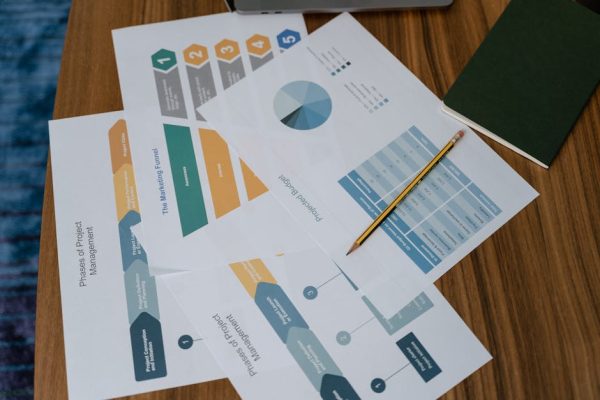
Your automation strategy must reflect how your customers actually buy, not how you wish they would. Journey mapping identifies every touchpoint, decision point and emotional state a prospect experiences from first awareness to loyal customer.
Awareness Stage
How do prospects first encounter your business? In Singapore, common awareness channels include Google search (captured via SEO and Google Ads), LinkedIn content, industry events, referrals and social media. Document each entry point because automation workflows need to recognise and respond differently based on source. A prospect from a Google search for “marketing agency Singapore” has different intent than one who downloaded your industry report.
Consideration Stage
Prospects are evaluating options. They visit your website multiple times, read case studies, compare pricing, check reviews on Google and possibly attend a webinar. Map the specific pages and content that signal consideration behaviour. These become triggers for your automation — when someone views your pricing page twice in a week, that is a clear consideration signal requiring a specific response.
Decision Stage
The prospect is ready to choose. They might request a quote, book a consultation, start a free trial or add items to a cart. Automation at this stage focuses on removing friction, addressing final objections and ensuring rapid sales response. For Singapore B2B transactions, this stage often involves multiple stakeholders — your automation should account for influencing the buying committee, not just the primary contact.
Post-Purchase and Retention
The journey does not end at purchase. Onboarding automation ensures customers succeed. Regular engagement keeps them active. Upsell and cross-sell workflows increase lifetime value. Advocacy programmes turn satisfied customers into referral sources. Map each of these phases with the same detail you applied to the pre-purchase journey.
Practical Journey Mapping Exercise
Gather your marketing and sales team. For each stage, answer: What questions does the customer have? What content addresses those questions? What action signals they are moving to the next stage? What would cause them to stall or leave? Document this on a single page — a complex multi-tab spreadsheet that nobody references is worse than a simple one-page map that guides daily decisions.
Designing Your Workflow Architecture
Workflow architecture defines how individual workflows connect into a coherent system. Without architecture, you end up with overlapping workflows that send conflicting messages or leave gaps where contacts receive nothing.
The Lifecycle Framework
Organise workflows around lifecycle stages. Every contact exists in one stage at any time, and workflows move them forward (or re-engage them when they stall). A typical framework for Singapore businesses:
- Subscriber: Entered database but minimal engagement. Welcome and education workflows apply.
- Engaged Lead: Actively consuming content and interacting. Nurture workflows apply.
- Marketing Qualified Lead (MQL): Meets scoring threshold. Sales notification and meeting booking workflows apply.
- Sales Qualified Lead (SQL): Sales has accepted the lead. Sales enablement workflows apply.
- Customer: Has purchased. Onboarding, retention and expansion workflows apply.
- Advocate: Actively refers others. Referral programme and VIP workflows apply.
Workflow Prioritisation Matrix
You cannot build everything at once. Prioritise workflows using two criteria: business impact (revenue potential or cost savings) and implementation complexity (technical difficulty and content requirements). Plot each potential workflow on a 2×2 matrix. Start with high-impact, low-complexity workflows — these deliver quick wins that build confidence and justify further investment.
Preventing Workflow Conflicts
Establish rules that prevent contacts from receiving too many messages or conflicting communications. Common rules include: maximum two automated emails per week per contact, suppression from promotional workflows during active sales conversations, and priority hierarchy (transactional emails override marketing, sales-triggered messages override marketing automation).
Content Requirements Planning
Each workflow needs content — emails, landing pages, forms and potentially SMS messages. Before building workflows, audit your existing content against requirements. Identify gaps early because content creation is typically the bottleneck that delays automation launches. A partnership with a content marketing team can accelerate this process significantly.
Evaluating and Selecting Your Platform
With your strategy, goals and workflow architecture defined, platform selection becomes a requirements-matching exercise rather than a features comparison.

Building Your Requirements Document
Create a requirements document with three categories. Must-haves are non-negotiable capabilities — if the platform lacks these, it is eliminated regardless of other strengths. Nice-to-haves improve efficiency but are not deal-breakers. Future needs are capabilities you will require within 18–24 months as your automation matures.
For Singapore businesses, common must-haves include: visual workflow builder, email automation with dynamic content, CRM integration (specify your CRM), form builder, contact scoring, PDPA-compliant consent management, and reporting dashboard. Common nice-to-haves include: SMS automation, social media scheduling, landing page builder, predictive send-time optimisation, and A/B testing within workflows.
The Platform Evaluation Process
Shortlist three to four platforms that meet your must-haves. Request trials or demos. During evaluation, build your highest-priority workflow on each platform to test the actual experience — not just the demo environment. Evaluate based on: ease of workflow building, data import and management, reporting capabilities, integration quality with your existing tools, and support responsiveness during Singapore business hours.
Total Cost of Ownership
Platform pricing is only part of the cost. Calculate total cost of ownership including: platform subscription (typically billed on contact count), implementation and migration fees, training for your team, content creation for initial workflows, ongoing optimisation time, and potential agency management fees. For a Singapore SME with 10,000 contacts, realistic first-year total costs range from SGD 8,000 for entry-level to SGD 40,000 for mid-range to SGD 80,000+ for enterprise solutions.
Team Structure and Alignment
Marketing automation succeeds or fails based on people, not technology. The right team structure ensures workflows are built strategically, maintained consistently and optimised continuously.
Roles and Responsibilities
Even in a small Singapore business, these roles need clear ownership (one person can hold multiple roles):
- Automation Strategist: Defines workflow objectives, maps customer journeys and prioritises initiatives. Typically the marketing manager or director.
- Automation Builder: Constructs workflows, configures triggers and conditions, manages platform administration. Requires technical comfort with the platform.
- Content Creator: Writes email copy, creates landing pages and develops the assets each workflow requires.
- Data Analyst: Monitors performance, identifies optimisation opportunities, builds reports and maintains data quality.
- Sales Liaison: Represents the sales team’s perspective on lead quality, provides feedback on MQL criteria and ensures smooth handoff processes.
Marketing-Sales Alignment
The most critical alignment is between marketing and sales. Document a Service Level Agreement (SLA) that defines: what constitutes an MQL (specific scoring criteria both teams agree on), maximum response time for sales to follow up on MQLs (best practice: under 1 hour during business hours), feedback mechanism for sales to report lead quality, and regular review cadence (monthly is typical). Without this SLA, marketing automation generates leads that sales ignores, wasting the entire investment.
Training and Enablement
Budget for thorough training. Platform-specific training ensures your team can build and manage workflows independently. Strategic training ensures they understand when and why to automate versus when human interaction is more appropriate. Most platforms offer certification programmes — investing in these pays back through more effective implementation.
A Framework for Scaling Automation
Scaling automation is not about adding more workflows indefinitely. It is about systematically expanding automation’s reach and sophistication in a way that continues to deliver measurable returns.
Phase 1: Foundation (Months 1–3)
Build and optimise your core workflows: welcome sequence, primary lead nurture, sales notification and one retention workflow. Focus on getting these right — strong open rates, healthy click-through rates, positive sales feedback on lead quality. Establish baseline metrics that all future efforts will be measured against.
Phase 2: Expansion (Months 4–6)
Add workflows that address secondary customer journey paths: alternative entry points, industry-specific nurture tracks, post-purchase upsell sequences, and re-engagement campaigns. Implement lead scoring if you have not already. Start A/B testing workflow elements systematically.
Phase 3: Sophistication (Months 7–12)
Introduce advanced capabilities: multi-channel automation (adding SMS and social media touchpoints to email workflows), predictive lead scoring, dynamic content personalisation, account-based marketing workflows, and revenue attribution reporting. These require mature data and proven foundational workflows to function effectively.
Phase 4: Optimisation (Ongoing)
Shift focus from building new workflows to optimising existing ones. Use performance data to identify underperforming sequences, test alternative approaches, refine scoring models, and retire workflows that no longer deliver results. A mature automation system requires as much maintenance and optimisation as it does initial building.
Scaling Triggers
Move to the next phase when: current phase workflows consistently hit KPI targets for at least one month, your team has capacity (time and skills) for additional complexity, your content pipeline can support new workflow requirements, and your data quality supports more sophisticated segmentation and scoring.
Singapore-Specific Strategic Considerations
Several factors unique to the Singapore market should influence your automation strategy.
Multilingual Communication
Singapore’s multilingual population means your automation may need to support English, Mandarin, Malay and Tamil communications. At minimum, build your primary workflows in English but plan for Mandarin versions if your audience includes Mandarin-dominant segments. This doubles content requirements — factor it into your resource planning and timeline.
PDPA Compliance
The Personal Data Protection Act governs how you collect, use and store personal data. Your automation strategy must include: clear consent collection at every data capture point, easy unsubscribe mechanisms in every communication, data retention policies (do not keep data longer than necessary), and documentation of consent for audit purposes. The PDPC has increased enforcement — fines can reach SGD 1 million.
Seasonal Planning
Singapore’s business calendar affects automation timing. Key periods include: Chinese New Year (January/February), the Great Singapore Sale (June–August), National Day (August), Deepavali and year-end festive season (October–December). Build seasonal workflows that activate automatically each year, reducing the scramble of annual campaign planning. Back-to-work campaigns in January and post-holiday re-engagement sequences perform consistently well.
Market Size Implications
Singapore’s compact market means your total addressable audience is smaller than in larger countries. This makes every lead more valuable and increases the importance of nurturing and retention automation. It also means you will exhaust new audience segments faster, making re-engagement and customer expansion workflows proportionally more important than in larger markets. Coupling email marketing with intelligent automation ensures maximum value from every contact in your database.
Frequently Asked Questions
How do I convince leadership to invest in marketing automation?
Build a business case around three pillars: cost savings (calculate hours currently spent on manual tasks multiplied by hourly labour cost), revenue opportunity (estimate the value of faster lead response and higher follow-up rates), and competitive necessity (research which competitors already use automation). Present a phased approach with clear ROI milestones to reduce perceived risk — most Singapore SMEs can demonstrate positive ROI within the first six months.
Should I hire an in-house specialist or engage an agency for automation?
It depends on your scale. Businesses with fewer than 15,000 contacts and under 15 active workflows can typically manage with an existing marketing team member who receives training, supplemented by an agency for strategy and complex builds. Larger operations benefit from a dedicated in-house automation specialist. Many Singapore businesses use a hybrid model — an agency sets up the strategy and initial workflows, then trains an in-house person to manage ongoing operations.
How long before I see results from my automation strategy?
Quick wins like welcome sequences and abandoned cart workflows typically show measurable impact within 2–4 weeks of launch. Lead nurture workflows need 6–8 weeks to demonstrate conversion impact because they operate on longer timeframes. Full strategy impact — including lead scoring, multi-workflow integration and revenue attribution — typically becomes clear at the 4–6 month mark. Patience with the process while maintaining urgency on execution is the right balance.
What is the biggest risk in marketing automation strategy?
The biggest risk is automation without personalisation. Sending automated messages that feel generic and robotic damages your brand more than sending nothing. Every automated message should feel like it was written for the specific recipient in response to their specific behaviour. This requires thoughtful segmentation, dynamic content and regular quality reviews of what contacts actually receive.
How often should I review and update my automation strategy?
Conduct a comprehensive strategy review quarterly. This includes evaluating all active workflows against KPIs, assessing whether customer journey maps still reflect reality, reviewing platform capabilities against evolving needs, and adjusting goals based on business changes. Between quarterly reviews, monitor weekly performance dashboards and make tactical adjustments as needed.
Can small businesses with limited budgets implement automation effectively?
Yes, but scope appropriately. A small Singapore business with a SGD 100–200 monthly platform budget can implement three to five core workflows that handle 80% of common automation needs. The key is starting with the highest-impact workflows — welcome sequence, lead follow-up and one retention workflow — and expanding only as results justify further investment. Free tiers on platforms like HubSpot and Mailchimp allow you to start with zero platform cost.
How do I ensure my automation strategy aligns with my overall marketing strategy?
Automation strategy should be a chapter within your overall marketing strategy, not a separate document. Every automation workflow should map to a marketing objective, which in turn maps to a business goal. Test alignment by asking of each workflow: “Which marketing goal does this serve, and how will I measure its contribution?” If you cannot answer clearly, the workflow does not belong in your strategy yet.
What data do I need before starting automation?
At minimum, you need: a clean contact database with accurate email addresses (verified, deduplicated), basic segmentation data (at least industry or interest area for B2B, or purchase history for B2C), consent records showing permission to email, and website tracking installed for at least 30 days to establish behavioural baselines. The richer your data, the more sophisticated your automation can be — but do not let imperfect data delay starting. Begin with what you have and improve data quality as a parallel workstream.
Should my automation strategy include channels beyond email?
Eventually, yes — but start with email as your foundation. Email automation offers the highest ROI, the most mature platform support, and the easiest measurement. Once your email workflows perform well, extend to SMS (particularly effective for appointment reminders and time-sensitive offers in Singapore), social media retargeting, and web personalisation. Each additional channel increases complexity, so add them one at a time and measure the incremental impact.
How do I handle automation when my business model changes?
Business model changes — new products, new markets, pivots — require an automation audit. Review every active workflow and assess: Is this still relevant? Does it reference correct products, pricing or messaging? Are the triggers and scoring criteria still valid? Pause workflows that no longer apply, update those that need modification, and build new ones for changed business requirements. A well-documented automation system makes these transitions manageable; an undocumented one makes them painful.