
Marketing Automation ROI: Measure and Maximise Your Investment
Why Measuring Automation ROI Matters
Marketing automation is an investment — in software, in implementation time, in ongoing management and in the content that fuels your workflows. Like any investment, it needs to prove its return. Yet a surprising number of Singapore businesses run automation without clear ROI measurement. They know automation “feels useful” but cannot quantify how useful, or whether the returns justify continued — let alone increased — spending.
This measurement gap creates two problems. First, automation budgets become vulnerable during cost-cutting exercises because marketing cannot demonstrate concrete financial impact. Second, without ROI data, you cannot optimise effectively. You do not know which workflows generate revenue and which consume resources without payback. You cannot make informed decisions about where to invest more and where to scale back.
Measuring marketing automation ROI requires looking beyond simple email metrics. Open rates and click-through rates tell you about engagement but say nothing about revenue. The real question is: does the money, time and effort you put into automation generate more value than it costs? Answering this requires a structured approach to cost accounting, revenue attribution and efficiency measurement.
The ROI Measurement Challenge
Marketing automation sits in the middle of the customer journey, influencing outcomes rather than directly causing them. A lead nurture workflow that warms a prospect over six weeks contributes to the eventual sale, but so does the sales rep’s call, the website’s content and the initial ad that generated the lead. Isolating automation’s specific contribution is the core challenge of ROI measurement — and the reason most businesses either over-attribute (giving automation credit for everything) or under-attribute (measuring only direct last-touch conversions).
Calculating the True Cost of Automation
Accurate ROI starts with honest cost accounting. Platform subscription fees are the visible cost, but they represent only 30–40% of the total investment. A complete cost picture includes every resource automation consumes.

Direct Costs
Platform subscription: Monthly or annual fees based on contact count, feature tier and add-ons. For Singapore SMEs, this ranges from SGD 600 per year (entry-level tools with small databases) to SGD 60,000+ per year (enterprise platforms with large databases and advanced features). Always calculate the annual figure rather than the monthly one — annual commitments often include 15–20% discounts.
Implementation and migration: One-time costs for initial setup, data migration from existing tools, CRM integration and first workflow builds. If handled by an agency, expect SGD 3,000–15,000 depending on complexity. If handled internally, calculate the hours spent multiplied by the hourly cost of the team members involved.
Third-party integrations: Connector tools (Zapier, Make), additional API costs, and supplementary tools (landing page builders, A/B testing tools, data enrichment services) that support your automation stack. These often run SGD 50–300 per month each.
Indirect Costs
Staff time: The ongoing hours your team spends building workflows, creating content, monitoring performance, managing data quality and troubleshooting issues. For a Singapore SME with a single marketing automation manager, this is typically 40–60% of their role — translate that into salary cost. At an average marketing manager salary of SGD 60,000, that represents SGD 24,000–36,000 annually in automation management labour.
Content creation: Every workflow needs email copy, landing pages, downloadable resources and supporting content. Whether produced internally or by a content marketing partner, this content has a cost. Estimate the number of content assets required and their production cost.
Training and development: Platform certifications, courses, conference attendance and time spent learning. Budget SGD 1,000–3,000 per team member annually for ongoing education.
Opportunity cost: The value of what your team would be doing if they were not managing automation. This is the hardest cost to quantify but should not be ignored. If your marketing manager could be running campaigns that generate SGD 10,000 per month, the time they spend on automation management has a real opportunity cost.
Total Cost Example
A realistic total cost breakdown for a Singapore SME with 15,000 contacts using a mid-range platform:
- Platform subscription: SGD 12,000/year
- Implementation (year one only): SGD 8,000
- Third-party integrations: SGD 2,400/year
- Staff time (50% of one role): SGD 30,000/year
- Content creation: SGD 6,000/year
- Training: SGD 2,000/year
- Year one total: SGD 60,400
- Year two onwards: SGD 52,400/year
This is the number your returns must exceed for positive ROI. Most businesses significantly underestimate total costs by focusing only on the platform subscription.
Revenue Attribution for Automation
Revenue attribution connects closed deals and purchases back to the marketing automation touchpoints that influenced them. This is where ROI measurement becomes both powerful and complex.
First-Touch Attribution
Credits the first marketing interaction with the entire sale. If a lead first entered your system by downloading a guide via an automated workflow, that workflow receives full revenue credit. Simple to implement but misleading — it ignores every subsequent touchpoint that nurtured the lead to purchase.
Last-Touch Attribution
Credits the final interaction before the sale. If the last automated email before a contact purchased was a discount offer, that workflow receives full credit. Equally misleading — it ignores the months of nurturing that brought the contact to the point where a discount triggered action.
Multi-Touch Attribution
Distributes credit across multiple touchpoints in the customer journey. This is the most accurate approach for measuring automation ROI because automation typically operates in the middle of the funnel. Several models exist:
- Linear attribution: Equal credit to every touchpoint. If a lead had 10 interactions before a SGD 10,000 purchase, each touchpoint receives SGD 1,000 credit. Simple but treats a generic blog visit equal to a pricing page view.
- Time-decay attribution: More credit to touchpoints closer to the conversion. Recent interactions receive more weight because they are most likely to have influenced the final decision. This tends to undervalue automation’s early-stage nurturing contribution.
- Position-based (U-shaped) attribution: 40% credit to the first touch, 40% to the converting touch, and 20% distributed among middle touches. This acknowledges the importance of both initial capture and final conversion while giving some credit to nurture activities.
- Custom attribution: Assign weights based on your specific understanding of which touchpoints most influence conversion. Requires the most setup but delivers the most accurate picture for your business.
Practical Attribution for Singapore SMEs
Enterprise-grade multi-touch attribution requires significant data infrastructure and dedicated analytics resources. For most Singapore SMEs, a pragmatic approach works better: use position-based attribution as your default model, supplement with manual analysis of your top 20% of deals each quarter, and track assisted conversions — deals where automation touchpoints appeared in the journey even if they were not the first or last touch.
Your digital marketing strategy should specify which attribution model you use so that all teams interpret data consistently.
Revenue Metrics to Track
- Automation-influenced revenue: Total revenue from deals where at least one automation touchpoint appeared in the journey. This is your broadest revenue metric.
- Automation-sourced revenue: Revenue from deals where an automation touchpoint was the first interaction. This measures automation’s direct generation capability.
- Revenue per workflow: Break down revenue contribution by individual workflow. This identifies your highest-performing sequences.
- Revenue per contact: Total automation-attributed revenue divided by database size. Measures the monetisation efficiency of your database.
Efficiency and Productivity Metrics
Revenue attribution captures one dimension of automation ROI. Efficiency gains — time saved, tasks eliminated, processes accelerated — represent the other dimension, often accounting for 30–50% of total returns.
Time Savings
Calculate hours saved by comparing pre-automation and post-automation time for specific tasks:
- Lead follow-up: Before automation — manual email to each new lead, average 10 minutes each, 150 leads/month = 25 hours. After automation — automated welcome and nurture sequence handles follow-up, 2 hours/month for monitoring = 23 hours saved.
- List segmentation: Before — manual spreadsheet sorting and import, 4 hours/month. After — automated tagging and segmentation, 30 minutes/month for review = 3.5 hours saved.
- Campaign reporting: Before — manual data compilation from multiple sources, 6 hours/month. After — automated dashboards updated in real time, 1 hour/month for analysis = 5 hours saved.
- Lead qualification: Before — sales rep calls each lead for initial qualification, 20 minutes per lead. After — automated scoring qualifies leads before sales contact, reducing qualification calls by 70% = significant hours saved depending on volume.
Multiply total hours saved by the hourly cost of the people who previously performed those tasks. For a Singapore marketing executive earning SGD 60,000 annually (approximately SGD 31/hour), saving 30 hours per month equals SGD 930 in monthly efficiency value or SGD 11,160 annually.
Speed Metrics
Faster processes have financial value even beyond time savings:
- Lead response time: Track the time between a lead entering your system and receiving first communication. Automation should reduce this from hours (or days) to minutes.
- Sales cycle length: Measure whether leads nurtured through automation convert faster than unnurtured leads. Shorter sales cycles mean lower cost per acquisition and faster revenue realisation.
- Campaign launch time: How quickly can you launch a new campaign with automation versus without? Reusable templates and workflows should significantly reduce launch timelines.
Quality Metrics
Automation should improve quality alongside speed:
- Lead-to-MQL conversion rate: What percentage of leads become marketing qualified? Automation should improve this through consistent nurturing.
- MQL-to-SQL conversion rate: What percentage of MQLs are accepted by sales? Higher rates indicate better scoring and qualification.
- SQL-to-customer conversion rate: Leads that received proper automated nurturing should close at higher rates than those that did not.
- Customer lifetime value: Customers acquired and onboarded through automation should have higher retention and lifetime value due to consistent, quality communication from first touch through ongoing engagement.
The ROI Calculation Framework
With costs and returns quantified, applying the ROI formula is straightforward. The challenge is ensuring you have captured all relevant inputs.

The Basic Formula
ROI = ((Total Returns – Total Costs) / Total Costs) x 100
Total Returns = Automation-attributed revenue + efficiency savings value + quality improvement value
Total Costs = Platform fees + implementation + staff time + content + training + integrations
Worked Example
Using our earlier Singapore SME example with SGD 52,400 annual costs (year two onwards):
Revenue returns:
- Automation-influenced revenue (using position-based attribution): SGD 180,000
- Automation’s attributed share (weighted touchpoint contribution): SGD 54,000
Efficiency returns:
- Time savings: 35 hours/month x SGD 31/hour x 12 months = SGD 13,020
- Reduced cost per lead (20% improvement): SGD 4,800
Quality returns:
- Improved conversion rates adding 12 additional customers x SGD 3,000 average deal = SGD 36,000
Total returns: SGD 54,000 + SGD 13,020 + SGD 4,800 + SGD 36,000 = SGD 107,820
ROI: ((SGD 107,820 – SGD 52,400) / SGD 52,400) x 100 = 105.8%
A 105% ROI means the business earns SGD 2.06 for every SGD 1 invested in automation. This is within the typical range for well-implemented automation — industry benchmarks suggest 100–400% ROI for mature implementations.
Conservative Versus Optimistic Calculations
Always present ROI in ranges rather than single numbers. Run the calculation three times: conservative (using the lowest defensible attribution and highest cost estimates), moderate (balanced estimates), and optimistic (highest defensible attribution and efficiency gains). For the example above, conservative ROI might be 45%, moderate 106% and optimistic 180%. This range gives decision-makers a realistic picture and prevents credibility-damaging over-promises.
Singapore Benchmarks and Expectations
Understanding what realistic returns look like prevents both premature disappointment and false expectations.
Timeline to Positive ROI
Most Singapore businesses should expect to reach break-even on their automation investment within 6–9 months, with clear positive ROI emerging by month 10–14. Year one ROI is typically modest (20–60%) due to implementation costs and the learning curve. Year two ROI improves significantly (80–200%) as implementation costs are eliminated, workflows are optimised based on data, and compound effects of nurturing take hold.
Businesses that invest in strong SEO and Google Ads campaigns alongside automation reach positive ROI faster because they generate more leads for automation to nurture and convert.
Industry-Specific Benchmarks
B2B professional services (consulting, legal, accounting): Typically see the highest automation ROI in Singapore due to high average deal values (SGD 10,000–100,000+). Even modest conversion improvements generate significant revenue. Expected year two ROI: 150–300%.
B2B SaaS and technology: Strong ROI driven by high lead volumes and clear digital buyer journeys. Free trial and demo request workflows drive measurable conversions. Expected year two ROI: 120–250%.
E-commerce: ROI driven primarily by abandoned cart recovery, post-purchase sequences and lifecycle campaigns. Lower average order values (SGD 50–500) require higher volumes for strong returns. Expected year two ROI: 80–200%.
Education and training: Singapore’s education sector benefits from nurture-heavy automation due to long consideration periods. Enrolment workflows and application follow-ups drive returns. Expected year two ROI: 100–200%.
Healthcare and wellness: Appointment reminder and patient re-engagement workflows reduce no-shows and increase rebooking rates. Expected year two ROI: 60–150%.
Metrics Benchmarks
Based on aggregated data from Singapore businesses running mature automation:
- Automated email open rates: 25–40% (versus 15–22% for batch sends)
- Automated email click-through rates: 4–8% (versus 2–3% for batch sends)
- Lead-to-MQL conversion improvement: 15–30% increase
- Sales cycle reduction: 10–25% shorter
- Cost per lead reduction: 15–30% decrease
- Customer retention improvement: 5–15% increase
Strategies to Maximise Automation ROI
ROI is not fixed — it responds directly to how well you implement and optimise your automation. These strategies consistently produce the highest returns for Singapore businesses.
Focus on High-Impact Workflows First
Not all workflows contribute equally to ROI. Prioritise workflows that directly influence revenue: lead nurture sequences (move leads toward purchase), abandoned cart/enquiry recovery (capture revenue that would otherwise be lost), customer onboarding (reduce churn and increase lifetime value), and upsell/cross-sell sequences (expand revenue from existing customers). Save awareness-stage workflows and nice-to-have automations until your revenue-driving workflows are optimised.
Invest in Content Quality
The emails and content within your workflows determine their effectiveness. A well-built workflow with mediocre content underperforms. Invest in compelling subject lines, genuinely valuable email content, professionally designed templates (for B2C) and landing pages that convert. The incremental cost of quality content is small relative to the revenue improvement it generates across every contact who enters the workflow.
Aggressive A/B Testing
Test everything systematically: subject lines, send times, email length, CTA placement, content offers and workflow branching logic. Even small improvements compound across your entire database. A 10% improvement in click-through rates across a workflow that processes 500 contacts per month means 50 additional engaged contacts monthly — over a year, that is 600 additional opportunities for conversion.
Reduce Platform Waste
Audit your platform usage annually. Are you paying for features you do not use? Are you storing contacts that will never convert? Could you achieve the same results on a lower tier? Many Singapore businesses pay for enterprise features while using basic functionality. Conversely, some businesses on cheap plans waste staff hours working around limitations that a slightly more expensive plan would eliminate. Right-size your platform to your actual needs.
Improve Data Quality Continuously
Better data enables better segmentation, better personalisation and better scoring — all of which improve conversion rates and ROI. Implement progressive profiling (collecting additional data points over time rather than all at once), data enrichment for key accounts, and regular database cleaning. Every improvement in data quality amplifies the effectiveness of every workflow that uses that data.
Align with Email Marketing Best Practices
Automation relies heavily on email deliverability. Maintain sender reputation through list hygiene, authentication (SPF, DKIM, DMARC), consistent sending patterns and engagement-based suppression. A 5% improvement in deliverability means 5% more contacts receive and can act on your automated messages — a direct ROI multiplier.
Building Your ROI Reporting Dashboard
A well-structured reporting dashboard makes ROI visible to stakeholders and highlights optimisation opportunities for your team.
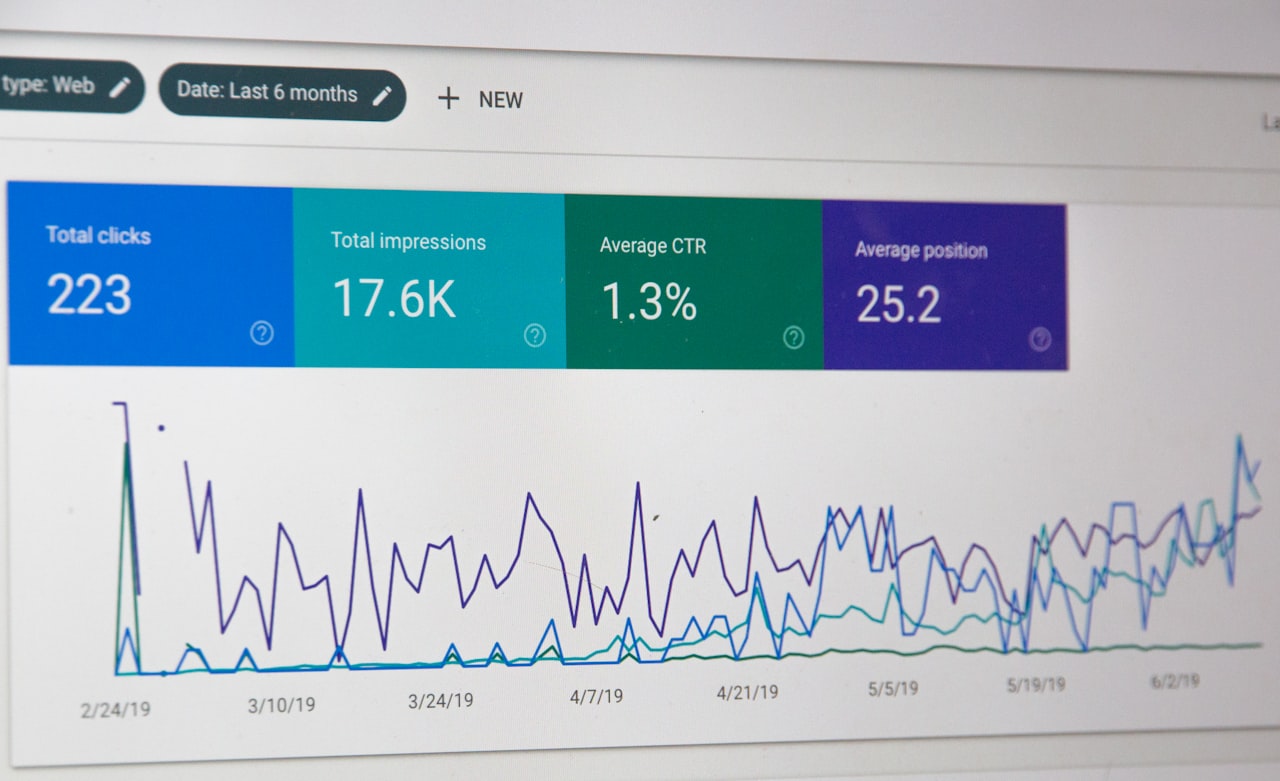
Executive Dashboard
For leadership, create a monthly one-page view showing: total automation ROI (current period and trend), automation-attributed revenue, cost per lead and cost per acquisition trends, and the top three performing workflows with revenue contribution. Keep this high-level — executives need to see that automation is paying for itself and where it is contributing most.
Operational Dashboard
For the marketing team, build a detailed weekly dashboard including: enrolment and completion rates per workflow, email performance metrics per workflow step, lead scoring distribution and MQL generation rate, workflow error logs and failed sends, and A/B test results. This dashboard drives day-to-day optimisation decisions.
Sales Alignment Dashboard
For the sales team, provide: MQL volume and quality trends, average lead response time, sales acceptance rate of marketing-qualified leads, revenue closed from automation-nurtured leads versus non-nurtured leads, and pipeline value from automation-sourced opportunities. This dashboard maintains transparency and builds trust between marketing and sales.
Tools for Dashboard Building
Most automation platforms include built-in reporting. For more sophisticated dashboards, connect your automation data to Google Looker Studio (free), Tableau or Power BI. The integration typically requires exporting data via API or using connector tools. For Singapore SMEs, Google Looker Studio with platform-native connectors offers the best value — enterprise-quality dashboards at zero additional cost.
Reporting Cadence
Weekly operational reports keep the team aligned on performance. Monthly ROI summaries inform resource allocation decisions. Quarterly comprehensive reviews assess strategy-level questions: Is our automation investment growing proportionally with returns? Which workflow categories deserve more investment? Are there diminishing returns in specific areas? Annual reviews evaluate whether the platform, team structure and overall automation strategy remain aligned with business objectives.
Frequently Asked Questions
What is a good ROI for marketing automation?
Industry data indicates that well-implemented marketing automation delivers 100–400% ROI by the second year. For Singapore businesses, a realistic year-one target is 30–80% ROI (accounting for implementation costs), improving to 100–250% in year two as workflows mature and optimise. ROI below 50% in year two suggests fundamental issues with strategy, implementation or measurement that need addressing.
How long until marketing automation pays for itself?
Most Singapore businesses reach break-even within 6–9 months of launch. Businesses with higher average deal values (B2B services, enterprise software) break even faster because each additional conversion represents significant revenue. E-commerce businesses with lower average order values may take 9–12 months. The key accelerator is launching revenue-impacting workflows quickly rather than spending months perfecting setup before going live.
Which automation workflows generate the highest ROI?
Consistently, these workflow types deliver the highest returns: abandoned cart/enquiry recovery (recovers revenue at minimal marginal cost), lead nurture sequences (converts leads that would otherwise go cold), customer onboarding (reduces churn and increases lifetime value), and re-engagement campaigns (reactivates dormant contacts who have already been acquired). Welcome sequences rank high for engagement metrics but contribute indirectly to revenue through downstream nurturing.
How do I attribute revenue to automation when the sales team closes the deal?
Use multi-touch attribution to share credit across all touchpoints. The recommended approach is position-based attribution: the first marketing touch and the closing sales touch each receive 40% credit, with the remaining 20% distributed among nurturing touchpoints (including automation). This acknowledges that both marketing (generating and nurturing the lead) and sales (closing the deal) contribute to revenue. Track “automation-influenced” revenue as a separate metric that counts any deal where automation played a role.
Should I include time savings in my ROI calculation?
Yes — time savings represent real economic value. If automation saves your team 30 hours per month, that is 30 hours available for higher-value activities or 30 hours of labour cost avoided. Calculate the monetary value using the hourly rate of the people whose time is freed. However, be honest about whether that time is actually redeployed productively. Saved time that becomes idle time has lower real value than saved time redirected to revenue-generating activities.
What are common reasons for poor automation ROI?
The most common causes: over-investment in platform capabilities that go unused (paying for enterprise features when mid-range suffices), insufficient content quality leading to low engagement rates, poor data quality causing mis-targeting and wasted sends, lack of ongoing optimisation (set-and-forget mentality), disconnection between marketing automation and sales follow-up (good leads that never get contacted), and measuring the wrong metrics (celebrating open rates while ignoring revenue impact).
How do I justify automation ROI to my CFO?
Speak in financial terms: total investment versus total return, payback period, and comparison with alternative investments. Present conservative ROI estimates with clear methodology. Show the cost of not automating — manual labour hours, missed leads, slower response times — as the baseline. Frame automation as a productivity investment (similar to any business tool) rather than a marketing expense. Include a sensitivity analysis showing ROI under different scenarios to demonstrate you have considered risks.
Can I measure automation ROI without sophisticated attribution tools?
Yes, using a simplified approach. Track two primary metrics: (1) direct conversions from automated workflows — contacts who click through an automated email and convert within 7 days, and (2) comparative analysis — compare conversion rates, sales cycle length and customer lifetime value for leads who went through automation versus those who did not. This approach underestimates total automation impact but provides defensible, conservative ROI figures that even sceptical stakeholders trust.
How does automation ROI change as my database grows?
Automation ROI generally improves with database growth because fixed costs (platform management, workflow building) are amortised across more contacts. A workflow that costs SGD 2,000 to build and manage delivers SGD 20 per contact value when 100 contacts pass through it, but only SGD 2 per contact cost when 1,000 contacts pass through it. However, platform costs also increase with database size, so ROI improvement is not linear. The optimal point is where marginal revenue per additional contact exceeds the marginal platform and management cost of that contact.
What ROI metrics should I track weekly versus monthly versus quarterly?
Weekly: workflow engagement metrics (open, click, conversion rates), email deliverability, error rates and A/B test results. These metrics enable tactical optimisation. Monthly: revenue attribution, cost per lead, cost per acquisition, MQL generation rate and time savings. These metrics inform operational decisions. Quarterly: total ROI calculation, platform cost assessment, workflow retirement and expansion decisions, and strategy alignment review. These metrics guide strategic direction. Tracking at the right cadence prevents both over-reaction to short-term noise and under-reaction to meaningful trends.