Instagram Marketing for Fashion Brands in Singapore: Content, Shopping and Growth
Table of Contents
- Instagram’s Role for Fashion Brands in Singapore in 2026
- Profile Foundations: Bio, Highlights and Shop
- Content Pillars and Weekly Cadence
- Reels Strategy for Singapore Fashion
- Stories, DMs and Community Management
- Instagram Shopping, Product Tags and Checkout
- Creator Partnerships and UGC Amplification
- Paid Instagram: Ads, Budgets and Benchmarks
- Frequently Asked Questions
Instagram’s Role for Fashion Brands in Singapore in 2026
Instagram marketing for fashion brands in Singapore in 2026 sits at a more interesting crossroads than at any point since 2018. The platform remains the default brand-identity channel for Singapore fashion — buyers, press and creators all check a label’s feed before taking it seriously — but its role in direct sales has shifted. TikTok drives more discovery, Shopee and Lazada capture more low-consideration conversion, and Instagram’s weight now falls on brand trust, mid-funnel nurture and high-intent remarketing.
Reach economics have also changed. Organic reach for Singapore fashion accounts typically sits at 6-14% of followers for Reels, 2-5% for carousels and 1-3% for single images. Paid amplification is no longer optional for any account that wants meaningful sales impact. The winning approach in 2026 is to treat Instagram as a production engine whose best output is promoted systematically, rather than an organic megaphone whose posts rise or fall on luck.
Singapore fashion shoppers use Instagram to assess brand legitimacy, check real-person styling, evaluate fit, and verify that a brand still posts regularly. An account with a polished grid but no activity in the past three weeks signals brand trouble and costs more in lost conversion than most founders realise.
Profile Foundations: Bio, Highlights and Shop
The profile is the single most clicked asset in your Instagram marketing. A Singapore fashion brand should have a one-line positioning statement, a clear category descriptor (e.g. “Modest resort-wear, shipped from Singapore”), a link in bio that routes to a structured landing page via Linktree, Beacons or Shopify’s native link-in-bio, and a WhatsApp or Email contact method.
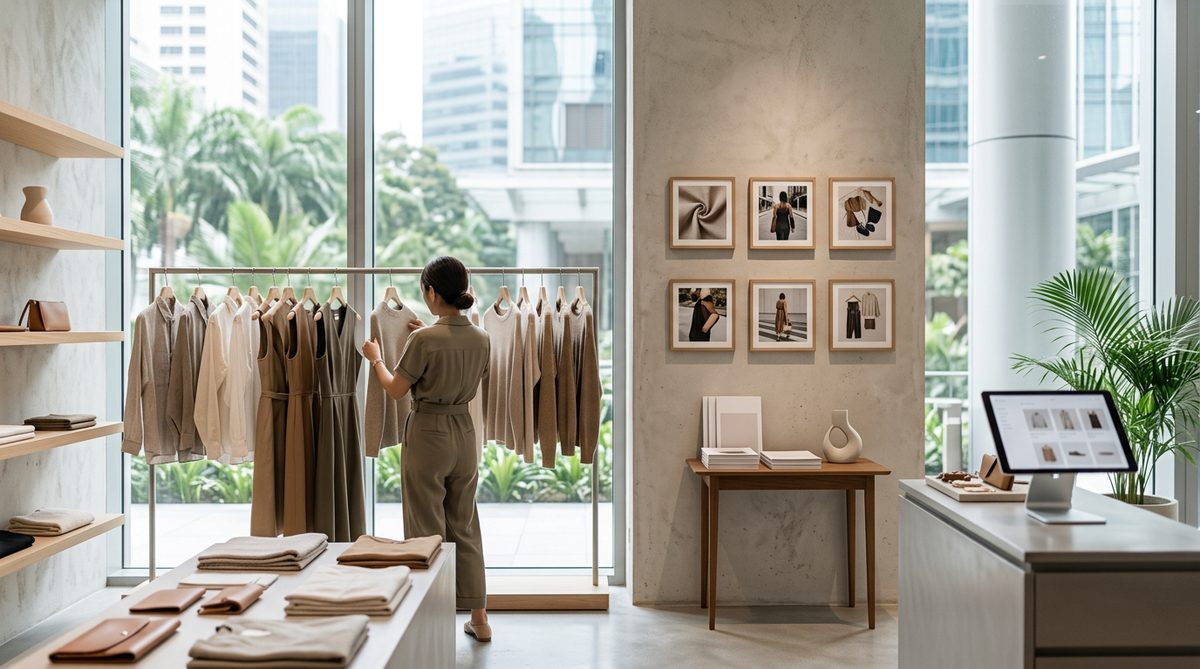
Highlights are under-used real estate. Allocate six to nine highlight tiles covering: size and fit guide, shipping and returns, signature collection, press and stockist mentions, founder story, customer reviews, care instructions, pop-up events, and FAQ. Design consistent cover icons that match the brand’s visual identity. Treat highlights as an always-on FAQ rather than a scrapbook.
Enable Instagram Shopping with a clean product catalogue synced from Shopify or a native Instagram catalogue. Tag products in feed posts, Reels and Stories wherever possible. A fully configured Shop tile increases profile-to-checkout conversion by 10-20% compared to accounts relying only on link-in-bio navigation. For the broader cross-channel frame that ties Instagram to the rest of your stack, our fashion marketing playbook covers the full funnel.
Content Pillars and Weekly Cadence
A healthy Singapore fashion Instagram account runs on four content pillars: product-forward content (new drops, styling, fit, close-ups), lifestyle and editorial (campaign imagery, location shoots, seasonal mood), social proof (UGC reposts, reviews, creator features, press), and brand-personality (founder commentary, studio behind-the-scenes, values, community). Target roughly 35% product, 25% lifestyle, 25% social proof and 15% brand personality as a starting ratio.
Weekly cadence for most Singapore fashion brands should sit at 4-6 Reels, 2-3 carousel posts and 15-25 Stories. Single-image feed posts are now best reserved for editorial campaigns and hero moments. Posting frequency matters less than consistency — a steady 4 Reels per week outperforms a burst of 10 followed by silence.
Peak engagement windows in Singapore typically fall at 7.30-9pm on weekdays and 10am-1pm on weekends, though the algorithm increasingly prioritises content quality over posting time. For more tactical guidance on measurement, see our piece on Instagram insights. Internal cross-linking like this helps surface older content and keeps readers in the funnel.
Reels Strategy for Singapore Fashion
Reels are the single highest-leverage content format on Instagram for Singapore fashion in 2026. A well-performing Reel reaches 3-10x the account’s follower count; a viral one reaches 50-200x. The economics of producing one strong Reel per day far outweigh the economics of a monthly campaign shoot with low-engagement output.
High-performing Singapore fashion Reel formats include: the get-ready-with-me (GRWM) for an occasion, the one-dress-three-ways styling video, the before-after try-on for fit transparency, the new-drop reveal with unboxing audio, the founder-speaking piece for brand trust, and the trend-led styling using current platform audio. Hook the viewer in the first 1.2 seconds with a motion-heavy frame, a question on screen, or a pattern interrupt.
Use Singapore-relevant visual context where it helps: a Dempsey doorway, a Tiong Bahru shophouse, Merlion Park at golden hour, or simply a dressing-room mirror in a local mall. Avoid generic studio-white backgrounds that could be anywhere. Run Reels through captions, on-screen text, location tags, product tags and a concise description with a soft call to action. Our video marketing team structures Reels production as a systematic weekly operation rather than ad-hoc filming.
Stories, DMs and Community Management
Stories are the underrated workhorse of Instagram marketing for Singapore fashion. They carry mid-funnel nurture — polls, behind-the-scenes, restock alerts, pop-up reminders, customer reviews and personal founder voice. Post 3-5 Story frames daily, group them into clear narrative arcs, and use interactive stickers (polls, questions, quizzes, countdown, emoji sliders) on at least 40% of frames to trigger algorithmic ranking.
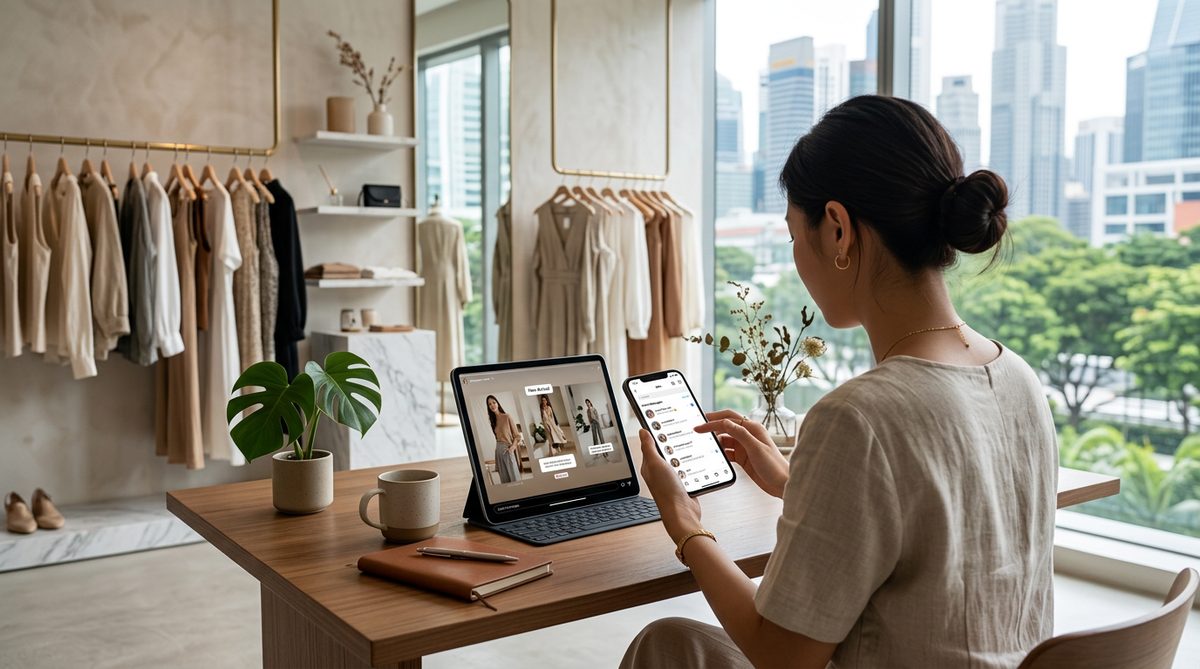
Story-led DMs are where many Singapore fashion sales quietly happen. A customer responding to a Story poll, asking about sizing, or reacting with an emoji triggers a DM thread that a human or a lightweight Manychat flow can convert. DMs typically convert 5-15x higher than feed clicks because the shopper has already self-identified interest.
Community management matters more than most brands admit. Reply to every comment for the first 60 minutes after posting, respond to DMs within 4 hours during business times, and save answers as quick-reply templates for repeat questions. Assign a dedicated community lead, even on a part-time basis, once the account grows past 15,000 followers.
Instagram Shopping, Product Tags and Checkout
Instagram Shopping integration closes the gap between content and commerce on-platform. For Singapore fashion brands, setting up a product catalogue either natively through Commerce Manager or synced from Shopify should happen before paid spend begins. Every feed post, Reel and Story that features a product should carry a product tag; this one discipline alone lifts revenue from Instagram by 15-30% versus untagged content.
Product tagging works best when the SKU is clearly visible in the content. Tag at most 4-5 products per post to avoid visual clutter and to keep the tap target clean on mobile. Reels support product tagging as a pinned item in the caption area; use it on every commercial Reel.
While Instagram Checkout is not yet available in Singapore, tagged products route shoppers cleanly to your Shopify or other storefront. Make sure landing experiences match the Instagram aesthetic — a shopper clicking through from a moody black-and-white Reel and landing on a cluttered PDP will bounce. The shopping experience continuity is part of what our CRO team optimises for fashion clients.
Creator Partnerships and UGC Amplification
Creator marketing on Instagram remains the most efficient new-audience acquisition channel for most Singapore fashion brands in 2026, particularly when the content is amplified through Partnership Ads (previously Branded Content Ads). A well-run programme combines three tiers: gifted seeding to 30-50 micro-creators per quarter, paid collaborations with 5-10 mid-tier creators per quarter, and 1-2 flagship partnerships per year with larger Singapore personalities.
Micro-creators (5,000-40,000 followers) in Singapore typically accept gifted collaborations for product worth SGD 150-400. Paid posts with Singapore fashion micro-creators run SGD 300-1,500 per deliverable depending on engagement rate and usage rights. Mid-tier creators (50,000-200,000 followers) range SGD 1,500-6,000 per integrated piece. Flagship partnerships with top Singapore fashion and lifestyle personalities run SGD 8,000-30,000 per campaign.
Negotiate content usage rights upfront — at least 90 days of organic and paid usage across Instagram and Meta properties is standard, with extensions for longer-term whitelisting. The ROI on amplifying a creator’s content as a Partnership Ad is typically 1.5-3x that of in-house creative. For a deeper dive into rates and structures, our influencer marketing services page covers contract terms and measurement frameworks.
Paid Instagram: Ads, Budgets and Benchmarks
Paid Instagram in 2026 is managed through Meta Ads Manager alongside Facebook, with most Singapore fashion brands running an Advantage+ Shopping campaign as the workhorse plus broad-audience prospecting and tight remarketing. Minimum spend for meaningful results sits around SGD 2,500-4,000 per month; scaling sweet spot for growth-stage brands is SGD 15,000-40,000 monthly.
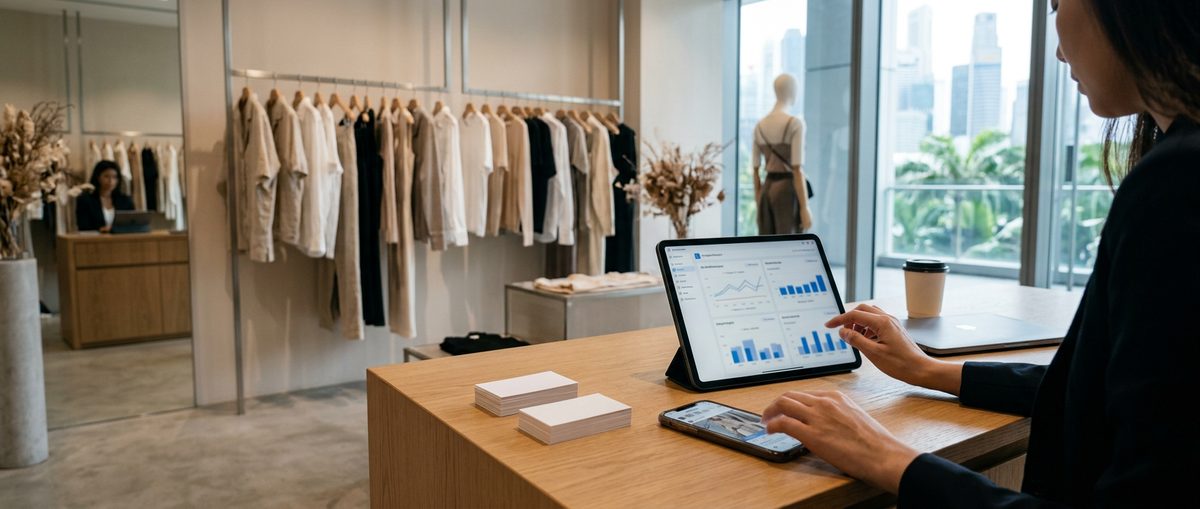
Benchmarks for Singapore fashion Meta campaigns in 2026: CPM SGD 14-28 for cold prospecting, click-through rate 1.2-2.4% on Reels placements, cost per add-to-cart SGD 3-9, cost per purchase SGD 25-55 for mid-market brands and SGD 45-120 for premium labels. Return on ad spend targets of 2.8x-4.2x blended are realistic for brands with 65%+ gross margin.
Creative wins over targeting in 2026. Allocate at least 30% of total budget to creative production so that the account can refresh 8-15 ad variants per month. Use Advantage+ audiences broadly and let the algorithm find buyers; reserve detailed targeting only for specific retargeting pools and lookalike seeds built from high-LTV customers. Connect Instagram performance to total channel mix rather than optimising it in isolation.
Frequently Asked Questions
How many Instagram followers does a Singapore fashion brand need to be credible?
Credibility starts around 3,000-5,000 engaged local followers. Below that, buyers and press question whether the brand is real. Above 20,000 with genuine engagement, the account becomes a legitimate sales asset. Follower count alone matters less than engagement quality, so prioritise real local followers over international vanity growth.
Should my Singapore fashion brand post Reels or carousels more often?
Reels more often, with 4-6 per week as the baseline and carousels for product-heavy or editorial storytelling. Reels carry discovery and reach; carousels carry education and saves. Both matter, but if you must choose, Reels deliver more new-follower acquisition in 2026.
How much should I spend on Instagram ads for my fashion brand in Singapore?
Emerging brands should start at SGD 2,500-4,000 monthly across Instagram and Facebook combined. Growth-stage brands at SGD 15,000-40,000 monthly. Spend meaningful money only after your creative refresh cadence is capable of supporting 8-15 ad variants per month, otherwise CPMs will rise as frequency builds.
What is a realistic Instagram engagement rate for Singapore fashion?
Benchmarks vary by account size. Micro accounts under 10,000 followers typically see 3-7% engagement, mid-size 1.5-3.5%, and established brands 0.8-2%. Engagement rate matters less than it did pre-2022; reach, saves, shares and DM volume are now better indicators of content quality.
Do Singapore fashion brands need Instagram Shopping enabled?
Yes, as a baseline. Product tagging lifts revenue from Instagram by 15-30% and reduces friction in the buyer journey. Even if Instagram Checkout is not available in Singapore, tagged products route traffic more efficiently to your Shopify or marketplace listing.
How often should I use Singapore creators for Instagram content?
Run creator seeding as an always-on programme with 10-20 gifted collaborations per month, plus 1-3 paid partnerships per month. Amplify the best-performing creator content as Partnership Ads to extract compounding ROI from each placement.
Should I run Instagram ads directly from the app or through Meta Ads Manager?
Always use Meta Ads Manager for anything beyond boosting. In-app boosting has far fewer targeting, placement and objective controls. The slightly higher learning curve of Ads Manager pays back within the first few campaigns.
What are the best content formats for driving Instagram fashion sales in Singapore?
Product-led Reels with clear styling, fit-transparency try-on videos, founder-voice Stories, and UGC-anchored carousels. Editorial campaign imagery still matters for brand equity but rarely drives direct sales on its own. Test across all formats and lean harder into whichever two are producing measurable revenue.
How do I grow my Singapore fashion Instagram account organically in 2026?
Consistent Reels output, strong hooks in the first 1.2 seconds, local visual context, steady DMs and Stories interaction, and selective collaborations with relevant Singapore creators. Organic growth compounds slowly; expect 6-12 months of discipline before the curve accelerates meaningfully.
How do I measure the ROI of Instagram marketing for a Singapore fashion brand?
Track follower growth, profile visits, website clicks, Shop product views, cost per purchase from Instagram placements in Ads Manager, and post-purchase survey responses naming Instagram as the discovery source. Combine these into a simple monthly dashboard and judge trends over quarters rather than weeks.