Inbound Marketing for Singapore Companies: Strategy, Channels and Getting Started
Table of Contents
- What Is Inbound Marketing?
- Inbound vs Outbound Marketing: Key Differences
- The Inbound Methodology: Attract, Engage, Delight
- Core Channels for Inbound Marketing in Singapore
- Content as the Foundation of Inbound
- Lead Nurturing and Marketing Automation
- Getting Started: Building Your Inbound Programme
- Frequently Asked Questions
What Is Inbound Marketing?
Inbound marketing is a strategic approach that attracts potential customers to your business through valuable content, helpful resources, and relevant experiences rather than pushing interruptive messages at them. Instead of buying attention through cold calls, purchased email lists, or intrusive advertising, an inbound marketing company Singapore approach earns attention by creating content and experiences tailored to what your audience is already looking for.
The concept is straightforward: when someone has a problem, they search for solutions. If your business provides genuinely helpful information that addresses their problem, you build trust and establish a relationship before any sales conversation begins. By the time the prospect is ready to buy, your company is already a known, trusted resource.
For Singapore businesses — particularly in B2B sectors, professional services, education, and SaaS — inbound marketing offers a sustainable, scalable alternative to advertising-dependent growth. While paid advertising stops generating leads the moment you stop paying, inbound assets (blog articles, guides, tools, videos) continue attracting prospects for months and years after creation.
Inbound vs Outbound Marketing: Key Differences
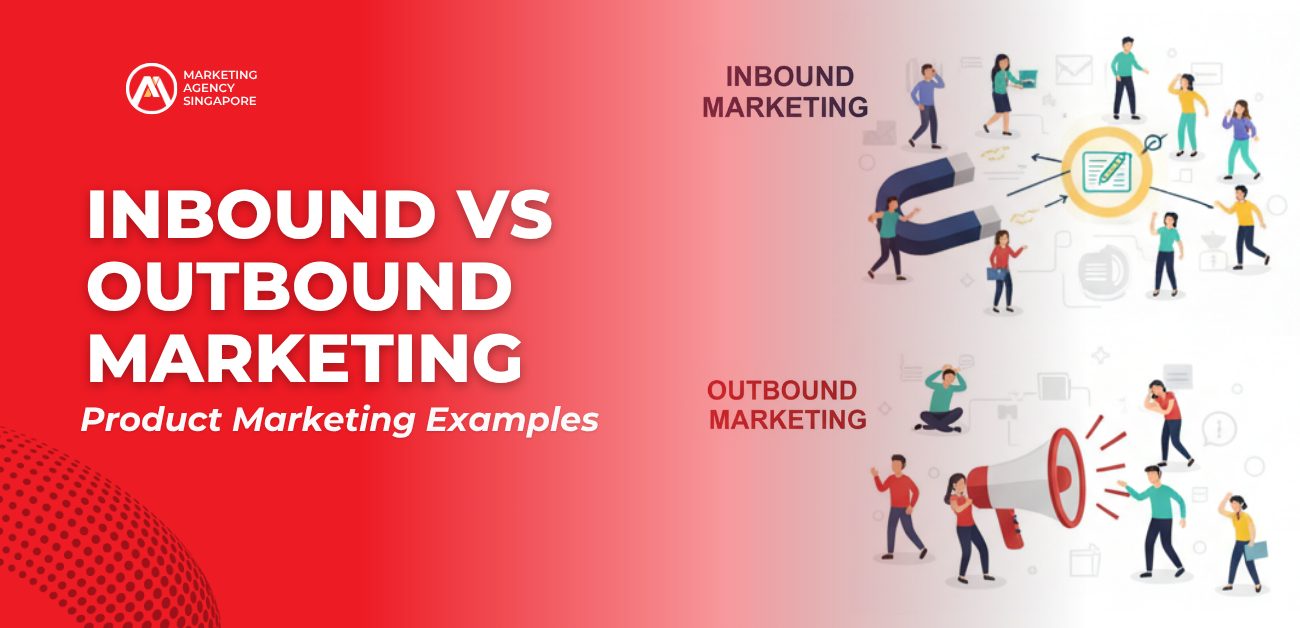
Outbound marketing interrupts: television commercials interrupt programmes, cold calls interrupt work, display ads interrupt browsing. The audience has not asked for the message and often actively avoids it — ad blockers, caller ID, and email spam filters are all responses to outbound tactics.

Inbound marketing attracts: a blog post answers a question someone searched for, a guide helps solve a problem, a webinar educates on a topic of genuine interest. The audience comes to you willingly because you offer something they value.
Cost dynamics: Outbound costs scale linearly — more reach requires proportionally more spending. Inbound costs scale favourably — a blog post that ranks on Google generates traffic indefinitely without additional per-visit cost. Over time, cost per lead from inbound typically decreases as your content library grows.
Trust and credibility: Inbound builds trust because the relationship starts with value delivery. A prospect who has read five of your blog articles, downloaded a guide, and attended a webinar has a fundamentally different perception of your brand than someone who received a cold email.
Timeline: This is the trade-off. Outbound delivers results quickly — run ads, get leads. Inbound takes time to build momentum — typically three to six months before consistent lead generation begins. Most successful Singapore companies use both approaches, with outbound providing near-term results while inbound builds long-term, sustainable lead flow.
The Inbound Methodology: Attract, Engage, Delight
The inbound methodology organises marketing activities into three stages that mirror the buyer’s journey.
Attract: Draw the right people to your website and content. “Right people” is key — inbound is not about generating mass traffic but about attracting visitors who match your ideal customer profile. The primary attract channels are SEO, content marketing, and social media. You create content around the questions and problems your target audience has, optimise it for search, and distribute it where your audience spends time.
Engage: Convert visitors into leads and leads into customers. This stage involves providing deeper value in exchange for contact information — offering downloadable guides, free tools, webinars, or consultations. Once you have a lead’s contact details, email nurturing sequences deliver relevant content that moves them toward a purchase decision.
Delight: Continue providing value after the sale to turn customers into advocates. Delighted customers refer new business, leave positive reviews, and become long-term recurring revenue. Post-sale content, excellent customer support, and loyalty programmes all contribute to the delight stage.
Each stage requires different content types, different channels, and different metrics. A common mistake for any inbound marketing company Singapore businesses work with is focusing exclusively on the attract stage (driving traffic) without building the engage and delight stages that convert and retain customers.
Core Channels for Inbound Marketing in Singapore
Several channels serve as the backbone of inbound marketing programmes for Singapore businesses.

Search engine optimisation (SEO): Organic search is typically the largest source of inbound traffic. When your website ranks for keywords your target audience searches, you attract visitors with genuine intent. For Singapore companies, local SEO is particularly important — ranking for “[service] Singapore” queries drives highly qualified local traffic. Our SEO services help businesses build this organic visibility systematically.
Blog and content marketing: A regularly updated blog addressing your audience’s questions, challenges, and interests is the content engine of inbound marketing. Each blog post is an indexed page that can rank in search engines, attracting relevant traffic. Over time, a library of hundreds of articles creates a compounding source of organic leads.
Email marketing: Email is the primary channel for lead nurturing — the process of moving leads from initial interest to purchase readiness. Segmented email sequences deliver the right content at the right time based on a lead’s behaviour, interests, and stage in the buying journey.
Social media: Social media platforms distribute your content, build community, and facilitate engagement. LinkedIn is particularly effective for B2B inbound in Singapore, while Instagram, Facebook, and TikTok serve B2C audiences. Social media amplifies your content’s reach beyond organic search.
Video and multimedia: Educational videos, explainer content, and webinars serve as both attract and engage tools. YouTube content can rank in both Google and YouTube search, providing an additional discovery channel. Webinars generate high-quality leads because attendees invest significant time engaging with your brand.
Gated content and lead magnets: In-depth resources — comprehensive guides, industry reports, templates, tools, and checklists — offered in exchange for contact information convert website visitors into leads. The key is that the gated content must be genuinely more valuable than what is available freely on your blog.
Content as the Foundation of Inbound
Content is not one component of inbound marketing — it is the foundation upon which everything else is built. Without valuable content, there is nothing to attract visitors, nothing to nurture leads with, and nothing to establish your expertise.
Topic research: Start with your audience’s questions and problems. What do they search for? What challenges do they face? What information do they need to make purchasing decisions? Use keyword research tools, customer interviews, sales team feedback, and competitor analysis to build a content topic list.
Content types by funnel stage:
Top of funnel (awareness): Blog posts, infographics, social media content, and introductory videos that address broad questions and problems.
Middle of funnel (consideration): Comparison guides, case studies, webinars, and detailed how-to content that helps prospects evaluate solutions.
Bottom of funnel (decision): Product demos, free trials, consultation offers, customer testimonials, and pricing information that helps prospects choose your solution.
Content quality: In a market saturated with generic content, quality is your competitive advantage. Every piece should be genuinely helpful, well-researched, and better than what competitors offer. Thin, keyword-stuffed content does not attract, engage, or delight — it damages your brand. Building a robust content strategy ensures consistent quality across all your inbound efforts.
Content consistency: Inbound marketing requires sustained content production. Publishing one great article, then going silent for three months, does not build momentum. Establish a realistic publishing schedule — even one high-quality piece per week — and maintain it consistently.
Lead Nurturing and Marketing Automation
Generating leads is only valuable if you can convert them into customers. Lead nurturing bridges the gap between initial interest and purchase decision through systematic, personalised communication.
Email nurturing sequences: When a lead downloads a guide or signs up for a webinar, they enter a nurturing sequence — a series of automated emails that deliver relevant content over days or weeks. Each email provides additional value while gradually introducing your product or service as a solution.
Lead scoring: Assign points to leads based on their behaviour — visiting pricing pages (high intent), downloading multiple resources (high engagement), or fitting your ideal customer profile (high fit). When a lead’s score exceeds a threshold, they are passed to sales for personal outreach. This ensures sales teams focus on the most qualified leads.
Marketing automation platforms: Tools like HubSpot, ActiveCampaign, Marketo, and Pardot automate lead nurturing, scoring, and segmentation. For most Singapore SMEs, HubSpot or ActiveCampaign provides sufficient capability at a reasonable cost. Enterprise businesses may require more advanced platforms.
Personalisation: Use the data you collect — content consumed, pages visited, industry, job title — to personalise communications. A lead from the finance industry who downloaded a fintech case study should receive different follow-up content than a lead from healthcare who attended a webinar on compliance.
Sales and marketing alignment: Inbound marketing works best when marketing and sales teams share a common definition of a qualified lead, agree on handoff processes, and maintain feedback loops. Sales should inform marketing about lead quality, and marketing should inform sales about lead behaviour and interests.
Getting Started: Building Your Inbound Programme
For Singapore businesses ready to invest in inbound marketing, here is a practical roadmap for getting started.

Month 1-2: Foundation
Define your buyer personas — detailed profiles of your ideal customers, including their challenges, goals, and information-seeking behaviour. Audit your existing content and identify gaps. Set up basic analytics and tracking. Choose your marketing automation platform.
Month 2-3: Content engine
Develop a content calendar targeting your highest-priority keywords and topics. Begin publishing blog content consistently — aim for at least two to four posts per month. Create your first lead magnet (a comprehensive guide or useful tool) to convert visitors into leads.
Month 3-4: Lead capture and nurturing
Implement lead capture forms and landing pages on your website. Set up your first email nurturing sequence. Begin basic lead scoring to prioritise follow-up.
Month 4-6: Optimisation
Analyse early results — which content attracts the most traffic, which lead magnets convert best, where leads drop off in the nurturing process. Refine your approach based on data. Expand content production and add new lead magnets for different audience segments.
Month 6+: Scale
With a working inbound system, focus on scaling content production, expanding into new topic areas, adding content formats (video, webinars, podcasts), and refining automation based on performance data.
Be realistic about timelines. Inbound marketing typically takes three to six months to generate consistent leads, and twelve months to achieve meaningful ROI. The investment pays off because inbound leads are cheaper over time and higher quality than outbound leads — but patience is required in the early stages.
Frequently Asked Questions
What is inbound marketing?
Inbound marketing is a strategy that attracts potential customers to your business through valuable content, SEO, and helpful experiences rather than interruptive advertising. It earns attention by addressing your audience’s questions and problems, building trust before any sales conversation.
How long does inbound marketing take to show results?
Most businesses see initial traction in three to six months, with meaningful ROI within twelve months. The timeline depends on your industry’s competitiveness, content production volume, and the strength of your SEO foundation. Inbound results compound over time as your content library grows.
Is inbound marketing suitable for B2B companies in Singapore?
B2B is one of the strongest use cases for inbound marketing. B2B buying cycles are long and research-intensive, making content-driven trust building extremely effective. Singapore’s B2B market — including technology, professional services, manufacturing, and logistics — responds well to inbound approaches.
How much does inbound marketing cost?
Costs vary based on scope. A basic inbound programme for a Singapore SME — including content production, SEO, email marketing, and automation — typically requires SGD 3,000 to 8,000 per month when working with an agency, or the equivalent in internal team resources. The cost per lead decreases over time as organic traffic grows.
Can inbound marketing replace paid advertising?
Inbound can reduce dependence on paid advertising over time but rarely replaces it entirely. Most businesses use both — paid advertising for immediate results and retargeting, and inbound for long-term, sustainable lead generation. The ideal mix shifts toward inbound as your content library and organic traffic grow.
What tools do I need for inbound marketing?
Essential tools include a CMS (WordPress is widely used), an email marketing and automation platform (HubSpot, ActiveCampaign), SEO tools (Ahrefs, SEMrush), analytics (Google Analytics), and social media management software. Start with the basics and add tools as your programme matures.
How is inbound marketing measured?
Key inbound metrics include organic traffic, conversion rates (visitor to lead, lead to customer), cost per lead, lead quality scores, content performance (traffic, engagement, conversions per piece), email engagement rates, and ultimately, revenue attributed to inbound sources.
What is the difference between inbound marketing and content marketing?
Content marketing is a component of inbound marketing. Inbound marketing encompasses the full strategy — attract, engage, delight — including SEO, lead nurturing, marketing automation, and sales alignment. Content marketing specifically refers to creating and distributing valuable content. You need content marketing for inbound, but content marketing alone is not a complete inbound strategy.
Do I need a dedicated team for inbound marketing?
Effective inbound requires consistent effort across content creation, SEO, email marketing, and analytics. This can be handled by an internal team member (ideally with marketing automation experience), an external agency, or a combination. Very small businesses can start with a single marketing hire supplemented by freelance content creators.
What industries benefit most from inbound marketing in Singapore?
Industries with long buying cycles, high customer lifetime values, and research-oriented buyers benefit most. This includes B2B technology, professional services (legal, accounting, consulting), education, healthcare, financial services, and SaaS. B2C brands with considered purchases (property, insurance, education) also see strong inbound results.