
Why Google Ads Works for Financial Services
Financial services in Singapore operate in a high-intent search environment. When someone searches “business loan Singapore,” “wealth management services,” or “insurance broker near me,” they are actively looking for a financial product or adviser. Google Ads places your firm at the top of these results immediately, bypassing the months-long wait that organic SEO requires.
The economics work for finance because the lifetime value of a financial client is typically high. A wealth management client, mortgage customer, or corporate insurance policy holder generates revenue over years or decades. This means you can afford a higher cost per acquisition than industries with lower lifetime values.
However, running Google Ads for financial services is more complex than most industries. Google enforces strict advertising policies on financial products, and Singapore’s Monetary Authority of Singapore (MAS) imposes additional regulatory requirements on how financial services can be marketed. Navigating both sets of rules is essential to avoid ad disapprovals, account suspensions, and regulatory penalties.
This guide covers the practical steps to run compliant, profitable Google Ads campaigns for financial services firms operating in Singapore.
Google Advertising Policies for Finance
Google maintains a dedicated set of policies for financial services advertising. Understanding these policies is the first step to launching campaigns that do not get flagged or suspended.

Financial products and services policy: Google restricts or requires certification for several financial product categories. The key restrictions for Singapore-based firms include:
- Personal loans: Advertisers must display the minimum and maximum repayment period, maximum annual percentage rate (APR), and a representative example of the total cost of the loan. Google requires advertiser certification in certain markets.
- Cryptocurrency: Only advertisers registered with the relevant financial authority (MAS in Singapore) can advertise cryptocurrency exchanges and wallets. Google requires completion of an application form and verification of regulatory status.
- Complex speculative financial products: Contracts for difference (CFDs), spread betting, and binary options face heavy restrictions. Some are outright prohibited in Google Ads.
- Credit repair and debt management: These services require advertiser certification and must comply with local regulations.
Verification requirements: Google requires financial services advertisers in several markets to complete an identity verification process. This involves submitting business registration documents, proof of regulatory licensing, and other documentation. Start this process early — verification can take several weeks.
Ad content restrictions: Financial ads cannot make guarantees of returns, use misleading claims about risk, or promote “get rich quick” schemes. Claims must be substantiated. If your ad copy promises specific returns or uses superlatives like “guaranteed” or “risk-free,” Google will disapprove it.
Review Google’s financial services advertising policies in full before building campaigns. Policies change frequently, and non-compliance can result in ad disapprovals or, in severe cases, permanent account suspension.
MAS Compliance in Digital Advertising
Beyond Google’s own policies, financial services firms in Singapore must comply with MAS guidelines on advertising and marketing. These regulations apply to all marketing channels, including Google Ads.
Key MAS requirements for financial advertising:
- Fair dealing: All marketing materials must be clear, fair, and not misleading. This extends to ad copy, landing pages, and any content a prospect encounters after clicking an ad.
- Risk disclosure: Investment products must include appropriate risk warnings. The typical disclaimer is: “Investments are subject to investment risks, including the possible loss of the principal amount invested.” This must appear on landing pages and, where space permits, in ad extensions.
- Product suitability: Ads should not promote complex financial products to a mass audience without appropriate qualification steps. For example, advertising accredited investor products to the general public would raise regulatory concerns.
- Licensing declarations: Your landing pages should clearly state your firm’s MAS licensing status, licence number, and the specific activities you are regulated to perform.
MAS has increased scrutiny of digital marketing by financial institutions and intermediaries. Firms that fail to comply risk regulatory action, fines, and reputational damage. If you are working with a financial services marketing agency, ensure they have a thorough understanding of MAS requirements.
Practical compliance steps:
- Maintain a compliance review process for all ad copy and landing pages before they go live
- Include mandatory disclaimers and risk warnings on every landing page
- Avoid promissory language about returns or performance
- Document your advertising approval process for regulatory audits
- Train your marketing team on MAS advertising guidelines
Keyword Strategy for Financial Services
Keyword selection for google ads finance campaigns requires balancing search volume, intent, cost, and compliance. Financial keywords are among the most expensive in Google Ads, with cost-per-click (CPC) rates in Singapore often exceeding $10 to $30 for competitive terms.
High-intent service keywords:
- “Wealth management Singapore”
- “Business loan application Singapore”
- “Insurance broker Singapore”
- “Financial adviser Singapore”
- “Corporate insurance Singapore”
These keywords convert well but are expensive. Bid on them selectively and ensure your landing pages are optimised for conversion to justify the cost.
Long-tail and niche keywords:
- “Financial planning for expats Singapore”
- “SME trade financing Singapore”
- “Keyman insurance for directors”
- “Retirement planning CPF”
Long-tail keywords typically cost less per click and attract more qualified prospects. A search for “keyman insurance for directors Singapore” indicates a very specific need, making the searcher more likely to convert than someone searching the broad term “insurance Singapore.”
Negative keywords are essential. Financial searches attract many irrelevant queries. Build comprehensive negative keyword lists to prevent wasted spend on:
- Job-related searches (“financial adviser jobs,” “insurance agent salary”)
- Educational queries (“what is a hedge fund,” “how does CPF work”)
- Competitor brand searches (unless you are deliberately targeting them)
- DIY queries (“free financial planning template”)
Review your search terms report weekly, especially in the first month. Financial campaigns often trigger unexpected queries that drain budget quickly. For a deeper look at managing Google Ads costs in Singapore, review our dedicated cost guide.
Campaign Structure and Ad Formats
Structure your google ads finance campaigns around distinct product lines or services. Mixing different financial products in a single campaign makes budget allocation, bid management, and performance analysis unnecessarily difficult.

Recommended campaign structure:
- Campaign 1: Wealth Management — ad groups for financial planning, investment advisory, portfolio management
- Campaign 2: Insurance — ad groups for life insurance, health insurance, corporate insurance
- Campaign 3: Lending — ad groups for business loans, SME financing, trade financing
- Campaign 4: Brand — campaigns targeting your firm name and variations
This structure allows you to set separate budgets for each product line based on business priorities and adjust bids independently based on performance.
Ad formats to use:
Responsive Search Ads (RSAs) are now the default format. Provide at least eight to ten headlines and three to four descriptions. Include your target keyword in at least three headlines, mention your MAS licensing status, and incorporate a clear call to action. Pin your most important headlines to ensure they always appear.
Sitelink extensions: Add sitelinks to specific service pages, your “About Us” page, client testimonials, and contact page. Sitelinks increase your ad’s real estate on the search results page and improve click-through rates.
Callout extensions: Highlight key differentiators such as “MAS-Licensed,” “20+ Years Experience,” “Free Initial Consultation,” and “Independent Advice.”
Call extensions: For financial services, phone calls are often higher-quality leads than form submissions. Enable call extensions during business hours and track call conversions.
Location extensions: If you have a physical office, link your Google Business Profile to show your address alongside your ads. This builds trust and is particularly effective for local searches.
Landing Page Optimisation
Your landing page determines whether a click becomes an enquiry or a bounced visit. For financial services, landing pages must satisfy both conversion optimisation principles and regulatory requirements.
Essential landing page elements:
- Clear headline: Match the search intent and ad copy. If someone clicked an ad about wealth management, do not send them to a generic homepage.
- Trust signals: Display your MAS licence number, professional certifications (CFA, CFP, ChFC), years of experience, and client count or assets under management.
- Risk disclaimers: Position required risk warnings prominently but without dominating the page. A persistent footer banner works well for investment products.
- Social proof: Client testimonials, case studies (anonymised as needed), and media mentions build credibility.
- Lead capture form: Keep forms short — name, phone number, and a brief description of their needs. Financial prospects prefer phone consultations over lengthy online forms.
- Privacy statement: Link to your privacy policy and explain how prospect data will be used. This is both a trust factor and a PDPA requirement.
Create dedicated landing pages for each campaign or ad group. A landing page built specifically for “business loan Singapore” will outperform a generic services page because the messaging aligns precisely with the searcher’s intent. The quality score improvement from this relevance also lowers your CPC.
Test different versions of your landing pages. A/B test headlines, form lengths, and call-to-action buttons. Even small improvements in conversion rate significantly impact your cost per lead over time.
Bidding Strategy and Budget Management
Financial keywords are expensive, so intelligent bidding and budget management are critical to maintaining profitability.
Start with manual CPC or maximise clicks with a bid cap. This gives you control over costs while you gather conversion data. Avoid jumping straight to automated bidding strategies — they need at least thirty to fifty conversions per month to optimise effectively.
Once you have sufficient conversion data, transition to Target CPA (cost per acquisition) or Maximise Conversions bidding. Set your target CPA based on the lifetime value of a client and your acceptable acquisition cost. For wealth management clients worth $50,000 or more in lifetime revenue, a CPA of $200 to $500 may be entirely reasonable.
Budget allocation considerations:
- Allocate more budget to campaigns with the highest lifetime value products
- Reduce spend on campaigns with high CPC but low conversion rates
- Increase budgets during peak periods (tax season, annual insurance renewal periods, year-end financial planning)
- Maintain brand campaigns at a lower budget — they are cheap to run and protect against competitors bidding on your name
Dayparting: Analyse when your conversions occur. Financial services enquiries often peak during business hours. If your data shows minimal conversions between 10 PM and 7 AM, reduce bids or pause campaigns during those hours to conserve budget.
Geographic targeting: Target Singapore specifically and exclude other countries unless you serve international clients. Within Singapore, you can adjust bids by region if certain areas produce higher-quality leads. This is relevant for firms in the fintech space that may serve different customer segments across the island.
Tracking Conversions and Lead Quality
Conversion tracking for financial services must go beyond counting form submissions. The gap between a lead and a paying client is significant, and optimising for volume alone often results in poor-quality enquiries.
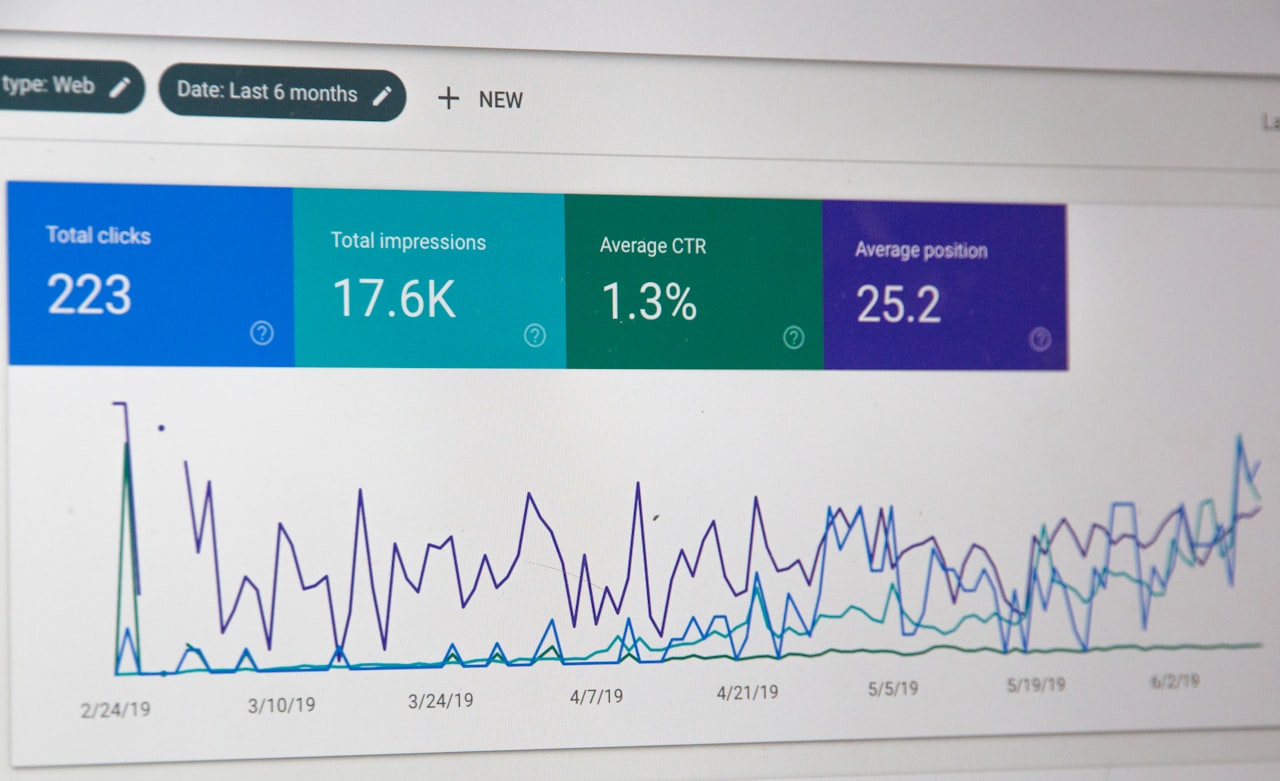
Set up comprehensive conversion tracking:
- Form submissions: Track all contact form completions with Google Ads conversion tracking
- Phone calls: Use Google call tracking for calls from ads and call extensions. Set a minimum call duration (e.g., sixty seconds) to filter out accidental calls
- WhatsApp clicks: If you use WhatsApp for enquiries, track clicks on your WhatsApp button as a conversion
- Offline conversions: Import your CRM data back into Google Ads to track which clicks ultimately became paying clients. This is the most valuable conversion data for financial services
Lead quality scoring: Not all conversions are equal. A lead requesting information about a $2 million portfolio is worth significantly more than an enquiry about a basic savings plan. Implement a lead scoring system in your CRM and feed quality signals back to Google Ads through offline conversion imports.
When Google Ads receives offline conversion data, its automated bidding algorithms learn which types of clicks lead to high-value clients and adjust bids accordingly. This is particularly powerful for financial services where lead quality varies dramatically.
Attribution considerations: Financial services typically have long consideration periods. A prospect might click your ad, visit your website several times over weeks, and then call your office directly. Use a data-driven or position-based attribution model rather than last-click to understand the full contribution of your Google Ads campaigns.
Integrate your Google Ads data with your SEO performance data to get a holistic view of how paid and organic search work together. Many financial services firms find that prospects click both paid and organic results before converting.
Frequently Asked Questions
Do I need MAS approval to run Google Ads for financial services?
MAS does not have a specific approval process for individual advertisements. However, all marketing materials, including Google Ads and landing pages, must comply with MAS advertising guidelines. Your firm should have an internal compliance review process for all marketing materials. Depending on your licence type, certain advertisements may need to include specific disclaimers, risk warnings, and licensing information. If you are promoting capital markets products, the requirements are more stringent.
How much do financial keywords cost per click in Singapore?
Financial keywords are among the most expensive in Singapore’s Google Ads market. Broad terms like “wealth management Singapore” or “business loan Singapore” can range from $10 to $40 per click. Niche and long-tail keywords are less expensive, often falling between $3 and $15 per click. The actual CPC depends on competition, quality score, and your bidding strategy. Despite the high costs, the lifetime value of financial clients typically justifies the investment when campaigns are managed effectively.
What happens if Google disapproves my financial services ads?
Google will flag the specific policy violation in your Google Ads account. Common reasons include missing disclaimers, promissory language about returns, or advertising restricted financial products without certification. Fix the identified issues and resubmit the ad for review. If you believe the disapproval is incorrect, you can appeal through Google’s policy manager. Repeated violations can trigger account-level reviews or suspensions, so address issues promptly and proactively audit your ads for compliance.
Should I bid on competitor brand names in financial services?
Bidding on competitor brand names is permitted by Google but requires careful consideration in financial services. The CPC for competitor keywords is typically high because your quality score will be low — your landing page does not match the competitor’s brand name. Additionally, aggressive competitor targeting can invite retaliation. Some financial services firms find it more effective to focus on generic service keywords and differentiate through ad copy and landing page quality rather than engaging in brand bidding wars.
How do I track phone call leads from Google Ads?
Enable Google Ads call extensions and call reporting to track calls made directly from your ads. For calls made to the phone number on your landing page, use Google’s website call conversion tracking, which dynamically replaces your phone number with a tracking number for visitors who arrived via Google Ads. Set a minimum call duration threshold — typically sixty to ninety seconds — to count only meaningful conversations as conversions. For the most accurate tracking, integrate your phone system or CRM with Google Ads through offline conversion imports.