
Google Ads Benchmarks by Industry: CPC, CTR and Conversion Rates for 2026
Table of Contents
Why Google Ads Benchmarks Matter
Every Google Ads advertiser faces the same nagging question: is my campaign performing well, or am I leaving money on the table? Without reliable Google Ads benchmarks, you are flying blind, unable to determine whether a three per cent click-through rate warrants celebration or concern.
Benchmarks provide the context needed to evaluate campaign performance objectively. They establish what “average” looks like for your industry, campaign type and ad format so you can set realistic targets and pinpoint genuine opportunities for improvement. For Singapore businesses managing campaigns in-house or evaluating the work of an agency, these figures serve as an essential performance compass.
A critical caveat before diving into the data: benchmarks represent medians across all advertisers, from beginners running their first campaign to seasoned professionals with years of optimisation behind them. Top performers routinely exceed these figures by two to three times. The goal is not necessarily to match the average but to understand where your campaigns sit relative to peers and to identify which metrics deserve your optimisation focus. If you are working with a Google Ads agency, use these numbers as a shared performance language.
Google Search Ads Benchmarks by Industry
Google Search remains the cornerstone of most paid advertising strategies, capturing high-intent users actively seeking products and services. These Google Ads benchmarks reflect median performance across advertisers in each industry for the first quarter of 2026.

Home services and legal continue to command the highest CPCs, with legal averaging USD 6.75 per click and home services at USD 6.55. These reflect fierce competition for high-value leads. E-commerce (USD 1.16) and travel (USD 1.53) enjoy lower CPCs but also lower conversion rates, largely because the buyer journey involves more comparison shopping.
Home services leads conversion rates at 9.4 per cent, driven by the urgent nature of searches like “emergency plumber” or “aircon repair.” B2B services sits at the opposite end with a 3.0 per cent conversion rate but compensates with higher deal values, making even expensive clicks profitable. Technology companies face the steepest cost-per-acquisition at approximately USD 131, reflecting longer sales cycles and multiple decision-makers.
The average Search CTR across all industries hovers around 3.5 to 4.0 per cent. If your campaigns consistently fall below this range, your ad copy likely needs attention — stronger headlines, more relevant extensions and tighter keyword-to-ad alignment can lift CTR meaningfully. A well-structured digital marketing approach ensures these fundamentals are covered before scaling spend.
Google Display Network Benchmarks
The Google Display Network reaches over 90 per cent of internet users worldwide, making it essential for brand awareness and remarketing. Because Display ads interrupt users rather than responding to active search intent, performance metrics look very different from Search.
The average Display CPC across all industries sits at approximately USD 0.64, making it an affordable visibility channel. CTRs average 0.50 to 0.60 per cent, and conversion rates typically range from 0.5 to 1.2 per cent. These figures are dramatically lower than Search because Display serves a fundamentally different purpose — building awareness and maintaining top-of-mind positioning rather than capturing immediate demand.
The value of Display often lies in assisted conversions and brand recall rather than direct response. Evaluating it purely on last-click metrics understates its contribution. If your Display CTR falls below 0.40 per cent, it is time to refresh creative assets or refine targeting. Remarketing campaigns specifically should deliver CTRs two to three times higher than prospecting benchmarks because the audience already knows your brand.
For Singapore businesses, Display advertising is particularly useful for maintaining visibility throughout the customer journey. A prospect who encounters your brand through Display before searching on Google is more likely to click your Search ad and convert. This cross-channel reinforcement effect makes Display a valuable complement to Search even when its standalone metrics appear modest.
Google Shopping Ads Benchmarks
Google Shopping campaigns are the lifeblood of e-commerce advertising in Singapore and globally. With product images, prices and ratings displayed directly in search results, Shopping ads attract highly qualified clicks from users with purchasing intent.

Shopping benchmarks vary enormously by product category. Consumer electronics delivers the highest average ROAS at 6.1x, driven by higher average order values. Food and grocery enjoys the lowest CPC at USD 0.31 with the highest conversion rate at 3.2 per cent, reflecting the routine, low-consideration nature of these purchases. Furniture and home carries the highest CPC at USD 0.72 with the lowest conversion rate at 1.1 per cent, consistent with longer consideration cycles for high-ticket items.
If your Shopping campaigns deliver less than 3x ROAS, your product feed, pricing strategy or bidding approach likely needs attention. Product feed optimisation is the most underrated lever in Shopping campaign performance — accurate titles, complete attributes, competitive pricing and high-quality images all influence both visibility and click-through rates. For Singapore e-commerce businesses, pairing Shopping campaigns with a solid website experience ensures that qualified traffic converts once it arrives.
Singapore-Specific Benchmarks
Singapore’s digital advertising landscape differs from global averages in several important ways. As a small, affluent market with high digital adoption, Singapore tends to produce higher CPCs but also higher conversion values. Competitive density in a market of 5.9 million people intensifies bidding pressure in several industries.
Legal services in Singapore command the highest CPC at SGD 8.50 per click, reflecting the high lifetime value of legal clients and intense competition among firms. Financial services follows at SGD 5.80, consistent with MAS-regulated industries where customer acquisition costs are offset by long-term relationship value. Healthcare and clinics average SGD 4.50, while technology and SaaS sit at SGD 5.20.
At the other end, F&B businesses enjoy the lowest CPCs at SGD 1.10, with a strong conversion rate of 5.2 per cent. Retail and e-commerce average SGD 1.60 with a 2.4 per cent conversion rate. Travel and tourism benefits from high CTRs of 5.5 per cent, reflecting the visual and inspirational nature of travel-related searches. Home services delivers the strongest conversion rate in Singapore at 7.8 per cent, driven by the urgent, intent-rich nature of searches like “aircon repair” or “plumber near me.”
For a detailed analysis of what campaigns cost across different industries and budgets, our guide on SEO services provides context on organic alternatives that can complement your paid strategy and reduce overall acquisition costs.
How to Use These Benchmarks Effectively
Benchmarks are a compass, not a GPS. They indicate direction but should not dictate every decision. Here is how to extract maximum value from the data without misapplying it.
Compare within your industry first. A two per cent CTR might be excellent for B2B technology but poor for e-commerce. Context matters enormously, and cross-industry comparisons lead to misguided conclusions. Account for your specific situation — geographic targeting, budget level, competitive landscape and campaign maturity all influence where you fall relative to averages.
Use benchmarks to prioritise optimisation efforts. If your CTR is well above average but your conversion rate is below average, focus energy on the landing page experience rather than ad copy. Benchmarks help you identify the weakest link in your conversion funnel rather than attempting to improve everything simultaneously.
Track your own trends relentlessly. Your most important benchmark is your own historical performance. A steady month-over-month improvement matters more than matching an industry average. Use external benchmarks to set initial targets, then pivot to continuous improvement against your own baseline. A high CPC is not inherently bad if it delivers high-value conversions. Similarly, a low CPC is meaningless if clicks do not convert. Always evaluate benchmarks within the context of your overall return on investment.
How to Improve Below-Average Metrics
Identifying below-average metrics is the first step. Knowing what to do about them is where the real value lies.
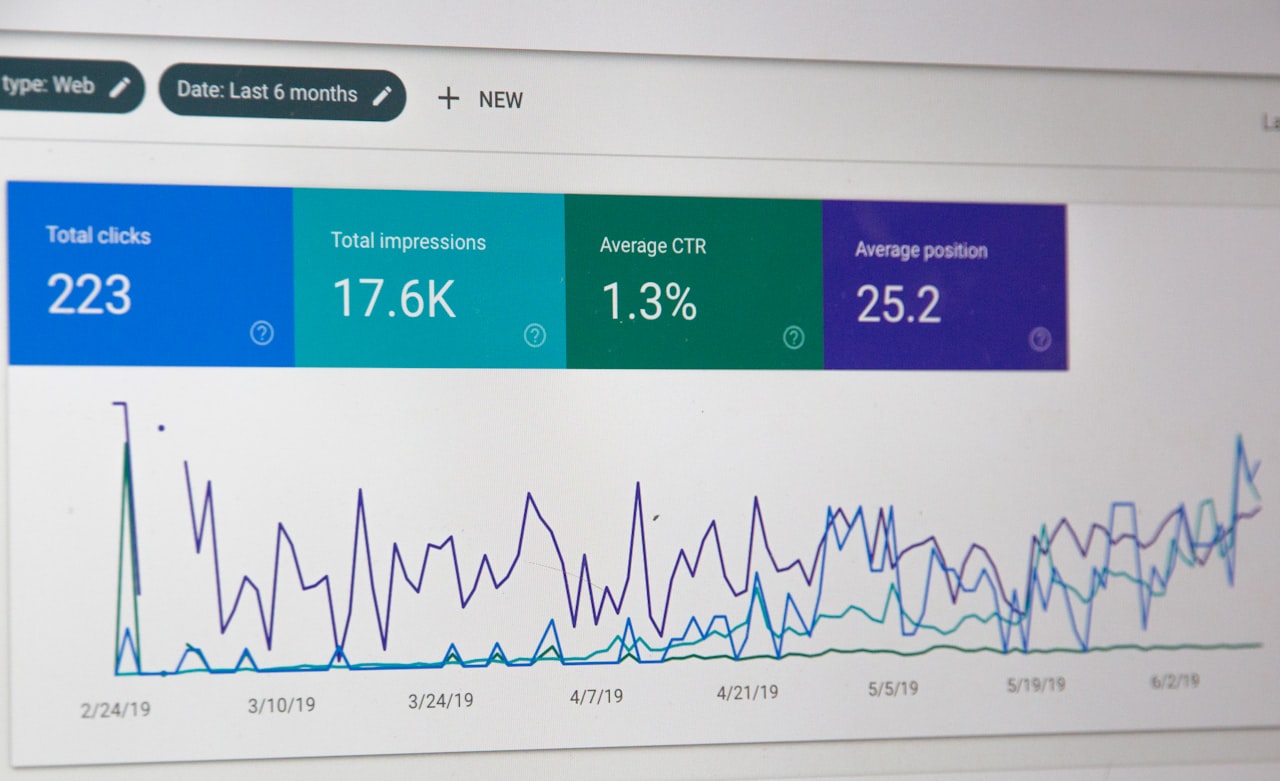
To improve CTR, start with ad copy. Ensure headlines include the target keyword and a clear value proposition. Use all available ad assets including sitelinks, callouts, structured snippets and call extensions. Test at least three to four headline variations per ad group. For Display and YouTube, refresh creative assets every four to six weeks to combat ad fatigue.
To lower CPC, focus on Quality Score. Ensure tight alignment between keywords, ad copy and landing pages. Use single-theme ad groups to maximise relevance. Consider shifting budget to less competitive long-tail keywords that still capture qualified traffic. Even small Quality Score improvements can substantially reduce your cost per click.
To boost conversion rate, look at the landing page. Ensure it matches the promise made in the ad, loads in under three seconds and features a clear, prominent call to action. Test different offers, form lengths and page layouts. For e-commerce, address common conversion killers: unexpected shipping costs, limited payment options and complicated checkout processes.
To reduce CPA, improve either CPC or conversion rate — or both simultaneously. Refine targeting through aggressive negative keyword additions, audience layering and ad scheduling during high-conversion hours. Working with an experienced Google Ads specialist accelerates this process by applying proven optimisation frameworks rather than relying on trial and error.
Frequently Asked Questions
How often do Google Ads benchmarks change?
Benchmarks shift gradually throughout the year, with notable fluctuations during peak seasons like year-end holidays, Chinese New Year and back-to-school periods. Review benchmarks quarterly and compare your performance against the most recent data available. Major Google algorithm or auction changes can also cause sudden shifts.
Why are my CPCs higher than the benchmark?
Higher-than-average CPCs usually indicate a low Quality Score (below six), highly competitive keywords, narrow geographic targeting like Singapore only, or aggressive automated bidding strategies. Review your Quality Score components — expected CTR, ad relevance and landing page experience — and address the weakest area first.
Should I be concerned if my metrics are below average?
Not necessarily. If campaigns are profitable and delivering positive return on investment, below-average CTR or above-average CPC may be acceptable. Benchmarks identify optimisation opportunities, not reasons for panic. Focus on the metrics that tie directly to your business goals.
Are Singapore benchmarks higher than global averages?
Generally, yes. Singapore’s high GDP per capita, dense competition and small geographic targeting area push CPCs above global averages. However, conversion values are typically higher as well, which can offset the increased cost per click. The key is ensuring your cost per acquisition remains profitable relative to customer lifetime value.
How do I benchmark Performance Max campaigns?
Performance Max benchmarking is challenging because these campaigns blend multiple channels. Compare your PMax performance against your combined Search plus Display performance from before adoption. Use Google’s Insights tab to see how you compare to similar advertisers. Be cautious of branded traffic cannibalisation, which can inflate apparent PMax performance.
What is a good conversion rate for Google Ads in Singapore?
The average Search conversion rate across industries is three to five per cent. Top performers achieve ten per cent or higher. Home services and healthcare tend to see the strongest conversion rates in Singapore due to the urgent, high-intent nature of searches. B2B and real estate typically see lower rates but higher per-conversion value. Focus on improving your own rate over time rather than fixating on external figures.
How do seasonal trends affect Singapore benchmarks?
Chinese New Year, Great Singapore Sale, year-end holiday shopping and back-to-school periods all create seasonal fluctuation. CPCs typically rise during peak demand periods as more advertisers compete for the same audience. Plan budgets and bid strategies around these cycles, increasing investment when conversion rates peak and pulling back when competition inflates costs beyond profitable levels.
Should I use benchmarks to set my Google Ads budget?
Benchmarks help estimate the budget needed to achieve specific targets. Multiply your target number of monthly conversions by the industry average CPA to estimate required spend. Factor in a testing budget of 15 to 20 per cent for the first three months while campaigns optimise. Benchmarks provide starting points; your own data refines the budget over time.
Why is my ROAS lower than the benchmark?
Low ROAS typically stems from a combination of high CPCs, low conversion rates and low average order values. Evaluate each component separately. If CPCs are the issue, focus on Quality Score and keyword strategy. If conversion rate is the problem, optimise landing pages. If average order value is low, implement upselling strategies and product bundling on your website.
How reliable are industry benchmark averages?
Industry benchmarks aggregate data from thousands of accounts at various stages of optimisation, making them useful directional indicators rather than precise targets. Your specific niche within an industry, geographic focus and competitive set may produce significantly different results. Treat benchmarks as starting hypotheses and let your own campaign data guide your optimisation decisions.