F&B Market Entry in Singapore: Licensing, Locations and Marketing
Table of Contents
Singapore’s F&B Market Landscape
Singapore’s food and beverage industry is one of the most dynamic and competitive in the world. The city-state’s reputation as a global food capital, combined with its diverse multicultural population and high dining-out culture, makes it an attractive destination for foreign F&B brands. However, the path to success in food beverage market entry Singapore requires careful planning, thorough understanding of local regulations and a well-executed marketing strategy.
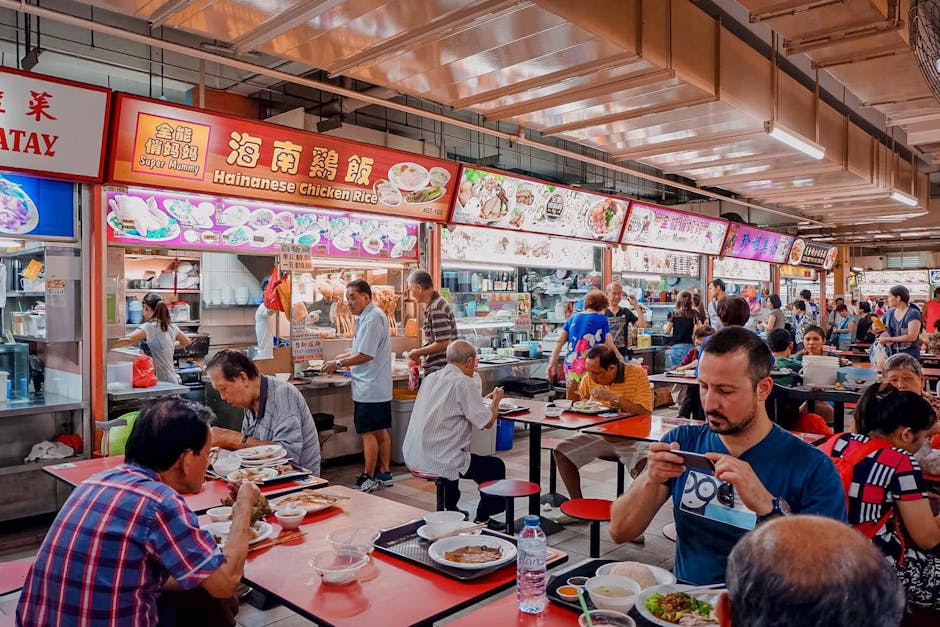
The Singapore F&B market is valued at over S$14 billion annually, encompassing everything from hawker centres and fast-casual dining to fine dining establishments and cloud kitchens. Singaporeans spend a significant portion of their income on food — eating out is deeply embedded in the culture, with many households dining out or ordering delivery for the majority of their meals. The average Singaporean eats out approximately four to five times per week.
The market is characterised by intense competition, with over 40,000 food establishments operating across the island. Turnover is high — an estimated 30 per cent of new F&B businesses close within the first two years. Successful entries typically feature strong brand concepts, clear differentiation, operational efficiency and effective marketing. International brands that have thrived in Singapore include Shake Shack, Tim Ho Wan, A&W (on its return), and numerous bubble tea chains from Taiwan.
Consumer trends shaping the market include growing demand for health-conscious options, plant-based and alternative proteins, premium and experiential dining, sustainability and reduced food waste, and fusion cuisines that blend Asian and Western flavours. The rise of food delivery platforms — GrabFood, foodpanda and Deliveroo — has fundamentally altered the industry, with delivery now accounting for a significant portion of total F&B revenue.
Singapore’s multicultural society means that halal certification, vegetarian and vegan options, and allergen awareness are important considerations. The Muslim population represents approximately 14 per cent of residents, and halal certification can significantly expand your addressable market.
Licensing and Permits
Obtaining the correct licences and permits is the foundational step in food beverage market entry Singapore. The Singapore Food Agency (SFA), established in 2019 to consolidate food-related regulatory functions, is the primary regulatory body for F&B businesses.
SFA Food Shop Licence
All food retail establishments in Singapore require a food shop licence from SFA. The licence application process involves submitting plans of your premises to SFA for approval, ensuring the premises meet SFA requirements for layout, ventilation, sanitation and food safety, completing the application through SFA’s online licensing portal (GoBusiness), and passing an SFA inspection before the licence is issued. The licence fee is S$195 per year (subject to change), and processing typically takes two to four weeks after submission of a complete application. The licence must be renewed annually.
Types of Food Shop Licences
SFA issues different licence categories based on the type of food establishment. These include the eating house licence (for restaurants, cafes and food courts), the food stall licence (for individual stalls in hawker centres, coffee shops and food courts), the food caterer licence (for catering operations), the food processing establishment licence (for central kitchens and food manufacturing) and the supermarket/provision shop licence (for retail food sales). Each category has specific premises requirements and operational conditions.
Additional Licences and Permits
Depending on your F&B concept, you may require additional licences. A liquor licence is required for establishments selling alcohol past 10:30pm and is issued by the Singapore Police Force. A public entertainment licence is needed if you provide entertainment such as live music, DJs or karaoke, issued by the Police Licensing and Regulatory Department. An outdoor refreshment area (ORA) permit is required for al fresco dining on public property. Halal certification is issued by the Islamic Religious Council of Singapore (MUIS) and involves rigorous kitchen and supply chain audits.
Company Incorporation
Foreign F&B operators must incorporate a Singapore company with ACRA before applying for food licences. The process requires at least one local resident director, a Singapore registered address and a company secretary. Many franchise agreements also require the appointment of a local partner or franchisee with F&B experience. Incorporation takes one to two business days and costs S$315.
Location Selection and Lease Negotiation
Location is arguably the single most critical factor in F&B success in Singapore. The right location can make a business; the wrong one almost certainly guarantees failure.
Key Location Types
Shopping malls offer high footfall but come with premium rents (S$15 to S$50 per square foot per month) and strict landlord requirements regarding operating hours, fit-out standards and revenue sharing. Orchard Road malls attract tourists, while heartland malls (in HDB estates) draw local residents. Shophouse and street-front locations in areas such as Telok Ayer, Keong Saik, Jalan Besar, and Tiong Bahru offer character and flexibility but require careful assessment of foot traffic patterns. Industrial and commercial areas such as one-north, Mapletree Business City and ChangiBusinessPark cater to office workers during lunch hours. Hawker centres and coffee shops offer the lowest entry cost but are highly competitive and may have restrictions on cuisine types.
Rental Costs and Lease Terms
F&B rental costs in Singapore vary dramatically by location. Prime Orchard Road locations command S$20 to S$50 per square foot per month, while CBD areas range from S$12 to S$30. Suburban and heartland locations typically cost S$5 to S$15 per square foot. Lease terms for F&B premises are usually three years with an option to renew for a further three years. Negotiate rental-free fitting-out periods (typically one to three months) and caps on annual rental escalation (two to five per cent is standard).
Due Diligence Checklist
Before committing to a location, verify the following: whether the premises are zoned for F&B use under the Urban Redevelopment Authority (URA) Master Plan, the condition of existing ventilation and exhaust systems (a major cost factor), availability of adequate power supply (three-phase electricity for commercial kitchens), proximity to residential units (which may restrict operating hours and exhaust emissions), grease trap requirements and the landlord’s approved fit-out specifications. Engage a licensed interior designer or renovation contractor familiar with SFA requirements to assess premises before signing the lease.
Food Safety and Hygiene Regulations
Singapore maintains stringent food safety standards, enforced by SFA. Compliance is not optional — violations can result in licence suspension, fines or prosecution.
Food Safety Management System
All food establishments must implement a food safety management system based on HACCP (Hazard Analysis and Critical Control Points) principles. Whilst full HACCP certification is not mandatory for all establishments, SFA strongly encourages it and it may become a requirement for certain categories. At minimum, you must maintain proper food handling procedures, temperature control records, cleaning and sanitisation schedules and pest control documentation.
Food Handler Certification
All food handlers in Singapore must attend and pass the Basic Food Hygiene Course (BFHC) conducted by SFA-registered training providers. This certification must be obtained within three months of starting work and is valid for five years. At least one person per establishment must hold a Food Safety Course Level 1 certification (previously known as the WSQ Food Safety Course). Training typically costs S$100 to S$200 per person.
Environmental Health and Hygiene
SFA and the National Environment Agency (NEA) conduct regular inspections of food establishments. Key requirements include maintaining minimum cleanliness standards for premises and equipment, proper waste disposal and grease trap maintenance, adequate ventilation and exhaust systems that comply with NEA emission standards, pest control measures (quarterly professional pest control is standard practice) and proper storage of food ingredients with clear labelling and FIFO (first in, first out) rotation.
Food Grading System
SFA grades food establishments from A to D based on hygiene and food safety standards following inspections. Grades must be prominently displayed. An A grade signals excellent standards, while a C or D grade can severely damage reputation and lead to increased inspection frequency. Consistent A or B grades should be a key operational objective, as they also influence consumer perception and can be leveraged in marketing.
Operational Setup and Staffing
Establishing efficient F&B operations in Singapore requires careful planning around staffing, supply chain and cost management. Labour is one of the biggest challenges for F&B operators in the city-state.
Staffing and Labour Challenges
Singapore’s F&B industry faces chronic labour shortages, driven by locals’ reluctance to work in demanding F&B roles and restrictions on foreign worker hiring. The services sector S Pass and work permit quota allows employers to hire foreign workers up to a certain percentage of their total workforce, with a dependency ratio ceiling that is periodically adjusted. Work permit holders in the F&B sector must come from approved source countries. Foreign worker levy rates apply — currently S$300 to S$700 per month per worker depending on the tier and qualification level.
Menu Engineering and Supply Chain
Design your menu with Singapore’s supply chain in mind. The country imports over 90 per cent of its food supply, making ingredient costs sensitive to global supply chain disruptions and currency fluctuations. Establish relationships with local distributors such as Angliss, Classic Fine Foods, and Song Fish Dealer for seafood. Consider seasonal menu adjustments to manage ingredient costs and maintain target food cost ratios (typically 28 to 35 per cent for full-service restaurants).
Technology and Systems
Modern F&B operations in Singapore rely heavily on technology. Point-of-sale (POS) systems such as Lightspeed, Square and Revel integrate with payment processing, inventory management and delivery platforms. Queue management systems reduce walkaway rates during peak hours. Kitchen display systems improve order accuracy and efficiency. The government’s Productivity Solutions Grant (PSG) subsidises up to 50 per cent of qualifying technology investments for eligible businesses.
Digital Marketing for F&B Businesses
In Singapore’s saturated F&B market, effective digital marketing is essential for driving awareness, footfall and repeat visits. Singaporeans are prolific food content consumers, and a strong online presence directly impacts business success.
Google and Local SEO
Claiming and optimising your Google Business Profile is the single most important digital marketing action for any F&B business in Singapore. Ensure your profile includes accurate operating hours, menu, high-quality food photography, booking links and regular updates. Local SEO optimisation ensures your restaurant appears in “near me” searches and Google Maps results — critical for foot traffic. Encourage satisfied customers to leave Google reviews, as review volume and rating significantly influence consumer decision-making.
Social Media Strategy
Instagram and TikTok are the dominant platforms for F&B social media marketing in Singapore. Invest in professional food photography and short-form video content showcasing your dishes, ambience and behind-the-scenes operations. User-generated content (UGC) is powerful — encourage diners to share their experience by creating Instagram-worthy plating and decor. TikTok food reviews can drive enormous awareness, with viral videos generating queues overnight.
Influencer and Food Blogger Partnerships
Singapore has a vibrant community of food bloggers and influencers. Popular accounts such as LadyIronChef, SethLui, MissTamChiak and DanielFoodDiary command significant followings and influence dining decisions. Invite food bloggers for tasting sessions, collaborate with micro-influencers for regular content creation and leverage platforms like Eatbook and HungryGoWhere for editorial coverage. A comprehensive content marketing strategy that combines owned, earned and paid media amplifies your reach.
Paid Advertising
Google Ads targeting location-based food searches drive high-intent traffic. Facebook and Instagram ads with mouth-watering food imagery can build awareness and drive visits. Geo-targeted ads reaching people within a five-kilometre radius of your restaurant are particularly effective. Allocate budget for campaign spikes around launch, major food festivals (Singapore Food Festival, Wine and Dine Festival) and seasonal peaks (Chinese New Year, Christmas, Hari Raya).
Brand Identity and Online Presence
A strong brand identity differentiates your F&B concept in a crowded market. Invest in professional website design with online reservation capabilities (integrate with Chope, Quandoo or Google reservations), menu presentation, location information and your brand story. Your digital marketing strategy should create a consistent narrative across all touchpoints — from your Instagram feed to your delivery packaging.
Food Delivery Platforms and Online Sales
Food delivery has become an integral part of Singapore’s F&B ecosystem, and any market entry strategy must incorporate a delivery component.
Major Delivery Platforms
GrabFood is the market leader with the largest customer base and delivery fleet. Commission rates range from 25 to 35 per cent but can be negotiated for larger operators. foodpanda holds the second-largest market share and offers competitive commission rates, typically 25 to 30 per cent. Deliveroo positions itself as a premium delivery service and is popular in CBD and affluent residential areas. Each platform offers marketing tools, promotional features and data analytics to help optimise your delivery business.
Cloud Kitchens
Cloud kitchens (also known as ghost kitchens or dark kitchens) offer a lower-cost entry point for testing F&B concepts in Singapore. Operators such as GrabKitchen, CloudEats and Smart City Kitchens provide fully equipped commercial kitchen spaces on flexible lease terms. Monthly costs range from S$3,000 to S$8,000 depending on size and location. Cloud kitchens are ideal for delivery-only brands, menu testing and scaling proven concepts before committing to a physical restaurant.
Direct Delivery and Online Ordering
Building your own online ordering capability reduces dependence on platform commissions. Solutions such as Oddle, GloriaFood and custom Shopify integrations enable direct online ordering with lower transaction costs (typically 3 to 5 per cent versus 25 to 35 per cent for platforms). Promote direct ordering through your website, social media and in-store materials. Offer loyalty rewards or small discounts for direct orders to incentivise customers to order directly.
Frequently Asked Questions
How much capital do I need to open a restaurant in Singapore?
Total startup costs for a mid-range restaurant typically range from S$150,000 to S$500,000. This includes renovation and fit-out (S$80,000 to S$250,000), kitchen equipment (S$30,000 to S$100,000), rental deposit (typically three months upfront plus one month’s rent), licences and permits (S$5,000 to S$15,000), initial inventory and supplies (S$10,000 to S$30,000), and marketing launch budget (S$10,000 to S$30,000). Cloud kitchen operations can start from S$30,000 to S$80,000.
How long does it take to open a restaurant in Singapore from scratch?
Plan for four to eight months from incorporation to opening day. Company incorporation takes one to two days. Location sourcing and lease negotiation require one to three months. Renovation and fit-out take six to twelve weeks depending on complexity. SFA licence approval takes two to four weeks after submission. Equipment installation and staff recruitment can run concurrently with renovation. Allow two to four weeks for soft opening and operational fine-tuning before your grand launch.
What is the SFA food grading system and why does it matter?
SFA grades food establishments from A (excellent) to D (poor) based on hygiene and food safety inspections. Grades are publicly displayed and visible to customers. An A or B grade builds consumer confidence, while a C or D grade can deter customers and lead to increased regulatory scrutiny. Consistently poor grades can result in licence suspension. Many commercial landlords include minimum grade requirements in lease agreements.
Do I need halal certification for my restaurant in Singapore?
Halal certification is not mandatory but can significantly expand your customer base. Approximately 14 per cent of Singapore’s resident population is Muslim, and many non-Muslim Singaporeans also patronise halal-certified establishments. Halal certification is issued by MUIS and involves comprehensive audits of ingredients, preparation methods, kitchen facilities and staff training. The certification process typically takes two to four months and costs vary based on establishment size.
What are the biggest challenges for foreign F&B brands entering Singapore?
The primary challenges include high rental costs (often the largest operating expense), labour shortages and restrictions on foreign worker hiring, intense competition in a saturated market, maintaining consistent food quality and service standards, and navigating the complex regulatory environment. Additionally, Singaporean consumers have sophisticated palates and high expectations — concepts that succeed overseas do not automatically translate to success in Singapore.
Can I operate a home-based food business in Singapore?
Yes, SFA allows home-based food businesses under specific conditions. You must obtain a licence from SFA, and your production is limited to certain food categories. Home-based businesses can only sell through online platforms, not from the premises directly. There are restrictions on the number of employees (typically household members only) and production volume. HDB has additional guidelines for home-based businesses operating from public housing flats.
How important are food delivery platforms for F&B in Singapore?
Food delivery platforms are essential for most F&B businesses in Singapore. Delivery can account for 20 to 40 per cent of total revenue, and for some concepts (particularly fast-casual and Asian cuisines), it can exceed 50 per cent. However, platform commissions of 25 to 35 per cent significantly impact margins. A balanced strategy combining platform presence with direct ordering capability is recommended to optimise both reach and profitability.
What food safety certifications do staff need in Singapore?
All food handlers must pass the Basic Food Hygiene Course (BFHC) within three months of starting work. At least one person per establishment must hold the Food Safety Course Level 1 certification. These certifications are obtained through SFA-registered training providers and are valid for five years. Additional training in allergen management, food defence and HACCP is recommended but not mandatory for most establishments.
Are there government grants available for F&B businesses in Singapore?
Yes, several grants support F&B businesses. The Enterprise Development Grant (EDG) covers up to 50 per cent of qualifying costs for innovation, productivity improvements and market expansion. The Productivity Solutions Grant (PSG) subsidises up to 50 per cent of technology adoption costs, including POS systems, inventory management and digital ordering platforms. The SkillsFuture Enterprise Credit supports workforce training. The Market Readiness Assistance (MRA) grant supports F&B brands expanding into overseas markets.
What are the alcohol licensing requirements for restaurants in Singapore?
Restaurants serving alcohol before 10:30pm with food generally do not require a specific liquor licence — the food shop licence covers this. However, establishments that serve alcohol past 10:30pm, operate as bars or pubs, or are located in designated Liquor Control Zones (Geylang, Little India, and certain areas of the CBD on weekends) require a liquor licence from the Singapore Police Force. The Liquor Control (Supply and Consumption) Act imposes strict rules including no takeaway alcohol sales from 10:30pm to 7am.