ESG Reporting Guide: How to Create Effective Sustainability Reports in Singapore
Why ESG Reporting Matters in Singapore
ESG reporting — the disclosure of environmental, social, and governance performance — has moved from a voluntary exercise to a strategic imperative for businesses operating in Singapore. Investors, regulators, customers, and employees increasingly evaluate organisations based on their sustainability credentials alongside financial performance.
Singapore has positioned itself as a regional leader in sustainable finance and green business practices. The Monetary Authority of Singapore (MAS) has introduced green finance guidelines, the Singapore Green Plan 2030 sets ambitious national sustainability targets, and the Singapore Exchange (SGX) mandates sustainability reporting for all listed companies. This regulatory momentum means that ESG disclosure is not optional for companies operating in or listed in Singapore.
Beyond compliance, effective ESG reporting creates tangible business value. Companies with strong ESG disclosure attract capital from sustainability-focused investors, command premium valuations, and build resilience against regulatory and reputational risks. Customers, particularly in B2B sectors, increasingly require sustainability credentials from their suppliers and partners.
For multinational corporations with Singapore operations, ESG reporting also supports compliance with regulations in other jurisdictions such as the EU’s Corporate Sustainability Reporting Directive (CSRD) and upcoming climate disclosure requirements in the US, Australia, and the UK.
The challenge is not whether to report, but how to report effectively. A poorly designed ESG report that is dense, jargon-filled, and lacking in concrete data can do more harm than good. This guide covers how to create ESG reports that meet regulatory requirements while genuinely communicating your sustainability story to stakeholders.
SGX Sustainability Reporting Requirements
SGX-listed companies must comply with specific sustainability reporting requirements that have evolved significantly in recent years. Understanding these requirements is the starting point for any esg reporting effort in Singapore.
Mandatory Reporting
All SGX-listed issuers are required to publish an annual sustainability report. The report must be published alongside or as part of the annual report. Since 2022, SGX has mandated climate reporting based on the recommendations of the Task Force on Climate-related Financial Disclosures (TCFD) for companies in identified priority sectors, with phased implementation for other sectors.
Core ESG Metrics
SGX requires disclosure on a set of common core ESG metrics covering:
- Environmental: greenhouse gas emissions (Scope 1 and 2), energy consumption, water consumption, waste generation
- Social: employee diversity, workplace safety (injury and fatality rates), training hours, employee turnover
- Governance: board diversity, anti-corruption policies, data privacy practices, ethical business conduct
Climate Reporting (TCFD-Aligned)
The TCFD framework requires disclosure across four pillars: governance (how the board oversees climate risks), strategy (actual and potential climate impacts on the business), risk management (processes for identifying and managing climate risks), and metrics and targets (emissions data and reduction targets).
External Assurance
SGX has progressively introduced requirements for external assurance of sustainability reports. Companies must obtain independent assurance for their Scope 1 and Scope 2 greenhouse gas emissions data. This requirement is being phased in by sector and company size, so check the current timeline applicable to your organisation.
Reporting Timeline
Sustainability reports must cover the same financial year as the annual report and be published within the same deadline. Companies should begin data collection and report preparation well in advance — ideally starting the process six to eight months before the publication deadline.
If your organisation needs professional guidance on meeting SGX requirements, our ESG report design services team works with listed companies across multiple sectors.
Choosing the Right Reporting Framework
Beyond SGX’s mandatory requirements, companies can choose from several voluntary frameworks that provide structure and credibility to their ESG disclosure. The choice of framework depends on your industry, stakeholder expectations, and global reporting obligations.
Global Reporting Initiative (GRI)
GRI Standards are the most widely used sustainability reporting framework globally and in Singapore. They provide comprehensive guidelines for reporting on a broad range of ESG topics. GRI’s modular structure allows companies to report on topics most material to their business. This framework is well-suited for companies that want to provide a holistic view of their sustainability performance.
International Sustainability Standards Board (ISSB)
The ISSB Standards (IFRS S1 and S2) focus on sustainability-related financial information that is relevant to investors. Singapore has signalled alignment with ISSB standards, and SGX is expected to incorporate ISSB requirements into its listing rules. Companies preparing for future regulatory alignment should familiarise themselves with ISSB Standards now.
Sustainability Accounting Standards Board (SASB)
SASB Standards provide industry-specific metrics that are financially material. They are particularly useful for companies that want to report ESG information most relevant to investors in their specific industry. SASB has been consolidated under the IFRS Foundation alongside ISSB, ensuring continued relevance.
United Nations Sustainable Development Goals (SDGs)
While not a reporting framework per se, many companies map their ESG initiatives to the 17 SDGs. This approach resonates with a broad audience and provides a recognisable structure for communicating impact. However, SDG mapping should supplement, not replace, a structured reporting framework.
Practical Recommendation
For most Singapore-listed companies, a combination of SGX mandatory requirements, GRI Standards for comprehensive disclosure, and TCFD for climate reporting provides a solid foundation. Companies with significant institutional investor bases should add ISSB alignment. Industry-specific SASB metrics add further granularity where relevant.
ESG Report Content and Structure
A well-structured ESG report guides readers through your sustainability story logically. While specific content requirements vary by framework, the following structure works for most Singapore companies.
CEO or Chairman’s Message
A letter from senior leadership that sets the tone and demonstrates top-level commitment to sustainability. This should be substantive, not generic. Reference specific achievements, challenges, and commitments for the year ahead.
About the Report
State the reporting period, scope (which entities and operations are covered), frameworks used, and any limitations or restatements of prior-year data. This section establishes credibility and transparency.
Company Overview and Strategy
Briefly describe your business, operations, and how sustainability is integrated into your corporate strategy. Explain your value chain and where your most significant ESG impacts occur.
Materiality Assessment
Describe how you identified the ESG topics most material to your business and stakeholders. Present the results in a materiality matrix or prioritised list. SGX requires companies to explain their materiality assessment process and outcomes.
Environmental Performance
Report on your environmental metrics, including greenhouse gas emissions, energy consumption, water usage, waste generation, and any environmental compliance matters. Include year-on-year comparisons and progress against targets.
Social Performance
Cover workforce metrics, health and safety, community engagement, supply chain management, and customer-related impacts. Specific topics depend on your materiality assessment and industry.
Governance
Describe your governance structure for ESG oversight, board composition and diversity, risk management processes, ethics and compliance programmes, and data privacy practices.
Targets and Progress
Present your ESG targets with clear timelines and report progress against previously set targets. Acknowledge where you have fallen short and explain your plans to catch up. Stakeholders value honesty over perfection.
GRI Content Index or Framework Mapping
Include an index that maps your report content to the relevant framework requirements, making it easy for readers to locate specific disclosures.
For broader corporate reporting needs, our annual report design services cover both financial and sustainability reporting.
Design Best Practices for ESG Reports
The design of your ESG report significantly affects how stakeholders engage with the content. A well-designed report makes complex data accessible and reinforces your brand’s commitment to sustainability.
Visual Data Presentation
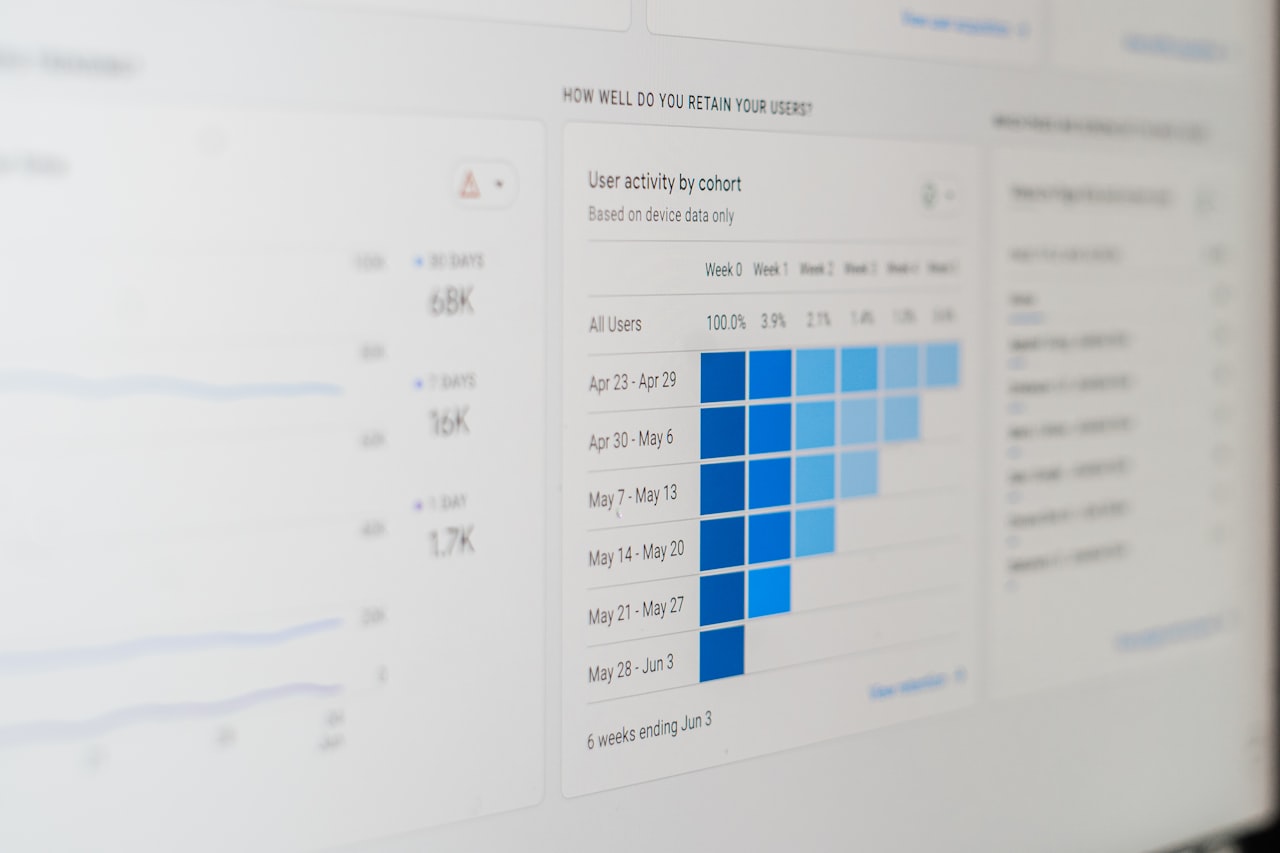
Use charts, graphs, and infographics to present quantitative data. A bar chart showing emissions trends over five years communicates more effectively than a table of numbers. Choose chart types that match your data: line charts for trends, bar charts for comparisons, pie charts for composition (used sparingly). Ensure all charts are accurately scaled and clearly labelled.
Consistent Branding
Your ESG report should align with your overall brand identity. Use your brand colours, typography, and visual style throughout. This consistency reinforces the message that sustainability is integrated into your business, not a separate afterthought.
Clear Information Hierarchy
Use headings, subheadings, and visual cues to create a clear hierarchy of information. Readers should be able to scan the report quickly to find the sections most relevant to them. Executive summaries, highlight boxes, and pull quotes help surface key messages.
Photography and Imagery
Use authentic photography that reflects your actual operations, employees, and communities rather than generic stock images. Photos of real projects, team members, and initiatives build credibility. Avoid greenwashing imagery — pictures of forests and oceans that have no connection to your business.
Digital-First Design
While printed reports still have a place, most stakeholders access ESG reports digitally. Design for screen readability first: use adequate font sizes, ensure sufficient colour contrast, and optimise file sizes for fast downloads. Consider creating an interactive web-based version alongside the PDF.
Accessibility
Ensure your report is accessible to all readers. This includes providing alt text for images, using readable font sizes, ensuring colour combinations work for colour-blind readers, and structuring the PDF with proper tags for screen reader compatibility.
Our graphic design services team has extensive experience designing ESG reports for SGX-listed companies and multinational corporations in Singapore.
Data Collection and Verification
The credibility of your ESG report rests on the quality of your data. Establishing robust data collection processes is essential for accurate, auditable reporting.
Establish Data Ownership
Assign clear responsibility for each data point to specific teams or individuals. Environmental data typically comes from operations and facilities management. Social data comes from HR and procurement. Governance data comes from the company secretary and legal teams. Each data owner should understand what is required, the definitions and boundaries, and the collection timeline.
Standardise Definitions and Boundaries
Ensure that all data contributors use consistent definitions. What counts as an “employee” (full-time, part-time, contract)? What is included in “waste” (operational, construction, electronic)? Which operations are within scope? Document these definitions and apply them consistently year on year.
Implement Collection Systems
Move beyond spreadsheet-based data collection as soon as practical. ESG data management platforms such as Workiva, Sphera, or Diligent streamline collection, validation, and reporting. For smaller companies, structured templates with built-in validation checks are a reasonable starting point.
Internal Review and Validation
Before submitting data for external assurance, conduct internal reviews to catch errors, inconsistencies, and gaps. Compare current-year data against prior years to identify anomalies that may indicate collection errors. Cross-check data against utility bills, HR records, and operational systems.
External Assurance
SGX requires external assurance for greenhouse gas emissions data. Engage an accredited assurance provider early in the reporting cycle. The assurance process involves reviewing your data collection methodology, testing a sample of data points, and issuing an assurance statement that accompanies your report. Limited assurance is the current minimum requirement, though reasonable assurance (a higher level) strengthens credibility.
Continuous Improvement
Treat each reporting cycle as an opportunity to improve your data collection processes. Document lessons learned, address gaps identified during assurance, and invest in automation where manual processes create risk. Companies that improve their data infrastructure early find subsequent reporting cycles significantly easier.
Communicating ESG Impact to Stakeholders
An ESG report is only effective if it reaches and resonates with its intended audiences. Different stakeholders have different information needs and preferred communication channels.
Investors
Investors want financially material ESG information: climate risks and opportunities, governance quality, and metrics that indicate long-term value creation. Present data in the context of business strategy and financial performance. Use ISSB and SASB frameworks to structure investor-focused disclosures. Make your ESG report easily accessible from your investor relations page.
Employees
Employees care about workplace safety, diversity and inclusion, career development, and the company’s social impact. Distil the full report into an employee-focused summary that highlights the initiatives most relevant to them. Share through internal communication channels and town hall presentations.
Customers and Partners
B2B customers increasingly request sustainability information from their suppliers. Make your ESG data available in formats that support your customers’ own reporting needs. Provide data sheets, certifications, and supply chain disclosures alongside the full report.
Regulators
Ensure your report clearly addresses all mandatory disclosure requirements. Use framework mapping indexes to demonstrate compliance. Make it easy for regulators to verify that you have met each requirement.
General Public and Media
Create simplified summaries and visual assets that communicate your ESG story to a broader audience. Press releases highlighting key achievements, social media content featuring specific initiatives, and case studies of community impact extend the reach of your reporting beyond the PDF document.
For companies looking to integrate sustainability into their broader marketing narrative, our sustainability marketing guide covers how to communicate ESG efforts authentically without greenwashing.
Common ESG Reporting Mistakes to Avoid
Based on reviewing hundreds of ESG reports from Singapore-listed companies, these are the most common pitfalls that undermine reporting effectiveness.
Greenwashing
Making vague claims without supporting data is the fastest way to lose stakeholder trust. Avoid phrases like “committed to sustainability” or “making a difference” unless backed by specific metrics, targets, and evidence of progress. Stakeholders and regulators are increasingly sophisticated at identifying greenwashing.
Data Without Context
Reporting emissions of 10,000 tonnes of CO2 equivalent means nothing without context. Is that an increase or decrease from last year? How does it compare to industry benchmarks? What is causing it? Always present data with year-on-year trends, normalised intensity metrics, and explanatory commentary.
Ignoring Negative Results
Reports that only highlight positive outcomes appear selective and untrustworthy. If you missed a target, say so and explain why. If an incident occurred, describe your response and lessons learned. Transparency about challenges builds more credibility than a curated highlight reel.
Inconsistent Reporting Boundaries
Changing what is included in your reporting scope from year to year makes data incomparable. If you must change boundaries (due to acquisitions, disposals, or methodology changes), clearly explain the changes and restate prior-year data on a comparable basis where possible.
Burying Material Information
Important disclosures should be prominent, not hidden in appendices or footnotes. If climate risk is material to your business, it belongs in the main body of the report with clear data visualisation, not in a table on page 87.
Treating Reporting as a Compliance Exercise
Companies that approach ESG reporting purely as a regulatory requirement produce reports that read like checklists. The most effective reports tell a coherent story about how the company creates value sustainably. Treat your report as a strategic communication tool, not a compliance document.
Our sustainability report design services help organisations avoid these pitfalls by combining strategic content development with professional design.
Frequently Asked Questions
Is ESG reporting mandatory in Singapore?
Yes, for SGX-listed companies. All issuers must publish an annual sustainability report, and climate reporting aligned with TCFD is mandatory for companies in identified sectors with phased implementation for others. Non-listed companies are not currently required to publish ESG reports, but many do so voluntarily to meet customer, investor, and stakeholder expectations. The regulatory direction clearly points toward broader mandatory disclosure in the coming years.
How much does it cost to produce an ESG report in Singapore?
Costs vary significantly based on the report’s scope, design quality, and whether external assurance is required. For a professionally designed ESG report, expect to invest SGD 30,000 to SGD 80,000 for mid-sized companies, covering content development, design, and production. External assurance adds SGD 15,000 to SGD 50,000 depending on scope. Large corporations with complex operations and multiple frameworks may invest SGD 100,000 or more. These costs are typically justified by the strategic value the report delivers.
What is the difference between an ESG report and a sustainability report?
The terms are often used interchangeably, though there are nuances. A sustainability report traditionally focuses on environmental and social impact. An ESG report explicitly includes governance alongside environmental and social factors, reflecting the framework that investors use to evaluate companies. In practice, most modern reports cover all three pillars regardless of the title. SGX uses “sustainability report” in its listing rules, while investors and analysts tend to use “ESG report.”
How long does it take to produce an ESG report?
A typical esg reporting cycle takes four to six months from data collection to publication. This includes data gathering (six to eight weeks), content writing and review (four to six weeks), design and production (four to six weeks), and external assurance (four to eight weeks, often running in parallel). First-time reporters should allow additional time for establishing processes and frameworks. Starting the process immediately after the financial year closes is advisable.
Can SMEs benefit from ESG reporting even if it is not mandatory?
Yes. While the investment in a full ESG report may not be justified for all SMEs, smaller companies can benefit from streamlined ESG disclosure. A focused sustainability statement covering key environmental and social metrics can strengthen tender submissions, attract sustainability-conscious customers, and prepare the company for future regulatory requirements. Many SMEs in Singapore start with a simple ESG summary and expand their disclosure over time.