Display Advertising Guide: Banner Ads, Rich Media and Native Display
Table of Contents
What Is Display Advertising
This display advertising guide covers everything Singapore marketers need to know about visual ads that appear across websites, apps and digital platforms. Display advertising uses images, animations, video and interactive elements to capture attention and drive brand awareness, consideration and conversions.
Display ads are among the oldest forms of digital advertising, dating back to the first banner ad in 1994. Since then, the format has evolved dramatically. Today, display advertising encompasses everything from simple static banners to complex interactive rich media units and seamless native placements that match the look and feel of surrounding content.
In Singapore’s competitive digital landscape, display advertising plays a crucial role in brand building and remarketing. While search ads capture demand from users actively looking for products or services, display ads create demand by reaching users during their browsing sessions. This makes display an essential component of any comprehensive digital marketing strategy.
The display ecosystem is powered by programmatic technology, which automates the buying and selling of ad inventory. Our guide on programmatic advertising in Singapore explains this ecosystem in greater detail.
Display Ad Formats Explained
Banner ads are the most recognisable display format. They come in standardised sizes defined by the Interactive Advertising Bureau. The most common sizes include the medium rectangle at 300 by 250 pixels, the leaderboard at 728 by 90 pixels, the skyscraper at 160 by 600 pixels and the large mobile banner at 320 by 100 pixels. These standard sizes ensure ads can run across the widest possible range of publisher sites.
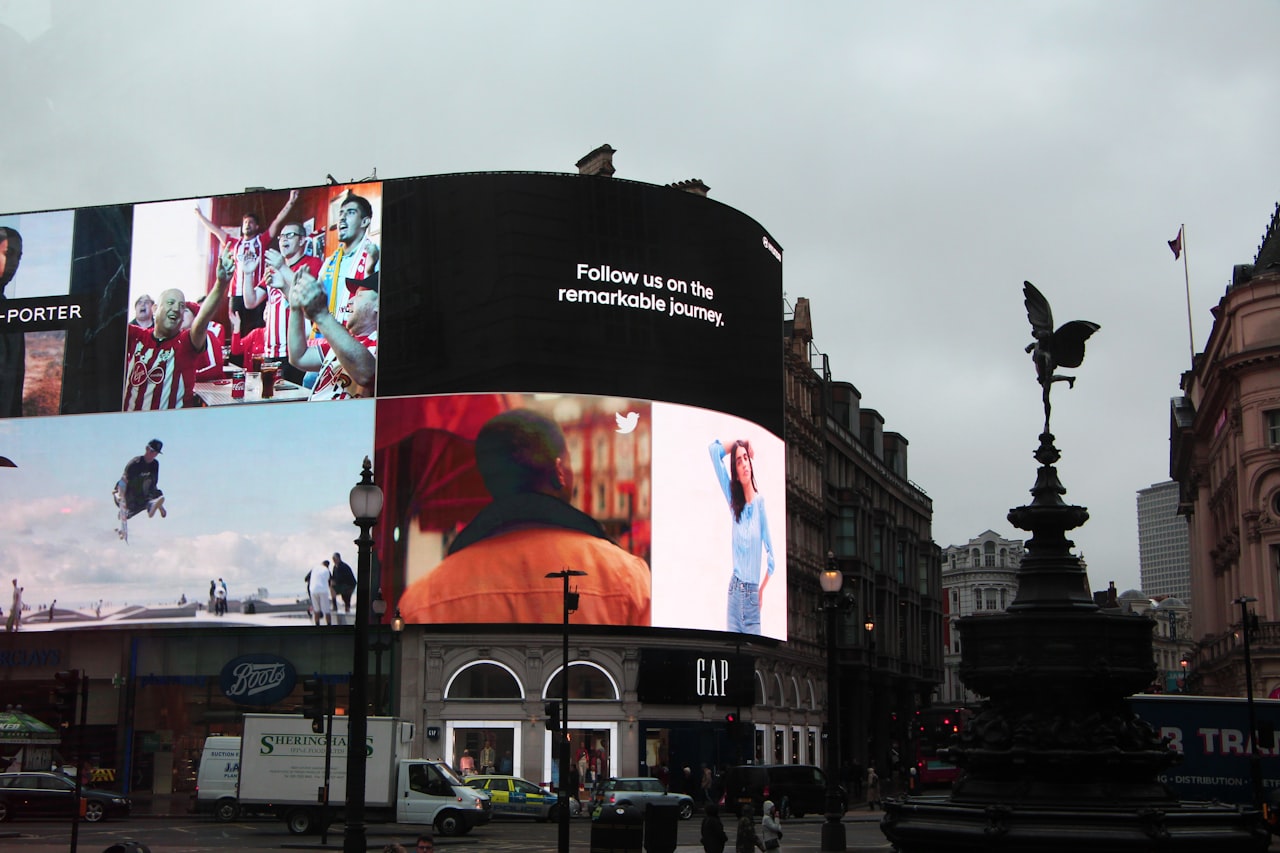
Responsive display ads automatically adjust their size, appearance and format to fit available ad spaces. Google Ads responsive display ads combine headlines, descriptions, images and logos that the system mixes and matches to create the best-performing combination. This format is highly recommended for advertisers who want maximum reach without creating dozens of individual ad sizes.
Rich media ads go beyond static images to include interactive elements such as expandable panels, video players, product carousels and mini-games. These formats typically achieve higher engagement rates but require more development effort and may carry premium pricing from publishers.
Native display ads match the visual style of the platform where they appear. They look like editorial content rather than traditional advertisements, which can improve user experience and engagement. Native ads often appear in content recommendation widgets, in-feed placements and promoted listings.
Video display ads embed video content within standard display placements. They may auto-play silently as users scroll past or require a click to initiate playback. Outstream video, which plays within text content rather than before or during other video content, has become particularly popular.
Targeting Options for Display Campaigns
Audience targeting lets advertisers reach specific groups of users based on their characteristics and behaviours. Demographic targeting covers age, gender, household income and parental status. Affinity audiences reach people based on their long-term interests and habits.
In-market audiences target users who are actively researching or considering a purchase in a specific category. For example, a car dealership in Singapore could target users who are in-market for vehicles. Custom intent audiences allow advertisers to build their own segments based on keywords, URLs and apps related to their offering.
Remarketing is one of the most powerful display targeting methods. It shows ads to users who have previously visited your website, used your app or interacted with your content. Dynamic remarketing takes this further by showing specific products or services that a user viewed. A strong web design with proper remarketing tags is essential for building these audiences.
Contextual targeting places ads on pages that contain content relevant to the advertiser’s product or service. Rather than targeting users, it targets the environment. This approach has regained popularity as privacy regulations limit user-level tracking.
The Google Display Network offers all these targeting options within its platform, reaching over 90 percent of internet users worldwide across millions of websites and apps.
Designing Effective Display Ads
Clarity is the most important design principle. Display ads occupy a small space and compete with surrounding content for attention. Your ad must communicate its message within one to two seconds. Use a clear headline, a compelling visual and an obvious call to action.

Brand consistency ensures users recognise your business across different placements. Use your brand colours, fonts and logo consistently across all ad sizes. This builds familiarity and trust over time, especially when running brand awareness campaigns.
The call to action should be prominent and specific. Instead of generic text like Learn More, use action-oriented phrases like Get Your Free Quote, Shop the Sale or Book a Consultation. The CTA button should contrast with the rest of the ad to draw the eye.
Animation and motion can increase engagement but should be used judiciously. Subtle animations that draw attention to the CTA or highlight key messaging work well. Avoid overly flashy or distracting animations that irritate users and may be blocked by ad blockers. Keep animations to 15 seconds or fewer and ensure the final frame contains your key message.
Mobile-first design is essential in Singapore where mobile browsing dominates. Ensure text is large enough to read on small screens, buttons are easily tappable and the ad loads quickly on mobile connections. Investing in proper branding ensures your display ads maintain a professional, cohesive appearance across all formats.
Setting Up a Display Campaign
Start by defining your campaign objective. Google Ads offers campaign goals including sales, leads, website traffic, brand awareness and reach, and app promotion. Your chosen objective influences the bidding strategies and targeting options available.
Set your budget and bidding strategy based on your objective. For awareness campaigns, target cost per thousand impressions. For traffic campaigns, use target cost per click. For conversion campaigns, target cost per acquisition or return on ad spend bidding typically delivers the best results.
Create your ad groups around tightly themed targeting criteria. Each ad group should focus on a specific audience segment or contextual theme. This allows you to tailor messaging to each group and measure performance at a granular level.
Upload multiple creative variations within each ad group. Include responsive display ads as your foundation, then add image ads in key sizes for more creative control. Test different headlines, descriptions and images to identify what resonates with your audience.
Configure frequency capping to prevent ad fatigue. Showing the same ad to the same user too many times reduces effectiveness and can create negative brand sentiment. A cap of three to five impressions per user per day is a common starting point.
Implement conversion tracking before launching your campaign. Without proper tracking, you cannot optimise towards business outcomes. Set up Google Ads conversion tags, connect Google Analytics and configure any relevant offline conversion imports. Work with your Google Ads management team to ensure tracking is properly configured.
Measuring Display Ad Performance
Impressions and reach tell you how many times your ad was shown and how many unique users saw it. These are primary metrics for brand awareness campaigns but insufficient for measuring business impact on their own.
Click-through rate measures the percentage of users who click your ad after seeing it. Average display CTR in Singapore ranges from 0.1 to 0.5 percent depending on the industry and targeting method. Remarketing campaigns typically achieve higher CTRs than prospecting campaigns.
Viewability measures whether an ad was actually seen by a user. The industry standard defines a viewable display impression as one where at least 50 percent of the ad’s pixels are in the viewable area of the browser for at least one second. Our article on ad viewability standards covers this topic comprehensively.
View-through conversions track users who saw your display ad but did not click, then later visited your site and converted through another channel. This metric captures the influence of display advertising on the broader customer journey, which pure click-based measurement misses.
Brand lift studies measure the impact of display campaigns on brand awareness, ad recall and purchase intent through surveys of exposed and control groups. Google offers free brand lift studies for campaigns meeting minimum spend thresholds.
Optimisation Strategies That Work
Audience layering combines multiple targeting signals to reach the most relevant users. Start with broad audience targeting, then layer in demographic, geographic and behavioural signals to narrow your focus. Monitor performance by segment and shift budget towards the best-performing combinations.
Creative rotation and testing is essential. Set up A/B tests comparing different headlines, images, colour schemes and calls to action. Let tests run for at least two weeks before drawing conclusions, and ensure each variation accumulates enough data for statistical significance.
Placement optimisation involves reviewing where your ads appear and excluding low-quality or irrelevant sites. Check your placement reports regularly and add poorly performing sites to your exclusion list. Consider focusing on managed placements for campaigns where context matters. Ensuring brand safety protects your reputation while optimising placement quality.
Dayparting adjusts bids or pauses campaigns during hours when performance is weak. Analyse your performance data by hour and day of week to identify patterns. For B2B campaigns in Singapore, weekday business hours often perform best, while B2C campaigns may see stronger results in the evenings and weekends.
Combining display advertising with content marketing creates a powerful flywheel. Content assets give you landing pages that provide value to users who click your display ads, improving conversion rates and quality scores.
Frequently Asked Questions
What is the average cost of display advertising in Singapore?
Display advertising costs in Singapore typically range from SGD 1 to SGD 5 per thousand impressions for open auction buying. Remarketing campaigns may see CPMs of SGD 3 to SGD 8. Cost per click usually falls between SGD 0.50 and SGD 2.00 depending on the industry and targeting method.
Are banner ads still effective in 2026?
Yes, when executed well. While click-through rates are lower than search ads, display advertising drives brand awareness and supports remarketing. Responsive and native formats have improved engagement rates compared to traditional static banners.
What size display ads should I create?
At minimum, create ads in the medium rectangle 300 by 250, leaderboard 728 by 90 and large mobile banner 320 by 100 sizes. Using responsive display ads alongside these covers the broadest range of placements automatically.
How do I prevent my display ads from appearing on low-quality sites?
Use placement exclusion lists, enable brand safety controls in your ad platform and review placement reports weekly. Consider using third-party verification tools for additional protection against inappropriate placements.
Should I use display advertising for lead generation?
Display can generate leads, especially through remarketing. For cold audiences, display is better suited to building awareness and driving consideration. Combine display with search advertising to capture leads from users who discover your brand through display and later search for you.
What is the difference between display and native advertising?
Traditional display ads are clearly identifiable as advertisements with distinct borders and styling. Native ads match the visual format and function of the platform where they appear, blending in with surrounding content. Both have their place in a balanced media mix.
How long should I run a display campaign before judging results?
Allow at least two to four weeks for a display campaign to gather sufficient data. Brand awareness campaigns may need longer to show measurable impact through brand lift studies. Performance campaigns should accumulate at least 50 to 100 conversions before making major optimisation decisions.