Discount Strategy: When and How to Offer Discounts Without Killing Margins
The Discount Dilemma
Discounts are the most powerful and most dangerous tool in a marketer’s arsenal. A well-timed, well-structured discount strategy drives sales, clears inventory, and acquires new customers. A poorly planned one trains customers to never pay full price, compresses margins permanently, and positions your brand as cheap. For Singapore businesses competing in a market where 11.11, Black Friday, Great Singapore Sale, and a dozen other promotional events fill the calendar, the pressure to discount is constant. Resisting that pressure — or at least channelling it strategically — is essential for long-term profitability.
The maths of discounting is unforgiving. If your gross margin is 40%, a 20% discount means you need to sell 100% more units just to maintain the same gross profit. Not 20% more — 100% more. This margin arithmetic catches many Singapore business owners off guard. They see the revenue bump from a sale and miss the profit erosion underneath it.
This guide is not anti-discount. Discounts, used strategically, are effective. But they need to be planned with the same rigour you would apply to any marketing investment — with clear objectives, defined guardrails, and measurement systems that track profitability, not just revenue.
Types of Discounts and When to Use Each
Not all discounts are created equal. Each type serves a different strategic purpose, attracts a different customer behaviour, and has a different impact on your brand and margins.

Percentage Off
The most common discount format: 10% off, 20% off, 50% off. It scales with purchase size, which makes it feel fairer for big-ticket items. Use percentage discounts when your product range spans a wide price range and you want a single promotion to apply across the catalogue. In Singapore, percentage discounts are the standard for fashion, electronics, and lifestyle categories.
The risk: customers anchor on the discounted percentage and begin to expect it. If you run “20% off everything” every month, your effective price becomes the discounted price and full-price purchases drop. Limit frequency to 2-3 times per year for sitewide percentage discounts.
Dollar Amount Off
“SGD 10 off orders over SGD 80” or “SGD 50 off your first purchase.” Dollar-amount discounts work best for lower-priced items (where a percentage feels small) and for setting cart minimums. A SGD 10 discount feels more tangible than “12.5% off” even though they are identical for an SGD 80 order.
Volume and Tiered Discounts
“Buy 2, get 10% off. Buy 3, get 15% off.” Tiered discounts incentivise larger orders without discounting single-unit purchases. They protect your margin on low-quantity orders while rewarding bulk buyers. This works particularly well for consumable products — coffee, supplements, cleaning supplies — where customers will eventually use the extra units.
Conditional Discounts
Discounts that require a specific action: sign up for the newsletter, refer a friend, leave a review, complete a survey. These discounts have a dual purpose — they drive the desired behaviour and they discount. The “behaviour cost” offsets some of the margin loss because you are gaining something valuable (an email address, a referral, user-generated content) in exchange for the discount.
Loyalty and Repeat Purchase Discounts
Discounts for returning customers reward loyalty and increase retention. “10% off your next order” included in post-purchase emails, or a points-based system where accumulated purchases unlock discounts. These are strategically superior to acquisition discounts because they reward customers who have already demonstrated value, and the redemption rate is typically 15-30% — meaning you give the discount only to those who return.
Clearance Discounts
End-of-season, overstock, and discontinuation discounts serve a specific operational purpose: converting ageing inventory into cash. Mark these clearly as clearance to protect your full-price perception. Singapore consumers understand that seasonal items go on sale — it does not devalue your brand when the context is clear.
The Psychology of Discounts
Understanding why discounts work helps you design offers that maximise response while minimising margin damage. Several well-documented psychological principles drive discount effectiveness.
The Rule of 100
For products priced below SGD 100, percentage discounts feel larger. For products above SGD 100, dollar amounts feel larger. “30% off a SGD 50 item” (SGD 15 saving) feels more impressive than “SGD 15 off.” But “SGD 300 off a SGD 1,000 item” (30% saving) feels more impressive than “30% off.” Choose your discount format accordingly.
Anchoring and Reference Prices
Showing the original price next to the discounted price creates an anchor that makes the savings feel real. “Was SGD 89, now SGD 59” is more effective than “SGD 59 (save 34%)” because the customer can see the specific amount they are not paying. In Singapore, the original price must be genuine — inflating a price to create a false discount violates the Consumer Protection (Fair Trading) Act.
Urgency and Scarcity
“Ends midnight Sunday” or “Only 14 left at this price” create temporal and quantity scarcity that accelerates purchase decisions. Countdown timers on discount pages increase conversion by 9-14% in A/B tests. But false scarcity — a timer that resets or “limited stock” that never runs out — will destroy trust when discovered, and in Singapore’s online communities, it will be discovered.
Loss Aversion
Framing a discount as something the customer will lose is more powerful than framing it as something they will gain. “Your SGD 20 voucher expires in 48 hours” triggers loss aversion. The customer does not want to “waste” the voucher, even though not using it costs them nothing. This is why expiring vouchers have higher redemption rates than open-ended ones.
The Pain of Paying
Discounts reduce the psychological “pain of paying” — the mental discomfort of spending money. A discounted price activates the pleasure centres of the brain more than an always-low price because the customer feels they are getting a deal. This is why sale prices drive more purchases than permanent low prices, even when the final amount is identical.
Margin Protection Strategies
The goal is to capture the sales benefit of discounting while protecting your profit margins. These strategies help you thread that needle.
Set a Discount Budget
Treat discounts like any other marketing spend. Allocate a quarterly discount budget as a percentage of revenue (2-5% for most Singapore SMEs) and manage promotions within that budget. When the budget is spent, the promotions stop. This prevents the creep of perpetual discounting.
Discount Only What Needs Discounting
Sitewide sales are expensive. Targeted discounts — on slow-moving inventory, new customer acquisition, or specific customer segments — concentrate the margin hit where it delivers the most strategic value. Use your digital marketing data to identify which products and segments respond to discounts and which buy at full price regardless.
Protect Your Best Sellers
Your best-selling products already sell well at full price. Discounting them is pure margin erosion with minimal incremental volume. Exclude top sellers from sitewide promotions or offer them at smaller discounts than the rest of the range. Customers come for the sale; many will buy a full-price best seller while they are there.
Raise Prices Before Discounting
If you plan a 20% off promotion, consider raising your base prices by 5-10% two months before the sale. This is common practice in retail and is ethically sound as long as the raised price is genuinely charged for a reasonable period. It reduces the net margin impact of the discount. However, be careful — if your “original price” only existed for a week before the sale, Singapore consumers and regulators will see through it.
Use Minimum Thresholds
“SGD 15 off orders over SGD 100” protects your margin on small orders while incentivising larger baskets. Set the threshold above your current average order value to ensure the discount drives incremental spending. If your AOV is SGD 75, a SGD 100 threshold pushes customers to add more items, partially offsetting the discount cost.
Limit Discount Stacking
Prevent customers from combining multiple discounts — loyalty points plus a promo code plus a first-purchase voucher can stack to 40-50% off, which is rarely intentional. Set clear rules: “Cannot be combined with other offers” and enforce them technically in your checkout system.
Timing Your Discounts
When you discount matters as much as how much you discount. Singapore’s promotional calendar is crowded, and timing your offers strategically can mean the difference between a profitable promotion and a margin-destroying one.
The Singapore Promotional Calendar
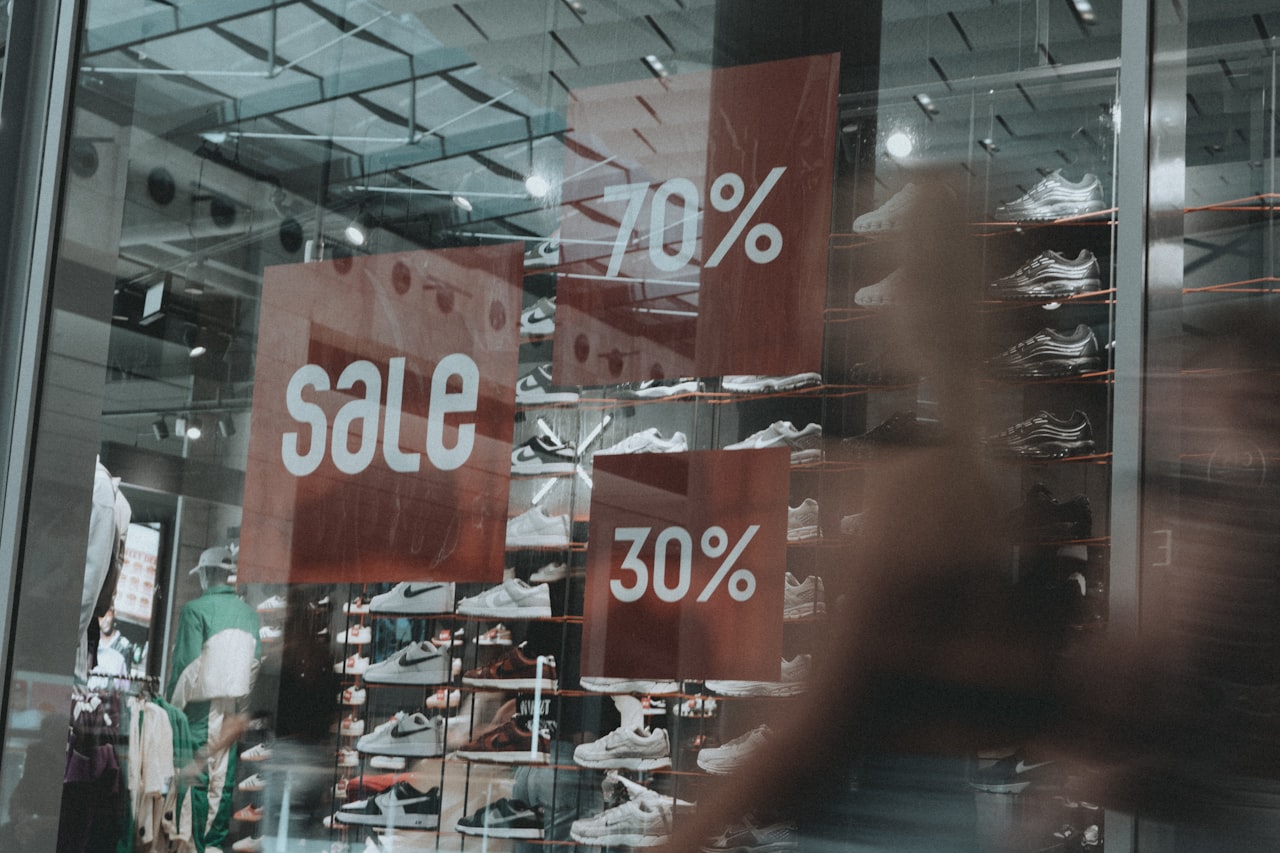
Key dates include Chinese New Year (January/February), Great Singapore Sale (June-August, though its prominence has waned), National Day (August), 9.9/10.10/11.11/12.12 platform sales, Black Friday/Cyber Monday (November), and Christmas/Year-End (December). Competing directly with major platform sales (Shopee 11.11, Lazada 12.12) is expensive because customer expectations for deep discounts are set by the platforms’ subsidised deals.
Counter-Programming
Rather than discounting during peak promotional periods when every competitor is shouting, consider running your best offers slightly before or after the major events. A “Pre-11.11 Early Access” sale in late October captures deal-seekers before they are overwhelmed with options. A “Missed the sale?” follow-up in mid-November catches those who did not find what they wanted during the main event.
Strategic Quiet Periods
Use discounts to fill troughs in your sales cycle. If February and March are slow months for your business, a targeted promotion during those periods makes strategic sense — the alternative is idle capacity or unsold inventory. Discounting during peak periods, when you would sell the product anyway, is wasted margin.
Product Lifecycle Timing
New products should rarely be discounted at launch — it sets the wrong price anchor. Discount 3-6 months in when initial demand has cooled, or when a new version is approaching. For seasonal products, begin markdowns at 30% through the season, escalating to deeper cuts as the end approaches. The goal is to clear as much as possible at small discounts before resorting to deep ones.
Alternatives to Straight Discounts
Before defaulting to a price cut, consider alternatives that provide perceived value without directly reducing your price. These approaches protect margins while still giving customers something extra.
Value-Add Offers
“Free shipping on all orders” costs you the shipping fee (typically SGD 3-8 for local delivery) but feels like a discount to the customer. “Free gift with purchase” moves slow-selling inventory while making the customer feel rewarded. Extended warranties, bonus content, or additional service hours all add value without cutting the price of the core product.
Bundle Pricing
Bundling products together at a slight discount to the total individual price increases AOV while distributing the discount across multiple items. The effective discount per item is small, but the bundle feels like a deal. A skincare brand selling a cleanser (SGD 35), toner (SGD 28), and moisturiser (SGD 42) individually can bundle them at SGD 89 — a 15% saving that still generates more total revenue than a single-product purchase.
Exclusive Access
Early access to new products, members-only shopping events, or exclusive colourways can be more compelling than discounts for brand-conscious customers. Singapore consumers value exclusivity — limited-edition collaborations and invite-only events create desire that discounts cannot.
Cashback and Store Credit
Offering 10% cashback as store credit instead of a 10% discount costs you less because redemption rates for store credit average 60-70%. Those who redeem also make additional purchases, generating further revenue. It is a discount that brings the customer back, rather than one that ends at the transaction.
Loyalty Points and Programmes
Points-based systems defer the discount to future purchases and create switching costs. A customer with 500 unredeemed points is less likely to shop elsewhere. Structure the programme so that points are earned easily but redeemed at a level that keeps the effective discount below 5-8%. Use email marketing to remind customers of their points balance and encourage repeat visits.
The Singapore Discount Landscape
Singapore’s retail and e-commerce environment has unique characteristics that shape how discounts work in practice.
Platform Dominance
Shopee and Lazada have conditioned Singapore consumers to expect deep discounts on numbered dates (9.9, 10.10, 11.11, 12.12). These platforms subsidise discounts with their own funds to drive GMV, which creates an unrealistic benchmark for independent sellers. If you sell on these platforms, participate strategically — use the traffic surge but do not try to match the subsidised deals. If you sell on your own site, differentiate on experience, branding, and service rather than competing on price.
Price Comparison Culture
Singaporeans are avid price comparers. Tools like PriceSpy, ShopBack, and browser extensions that surface coupon codes mean your discount is always viewed in context. If you offer 10% off but a competitor offers 15%, the comparison is instant and transparent. This makes conditional discounts (behaviour-based, threshold-based) more defensible than blanket percentage-off promotions because they add complexity that resists direct comparison.
Cashback Platforms
ShopBack and its competitors have created a permanent layer of cashback between you and the consumer. Factor platform cashback into your discount calculations. If ShopBack offers 6% cashback on your store, your effective discount to the consumer is already 6% before you layer on any additional promotion. You are paying that cashback through the platform’s affiliate commission, so it is not free.
GST and Discount Communication
Always communicate discounted prices inclusive of GST for B2C sales. A “20% off” promotion where the shown price does not include 9% GST creates a negative surprise at checkout. Singapore consumers expect the price they see to be close to the price they pay. For B2B transactions, discount on the ex-GST price is standard practice.
Integrating your discount strategy with your broader content marketing and SEO efforts ensures that promotional pages attract organic traffic and that discount-focused content is findable long after the promotion ends.
Implementation and Measurement
A discount is a marketing investment. Measure it like one.

Pre-Promotion Baseline
Before launching a discount, document your current metrics: daily revenue, AOV, conversion rate, units sold, and gross margin. Without a baseline, you cannot calculate the true incremental impact of the promotion. Also account for the “pull-forward” effect — some sales during the promotion would have happened anyway, and there may be a post-promotion dip as customers who bought early do not buy in the following weeks.
Key Metrics to Track
Revenue is the vanity metric. Gross profit is the real one. Track: total gross profit during the promotion period compared to the baseline, customer acquisition cost for new customers acquired during the promotion, percentage of sales from new vs existing customers, redemption rate for codes and vouchers, and post-promotion sales velocity to measure pull-forward effects.
Customer Segment Analysis
Who used the discount? If 80% of redemptions came from existing customers who would have bought at full price, the promotion destroyed margin without creating new value. If 60% came from new customers who subsequently make a second full-price purchase, it was an effective acquisition tool. Segment your analysis to understand the real impact.
Long-Term Brand Impact
Track your percentage of sales at full price over time. If it declines quarter over quarter, your discounting is training customers to wait for sales. Healthy brands maintain 60-80% of sales at full price. If your full-price ratio drops below 50%, you have a discounting dependency that will take 6-12 months of discipline to reverse.
Testing and Optimisation
A/B test your promotional offers using Google Ads and social campaigns. Test discount amounts (15% vs 20%), formats (percentage vs dollar), conditions (with threshold vs without), and messaging (saving-focused vs urgency-focused). Small differences in offer structure can produce meaningful differences in profitability.
Frequently Asked Questions
What is a safe discount percentage that will not erode my margins?
It depends entirely on your gross margin. If your gross margin is 60%, a 15-20% discount leaves you profitable on each sale. If your gross margin is 30%, even a 10% discount requires significant volume increases to maintain profit. Calculate your break-even volume increase for any discount: at 30% margin, a 10% discount requires 50% more sales to break even. Most businesses find 10-15% to be a sustainable promotional discount for periodic use.
How often should I run promotions?
For most Singapore SMEs, 4-6 promotional events per year is sustainable. This might include 2 seasonal sales (mid-year and year-end), 1-2 tactical promotions (clearance or new customer acquisition), and 1-2 platform-aligned events (11.11 or National Day). More than monthly promotions risks creating discount dependency among your customer base.
Should I match competitors’ discounts?
Only if you are competing on price as your primary strategy. For most businesses, matching every competitor discount is a race to the bottom. Instead, differentiate on value — better service, superior product quality, faster delivery, stronger brand — and let price-sensitive customers go to the competitor. Your best customers are rarely the most price-sensitive ones.
Do discounts attract the wrong type of customers?
Discounts disproportionately attract price-sensitive buyers who have lower lifetime value and higher churn. This is not inherently bad — some will become loyal full-price customers. But if your only acquisition strategy is discounting, you will build a customer base with structurally low LTV. Balance discount-driven acquisition with value-driven acquisition through content, SEO, and brand building.
How do I stop customers from waiting for sales?
Make your discount timing unpredictable, limit the products included, and use conditional discounts (first purchase only, volume thresholds) rather than blanket promotions. Communicate your full-price value consistently so that customers see the regular price as fair, not inflated. If customers are openly waiting for your next sale, you are discounting too predictably.
Are flash sales still effective in Singapore?
Flash sales (24-48 hour deep discounts) still drive volume, but their effectiveness has diminished as every platform and retailer runs them. To stand out, make your flash sale genuinely limited (specific products, capped quantities), promote it primarily to your email list and social followers (not broadly), and ensure the discount is meaningful enough to justify the urgency.
How do I discount services without devaluing my expertise?
Never discount your hourly rate or day rate — it directly devalues your time. Instead, offer value-adds: “Sign a 6-month retainer and we include a quarterly strategy workshop at no additional cost.” Bundle additional deliverables at a reduced scope, or offer a project price that is lower than your standard rate but structured as a fixed-scope engagement rather than a discounted rate.
What is the impact of discount codes on checkout completion?
The “promo code” field at checkout causes 27% of customers to abandon the cart to search for a code (Baymard Institute data). If they cannot find one, some do not return. Solutions include auto-applying available discounts, hiding the promo code field behind a link (“Have a code? Click here”), or using URL-based discounts that apply automatically when the customer arrives from a promotional link.
Should I offer discounts to win back lapsed customers?
Win-back discounts can be effective when targeted at customers who have not purchased in 90+ days. A personalised “We miss you — here’s 15% off your next order” email with a 14-day expiry creates urgency without broadly discounting. Keep win-back offers exclusive to the email channel so they do not set public expectations for discounts.
How do I calculate the true cost of a promotion?
Add up: the direct margin loss (discount amount times units sold), the opportunity cost of full-price sales that would have occurred without the promotion, the marketing spend to promote the discount, any platform fees or affiliate commissions on discounted sales, and the long-term brand impact of training customers to expect discounts. Most businesses only count the first item and underestimate the true cost by 40-60%.