Creative Agency Singapore: Design, Campaigns and Brand Storytelling
Table of Contents
- What Creative Agencies in Singapore Offer
- Types of Creative Agencies and Their Specialisations
- How to Evaluate a Creative Agency Portfolio
- The Creative Process: From Brief to Delivery
- Creative Agency Pricing Structures
- Singapore’s Creative Industry Landscape
- How to Work Effectively With a Creative Agency
- Frequently Asked Questions
What Creative Agencies in Singapore Offer
A creative agency singapore businesses partner with serves as the intersection of strategy and artistry. These agencies translate business objectives into compelling visual and narrative experiences that capture attention, build emotional connections and drive commercial outcomes.
Unlike specialist firms that focus on a single discipline, creative agencies typically offer a broad suite of services spanning graphic design, advertising campaigns, content creation, brand storytelling, video production and digital experiences. This breadth allows them to develop integrated campaigns where every element — from a social media post to a billboard — speaks with one consistent creative voice.
Singapore’s position as a regional hub means creative agencies here often serve both local and Southeast Asian markets. This demands creative work that can transcend cultural boundaries while still feeling locally relevant — a balancing act that the best agencies in the city have mastered through years of multicultural work.
The scope of services typically includes campaign conceptualisation, art direction, copywriting, graphic design, motion graphics, video production, social media content, print design, environmental graphics and digital experience design. Many agencies also extend into web design and digital marketing to offer end-to-end solutions.
Types of Creative Agencies and Their Specialisations
The creative agency landscape in Singapore spans several distinct categories, each suited to different business needs.

Full-service creative agencies handle everything from strategy to execution across multiple channels. They are ideal for businesses wanting a single creative partner to manage all their design and campaign needs. The trade-off is that they may not have the deepest expertise in any single discipline.
Design studios specialise in visual design — logos, brand identity, packaging, publication design and digital interfaces. They tend to be smaller teams with strong aesthetic sensibilities but may not offer strategic or campaign planning services.
Advertising agencies focus on campaign creation and media placement. Traditional ad agencies have evolved significantly, with most now offering strong digital capabilities alongside traditional media expertise.
Content and storytelling agencies specialise in narrative-driven marketing — brand films, editorial content, documentary-style campaigns and long-form storytelling. These agencies are particularly relevant as content marketing continues to grow in importance.
Digital creative agencies focus on interactive experiences, website design, app interfaces, social media content and digital campaigns. Their work lives primarily on screens and is optimised for engagement metrics and conversion.
A branding agency may overlap with creative agencies in services like identity design, but branding agencies typically go deeper on strategic positioning work.
How to Evaluate a Creative Agency Portfolio
A portfolio is the most important indicator of what a creative agency can deliver for your business. Here is how to assess one effectively.
Look for strategic thinking, not just beautiful design. Can the agency articulate the business challenge behind each piece of work? Creative that looks stunning but was not informed by strategy is decoration, not communication. The best portfolio case studies explain the brief, the insight, the creative approach and the results.
Assess versatility. Can the agency work across different styles, industries and media? A portfolio showing only one aesthetic suggests the agency may impose their house style on your brand rather than developing something uniquely appropriate for your business.
Check for results. Did the campaign increase sales? Did the rebrand improve brand recall? Agencies that can demonstrate commercial impact are more likely to deliver work that serves your business objectives, not just their creative ambitions.
Consider relevance. While versatility matters, experience in your industry or with comparable challenges is genuinely valuable. An agency that has produced work for similar products, audiences or markets will have a shorter learning curve.
Examine craft quality. Look at the details — typography, spacing, colour application, copywriting precision. These details reveal how much care the agency puts into execution, which directly affects how your brand will be perceived.
The Creative Process: From Brief to Delivery
Understanding the typical creative process helps you plan timelines, budget appropriately and collaborate more effectively with your agency.
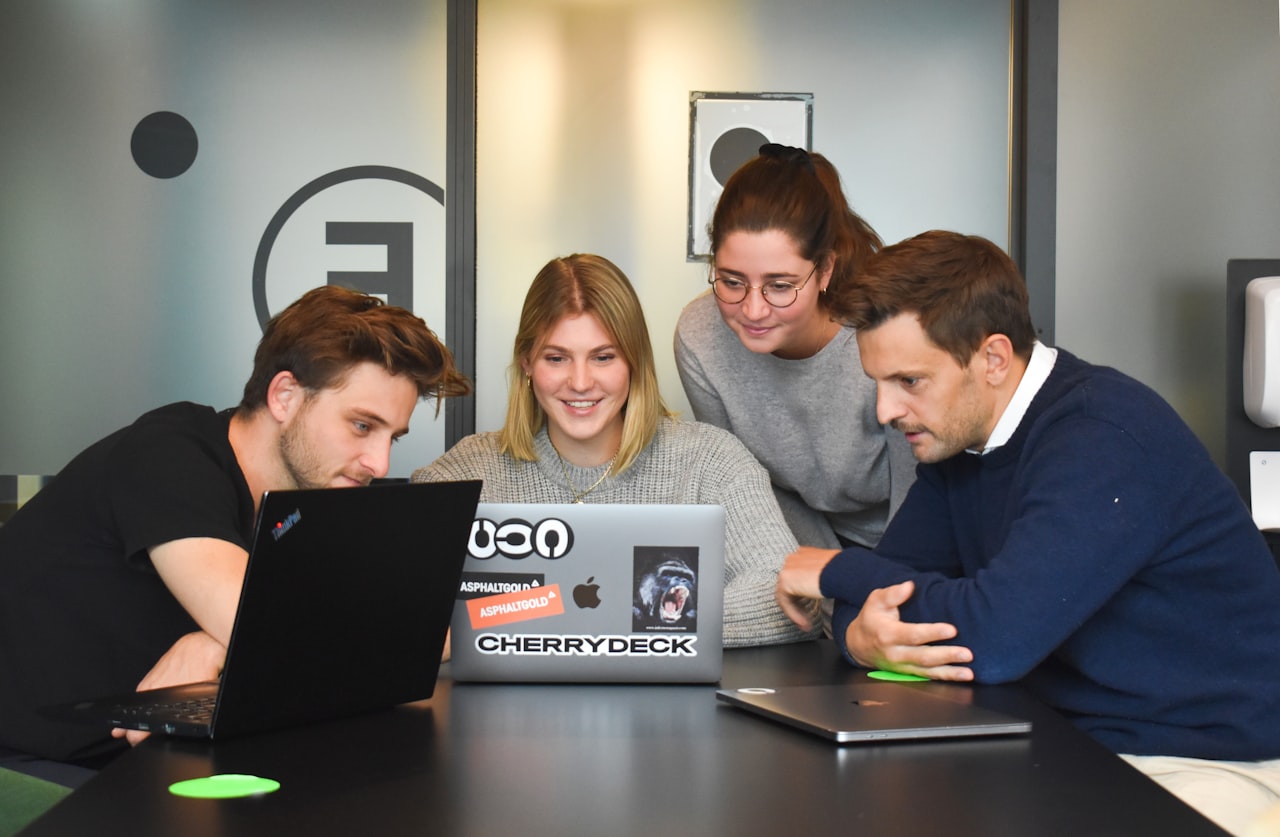
Briefing (Week 1): You provide the agency with your objectives, target audience, key messages, budget, timeline and any mandatory requirements. The quality of the brief directly influences the quality of creative output. Good agencies will push back on vague briefs and ask probing questions.
Research and Strategy (Weeks 1-2): The agency analyses your market, competitors and audience to identify creative opportunities. This phase produces a creative strategy or big idea that will guide all creative development.
Concept Development (Weeks 2-4): Creative teams develop multiple concepts that bring the strategy to life. Most agencies present 2-4 concepts in rough form, allowing you to react to the direction before significant resources are invested in production.
Refinement and Production (Weeks 4-6): The approved concept is developed into finished creative across all required formats and channels. This is where craft skills matter most — translating a rough concept into polished, production-ready assets.
Review and Approval (Week 6-7): Final materials are reviewed, revised if needed and approved for release. Efficient agencies build structured feedback processes that minimise unnecessary revision cycles.
Launch and Optimisation (Ongoing): For campaigns, the agency supports launch and may optimise creative based on performance data. This is where integration with social media marketing and paid media teams becomes critical.
Creative Agency Pricing Structures
Creative agencies in Singapore use several pricing models. Understanding these helps you budget accurately and avoid surprises.
Project-based pricing is the most common model for defined scopes of work. A brand identity project might cost $10,000-50,000, a campaign $15,000-100,000, and individual design pieces $500-5,000 each. This model works well when deliverables are clearly defined upfront.
Retainer arrangements suit businesses with ongoing creative needs. Monthly retainers in Singapore typically range from $3,000-15,000 for SMEs and $15,000-50,000+ for larger organisations. Retainers guarantee dedicated creative resources and often include a set number of hours or deliverables per month.
Hourly rates are sometimes used for smaller or ad-hoc projects. Senior creative directors charge $200-400 per hour, mid-level designers $120-200 per hour, and junior designers $80-120 per hour. However, hourly billing can create misaligned incentives where efficiency is penalised.
Value-based pricing is emerging among premium agencies. The fee is based on the project’s commercial value to your business rather than the time spent. A campaign expected to drive $1 million in revenue might command a $50,000-100,000 creative fee regardless of hours invested.
At MarketingAgency.sg, we offer flexible pricing models that align with your budget and project requirements, whether you need a one-off campaign or ongoing creative support.
Singapore’s Creative Industry Landscape
Singapore’s creative industry has grown significantly over the past decade, supported by government initiatives and the country’s position as a regional business hub.
The Infocomm Media Development Authority (IMDA) and DesignSingapore Council actively support the creative sector through grants, capability development programmes and international market access initiatives. Businesses hiring creative agencies may be eligible for subsidies under schemes like the Productivity Solutions Grant (PSG) or Enterprise Development Grant (EDG).
Singapore hosts a diverse mix of agencies — from boutique studios with 3-5 people to regional offices of global networks employing hundreds. This variety means businesses of all sizes can find appropriate creative partners. The concentration of talent from across Asia also means Singapore agencies often bring multicultural perspectives that enrich creative output.
Industry challenges include talent competition with tech companies, rising operational costs and the pressure to demonstrate measurable ROI from creative investments. However, the overall quality of creative output from Singapore agencies is internationally recognised, with local firms regularly winning awards at Cannes Lions, D&AD and other global creative competitions.
How to Work Effectively With a Creative Agency
The client-agency relationship significantly influences creative quality. Here are practices that consistently produce better outcomes.

Write clear, focused briefs. The single biggest driver of creative quality is brief quality. Include specific objectives, target audience details, key messages, mandatories and success metrics. Avoid jargon and resist the temptation to brief too many messages — focus enables creativity.
Provide honest, constructive feedback. “I don’t like it” is unhelpful. Explain why something does not work relative to the brief and audience. Distinguish between personal taste and strategic concerns. Good agencies welcome rigorous feedback and will push back respectfully when they believe the work is right.
Consolidate feedback from your team. Nothing derails a project faster than multiple rounds of contradictory feedback from different stakeholders. Designate a single decision-maker or establish a clear approval process before the project begins.
Respect the process. Creative work benefits from structured phases. Jumping ahead — asking for final designs before strategy is agreed, for example — typically results in wasted time and budget as work gets redone.
Build a partnership, not a vendor relationship. The best creative work comes from agencies that deeply understand your business. Invest time in the relationship, share business context beyond the immediate project and treat the agency as an extension of your team.
When your creative campaigns need to drive measurable results online, integrating with SEO and content marketing strategies ensures your creative investment generates lasting value.
Frequently Asked Questions
What is the typical cost of hiring a creative agency in Singapore?
Costs vary widely based on scope. Individual design projects start from $500-2,000, brand identity packages range from $10,000-50,000, and integrated campaigns can cost $15,000-100,000+. Monthly retainers for ongoing support typically range from $3,000-15,000 for SMEs.
How do I choose between a creative agency and a freelancer?
Freelancers suit smaller, well-defined projects where a single skill set is needed. Agencies are better for complex projects requiring multiple disciplines (strategy, design, copywriting, production) and for ongoing relationships where consistency matters. Agencies also provide backup if a team member is unavailable.
What should I include in a creative brief?
A strong brief includes: background context, specific objectives, target audience profile, key messages (prioritised), tone of voice, mandatory elements, budget, timeline, deliverable specifications and how success will be measured. The more specific your brief, the more targeted the creative response.
How long does a typical creative campaign take to develop?
From brief to launch, most campaigns take 6-12 weeks. Simple social media campaigns may be produced in 3-4 weeks, while complex integrated campaigns with video, digital and print components can take 12-16 weeks or more.
Can a creative agency help with both digital and traditional marketing?
Most full-service creative agencies handle both. However, some specialise in one area. If you need strong capabilities across both, verify the agency’s portfolio includes recent examples of both digital and traditional work.
What is the difference between a creative agency and a branding agency?
A branding agency focuses specifically on brand strategy, identity and guidelines — the foundational elements of who you are. A creative agency takes that brand and brings it to life through campaigns, content and design across various channels. Some agencies offer both services.
Should I work with a local Singapore agency or an international firm?
For campaigns targeting Singaporean or Southeast Asian audiences, local agencies often deliver better cultural relevance and value for money. International firms may be preferable for global campaigns or when brand prestige is a significant factor in your industry.
How do I measure the ROI of creative agency work?
Define measurable objectives before the project starts. For campaigns, track metrics like brand awareness (surveys), engagement rates, website traffic, lead generation and sales attribution. For brand identity work, measure brand recall, consistency scores and stakeholder perception through pre- and post-surveys.