Branded Podcast Strategy: Build Thought Leadership Through Audio Content
Table of Contents
- What Is a Branded Podcast and Why It Matters
- Strategic Foundations for Your Branded Podcast
- Content Planning and Editorial Direction
- Production Quality and Brand Standards
- Distribution and Promotion Strategy
- Using Your Podcast for Lead Generation
- Measuring Thought Leadership Impact
- Frequently Asked Questions
What Is a Branded Podcast and Why It Matters
A branded podcast strategy is the deliberate creation and management of a podcast owned and produced by a brand, designed to build authority, deepen audience relationships and generate business value through consistently valuable audio content. Unlike podcast advertising where you rent attention on someone else’s show, a branded podcast gives you full ownership of the platform, audience and content.
Branded podcasts differ from traditional marketing content in a fundamental way. They prioritise audience value over brand messaging. The most successful branded podcasts barely mention their parent company’s products or services. Instead, they provide genuinely useful content that positions the brand as a knowledgeable, trustworthy voice in their industry. The brand benefits not from direct promotion but from association with valuable, authoritative content.
For Singapore businesses, branded podcasts offer a distinctive competitive advantage. The market has significantly fewer branded podcasts than the US, UK or Australian markets, meaning the opportunity to establish category authority through audio content is still wide open. A professional services firm, technology company or B2B brand that launches a well-produced branded podcast today can become the definitive audio voice in their niche within six to twelve months.
The business case extends beyond brand building. Branded podcasts create a relationship asset that appreciates over time. Each episode deepens the connection with existing listeners while attracting new ones. Unlike paid advertising that stops working the moment you stop spending, a podcast library continues to generate value indefinitely. Episodes published years ago still attract new listeners through search and recommendation algorithms.
Major global brands including Shopify, HubSpot, McKinsey and Sephora run successful branded podcasts that demonstrate the format’s versatility across industries and business models. In Singapore, a growing number of forward-thinking brands are investing in audio content as a core component of their content marketing strategy.
Strategic Foundations for Your Branded Podcast
Building a branded podcast without strategic foundations leads to the same outcome as any unplanned content initiative: inconsistency, mission drift and eventual abandonment. The strategy phase should be thorough enough to sustain production for at least two years.

Define your podcast’s position in the market by answering three questions. Who is this for? What value does it provide that they cannot get elsewhere? Why should they trust us to deliver it? The intersection of these answers becomes your podcast’s unique proposition. Avoid the temptation to target everyone. A podcast that speaks directly to CFOs of Singapore SMEs is infinitely more valuable than one that vaguely addresses business professionals.
Establish clear business objectives that the podcast serves. Common objectives include building thought leadership in a specific domain, generating qualified leads for services, nurturing existing prospects through the sales cycle, strengthening employee recruitment by showcasing company culture and creating networking opportunities with industry leaders through the guest invitation process.
Determine the relationship between your podcast content and your commercial offerings. The strongest branded podcasts maintain editorial independence from the sales team while strategically addressing topics that create awareness of problems your products or services solve. Map your podcast content pillars to stages of your buyer’s journey so that different episodes naturally attract listeners at different stages of consideration.
Commit to a minimum viable duration. Branded podcasts require at least six months of consistent publishing before generating meaningful results. Most achieve their stride at twelve to eighteen months. Securing executive commitment and budget for this timeframe before launching prevents premature cancellation during the inevitable growth period. A branded podcast that publishes eight episodes and then goes silent does more harm to brand perception than never launching.
Choose your host carefully. The podcast host becomes the human voice of your brand and the primary relationship your audience forms. Select someone who has genuine expertise, strong communication skills, authentic curiosity about the subject matter and the time commitment to sustain production. Many successful branded podcasts use a senior leader as host, while others use a dedicated content creator who interviews internal and external experts.
Content Planning and Editorial Direction
Editorial planning for a branded podcast must balance strategic content architecture with the flexibility to respond to timely topics and audience feedback.
Structure your content around three to five editorial pillars that reflect both your brand’s expertise and your audience’s interests. Each pillar should sustain multiple episodes without repetition. For a digital marketing agency’s podcast, pillars might include strategic planning, channel-specific tactics, measurement and analytics, industry trends and client success stories. For a fintech company, pillars might include personal finance education, regulatory developments, technology innovation and founder journeys.
Develop a 12-week rolling editorial calendar that maps specific episode topics to your pillars. Include a mix of planned content and placeholder slots for reactive episodes addressing breaking news, emerging trends or timely industry events. A ratio of 70 percent planned to 30 percent reactive provides structure while maintaining relevance.
Create episode briefs for each planned episode before production begins. An effective brief includes the episode objective, target listener profile, three to five key points to cover, potential guest suggestions, related resources or data sources and the desired listener takeaway. These briefs ensure consistency even when production is shared across team members.
Design recurring segments or features that create anticipatory patterns for listeners. A weekly news roundup, a monthly deep-dive, a quarterly industry predictions segment or a recurring Q&A format gives listeners reasons to return and creates production efficiency through repeatable formats. These structures also make content planning easier because the format is predetermined, allowing you to focus creative energy on the specific topic.
Integrate your podcast editorial calendar with your broader content strategy. Blog posts, social media content, email newsletters and the podcast should work as an interconnected system rather than isolated channels. A topic explored in depth on the podcast can be summarised in a blog post, discussed in social content and highlighted in your newsletter. This integration amplifies every piece of content across your digital marketing channels.
Solicit and incorporate listener feedback into your editorial planning. Conduct quarterly listener surveys, monitor comments and reviews, track which episodes generate the most engagement and ask your audience directly what they want to learn. Audience-driven content decisions increase relevance and listener loyalty.
Production Quality and Brand Standards
Production quality for a branded podcast must reflect the brand’s overall standards. A premium brand cannot afford amateur audio quality, and even mid-market brands risk undermining their credibility with poor production.
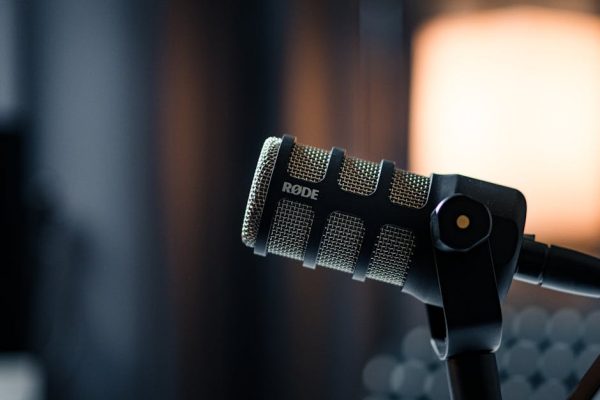
Audio quality starts with the recording environment and equipment. For in-studio recordings, invest in professional microphones such as the Shure SM7B or Rode PodMic, a quality audio interface, acoustic treatment and a quiet recording space. For remote recordings, use platforms like Riverside.fm or SquadCast that record locally on each participant’s device, ensuring professional quality regardless of internet connection stability.
Professional editing elevates your podcast from amateur to broadcast quality. This includes removing verbal fillers and extended pauses, normalising audio levels between speakers, adding branded intro and outro music, inserting chapter markers and ensuring consistent sound quality across episodes. Many Singapore production studios offer podcast editing packages starting from $100 to $300 per episode.
Develop a consistent sonic identity that reinforces your brand. This includes a distinctive intro sequence, transition sounds, background music for specific segments and an outro with your call to action. These audio elements should be professionally produced and consistent across all episodes, creating instant brand recognition when listeners hear the first few seconds. Your sonic identity should align with your overall brand guidelines.
Create visual assets that maintain brand consistency across podcast directories and social media. Your podcast cover art must be professionally designed, instantly communicable at small sizes and consistent with your brand visual identity. Episode-specific graphics for social promotion should follow a template that maintains visual consistency while highlighting unique episode content.
Establish a quality review process that checks every episode before publication. This review should confirm audio quality, content accuracy, brand guideline compliance and metadata completeness. Designate a specific team member as the quality gatekeeper to ensure standards do not slip as production becomes routine.
Distribution and Promotion Strategy
A branded podcast without a promotion strategy is like a shop without a signboard. The best content in the world achieves nothing if your target audience does not know it exists.
Ensure comprehensive directory distribution. Your podcast should be available on Apple Podcasts, Spotify, Google Podcasts, Amazon Music, Stitcher, Pocket Casts and any other platform your audience uses. Use a hosting platform that automates distribution through RSS feed syndication. Verify that your listing appears correctly on each platform with accurate artwork, descriptions and categorisation.
Build a dedicated podcast section on your website with individual pages for each episode. These pages should include the audio player, comprehensive show notes, full transcriptions, guest bios and relevant internal links. This creates an SEO asset that grows with every episode, driving organic search traffic to your podcast content and supporting your wider SEO strategy.
Develop a social media promotion playbook that generates multiple pieces of content from every episode. Minimum deliverables per episode should include an announcement post, two to three audiogram or video clips featuring key moments, a quotable insight graphic and a story or reel featuring the host or guest. Coordinate this promotion across all your active social media channels.
Email marketing is one of the most reliable podcast promotion channels. Feature each new episode in your newsletter with a compelling description that creates urgency or curiosity. Segment your email list to identify podcast listeners and create dedicated podcast notification emails for subscribers who opt in. Include podcast CTAs in automated email sequences for new subscribers or leads.
Leverage your guests’ networks for episode promotion. Provide guests with pre-written social media posts, graphics and talking points that make it effortless for them to share their episode with their audience. Most guests are willing and eager to promote their appearance, effectively giving you access to their entire network.
Cross-promote with complementary podcasts. Appear on other shows as a guest, host swap episodes, create collaborative content and build relationships with other podcast creators in your space. The Singapore podcast community values collaboration, and these relationships generate sustained audience cross-pollination.
Using Your Podcast for Lead Generation
Converting podcast listeners into business leads requires a deliberate strategy that respects the content-first nature of podcasting while creating clear pathways to engagement with your brand.
Design content that naturally creates awareness of problems your products or services solve. If your company offers supply chain software, produce episodes about supply chain challenges, trends and best practices. Listeners who engage with this content are self-identifying as having relevant needs. The podcast educates them about the problem space, and your brand becomes the natural solution provider when they are ready to act.
Create lead magnets that extend the podcast content. Develop downloadable resources such as templates, checklists, frameworks, case studies or research reports that complement specific episodes. Promote these resources within episodes with clear calls to action directing listeners to landing pages where they provide contact information in exchange for the resource.
Use episode-specific landing pages with tracking parameters that identify which episodes drive the most qualified traffic. This data informs both your content strategy and your sales team’s understanding of which topics resonate with potential buyers.
Implement a listener-to-lead nurture sequence. When a podcast listener downloads a resource or subscribes to your email list, enter them into a dedicated nurture sequence that references the podcast content they engaged with, provides additional value and gradually introduces your commercial offerings. This sequence should feel like a continuation of the podcast relationship rather than a sudden shift to sales messaging.
Track the listener-to-customer journey across your entire funnel. Many brands discover that podcast listeners convert at higher rates and have higher lifetime value than customers acquired through other channels because the podcast has already built trust, demonstrated expertise and educated the prospect. Document these metrics to justify ongoing investment in your branded podcast as part of your podcast marketing efforts.
Measuring Thought Leadership Impact
Measuring the thought leadership impact of a branded podcast requires metrics that go beyond download numbers to capture the broader business value of authority building.

Download and listener metrics provide the foundation. Track total downloads, unique listeners, listener growth rate, average consumption percentage and subscriber-to-download ratio. A healthy podcast shows consistent month-over-month growth in unique listeners and maintains an average consumption rate above 60 percent, indicating that listeners find the content valuable enough to hear most of each episode.
Engagement metrics reveal audience quality. Monitor review count and sentiment, social media engagement on podcast-related content, listener email responses and community participation. High engagement rates from a smaller audience often indicate stronger thought leadership impact than large download numbers with minimal engagement.
Inbound opportunities generated through the podcast demonstrate commercial impact. Track speaking invitations, media interview requests, partnership proposals and consulting enquiries that reference the podcast. These inbound opportunities represent direct evidence that the podcast is building the brand’s reputation as an authority in its space.
Guest relationship value captures an often-overlooked benefit of branded podcasts. Each guest interview creates a relationship with an industry leader, potential partner or prospective client. Track how many guest relationships lead to meaningful business outcomes including partnerships, referrals, collaborations and client relationships. Many branded podcast hosts report that the guest invitation process alone generates significant business development value.
Brand search volume and direct website traffic correlations indicate growing brand awareness. Monitor whether branded search terms increase following podcast launch and growth. Track direct traffic to your website and podcast pages to identify awareness-driven visits that correlate with podcast publishing and promotion activity.
Employee recruitment and retention impact is measurable through candidate surveys and employee feedback. Ask new hires whether the podcast influenced their decision to apply. Survey existing employees about whether the podcast makes them proud of their employer. These qualitative indicators connect podcast investment to talent acquisition and retention outcomes.
Frequently Asked Questions
How much does it cost to produce a branded podcast in Singapore?
Costs vary widely based on production quality and whether you manage production internally or outsource. A basic setup with internal production costs approximately $500 to $1,500 per month including equipment amortisation, hosting and basic editing. Fully outsourced production with professional editing, show notes and social assets typically ranges from $1,500 to $5,000 per episode. Most Singapore brands invest $2,000 to $8,000 per month for a weekly branded podcast with professional production quality.
Should our CEO or a marketing team member host the podcast?
Choose the person who combines subject matter credibility with strong communication skills and reliable availability. CEO-hosted podcasts carry authority but risk inconsistency if the CEO’s schedule disrupts recording commitments. A marketing or content team member can provide consistency and production discipline while using interview formats to feature internal and external experts. Some successful branded podcasts use co-hosting models that pair a senior leader with a content professional.
How long before a branded podcast generates measurable business results?
Expect three to six months before seeing meaningful audience growth and six to twelve months before generating measurable business leads. Thought leadership impact typically becomes evident at nine to eighteen months as the brand becomes increasingly associated with expertise in its domain. The podcasts that generate the strongest business results are those that commit to a minimum two-year timeframe, allowing the compounding effects of consistent publishing to build audience and authority.
Should our branded podcast mention our products and services?
Mention them sparingly and naturally. The most effective branded podcasts dedicate no more than 10 to 15 percent of content to brand messaging, typically through brief sponsor mentions at the beginning and end of episodes. The remaining 85 to 90 percent should be genuinely valuable content that serves the audience. Listeners are sophisticated and will disengage from content that feels like extended advertising. Trust that consistent value delivery builds more business than repeated product mentions.
How do we maintain consistent quality over time?
Establish documented production workflows, quality checklists and editorial standards from the outset. Create episode templates and briefs that maintain structural consistency. Build a content bank of researched topics and pre-scheduled guests so production never depends on last-minute scrambling. Schedule regular content audits to ensure quality has not drifted. Consider working with a production partner who provides accountability and consistency support.
What makes a branded podcast different from content marketing?
A branded podcast is a form of content marketing, but it has unique characteristics. The audio format creates a more personal and intimate connection with the audience. The subscription model means listeners opt in for ongoing relationship rather than discovering individual pieces of content. The episodic nature builds narrative continuity and listener loyalty. And the production investment creates a barrier to entry that reduces competition compared to blog content or social media posts.
Can a small business justify a branded podcast investment?
Yes, if the business has expertise worth sharing and an audience that values education. Small businesses can produce quality podcasts with modest budgets by leveraging affordable equipment, free or low-cost hosting platforms and internal production capabilities. The lead generation and relationship-building benefits can be proportionally larger for small businesses because each client relationship represents a larger share of revenue. Start with a minimal production approach and scale investment as the podcast demonstrates business value.
How do we choose between starting a branded podcast or advertising on existing podcasts?
The choice depends on your objectives and resources. Podcast advertising provides immediate access to established audiences and works well for time-bound campaigns, product launches and direct response objectives. A branded podcast builds a long-term owned media asset, establishes thought leadership and generates compounding value but requires sustained investment before delivering results. Many brands do both, using podcast advertising for short-term objectives while building their branded podcast for long-term authority.