How to Measure Brand Awareness: Metrics, Tools and Benchmarks for Singapore Businesses
Table of Contents
Why Measure Brand Awareness
Brand awareness measurement is one of marketing’s most important and most neglected disciplines. Most businesses invest heavily in building brand awareness through advertising, content, social media and PR, but few have a systematic way to track whether that investment is actually working.
Without measurement, brand awareness spending becomes an act of faith. You run campaigns, hope they work and justify the budget with vague metrics like reach and impressions. With measurement, you can quantify awareness growth over time, connect awareness to downstream business outcomes and make data-driven decisions about where to invest your branding budget.
For Singapore businesses competing in a small but sophisticated market, brand awareness is a genuine competitive advantage. When a prospect is ready to buy, they typically consider three to five brands. If your brand is not in that consideration set, no amount of performance marketing will help you win the deal. Measuring awareness tells you whether you are making it into that set — and whether your position is strengthening or weakening over time.
Types of Brand Awareness to Measure
Unaided brand awareness measures whether your target audience can recall your brand without any prompts. When asked “Which digital marketing agencies in Singapore can you name?” if prospects mention your brand unprompted, you have strong unaided awareness. This is the highest form of brand awareness and the hardest to achieve.

Aided brand awareness measures whether people recognise your brand when shown your name or logo. A survey might ask “Have you heard of the following companies?” and list several brands including yours. Aided awareness is typically much higher than unaided and is a useful measure of your marketing’s cumulative reach.
Top-of-mind awareness is the ultimate goal — being the first brand a prospect thinks of when they consider your category. It is measured by which brand people name first in an unaided awareness question. Top-of-mind brands capture a disproportionate share of search traffic, referrals and inbound enquiries.
Brand awareness measurement should track all three types, because they tell you different things. Strong unaided awareness means your marketing is making a lasting impression. Strong aided awareness with weak unaided awareness suggests people know your brand but it is not sticking in memory. Top-of-mind awareness indicates category leadership.
Quantitative Metrics for Brand Awareness
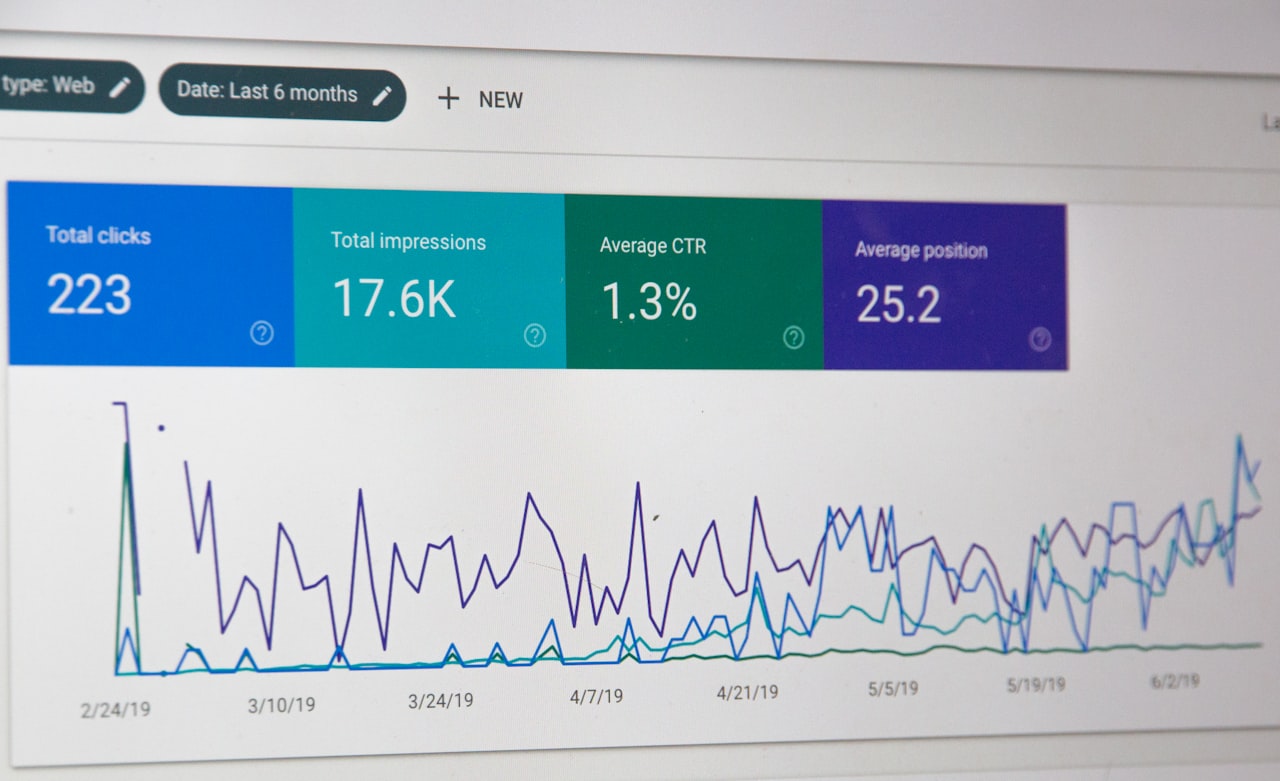
Branded search volume is the most accessible awareness metric. Use Google Search Console and Google Trends to track how many people search for your brand name each month. Rising branded search volume is a strong signal that awareness is growing. Track this monthly and correlate it with your marketing campaigns to identify which activities drive awareness most effectively.
Direct website traffic — visitors who type your URL directly or access your site from bookmarks — indicates brand familiarity. Monitor this in GA4 under Traffic Acquisition, filtered to “Direct” channel. Increasing direct traffic alongside branded search is a strong confirmation that awareness is building.
Social media metrics provide additional quantitative signals. Track follower growth rate (not just total followers), brand mentions, share of voice (your mentions relative to competitors) and engagement rate on brand content. These metrics are most useful when tracked over time as trends rather than as standalone numbers.
Share of search is a powerful awareness metric championed by marketing effectiveness experts. Calculate it by dividing your branded search volume by the total branded search volume for all competitors in your category. This gives you a percentage that correlates strongly with market share. Track it quarterly using SEO tools like Ahrefs or SEMrush that provide competitor search volume data.
Qualitative Measurement Methods
Brand tracking surveys are the gold standard for awareness measurement. Run quarterly surveys among your target audience asking unaided and aided awareness questions, brand perception questions and purchase consideration questions. Services like Milieu Insights and Toluna provide access to Singapore consumer panels at reasonable cost.
For smaller budgets, DIY surveys using Typeform or Google Forms distributed through your email list, social channels and paid survey panels can provide useful directional data. The key is consistency — ask the same questions to comparable audiences each quarter so you can track trends reliably.
Social listening tools like Brandwatch, Meltwater and Mention track online conversations about your brand across social media, news sites, forums and review platforms. These tools reveal not just whether people are talking about you, but what they are saying, how they feel and how your conversation volume compares to competitors.
Qualitative customer research — interviews and focus groups — adds depth that surveys and data cannot provide. Ask customers how they first heard about you, what they associate with your brand and how they would describe you to a colleague. These open-ended insights reveal perception gaps and messaging opportunities that quantitative data alone may miss.
Tools for Tracking Brand Awareness
Google Search Console is your free starting point for branded search tracking. Navigate to the Performance report and filter by queries containing your brand name. Track impressions, clicks and average position for branded terms over time. Set up a monthly export to track trends across quarters.
Google Trends provides relative search interest for your brand compared to competitors. Enter your brand name alongside two or three competitors to see how interest fluctuates over time. Filter by Singapore for local market data. The limitation is that Google Trends shows relative interest, not absolute search volume.
SparkToro analyses audience behaviour and brand visibility across social, web and podcast platforms. It reveals which websites your audience visits, which social accounts they follow and which podcasts they listen to. This intelligence helps you understand where awareness-building efforts will have the most impact.
For comprehensive brand tracking, platforms like Attest and Latana run automated brand tracking surveys in Singapore and other markets. They handle panel recruitment, survey administration and reporting, giving you a dashboard view of aided awareness, unaided awareness, brand associations and purchase consideration over time. Pricing typically starts at USD 500-1,000 per month for a single market.
Setting Benchmarks and Targets
Establish your baseline before setting targets. Run your first brand awareness measurement across all the metrics described above and document the results. This baseline becomes the reference point against which all future measurements are compared. Without a baseline, you cannot prove growth.
For branded search volume, a healthy growth target is 10-20 per cent year on year for established brands and 30-50 per cent for newer brands actively investing in awareness. If you are launching a new brand in Singapore, expect minimal branded search in the first six months and gradual growth as marketing campaigns accumulate.
Aided awareness benchmarks vary by industry and company size. For a well-established SME in Singapore, 20-40 per cent aided awareness within your target audience is strong. For enterprise brands, 50-70 per cent or higher is expected. Unaided awareness is typically one-third to one-half of aided awareness.
Set quarterly targets that account for your marketing investment level and competitive landscape. Awareness builds slowly — a brand campaign launched in January will typically show measurable awareness gains by April or May. Be patient and resist the urge to change strategy before giving it time to compound.
Reporting Brand Awareness to Stakeholders
Create a brand health dashboard that stakeholders can review monthly. Include branded search volume trend, direct traffic trend, share of voice, social mention volume and quarterly survey results. Present these as trend lines, not point-in-time numbers, so growth (or decline) is immediately visible.
Connect awareness metrics to business outcomes wherever possible. Show correlations between branded search growth and lead volume, between awareness survey scores and win rates, and between share of voice and market share. These connections help justify awareness spending to finance-minded stakeholders.
Use a waterfall chart to show how each marketing initiative contributed to awareness growth. A major PR placement might have driven a spike in branded search, while ongoing content marketing maintained steady baseline growth. Breaking down contributions helps stakeholders understand the value of different awareness-building activities.
Be honest about what awareness metrics can and cannot tell you. Awareness is a leading indicator, not a revenue metric. It takes time to convert awareness into consideration, consideration into purchase and purchase into revenue. Frame awareness reporting as an early signal of future revenue potential rather than a direct measure of current impact.
Frequently Asked Questions
How often should I measure brand awareness?
Track quantitative metrics (branded search, direct traffic, social mentions) monthly. Run brand tracking surveys quarterly. This cadence gives you enough data to spot trends without the noise of weekly fluctuations. Major campaigns or product launches may warrant additional measurement before and after.
How much does a brand tracking study cost in Singapore?
DIY surveys cost minimal out-of-pocket expense but require time to design and distribute. Professional brand tracking platforms like Attest or Latana cost USD 500-1,500 per month for Singapore market tracking. Custom research studies conducted by agencies like Milieu Insights or Kantar start at SGD 5,000-15,000 per wave.
Can I measure brand awareness without surveys?
Yes, though surveys provide the most direct measurement. You can build a reasonable awareness picture using branded search volume, direct traffic, social listening data and share of voice metrics. These proxy metrics correlate well with survey-based awareness scores and are available at no cost.
What is share of voice and why does it matter?
Share of voice is your brand’s proportion of total conversation or visibility within your category. It can be measured across search (branded search volume), social media (mentions), advertising (impression share) and media (press coverage). Research shows a strong correlation between share of voice and market share over time.
How long does it take to build brand awareness?
For a new brand in Singapore, expect six to twelve months of consistent marketing before awareness becomes measurable in surveys. Branded search typically shows growth within three to six months. Established brands can see awareness lifts from specific campaigns within weeks, but building lasting awareness requires sustained investment over years.
Which marketing channels are best for building brand awareness?
Video content (YouTube, TikTok), social media, PR, display advertising and content marketing are the strongest awareness builders. Paid search captures existing demand but does not create new awareness. The most effective approach combines broad-reach channels for awareness with performance channels for conversion.
How do I measure brand awareness in a B2B market?
B2B brand awareness is harder to measure because target audiences are smaller and niche. Focus on branded search volume, share of voice in industry publications, LinkedIn brand mentions and direct outreach response rates. Custom B2B surveys distributed through LinkedIn or industry panels provide the most reliable data.
What is the connection between brand awareness and SEO?
Branded searches signal authority to search engines. Brands with higher awareness tend to receive more branded search traffic, higher click-through rates on organic results and more natural backlinks — all of which improve overall SEO performance. Investing in brand awareness indirectly strengthens your organic search visibility.
Should I track competitor brand awareness too?
Yes. Awareness is relative — your position matters more than your absolute numbers. Track competitor branded search volume, social share of voice and media mentions alongside your own. This competitive context tells you whether your awareness is growing faster or slower than the market.
How do I prove ROI on brand awareness spending?
Connect awareness metrics to business outcomes through correlation analysis. Show that periods of increased branded search correspond to increased lead volume and revenue. Use brand tracking survey data to show that aided awareness growth correlates with consideration and purchase intent scores. The relationship is not always direct, but the pattern should be clear over multiple quarters.