
B2B Go-to-Market Strategy: From First Customer to Scale
B2B Go-to-Market Fundamentals
A B2B go-to-market strategy differs fundamentally from B2C because you are selling to organisations, not individuals. Purchasing decisions involve multiple stakeholders, longer evaluation cycles and higher deal values. In Singapore’s B2B landscape, these dynamics are amplified by a business culture that values relationships, proven track records and risk mitigation above all else.
The core challenge of B2B GTM is this: you need to reach the right people inside the right companies with the right message at the right time. Miss any one of these and your pipeline stalls. A procurement manager at a Singapore MNC does not care about your product features — they care about whether you can solve a business problem without creating new risks. A CTO evaluating a new SaaS platform wants to know about data residency compliance and integration with their existing tech stack. Your GTM strategy must address each stakeholder’s concerns specifically.
Singapore’s B2B market has several structural characteristics that shape GTM strategy. The total number of enterprises is roughly 300,000, with approximately 99% classified as SMEs (fewer than 200 employees). However, B2B revenue concentration is extreme — a relatively small number of large enterprises and government-linked companies (GLCs) account for a disproportionate share of B2B spending. Your GTM plan needs to reflect this reality by segmenting your target market into enterprise, mid-market and SME tiers with distinct approaches for each.
Choosing Your GTM Motion
B2B companies generally choose between three GTM motions: sales-led, marketing-led and product-led. Sales-led motions work best for high-value deals (above SGD 20,000 annually) where personalised engagement is expected. Marketing-led motions suit mid-market products where inbound demand generation is more efficient than outbound sales. Product-led motions — where the product itself drives acquisition through free trials or freemium — work for lower-priced tools where the end user has purchasing authority.
Most successful B2B companies in Singapore use a hybrid approach. They generate leads through digital marketing and content, qualify them through automated scoring, then hand off high-value prospects to sales while nurturing lower-value leads through self-serve funnels.
Identifying and Prioritising Target Accounts
Account-based thinking is essential for B2B GTM, even if you are not running a formal ABM programme. The principle is straightforward: not all potential customers are equally valuable. Identify the accounts most likely to buy, most likely to succeed with your product and most likely to become references — then focus your resources on reaching them.

Building Your Ideal Customer Profile
Your ICP for the Singapore market should specify company size (by headcount and revenue), industry vertical, technology infrastructure, key business challenges and buying signals. For example, a B2B SaaS company selling HR software might define their ICP as: Singapore-headquartered companies with 50–500 employees, in professional services or technology sectors, currently using manual HR processes or outdated systems, with recent job postings for HR managers (indicating growing HR complexity).
Use the ACRA business registry, LinkedIn Sales Navigator and industry directories (such as the Singapore Business Federation member list) to build your initial target account list. For government and GLC opportunities, monitor GeBIZ (the government procurement portal) for tenders that align with your offering.
Account Tiering
Segment your target accounts into three tiers. Tier 1 accounts (your top 20–50 targets) receive personalised, high-touch outreach — custom proposals, executive meetings, tailored demos. Tier 2 accounts (your next 100–200 targets) receive semi-personalised outreach — industry-specific messaging, targeted ads, personalised emails. Tier 3 accounts (everyone else in your TAM) receive scalable marketing — blog content, webinars, SEO-driven inbound and automated email sequences.
This tiering ensures you invest your most expensive resource — your sales team’s time — on the accounts with the highest potential return. In Singapore, where the B2B sales talent pool is small and expensive (a competent B2B account executive typically commands SGD 80,000–150,000 in total compensation), efficient allocation of sales effort is critical to GTM economics.
Mapping the Buying Committee
B2B purchases in Singapore rarely involve a single decision-maker. A typical enterprise deal involves four to seven stakeholders: the economic buyer (who controls the budget), the technical evaluator (who assesses product capabilities), the end user (who will actually use the product), the procurement officer (who manages the vendor process) and often an executive sponsor. Your GTM strategy needs messaging and content for each persona. A one-size-fits-all approach will fail to move deals through the pipeline.
Sales and Marketing Alignment
The single biggest GTM execution failure in B2B is misalignment between sales and marketing. Marketing generates leads that sales considers unqualified. Sales blames marketing for poor lead quality. Marketing blames sales for poor follow-up. The result is wasted budget and missed revenue targets.
Defining the Lead Handoff
Create a service-level agreement (SLA) between marketing and sales that defines exactly when a lead becomes sales-ready. This requires agreeing on lead scoring criteria — a combination of demographic fit (does this person match our ICP?) and behavioural signals (have they taken actions that indicate buying intent, such as visiting the pricing page, downloading a case study or requesting a demo?).
In practice, a Marketing Qualified Lead (MQL) in Singapore B2B typically exhibits these characteristics: they are in a decision-making role at a company matching your ICP, they have engaged with multiple pieces of content and they have taken a high-intent action. A Sales Qualified Lead (SQL) has additionally been verified by a sales development representative through a brief qualification call.
Shared Revenue Goals
Align marketing and sales around shared revenue metrics rather than siloed KPIs. Marketing should be measured not just on leads generated but on pipeline created and revenue influenced. Sales should be measured not just on closed deals but on speed of follow-up and quality of CRM data (which feeds back into marketing optimisation). This shared accountability prevents the blame game and creates genuine collaboration.
Technology Stack for Alignment
At minimum, you need a shared CRM (HubSpot and Salesforce are the most common in Singapore), marketing automation (for lead scoring and nurture sequences), and a communication channel (Slack or Teams) for real-time feedback between sales and marketing. The technology is not the hard part — the cultural alignment is. Schedule weekly pipeline reviews where sales and marketing jointly assess lead quality, conversion rates and bottlenecks.
B2B Channel Strategy for Singapore
Singapore’s compact geography and high digital penetration make it unusually efficient for B2B marketing — but only if you choose the right channels for your specific target segment.
LinkedIn: The Primary B2B Channel
LinkedIn has over 3.5 million members in Singapore, representing the majority of the professional workforce. For B2B GTM, LinkedIn serves triple duty as an advertising platform, a prospecting tool and a thought leadership channel. LinkedIn Ads in Singapore are expensive (CPMs of SGD 30–80 and CPCs of SGD 5–15 are typical), but the targeting precision — by job title, company size, industry and seniority — makes it the most efficient channel for reaching B2B decision-makers.
Organic LinkedIn content from founders and senior leaders consistently outperforms company page posts in engagement and lead generation. If your CEO or CTO is willing to publish regular insights, this alone can become your most productive B2B GTM channel. The Singapore business community actively follows thought leaders, and a well-crafted post can generate dozens of inbound enquiries.
Google Search: Capturing Existing Intent
When a Singapore business has a problem, they search for solutions on Google. Capturing this intent through both search engine optimisation and Google Ads is essential for any B2B GTM strategy. The key is targeting commercial-intent keywords — terms that indicate the searcher is evaluating solutions rather than casually researching. Keywords like “best HR software Singapore,” “payroll provider for SME” or “office space management tool” signal buying intent.
SEO takes months to build but delivers compounding returns. Google Ads delivers immediate visibility but requires ongoing spend. Most B2B GTM strategies should launch with Google Ads to capture immediate demand while building SEO assets for long-term organic visibility.
Events and Networking
Singapore is a regional events hub, hosting hundreds of industry conferences, trade shows and networking events annually. Events like Singapore FinTech Festival, Tech in Asia, SWITCH and various industry-specific forums provide concentrated access to decision-makers. For B2B GTM, events serve as pipeline acceleration tools — they do not replace digital channels but complement them by providing face-to-face relationship building that is crucial in Asian business culture.
Partnerships and Channel Sales
In Singapore’s B2B market, partnerships can dramatically accelerate your GTM. Technology partners, system integrators, consultancies and industry associations can provide warm introductions that bypass months of cold outreach. Identify potential partners whose existing customers match your ICP and whose offerings are complementary (not competitive) to yours. Structure partnerships with clear commercial terms — referral fees, revenue sharing or joint solution packaging.
Content and Thought Leadership
B2B buyers in Singapore consume significant amounts of content before engaging with sales. A 2024 LinkedIn B2B survey found that 73% of Singapore B2B buyers consumed three or more pieces of content before requesting a demo or proposal. Your content marketing strategy must serve each stage of the buying journey.

Top of Funnel: Awareness Content
Blog articles addressing industry challenges, market trend reports, data-driven analyses and educational guides attract prospects who are early in their research. This content should demonstrate expertise without being overtly promotional. For example, an article analysing “the state of digital transformation in Singapore’s logistics industry” positions your company as a knowledgeable authority that logistics companies want to engage with.
Middle of Funnel: Evaluation Content
Comparison guides, ROI calculators, detailed case studies, product demo videos and technical whitepapers serve prospects who are actively evaluating solutions. Singapore B2B buyers particularly value case studies featuring local companies — a case study from a recognisable Singapore brand carries far more weight than a global example. Invest in creating detailed Singapore-specific case studies as soon as you have successful customer stories.
Bottom of Funnel: Decision Content
Implementation guides, pricing transparency, customer testimonials, security and compliance documentation and free trial or pilot programme information help close deals. In Singapore, procurement processes often require detailed vendor documentation — prepare your compliance materials (ISO certifications, data protection policies, PDPA compliance statements, financial stability evidence) in advance.
Building a Thought Leadership Engine
Thought leadership is not about publishing corporate blog posts that nobody reads. It is about having genuine points of view on your industry, backed by data and experience, that challenge conventional thinking or illuminate emerging trends. In Singapore’s B2B community, authentic thought leadership from founders and senior leaders builds trust that no amount of advertising can replicate. Commit to a publishing cadence of at least two to four pieces of substantive content per month.
Pricing, Packaging and Proposals
B2B pricing in Singapore requires careful consideration of local market expectations, competitive dynamics and buyer psychology.
Pricing Structures That Work
Per-user pricing is well understood and works for software tools where the number of users is the primary value driver. Tiered pricing (Basic, Professional, Enterprise) allows you to capture different segments of the market with a single product. Usage-based pricing aligns cost with value but can create budget unpredictability that Singapore finance teams dislike. Consider hybrid models that combine a base fee with usage-based components.
Singapore Pricing Psychology
Singapore B2B buyers negotiate. Budget for a 10–20% discount off list price in your pricing structure — not because you should discount, but because the negotiation process is expected and helps buyers feel they have secured a good deal. However, avoid aggressive discounting that undermines your value positioning. Instead, offer value-adds (extra onboarding support, additional user licences, extended contract terms) rather than pure price reductions.
Annual contracts with monthly payment options are increasingly popular in Singapore. They provide revenue predictability for you while reducing the perceived financial commitment for the buyer. Offer a meaningful incentive (10–15% discount) for annual upfront payment to improve your cash flow.
The Proposal Process
Singapore B2B buyers expect professional, detailed proposals. A winning proposal includes an executive summary, problem statement (demonstrating you understand their specific challenges), proposed solution, implementation plan, pricing, terms, case studies and team credentials. For enterprise deals, budget four to eight hours for proposal development — this is not the place to cut corners.
From First Customer to Repeatable Sales
The path from first customer to scalable revenue is the most challenging phase of B2B GTM. Your first ten customers are typically acquired through founder-led sales, personal networks and sheer persistence. The goal is not just to close deals but to learn enough about your sales process that it can eventually be delegated and systematised.
The Founder-Led Sales Phase
For the first SGD 500,000–1,000,000 in annual revenue, founders should be directly involved in sales. This is not because you cannot afford salespeople — it is because founders learn critical information through sales conversations that shapes product development, messaging and positioning. When a prospect objects to your pricing, that is market intelligence. When they ask for a feature you do not have, that is product roadmap input. When they choose a competitor, that is competitive intelligence. No sales report captures these nuances as effectively as direct experience.
Building the Sales Playbook
Document everything you learn during founder-led sales: the discovery questions that uncover real pain, the demo flow that generates excitement, the objections that arise consistently and the responses that overcome them, the proposal format that wins and the follow-up cadence that closes. This documentation becomes your sales playbook — the foundation for hiring and training your first dedicated salespeople.
Hiring Your First Sales Team
In Singapore, hiring B2B sales talent is competitive and expensive. Your first sales hire should be a senior account executive (not a junior SDR) who can handle the full sales cycle independently. Look for candidates with experience selling to your target segment in the Singapore market — industry knowledge and an existing network are worth a premium. Budget SGD 100,000–180,000 in total compensation (base plus commission) for a competent senior AE in Singapore.
Scaling from Repeatable to Scalable
Repeatable sales means you can predictably close deals using a defined process. Scalable sales means you can add more salespeople and proportionally increase revenue without a decline in efficiency. The bridge between repeatable and scalable requires investing in sales enablement (training, tools, content), lead generation infrastructure (marketing automation, email marketing programmes, advertising) and sales management (pipeline management, forecasting, coaching). Most Singapore B2B companies reach this bridge at SGD 2–5 million in annual revenue.
Measuring B2B GTM Performance
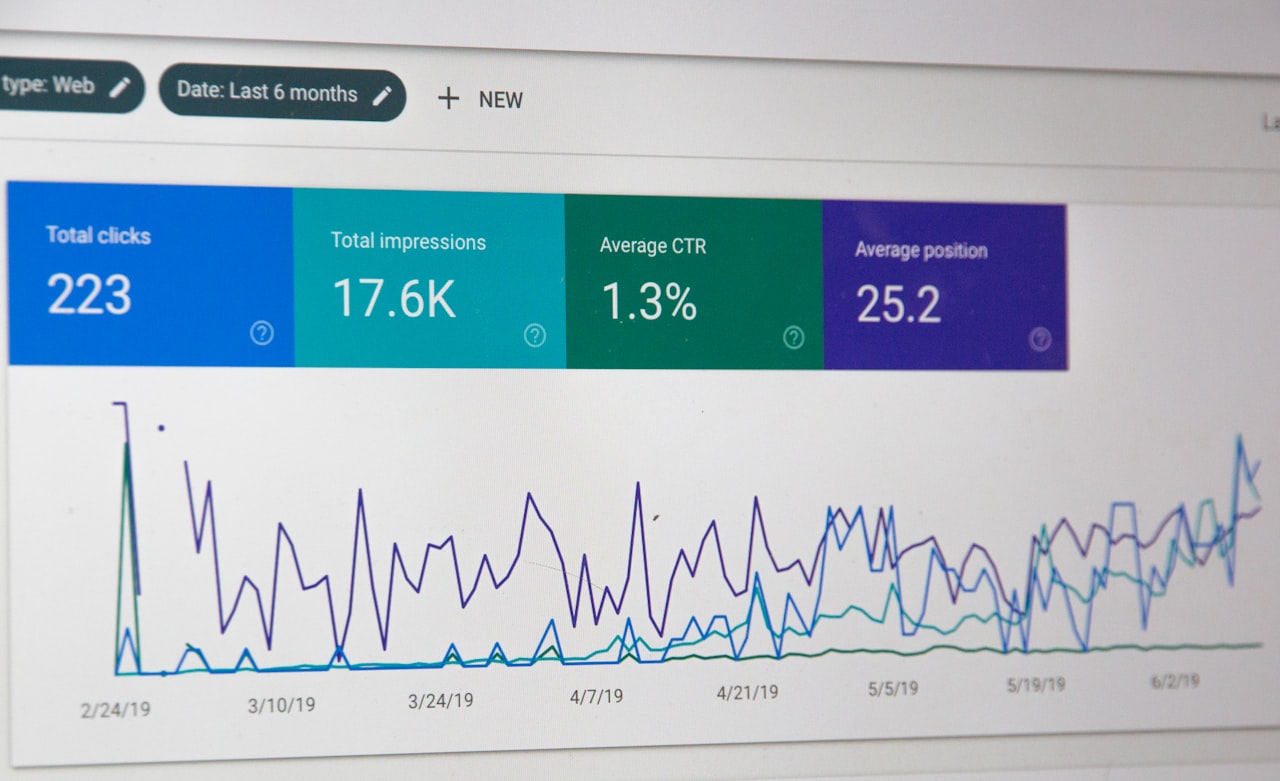
B2B GTM metrics require patience — sales cycles of three to twelve months mean that today’s marketing activities may not show revenue impact for two or three quarters. This is why leading indicators and pipeline metrics are essential.
The Metrics Framework
Track your GTM performance across five categories. Awareness metrics include website traffic from target accounts, LinkedIn follower growth, content engagement and brand search volume. Pipeline metrics include MQLs generated, SQLs created, pipeline value and pipeline velocity (how quickly deals move through stages). Revenue metrics include closed-won deals, average deal size, win rate and sales cycle length. Efficiency metrics include customer acquisition cost, LTV-to-CAC ratio and marketing spend as a percentage of revenue. Retention metrics include net revenue retention, churn rate and expansion revenue.
Benchmarks for Singapore B2B
While benchmarks vary by industry, reasonable targets for a Singapore B2B GTM launch include: MQL-to-SQL conversion of 20–30%, SQL-to-closed-won conversion of 15–25%, average sales cycle of 30–90 days for SME deals and 90–180 days for enterprise, and a target CAC that allows for a minimum LTV-to-CAC ratio of 3:1. If your metrics are significantly below these benchmarks after 90 days, your GTM strategy needs adjustment.
Attribution in B2B
B2B attribution is inherently messy because multiple touchpoints influence every deal. A prospect might first encounter your brand through a LinkedIn post, then read a blog article found via Google, then attend a webinar, then receive a cold email from your SDR, then meet you at an event before finally requesting a demo. Attempting to credit any single channel with the win is misleading. Use multi-touch attribution models and accept that some marketing influence will always be difficult to measure precisely. Focus on directional accuracy rather than perfect attribution.
Frequently Asked Questions
How long does a typical B2B GTM take to show results in Singapore?
Expect three to six months before you see meaningful pipeline and six to twelve months before revenue reaches a predictable cadence. B2B sales cycles in Singapore are rarely shorter than 30 days for SME deals and can extend to six months or longer for enterprise accounts. Companies that expect overnight results from B2B GTM inevitably abandon effective strategies too early.
What budget should I allocate for a B2B GTM launch?
A reasonable budget for a B2B GTM launch in Singapore is SGD 10,000–30,000 per month for marketing (including content creation, paid advertising, tools and events) plus the cost of at least one dedicated salesperson. Total first-year GTM investment typically ranges from SGD 200,000–500,000 for a well-funded startup to SGD 50,000–150,000 for a bootstrapped company. The key is not the absolute amount but efficient allocation toward your highest-impact channels.
Should I use ABM or inbound marketing for B2B GTM?
This is a false dichotomy — the most effective B2B GTM strategies combine both. Use ABM tactics (personalised outreach, targeted advertising, custom content) for your Tier 1 and Tier 2 accounts where the deal size justifies the investment. Use inbound marketing (SEO, content marketing, webinars) to attract and nurture the broader market. In Singapore, where the addressable market is relatively small, ABM is particularly effective because you can feasibly map and target a high percentage of your total market.
How important is having a local presence for B2B sales in Singapore?
Very important. Singapore B2B buyers strongly prefer working with vendors who have local teams, local support and a local entity for contracting purposes. If you are a foreign company entering the Singapore market, establish at least a representative office and hire local sales staff. Attempting to sell into Singapore entirely remotely puts you at a significant disadvantage against competitors with local presence.
What CRM should I use for B2B GTM in Singapore?
HubSpot is the most popular choice for Singapore SMEs and startups due to its free tier, ease of use and integrated marketing tools. Salesforce dominates the enterprise and mid-market segments. For companies selling into government or GLC accounts, consider CRMs that support compliance with local data residency requirements. The specific tool matters less than consistent usage — a simple CRM used diligently outperforms a sophisticated CRM used inconsistently.
How do I generate B2B leads in Singapore without cold calling?
The most effective non-cold-calling lead generation methods for Singapore B2B are: content marketing optimised for commercial-intent keywords, LinkedIn organic content and targeted ads, industry event speaking and sponsorship, referral programmes from existing customers and strategic partnerships with complementary service providers. These methods generate warmer leads with higher conversion rates than cold outreach, though they take longer to produce volume.
What is the biggest B2B GTM mistake companies make in Singapore?
The biggest mistake is underestimating the relationship-driven nature of Singapore business culture. Companies that rely purely on digital outbound and automation without investing in relationship building consistently underperform. In Singapore, a warm introduction from a mutual connection opens doors that months of cold emails cannot. Build relationships proactively through industry events, business associations (such as SBF, AMCHAM, BritCham) and professional networks.
How do I sell to Singapore government agencies?
Government procurement in Singapore follows structured processes managed through GeBIZ. Register as a vendor on GeBIZ, monitor tenders relevant to your offering and submit responses that comply with the detailed requirements in each tender document. Building pre-tender relationships is crucial — by the time a tender is published, agencies often have a preferred approach in mind. Engage with agencies through industry consultations, technology showcases and GovTech’s open innovation programmes well before formal procurement begins.
When should I expand my B2B GTM beyond Singapore?
Expand regionally when you have achieved repeatable, profitable sales in Singapore with a clear sales playbook, strong customer retention and a scalable operational model. For most B2B companies, this means at least SGD 1–3 million in Singapore annual revenue before committing resources to a new market. Malaysia is typically the easiest expansion market due to geographic proximity, cultural similarities and English-language business environment. Indonesia offers the largest market opportunity but requires significant localisation investment.
How do I compete with larger, established competitors in Singapore B2B?
Compete on speed, service quality and local expertise rather than on features or price. Large competitors move slowly — use your agility to implement customer feedback faster and provide more responsive support. Focus on a specific niche where you can become the clear leader rather than trying to compete across the board. Singapore B2B buyers are willing to work with smaller vendors if they demonstrate deep domain expertise and reliable delivery.