Automation Segmentation: Target the Right People at the Right Time
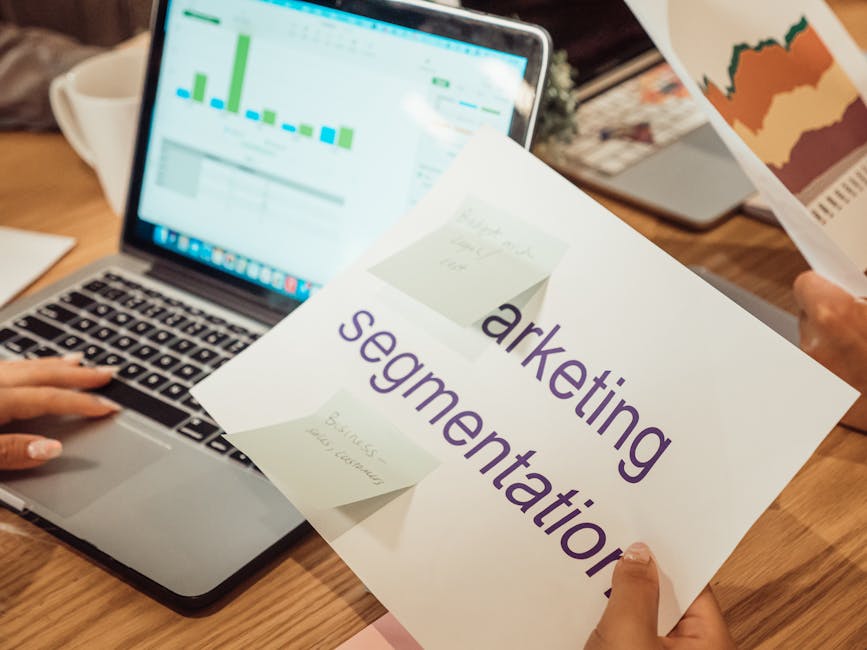
Sending the same message to your entire database is the fastest way to train contacts to ignore you. Automation segmentation divides your audience into meaningful groups so your workflows deliver the right message to the right person at the right moment. It is the difference between a generic broadcast that gets deleted and a targeted communication that drives action.
For Singapore businesses competing for attention in one of the world’s most connected and digitally sophisticated markets, segmentation is not optional — it is the foundation of effective marketing automation. This guide covers the segmentation strategies, techniques and implementation steps you need to move beyond basic list-based targeting.
Why Segmentation Transforms Automation Performance
The data supporting segmentation is overwhelming. Segmented email campaigns consistently outperform unsegmented ones by 30 to 50 per cent in open rates and 50 to 100 per cent in click-through rates. For Singapore marketers managing tight budgets, segmentation is the single highest-leverage improvement you can make to your automation performance.
The Relevance Imperative
Singapore consumers receive hundreds of marketing messages daily. They have trained themselves to filter out anything that does not immediately feel relevant. Segmentation ensures your messages clear this relevance threshold by addressing the specific needs, interests and circumstances of each audience group. A property developer sending investment opportunity emails to first-time homebuyers wastes both parties’ time. Segmentation prevents this mismatch.
The Efficiency Argument
Beyond performance, segmentation improves efficiency. Rather than building one massive workflow that tries to handle every scenario through complex branching, you build focused workflows for specific segments. These simpler workflows are easier to build, test, maintain and optimise. They are also easier to troubleshoot when something goes wrong, which supports the broader objectives of your digital marketing strategy.
Revenue Impact
Segmented automation directly impacts revenue. When leads receive content matched to their buying stage, they progress through the funnel faster. When customers receive recommendations based on their purchase history, average order values increase. When at-risk customers are identified early through behavioural segmentation, churn decreases. Each of these outcomes translates to measurable revenue gains.
Core Segmentation Types for Marketing Automation
Effective automation segmentation combines multiple data dimensions. No single segmentation approach captures the full picture of who your contacts are and what they need.

Demographic Segmentation
Demographics include age, gender, income, education and family status for B2C, and job title, seniority, department, company size and industry for B2B. In Singapore’s multicultural market, language preference is an important demographic variable — your automation should be able to serve content in English, Mandarin, Malay or Tamil based on contact preferences.
Geographic Segmentation
Even within Singapore, geographic segmentation matters. A retail business might segment by district to promote location-specific events or offers. For companies operating across APAC, geographic segmentation enables timezone-appropriate send times, currency-specific pricing and region-relevant content.
Firmographic Segmentation
For B2B automation, firmographics — company size, industry, revenue, technology stack, growth stage — are essential. A SaaS company selling to both startups and enterprises needs fundamentally different messaging for each segment. Firmographic data also drives lead scoring: an enterprise-segment lead from a target industry should be scored higher than a startup lead from a non-target vertical.
Psychographic Segmentation
Psychographics capture values, attitudes, interests and lifestyle. While harder to collect than demographics, psychographic data enables powerful segmentation. A financial services firm might segment by risk tolerance, an education provider by learning motivation, or a wellness brand by health priorities. Surveys, content engagement patterns and social media behaviour all provide psychographic signals.
Behavioural Segmentation Strategies
Behavioural segmentation is the most powerful type for marketing automation because it is based on what contacts actually do rather than who they are. Actions reveal intent more reliably than demographics.
Website Behaviour Segmentation
Segment contacts based on the pages they visit, the content they consume and the features they explore. A contact who repeatedly visits your pricing page is in a different buying stage than one who only reads blog posts. Create segments for high-intent behaviours (pricing page visits, demo page visits, competitor comparison page visits) and trigger targeted workflows for each. This approach significantly enhances your SEO and conversion efforts.
Email Engagement Segmentation
Divide your audience by engagement level: highly engaged (opens and clicks regularly), moderately engaged (opens occasionally), disengaged (has not opened in 90 days) and dormant (has not opened in 180 days). Each segment warrants a different approach. Highly engaged contacts can receive more frequent communication. Disengaged contacts need a re-engagement sequence. Dormant contacts should be suppressed to protect deliverability.
Purchase Behaviour Segmentation
For e-commerce and service businesses, purchase behaviour segmentation is a revenue multiplier. Segment by purchase frequency (one-time buyers versus repeat customers), average order value (high-value versus standard), product category preferences, time since last purchase and purchase recency-frequency-monetary (RFM) score. Each segment receives tailored cross-sell, upsell or retention workflows.
Content Consumption Segmentation
Track which topics, formats and content types each contact engages with. A contact who downloads whitepapers about cybersecurity should be segmented differently from one who watches webinars about cloud migration, even if both work in IT. Content consumption patterns reveal specific interests that enable precise personalisation within your nurture workflows.
Event-Based Segmentation
Trigger segmentation changes based on specific events: form submission, webinar attendance, trade show visit, support ticket creation, contract renewal date approaching or subscription upgrade. Event-based segments are dynamic — contacts enter and exit based on real-time actions, ensuring your automation always responds to current behaviour rather than historical snapshots.
Lifecycle Stage Segmentation
Lifecycle segmentation aligns your automation with the buyer’s journey, ensuring that contacts receive content appropriate to their current relationship with your brand.

Defining Your Lifecycle Stages
A typical B2B lifecycle includes subscriber, lead, marketing qualified lead (MQL), sales qualified lead (SQL), opportunity, customer and evangelist. B2C lifecycles might include prospect, first-time buyer, repeat customer, loyal customer and lapsed customer. Define clear criteria for each stage and implement automated transitions based on behavioural and engagement triggers.
Stage-Specific Automation
Each lifecycle stage warrants different content, frequency and channels. Subscribers receive educational content to build awareness. MQLs receive case studies and comparison guides to support evaluation. Opportunities receive personalised proposals and social proof. Customers receive onboarding, training and expansion content. Your email marketing workflows should reflect these stage-specific needs.
Transition Triggers
Define the specific actions or combinations of actions that move a contact from one lifecycle stage to the next. A subscriber who downloads a pricing guide and visits the contact page might transition to MQL. An MQL who requests a demo transitions to SQL. Automate these transitions so contacts immediately begin receiving stage-appropriate content without manual intervention.
Backwards Movement
Lifecycle stages are not strictly linear. A customer who does not renew reverts to a re-engagement segment. An SQL who goes cold reverts to nurture. Build automation that handles backwards movement gracefully, re-entering contacts into appropriate workflows rather than leaving them in limbo.
Predictive and AI-Driven Segmentation
Predictive segmentation uses machine learning to identify patterns in your data that human analysis would miss. It is the cutting edge of automation segmentation and increasingly accessible to Singapore SMEs through platform-native features.
Predictive Lead Scoring
Traditional lead scoring assigns fixed points for specific actions. Predictive scoring uses machine learning to analyse your historical conversion data and identify which combinations of attributes and behaviours are most predictive of conversion. The model continuously learns and adjusts, becoming more accurate over time. HubSpot, Marketo and Salesforce all offer predictive scoring capabilities.
Propensity Modelling
Propensity models predict the likelihood of specific outcomes: probability of purchase, probability of churn, probability of upsell acceptance or probability of event attendance. Use these models to create segments based on predicted behaviour and trigger proactive workflows. A customer with a high churn propensity score should receive a retention workflow before they actually leave.
Lookalike Segmentation
Identify your best customers — highest lifetime value, most frequent purchasers, strongest advocates — and use lookalike modelling to find prospects in your database who share similar characteristics. These high-potential segments should receive priority in your nurture workflows and Google Ads campaigns.
AI-Driven Dynamic Segmentation
Modern automation platforms increasingly offer AI-driven segmentation that automatically identifies meaningful audience clusters without predefined rules. These systems analyse hundreds of data points simultaneously to discover segments you would never think to create manually. While still maturing, this technology is particularly valuable for businesses with large, complex databases.
Implementation: Building Segments That Work
Strategy is nothing without execution. Here is how to implement effective segmentation in your automation platform.
Start with Your Data Audit
Before building segments, audit the data available in your CRM. Identify which fields are populated for what percentage of your database. A segment based on company size is useless if only 20 per cent of your records have that field populated. Prioritise segmentation strategies that use your most complete and reliable data fields.
Build a Segmentation Matrix
Create a matrix mapping your segments to your workflows and content. Each row is a segment, each column is a workflow or content piece, and each cell indicates whether that segment receives that content. This matrix reveals gaps (segments with no targeted content) and redundancies (multiple segments receiving identical content). It also serves as documentation for your team.
Use Dynamic Lists Over Static Lists
Static lists are snapshots — contacts are added manually or by import and do not update automatically. Dynamic lists (called smart lists, active lists or segments depending on your platform) update in real time based on criteria you define. Always use dynamic lists for automation segmentation so contacts move between segments as their data and behaviour change.
Test Segment Definitions
Before activating workflows for a new segment, verify the segment’s composition. Check the number of contacts, review a sample of records to confirm they match your intent and look for unexpected inclusions or exclusions. A segment definition with a logical error can send your most loyal customers a message intended for new prospects — a mistake that erodes trust quickly.
Layer Segments Progressively
Do not try to implement every segmentation strategy at once. Start with one or two high-impact dimensions — typically lifecycle stage and engagement level. Once these segments are working and delivering results, add behavioural, demographic and firmographic layers. This progressive approach is manageable, measurable and reduces the risk of overwhelming your team or your content production capacity.
Common Segmentation Mistakes to Avoid
Even experienced marketers make segmentation errors that undermine their automation performance. Avoid these common pitfalls.
Over-Segmentation
Creating too many segments spreads your content resources too thin. If you have 50 segments but only enough content to serve 10, most segments receive generic fallback content, defeating the purpose. A good rule of thumb: do not create a segment unless you have — or plan to create — differentiated content for it. For most Singapore SMEs, eight to fifteen core segments is a practical starting point.
Set-and-Forget Segments
Segments need regular review. Market conditions change, your product evolves, customer behaviour shifts and your data quality improves over time. Review your segment definitions quarterly to ensure they still reflect meaningful distinctions. Archive segments that no longer serve a purpose and create new ones as opportunities emerge.
Ignoring Segment Overlaps
When contacts belong to multiple segments, they may receive conflicting or redundant messages. A contact who is simultaneously in your “new customer onboarding” segment and your “abandoned cart” segment might receive five emails in a single day. Implement suppression rules and frequency caps to manage segment overlaps. Prioritise lifecycle-critical communications over promotional ones.
Segmenting Without Purpose
Every segment should tie to a specific business objective. Creating a segment of “contacts in the finance industry” is pointless unless you have finance-specific content, offers or workflows ready to deploy. Segment with intention, not just because the data allows it. Your social media marketing and other channel strategies should align with your segmentation approach.
Frequently Asked Questions
What is automation segmentation?
Automation segmentation is the process of dividing your contact database into distinct groups based on shared characteristics, behaviours or lifecycle stages so that your marketing automation workflows can deliver targeted, relevant messages to each group rather than sending generic communications to everyone.
How many segments should I create?
Start with eight to fifteen core segments for a typical Singapore SME. The right number depends on your database size, content production capacity and business model complexity. Only create a segment if you can serve it with differentiated content. Over-segmentation wastes resources; under-segmentation leaves performance on the table.
What is the difference between static and dynamic segments?
Static segments (lists) are fixed collections of contacts that do not update automatically. Dynamic segments update in real time as contacts meet or no longer meet defined criteria. For marketing automation, dynamic segments are almost always preferred because they ensure contacts are always in the correct segment based on their current data and behaviour.
Which segmentation type has the biggest impact on results?
Behavioural segmentation typically delivers the greatest performance improvement because it is based on demonstrated actions rather than assumed characteristics. A contact who visits your pricing page three times in a week is demonstrably more sales-ready than one who simply matches a demographic profile.
How do I segment if my data is incomplete?
Start with the data you have. Email engagement data is available for every contact. Website behaviour can be tracked without requiring form submissions. Purchase history is complete for existing customers. Use these readily available data sources first, then progressively collect additional data through forms, surveys and enrichment to enable more sophisticated segmentation.
How often should I review my segments?
Review segment definitions and performance quarterly. Check segment sizes monthly to identify unexpected growth or shrinkage, which may indicate data quality issues or market shifts. Review segment overlaps whenever you create a new segment or workflow to prevent conflicts and over-communication.
Can I use segmentation across channels, not just email?
Yes. Modern automation platforms support cross-channel segmentation. Use the same segments to personalise website content, target social media ads, customise SMS messages, tailor push notifications and inform sales outreach. Consistent segmentation across channels creates a cohesive experience that reinforces relevance at every touchpoint.
What is RFM segmentation?
RFM stands for recency, frequency and monetary value. It scores contacts based on how recently they purchased, how often they purchase and how much they spend. RFM segmentation is particularly effective for e-commerce businesses because it identifies high-value customers for loyalty programmes, at-risk customers for retention campaigns and dormant customers for re-engagement.
How does segmentation relate to personalisation?
Segmentation groups contacts with shared characteristics; personalisation tailors content to individual contacts within those groups. Segmentation determines which workflow a contact enters; personalisation determines the specific content they see within that workflow. Effective automation uses both: segmentation for targeting and personalisation for relevance.
How do I measure whether my segmentation is working?
Compare key metrics (open rates, click-through rates, conversion rates, revenue per contact) between segmented and unsegmented campaigns. Track how segment-specific metrics change over time. Monitor segment migration rates to ensure contacts are progressing through lifecycle stages as expected. If segmented campaigns do not outperform unsegmented ones, your segment definitions may need refinement.