10 Analytics and Tracking Mistakes That Lead to Bad Decisions
Table of Contents
- Why Tracking Accuracy Matters
- No Proper GA4 Setup
- Not Tracking Conversions
- Ignoring UTM Parameters
- Wrong Attribution Model
- Not Filtering Internal Traffic
- Obsessing Over Vanity Metrics
- No Custom Dashboards
- Not Connecting Ad Accounts
- Ignoring Data Privacy and PDPA
- Making Decisions on Insufficient Data
- Frequently Asked Questions
Why Tracking Accuracy Matters
Data-driven marketing is only as good as the data behind it. In 2026, most Singapore businesses understand that marketing decisions should be informed by analytics. What many do not realise is that their analytics setup is flawed, incomplete or misconfigured, leading to analytics tracking mistakes that produce inaccurate, misleading or missing data. When bad data drives decisions, the results are predictably poor: budget wasted on underperforming channels, successful campaigns prematurely paused and growth opportunities missed entirely.
The gap between having analytics tools installed and having analytics that actually produce reliable, actionable insights is larger than most businesses appreciate. A misconfigured Google Analytics account can generate impressively detailed reports that are fundamentally wrong. A tracking setup that misses key conversion events can make a profitable campaign look like a failure.
This article covers the 10 most common analytics tracking mistakes Singapore businesses make and explains what to do instead. Whether you manage your own analytics or work with a digital marketing agency, understanding these pitfalls will help you build a data foundation that supports genuinely informed decision-making.
1. No Proper GA4 Setup
Google Analytics 4 is the standard analytics platform for website and app measurement in 2026, yet many Singapore businesses either have not migrated from outdated setups, have a basic GA4 installation with default settings only, or have no analytics setup at all. A default GA4 installation captures basic page view data but misses most of the insights that actually matter for marketing decision-making.
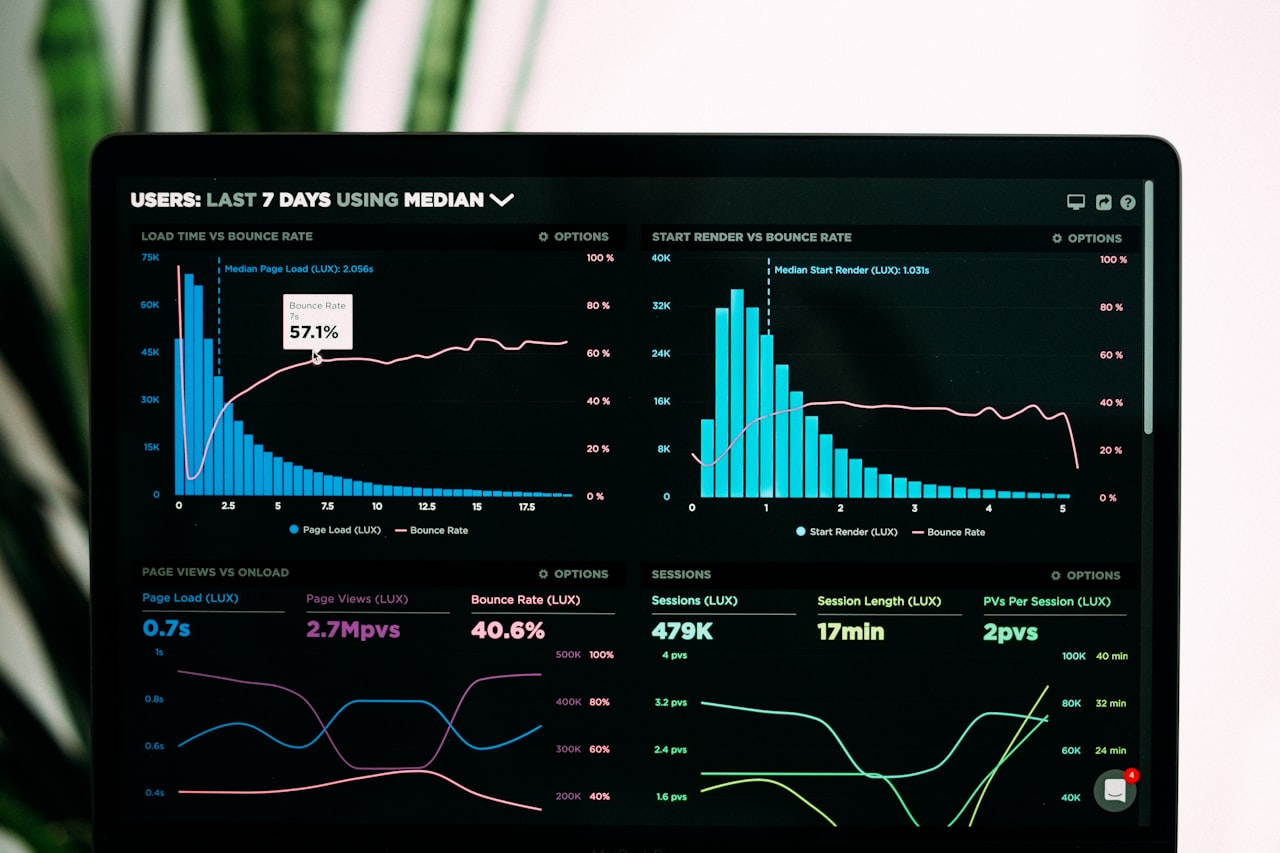
Without a properly configured GA4 setup, you are flying blind. You cannot see which marketing channels drive the most valuable traffic, how visitors navigate your site, where they drop off in your funnel, or what actions lead to conversions.
Set up GA4 properly from the ground up. Beyond the basic installation, configure enhanced measurement events to track scrolls, outbound clicks, site search, video engagement and file downloads. Set up custom events for actions specific to your business, such as form submissions, button clicks, phone calls and WhatsApp messages. Define key events (conversions) in GA4 for all the actions that matter. Connect your GA4 property to Google Search Console for organic search data integration.
2. Not Tracking Conversions
This is perhaps the most damaging analytics mistake: not tracking the actions that matter most. Many Singapore businesses have analytics installed but only track page views. They cannot tell you how many leads their website generated last month, how many quote requests came from Google Ads versus Facebook, or what the conversion rate of their landing pages is.
Conversion tracking is the bridge between marketing activity and business outcomes. Without it, you cannot calculate return on investment, identify your best-performing channels or optimise your campaigns for the actions that actually drive revenue.
Identify every meaningful action a visitor can take on your website and set up tracking for each one. Common conversions include form submissions, phone calls, email clicks, WhatsApp messages, product purchases, add-to-cart actions and download completions. Set up these conversions in GA4, Google Ads, Meta Ads Manager and any other advertising platform you use. Use Google Tag Manager to manage your tracking tags efficiently. Our SEO team ensures proper conversion tracking is in place before optimising any campaign.
3. Ignoring UTM Parameters
UTM parameters are tags added to URLs that tell your analytics platform exactly where traffic comes from, which campaign it belongs to and what prompted the click. Without UTM parameters, a significant portion of your traffic is attributed to vague categories like “direct” or “referral,” making it impossible to evaluate individual campaign performance.
This mistake is especially prevalent in social media and email marketing, where links shared without UTM parameters get lumped into generic traffic categories. You might be running five different email campaigns, but without UTM tags, GA4 shows them all as a single “email” source with no way to compare performance.
Implement a consistent UTM tagging strategy across all marketing channels. At minimum, use utm_source (the platform), utm_medium (the marketing medium) and utm_campaign (the specific campaign name). For paid campaigns, also use utm_content to differentiate between ad variations. Create a UTM naming convention document that your entire team follows to ensure consistency. Inconsistent naming fragments your data and defeats the purpose.
4. Wrong Attribution Model
Attribution modelling determines how credit for conversions is distributed across the touchpoints in a customer’s journey. The default last-click attribution model gives 100 percent of the credit to the final touchpoint before conversion, completely ignoring all previous interactions. This model systematically undervalues awareness and consideration channels while overvaluing bottom-of-funnel channels.
For Singapore businesses running multi-channel marketing campaigns, wrong attribution leads to wrong budget allocation. You might underinvest in Facebook campaigns that introduce customers to your brand because last-click attribution shows all the credit going to the Google brand search campaign that captures the conversion.
GA4 uses a data-driven attribution model by default, which uses machine learning to distribute credit based on observed patterns. This is a significant improvement over last-click attribution for most businesses. Review the model comparison reports in GA4 to understand how different models affect your channel performance data. Our Google Ads team configures attribution models to ensure accurate performance measurement and budget allocation.
5. Not Filtering Internal Traffic
When your team members, developers and agency partners visit your website repeatedly, their activity inflates your traffic numbers, skews your engagement metrics and can even trigger your own conversion events. For smaller Singapore businesses, internal traffic can represent a meaningful percentage of total traffic, particularly during website development or campaign launches.

Without proper filtering, your data includes visits from people who will never be customers. Your bounce rate may appear lower than it actually is because your team navigates multiple pages. Your conversion funnel may look different from the actual customer experience because your team submits test forms.
Set up internal traffic filters in GA4 by defining IP address ranges for your office, your agency partners and any regular remote workers. Navigate to Admin, Data Streams, Configure Tag Settings and define internal traffic rules. Create a data filter to exclude internal traffic from your reports. If your team works remotely with dynamic IP addresses, consider using a browser extension that sets a custom cookie to identify internal users.
6. Obsessing Over Vanity Metrics
Vanity metrics are numbers that look impressive in reports but do not actually indicate business success. Total page views, social media followers, email list size and raw traffic numbers can all be vanity metrics when they are disconnected from business outcomes. Many Singapore businesses produce elaborate monthly reports full of large, growing numbers that bear no relation to revenue or profitability.
The danger of vanity metrics is that they create a false sense of progress. Your team congratulates themselves on a 30 percent increase in website traffic while overlooking the fact that conversion rates dropped and fewer leads were generated.
Focus your reporting and analysis on metrics that directly connect to business outcomes. The metrics that matter most are cost per acquisition, conversion rate, customer lifetime value, return on ad spend and revenue by channel. Use other metrics such as traffic and engagement only as supporting indicators that help explain changes in your core metrics.
7. No Custom Dashboards
The default views in GA4 and other analytics platforms are designed for general use, not for your specific business questions. Many Singapore businesses rely on these default views for their reporting, scrolling through screens of data looking for insights rather than building custom dashboards that surface the specific metrics that matter.
Without custom dashboards, analytics becomes time-consuming and inconsistent. Different team members may look at different reports and draw different conclusions. Key metrics may be buried in complex reports that require significant effort to extract.
Build custom dashboards using Google Looker Studio to pull data from GA4, Google Ads, Meta Ads and other sources into a single, unified view. Design your dashboard around your most important business questions. Include an executive summary section with headline metrics, a channel performance breakdown and trend charts for key metrics over time. Automate dashboard refreshes so the data is always current.
8. Not Connecting Ad Accounts
Many businesses run advertising on Google, Meta, LinkedIn and other platforms but do not connect these ad accounts to their analytics platform. This means they are looking at advertising performance data in isolation rather than seeing a unified picture of how all channels work together.
Without connected accounts, you cannot compare channel performance on a like-for-like basis, you miss cross-channel attribution insights, and you often end up with discrepancies between what each platform reports and what your analytics shows.
Connect your Google Ads account to GA4 to enable automatic cost data import, audience sharing and unified conversion reporting. Link your Google Search Console to GA4 for organic search insights. For Meta Ads and LinkedIn Ads, use UTM parameters and offline conversion imports to close the data loop. Build a centralised reporting dashboard that combines data from all advertising platforms alongside your website analytics.
9. Ignoring Data Privacy and PDPA
Singapore’s Personal Data Protection Act (PDPA) governs how businesses collect, use and disclose personal data. Many Singapore businesses implement analytics and tracking tools without considering their PDPA obligations, potentially exposing themselves to regulatory penalties and reputational damage. The PDPA has been strengthened in recent years with higher penalties and broader enforcement.
Common privacy violations in analytics include collecting personal data without consent, using tracking cookies without disclosure, storing personal data in analytics tools without proper data processing agreements, and retaining data longer than necessary.
Conduct a data privacy audit of your analytics and tracking setup. Implement a clear cookie consent mechanism that allows visitors to accept or decline non-essential tracking cookies. Update your privacy policy to accurately describe the data you collect. Configure GA4 to anonymise IP addresses and respect consent signals. Set appropriate data retention periods in your analytics tools.
10. Making Decisions on Insufficient Data
One of the most insidious analytics tracking mistakes is making confident decisions based on too little data. A Facebook ad that has run for two days with 50 clicks is declared a failure and paused. A landing page variation with 20 visits is declared the winner of an A/B test. These premature decisions, driven by impatience rather than statistical validity, prevent businesses from discovering what actually works.

Small sample sizes produce unreliable results. A landing page with a 5 percent conversion rate based on 20 visits could easily have a true conversion rate anywhere from 0 to 15 percent. The data simply is not sufficient to draw conclusions.
Establish minimum data thresholds before making decisions. For A/B tests, aim for at least 100 conversions per variation before declaring a statistically significant winner. For paid advertising campaigns, allow at least 50 to 100 conversions before making major budget changes. Give new campaigns at least two to four weeks of run time. When analysing trends, compare week-over-week or month-over-month rather than day-over-day. Our social media marketing and paid advertising teams follow rigorous data thresholds to ensure decisions are based on reliable evidence.
Frequently Asked Questions
How do I know if my GA4 is set up correctly?
Run a comprehensive audit. Check that your tracking code fires on every page using GA4 DebugView or Google Tag Assistant. Verify that all custom events fire correctly by testing each one manually. Confirm that your key events are properly defined and recording data. Compare your GA4 data with your server logs or other analytics tools to verify accuracy.
What conversions should a Singapore business track?
Track every meaningful action a visitor can take on your website. At minimum, this includes form submissions, phone calls using call tracking numbers, WhatsApp or messaging app clicks, downloads of key resources and appointment bookings. For e-commerce, also track add-to-cart, initiate-checkout and purchase events. The specific conversions you track should align directly with your business model.
How often should I review my analytics?
Review high-level metrics weekly. Conduct a thorough analytics review monthly, examining channel performance, conversion trends and campaign results in detail. Perform a comprehensive analytics audit quarterly to check data accuracy and verify tracking is working correctly. After significant website changes, re-audit your tracking immediately.
What is the best attribution model for Singapore businesses?
For most Singapore businesses running multi-channel campaigns, GA4’s data-driven attribution model provides the most accurate picture. It uses machine learning to analyse your actual conversion paths and assign credit based on observed patterns. If your business has a short, simple customer journey, last-click attribution may be adequate. The most important thing is to use a consistent model over time.
How do I ensure PDPA compliance with my analytics setup?
Implement a cookie consent mechanism that clearly informs visitors about tracking technologies and allows them to opt in or out. Configure your analytics tools to respect these consent choices. Anonymise IP addresses in GA4. Ensure you have valid data processing agreements with all analytics vendors. Set appropriate data retention periods and delete data that is no longer needed.
What is the difference between GA4 events and conversions?
In GA4, everything is tracked as an event — page views, clicks, form submissions, purchases and custom interactions. Conversions (now called key events) are simply events that you mark as important to your business. Any event can be toggled as a key event in the GA4 admin panel. This distinction lets you track hundreds of interactions while focusing your reporting on the handful that truly matter.
How do I fix discrepancies between Google Ads and GA4 data?
Discrepancies are common and usually caused by differences in attribution models, conversion counting methods or tracking lag. Ensure your Google Ads account is properly linked to GA4. Check that both platforms use the same attribution model and conversion window. Verify that your conversion tags fire correctly on all devices and browsers. Some discrepancy is normal — a difference of 5 to 15 percent between platforms is typical.
Should I use Google Tag Manager or install tracking codes directly?
Use Google Tag Manager for almost all tracking implementations. GTM provides a centralised interface for managing all your tracking tags without editing website code directly. It supports version control, testing environments, trigger conditions and user permissions. Direct code installation is harder to maintain, more prone to errors and requires developer involvement for every change.
How much data do I need before making campaign decisions?
For A/B tests, aim for at least 100 conversions per variation and use a statistical significance calculator to verify results. For paid campaign optimisation, allow 50 to 100 conversions before making major budget changes. For channel-level strategy decisions, analyse at least three months of consistent data. Rushing decisions on small sample sizes is one of the most expensive analytics mistakes a Singapore business can make.
What are the most important GA4 reports for Singapore marketers?
Focus on the Acquisition overview for channel performance, the Engagement report for user behaviour, the Monetisation report for e-commerce, and the Retention report for returning visitor trends. The Explorations section lets you build custom funnel reports and path analyses. For campaign-specific insights, the Traffic Acquisition report broken down by campaign shows which efforts are driving results.