Table of Contents
- Amazon Singapore: Platform Overview and Opportunity
- Getting Started as an Amazon Singapore Seller
- Understanding FBA and Fulfilment Options
- Amazon Listing Optimisation for Singapore
- Amazon PPC Advertising Strategies
- Amazon Brand Registry and Enhanced Content
- Growth and Scaling Strategies
- Frequently Asked Questions
Amazon Singapore: Platform Overview and Opportunity
Amazon’s presence in Singapore continues to grow, offering sellers access to a marketplace backed by one of the world’s most powerful e-commerce ecosystems. This Amazon Singapore selling guide covers everything you need to know to launch, optimise and scale your business on the platform.
While Shopee and Lazada currently dominate Singapore’s marketplace landscape, Amazon brings unique advantages that savvy sellers can leverage. The platform’s global infrastructure, sophisticated advertising tools and Prime membership programme create opportunities that local-only marketplaces cannot match.
Amazon Singapore is particularly attractive for sellers targeting international customers, as the platform makes cross-border selling relatively straightforward. Products listed on Amazon.sg can also reach buyers through Amazon’s global marketplace network, opening up revenue streams beyond the Singapore market.
The competitive landscape on Amazon Singapore is different from other local platforms. With fewer sellers than Shopee or Lazada, there are more opportunities to establish category leadership, particularly in niches that are underserved on the platform. If you are weighing up which platforms to sell on, our marketplace vs own store comparison can help you decide.
Getting Started as an Amazon Singapore Seller
Setting up an Amazon seller account in Singapore requires choosing between an Individual plan and a Professional plan. The Individual plan has no monthly subscription fee but charges a per-item fee on each sale, while the Professional plan charges a monthly subscription but removes the per-item fee and unlocks additional selling tools.
For serious sellers planning to list more than a handful of products, the Professional plan is almost always the better choice. It provides access to advertising tools, bulk listing capabilities and detailed analytics that are essential for growth.
Account registration requires valid identification, a bank account for receiving payments and tax information. Amazon’s verification process is more thorough than most local platforms, but this also means that once approved, you are competing in a marketplace with generally higher seller quality standards.
Product selection for Amazon Singapore should consider the platform’s strengths. Categories where Amazon performs well globally — electronics, books, health and personal care, home goods and toys — tend to also perform well in Singapore. Research existing competition and pricing in your target categories before committing to specific products.
Understanding Amazon’s fee structure is critical for profitability. Fees include referral fees (commission that varies by category), fulfilment fees (if using FBA), storage fees and any applicable advertising costs. Model your unit economics carefully before listing products to ensure healthy margins after all fees are accounted for.
Understanding FBA and Fulfilment Options
Fulfilment by Amazon (FBA) is one of the platform’s most powerful features. When you use FBA, you send your inventory to Amazon’s fulfilment centres and Amazon handles storage, picking, packing, shipping and customer service for those orders. This gives your products the Prime badge, which significantly increases conversion rates.
FBA products are eligible for Prime delivery, which is a major selling point for buyers who expect fast, reliable shipping. Prime members tend to spend more and purchase more frequently, so FBA can directly increase your sales volume. The tradeoff is the fulfilment and storage fees, which you need to factor into your pricing.
Fulfilment by Merchant (FBM) is the alternative where you handle storage and shipping yourself. This gives you more control over costs and packaging but means your products will not carry the Prime badge. FBM can make sense for oversized items, low-velocity products or when you have an existing logistics operation that is more cost-effective than FBA.
Inventory management with FBA requires careful planning. Amazon charges monthly storage fees that increase during peak season, and long-term storage fees apply to inventory that sits in fulfilment centres for extended periods. Maintain sufficient stock to avoid stockouts while minimising excess inventory that racks up storage costs.
A hybrid approach works well for many sellers. Use FBA for your best-selling products where the Prime badge provides the most benefit, and fulfil slower-moving or oversized items yourself. This balances the conversion benefits of FBA with the cost efficiency of merchant fulfilment.
Amazon Listing Optimisation for Singapore
Amazon’s A9 search algorithm determines which products appear for any given search query. Optimising your listings for this algorithm is essential for driving organic traffic and reducing your advertising costs over time.
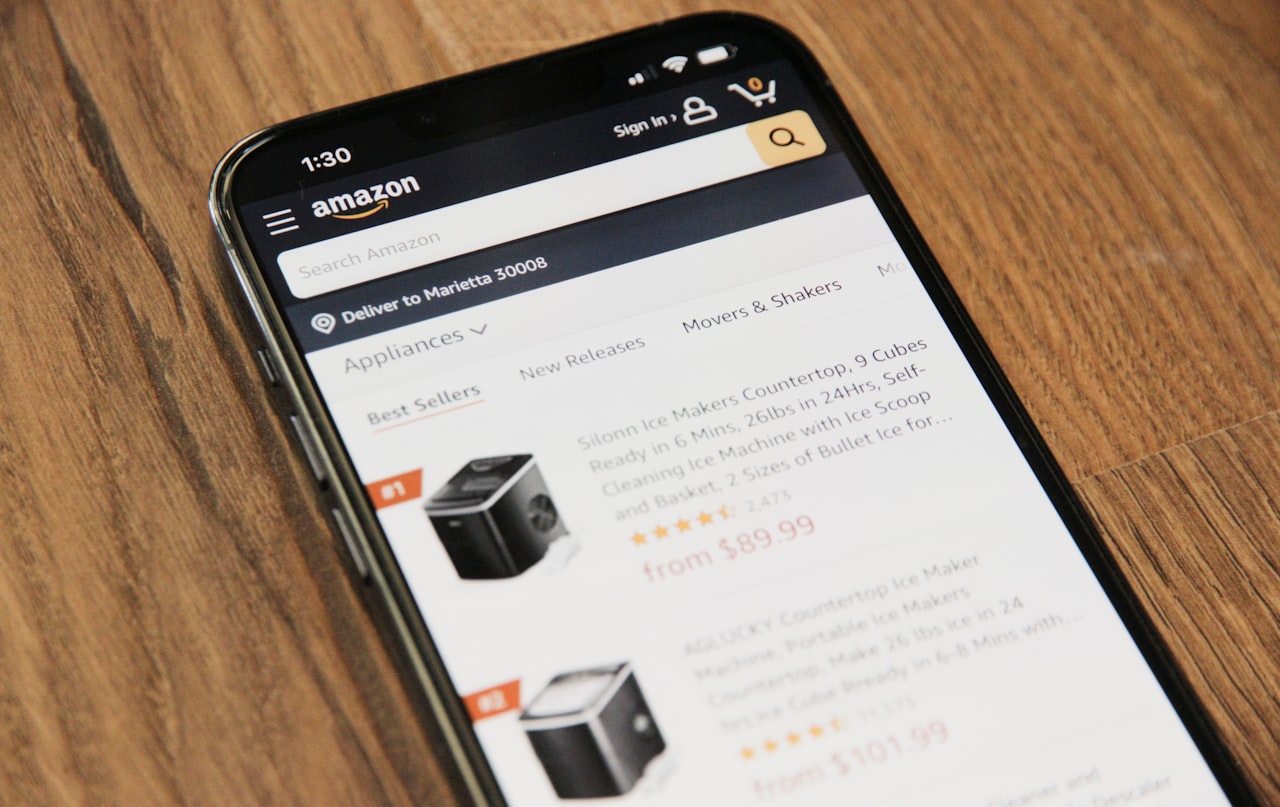
Product titles on Amazon should include the most important keywords while remaining readable and informative. Amazon has specific title formatting guidelines that vary by category. Generally, include your brand name, product type, key features, size or quantity and colour or variant. Violating title guidelines can result in suppressed listings. For platform-specific ranking tactics, our marketplace SEO guide provides detailed strategies.
Backend search terms are a unique Amazon feature that allows you to add keywords that do not appear in your visible listing but help your product appear in relevant searches. Use all available character space in your backend keywords, avoid repeating words already in your title and include common misspellings and alternative terms.
Bullet points on Amazon listings are crucial for communicating key benefits and features. You typically have five bullet points, each of which should lead with a benefit and follow with supporting details. Focus on what the buyer cares about: how the product solves their problem, what makes it different and what they receive.
Product images on Amazon must meet specific technical requirements. The main image must have a pure white background with the product filling at least 85 percent of the frame. Additional images should show the product from different angles, in use and with infographics highlighting key features. High-quality images are one of the strongest conversion drivers on Amazon.
A+ Content (formerly Enhanced Brand Content) is available to sellers enrolled in Amazon Brand Registry. This feature allows you to add rich content with enhanced images, comparison charts and detailed descriptions below the standard product information. A+ Content can increase conversion rates by 5 to 10 percent or more.
Amazon PPC Advertising Strategies
Amazon’s pay-per-click advertising platform is one of the most effective marketplace ad systems available. Unlike advertising on social media or search engines, Amazon ads reach shoppers who are actively looking to purchase, resulting in high conversion rates.
Sponsored Products are the bread and butter of Amazon advertising. These ads appear in search results and on product detail pages, promoting individual listings to relevant shoppers. Start with automatic campaigns to discover which keywords drive sales, then create manual campaigns targeting your best-performing keywords with optimised bids.
Sponsored Brands ads appear at the top of search results and feature your brand logo, a custom headline and multiple products. These are excellent for brand awareness and driving traffic to your Amazon Store page. Sponsored Brands also include video ad formats, which tend to achieve higher click-through rates than static ads.
Sponsored Display ads reach shoppers on and off Amazon based on their browsing behaviour. Use these for retargeting shoppers who viewed your products but did not purchase, or for conquesting by targeting viewers of competitor products. These ads extend your reach beyond Amazon’s search results. For a cross-platform view of marketplace advertising, see our marketplace advertising guide.
Campaign structure matters for effective Amazon PPC management. Organise campaigns by product group, match type and objective. Separate your branded keywords from non-branded keywords, and keep your best-performing keywords in dedicated campaigns with optimised budgets. Regular negative keyword management prevents wasted spend on irrelevant searches.
Advertising cost of sale (ACOS) is the key metric for Amazon PPC profitability. Calculate your break-even ACOS based on your profit margins, and optimise campaigns to stay below this threshold. New product launches may temporarily run above break-even ACOS to build sales velocity and reviews, with the expectation of reaching profitability as organic rankings improve.
Amazon Brand Registry and Enhanced Content
Amazon Brand Registry is a programme for brand owners that unlocks powerful tools for protecting and promoting your brand on the platform. To enrol, you need an active registered trademark in the country where you want to sell.
Once enrolled, you gain access to A+ Content for enhanced product descriptions, Brand Analytics for customer insights, brand protection tools that help you identify and report counterfeit listings and Sponsored Brands advertising. These tools collectively give registered brands a significant competitive advantage.
Amazon Store pages allow you to create a multi-page branded shopping experience within Amazon. Think of it as your mini website inside the marketplace, complete with custom layouts, curated product collections and brand storytelling. Direct traffic from Sponsored Brands ads and external marketing to your Store page to provide a cohesive brand experience. Building a strong brand identity matters whether you sell on marketplaces or your own site, and our branding services can help with either approach.
Brand Analytics provides insights into customer search behaviour, purchase patterns and competitive positioning. Use the Search Query Performance dashboard to understand which search terms drive the most traffic and conversions in your category. This data is invaluable for both listing optimisation and advertising strategy.
Growth and Scaling Strategies
Growing your Amazon Singapore business requires a combination of catalogue expansion, advertising optimisation and operational excellence. Start by establishing a strong position in your initial product category before expanding into adjacent categories.
Product launches on Amazon require a coordinated effort across advertising, promotions and potentially external traffic. Run aggressive PPC campaigns during the launch period to generate initial sales velocity. Combine this with promotional pricing and vine reviews (if available) to build social proof quickly.
External traffic from social media, email marketing and your own website can give your Amazon listings a competitive edge. Amazon’s Brand Referral Bonus programme even rewards sellers who drive external traffic to their Amazon listings, making it financially attractive to supplement your marketplace efforts with broader digital marketing.
International expansion through Amazon’s global selling programme allows you to list products on Amazon marketplaces in other countries. Singapore sellers can relatively easily expand to Amazon Australia, Japan and other APAC marketplaces, multiplying their revenue potential without building separate e-commerce operations in each country.
Diversification remains important even as you grow on Amazon. Combine your Amazon presence with other marketplace channels and consider whether selling across multiple marketplaces or building your own online store makes sense for your long-term business strategy.
Frequently Asked Questions
Is it worth selling on Amazon Singapore versus Shopee or Lazada?
Amazon Singapore offers lower competition, access to global selling infrastructure and powerful advertising tools. However, the buyer base is currently smaller than Shopee or Lazada in Singapore. Many sellers find success by listing on multiple platforms simultaneously rather than choosing just one.
How much does FBA cost in Singapore?
FBA fees include fulfilment fees based on item size and weight, and monthly storage fees per cubic foot of warehouse space used. Fees vary by product dimensions but typically range from a few dollars per unit for standard-sized items. Model your unit economics carefully to ensure FBA makes financial sense for your products.
What is a good ACOS target for Amazon PPC?
Your target ACOS depends on your profit margins. Generally, aim for an ACOS below your gross margin percentage to remain profitable on each sale. Many successful Amazon sellers target an ACOS between 15 and 25 percent. New product launches may temporarily accept higher ACOS to build sales velocity and reviews.
Do I need a trademark for Amazon Brand Registry?
Yes, you need an active registered trademark in the country where you sell. In Singapore, this means a trademark registered with IPOS. Pending trademark applications may qualify for the IP Accelerator programme, which provides early access to Brand Registry benefits while your trademark is being processed.
How do I get reviews on Amazon Singapore?
Amazon has strict policies against incentivised reviews. Use the Request a Review button in Seller Central, enrol in the Vine programme for early reviewer feedback on new products and focus on delivering excellent products and customer service. Building reviews organically takes time but results in more authentic, sustainable feedback.
Can I sell both on Amazon.sg and Amazon.com?
Yes, Amazon’s global selling programme allows you to list products on multiple Amazon marketplaces from a single account. This is one of Amazon’s key advantages, as it provides access to buyers worldwide without needing to establish separate business entities in each country.
How long does it take to become profitable on Amazon Singapore?
Most sellers need three to six months to reach consistent profitability on Amazon, factoring in initial inventory investment, advertising costs during the launch phase and the time needed to build reviews and organic rankings. Products with strong demand and limited competition may reach profitability faster.
What products should I avoid selling on Amazon Singapore?
Avoid categories with heavy brand dominance where you cannot differentiate, extremely low-margin products where Amazon fees erode profitability, oversized or heavy items with prohibitive FBA fees and restricted categories that require special approval. Research the competitive landscape thoroughly before committing to any product line.