AI-Generated Content and SEO: What Google Says, What Works and What to Avoid
Table of Contents
Google’s Official Position on AI Content
Google has stated clearly that AI generated content SEO is not inherently against its guidelines. The company’s official stance, published in early 2023 and reiterated since, is that Google rewards high-quality content regardless of how it is produced. The focus is on the quality of the output, not the method of creation.
However, Google draws a firm line against content created primarily to manipulate search rankings. Using AI to mass-produce low-quality articles designed to capture search traffic, without adding genuine value, falls squarely under Google’s spam policies. The Helpful Content system specifically targets sites that publish large volumes of content that prioritises search engines over human readers.
Google’s E-E-A-T framework (Experience, Expertise, Authoritativeness, Trustworthiness) applies equally to AI-generated and human-written content. A medical article must demonstrate medical expertise whether a doctor wrote it or an AI drafted it. For Singapore businesses, this means AI generated content SEO success depends entirely on whether the final published content meets the same quality standards you would apply to human-written work.
What Actually Works in Practice
The most effective use of AI in content creation is as a drafting and research assistant rather than an autonomous content producer. Businesses that achieve strong SEO results with AI typically follow a workflow where AI generates an initial draft, and a human expert then rewrites, fact-checks, adds original insights and ensures the content genuinely serves the reader.

AI excels at certain content tasks. Generating outlines, brainstorming angles, summarising research, creating first drafts of straightforward informational content and expanding on bullet points are all areas where AI saves significant time. A content writer who uses AI for these tasks can produce three to four times more content per week without sacrificing quality, provided they invest the editing time.
Where AI struggles is with originality, nuance and experience. An AI cannot share what it is like to manage a Google Ads campaign for a Singapore SME or describe the specific challenges of local SEO in a multi-language market. These experiential insights are exactly what Google’s E-E-A-T framework values most, and they are what differentiate authoritative content from generic information.
Data from multiple case studies suggests that AI-assisted content (human-guided, human-edited) performs comparably to fully human-written content in search rankings. Fully AI-generated content with minimal editing performs significantly worse, particularly in competitive niches where other sites publish expert-level content.
Risks of Pure AI Content for SEO
Factual inaccuracy is the most immediate risk. AI models generate plausible-sounding content that can be factually wrong. Publishing inaccurate statistics, incorrect advice or fabricated references damages your credibility with readers and can harm your E-E-A-T signals if Google’s quality raters or systems detect the errors.
Content homogeneity is a growing concern. Because AI models draw from the same training data, sites that rely heavily on AI tend to produce content that sounds remarkably similar to each other. Google has no incentive to rank ten versions of the same generic article. Sites that add unique perspectives, proprietary data or original research will outperform those publishing AI-generated sameness.
Scalability can become a trap. The ease of generating AI content tempts some businesses to publish hundreds of articles in a short period. Google’s systems can detect sudden spikes in publishing volume, and the Helpful Content system evaluates your site holistically. If a large portion of your content is unhelpful, it can drag down the performance of your genuinely good content as well.
Legal and ethical risks exist too. AI-generated content can inadvertently reproduce copyrighted material or generate statements that are misleading. For businesses in regulated industries, publishing unreviewed AI content could create compliance issues. Always have a qualified person review content before publication, particularly for topics related to health, finance or law.
How to Use AI Responsibly for Content Creation
Establish a clear editorial workflow that positions AI as a tool, not a replacement. A practical workflow looks like this: human strategist selects the topic and target keyword; AI generates an outline and first draft; human editor rewrites for accuracy, tone and originality; human expert adds unique insights, examples and data; final review ensures quality standards are met.
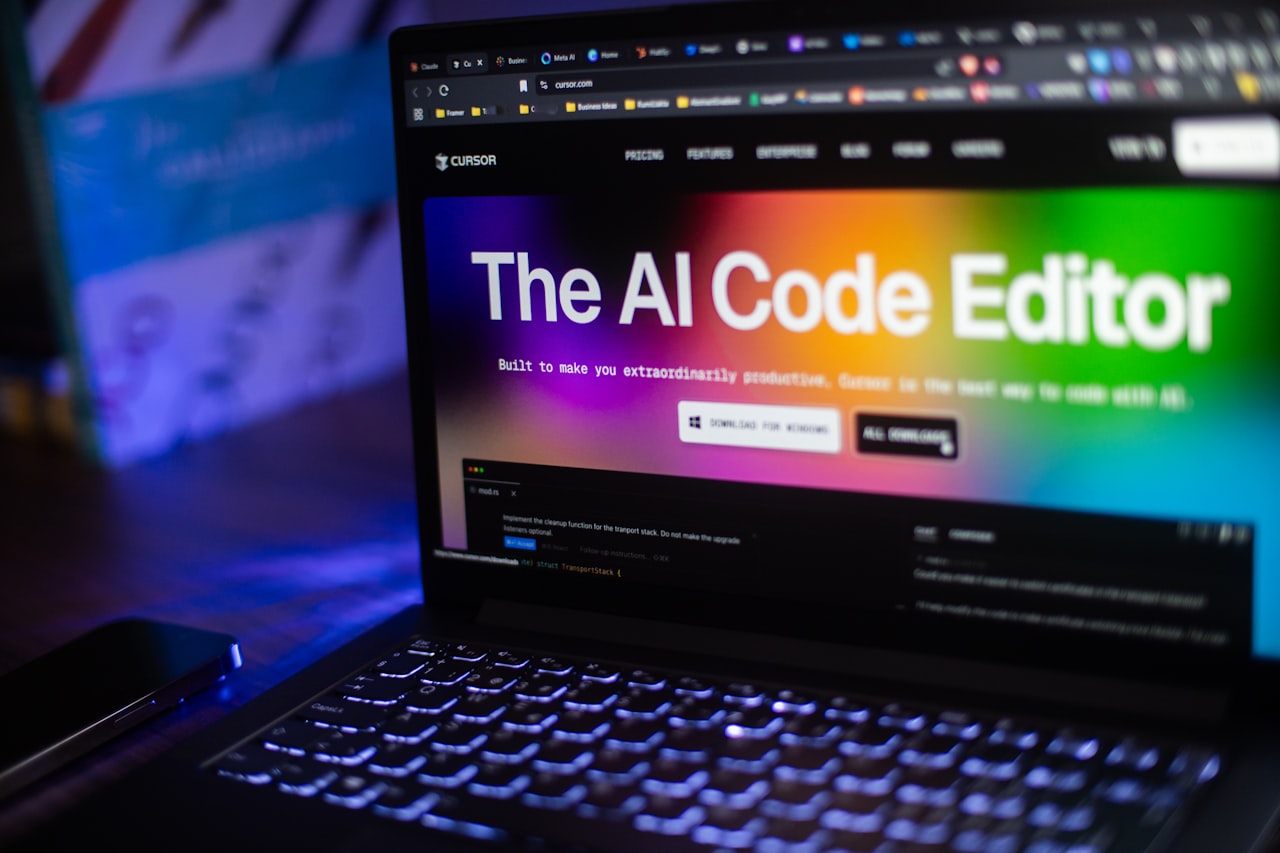
Invest more time in editing than in generating. The value of AI content is in the time saved on the first draft, not in eliminating human involvement entirely. Budget at least as much time for editing and enriching AI drafts as you save on the initial writing. The result will be content that reads naturally, provides genuine value and meets Google’s quality expectations.
Add elements that AI cannot produce. Include original data from your own business, real case studies from client work, screenshots of tools and dashboards, quotes from team members with relevant expertise, and Singapore-specific context that requires local knowledge. These elements are impossible for AI to fabricate and are precisely what makes content authoritative.
Use AI to improve rather than replace your content marketing process. Let AI handle research compilation, draft generation and repurposing (turning a long article into social posts, for example). Keep humans in charge of strategy, quality control, fact-checking and the experiential insights that build trust with your audience.
Quality Standards for AI-Assisted Content
Apply Google’s Helpful Content guidelines as your quality benchmark. Every piece of content should demonstrate first-hand expertise or deep knowledge of the topic. It should provide a satisfying, complete answer to the reader’s question. It should leave the reader feeling they learned something useful and do not need to search again for the same information.
Fact-check every claim, statistic and recommendation in AI-generated drafts. Cross-reference against primary sources and industry data. If you cannot verify a claim, remove it or replace it with verifiable information. Accuracy is non-negotiable, particularly for content targeting digital marketing topics where outdated advice can cost businesses real money.
Ensure the content has a consistent, authentic voice. AI-generated text often sounds generic or shifts tone between paragraphs. Edit for consistency, remove overly formal or robotic phrasing, and inject the personality and perspective that your brand represents. Readers can sense when content lacks a genuine human voice, even if they cannot articulate why.
Test your content against the “would I trust this?” standard. Read the final version as if you were a Singapore business owner seeking advice on this topic. Does the content provide practical, actionable guidance? Does it demonstrate that the author understands the local market? If the answer to either question is no, the content needs more work before publication.
AI Content Detection and Transparency
AI content detection tools like Originality.ai, GPTZero and Copyleaks exist but are imperfect. They produce false positives on human-written content and miss some AI-generated text. Google has stated that it does not use third-party AI detection tools as a ranking signal, and there is no evidence that content flagged by these tools is automatically penalised in search.
Google does have its own systems for evaluating content quality, including the Helpful Content system and SpamBrain. These systems focus on content quality signals rather than detecting whether AI was used. Content that is comprehensive, original and genuinely helpful will perform well regardless of detection tools. Content that is thin, repetitive and unhelpful will perform poorly regardless of whether it was AI-generated or human-written.
Transparency about AI use is an evolving area. Currently, Google does not require disclosure that content was AI-assisted. However, some industries and jurisdictions are developing regulations around AI transparency. For Singapore businesses, being transparent about your content process builds trust with your audience, even if it is not yet a regulatory requirement.
The Future of AI Content in Search
Google’s AI Overviews and Search Generative Experience are changing how users interact with search results. As Google itself generates AI answers at the top of the SERP, the bar for organic content rises. To earn clicks, your content needs to offer depth, perspective and value that a brief AI summary cannot replicate.

The competitive advantage will shift from content production volume to content differentiation. Sites that publish original research, proprietary data, expert commentary and unique perspectives will stand out. Sites that publish more of the same information available everywhere else will become invisible as AI summaries make generic content redundant.
For Singapore businesses, the practical takeaway is clear: use AI to make your content process more efficient, but invest the time savings into making your content more distinctive. Build topical authority through comprehensive, expert-led content that no AI summary can fully replace. The sites that thrive in an AI-augmented search landscape will be those that combine technological efficiency with genuine human expertise.
Frequently Asked Questions
Does Google penalise AI-generated content?
Google does not penalise content simply because it was generated by AI. It penalises content that is unhelpful, low-quality or created primarily to manipulate search rankings, regardless of how it was produced. High-quality AI-assisted content can rank just as well as human-written content.
Can Google detect AI-generated content?
Google has not disclosed the specifics of its detection capabilities. Its systems focus on evaluating content quality rather than identifying the production method. Whether content is AI-generated or human-written, it is judged by the same quality standards.
Should I disclose that my content uses AI?
There is currently no SEO requirement to disclose AI use. However, transparency can build trust with your audience. If you use AI as a drafting tool with heavy human editing, most businesses choose not to disclose this, similar to how writers have always used tools to assist their work.
Is it safe to publish AI content on a YMYL site?
YMYL (Your Money or Your Life) sites covering health, finance or legal topics face higher quality scrutiny from Google. AI-generated content on these topics must be reviewed by qualified professionals. Publishing unreviewed AI content on YMYL topics carries significant risk to both rankings and user safety.
How much editing does AI content need before publishing?
Plan for substantial editing. At minimum, every AI draft needs fact-checking, tone adjustment, addition of original insights and removal of generic filler. Expect to rewrite 40-60 per cent of an AI-generated draft to bring it to publication quality. The more competitive the topic, the more editing is required.
Will AI content still work for SEO in 2027?
AI-assisted content that meets quality standards will continue to perform well. Pure AI content with no human oversight will become increasingly ineffective as Google’s systems improve. The trend is clear: quality and originality will matter more over time, not less.
What is the best AI tool for SEO content?
Claude, ChatGPT and Gemini are the leading general-purpose AI tools for content drafting. Specialised tools like Jasper, Surfer and Frase combine AI generation with SEO-specific features. The best tool depends on your workflow, but the editing process matters more than the generation tool.
Can AI help with keyword research and content strategy?
AI is excellent for brainstorming content ideas, generating outlines, clustering keywords by intent and analysing competitor content. It is less reliable for search volume data and difficulty estimates, where dedicated SEO tools like Ahrefs and Semrush are more accurate.
How many AI-generated articles can I publish per month safely?
There is no safe or unsafe number. What matters is the quality of each article, not the volume. Publishing five exceptional AI-assisted articles per month is better than publishing 50 mediocre ones. Let your editing capacity determine your publishing volume, not your generation capacity.
Does AI content affect my site’s E-E-A-T?
AI content affects E-E-A-T only to the extent that it meets or fails to meet quality standards. Content that demonstrates genuine expertise, provides accurate information and serves the reader well supports strong E-E-A-T regardless of how it was produced. Content that is generic, inaccurate or unhelpful weakens E-E-A-T.