
SEO Forecasting: Predict Traffic, Revenue and ROI from SEO
Why SEO Forecasting Matters
SEO forecasting is the practice of predicting future organic search traffic, conversions, and revenue based on current data, planned activities, and historical trends. It transforms SEO from a vaguely defined “long-term investment” into a quantifiable business initiative with projected returns and timelines. For SEO professionals and the businesses that employ them, forecasting is what separates strategic SEO from speculative optimisation. For hands-on help, it is worth talking to our SEO services.
The primary value of SEO forecasting is securing and maintaining budget allocation. When marketing leadership compares channels, paid media has a clear advantage — you can project with reasonable accuracy how much traffic and how many conversions a given ad spend will produce. SEO historically lacked this quantitative rigour, making it vulnerable to budget cuts during economic tightening. A well-built SEO forecast demonstrates expected returns in the same language that leadership uses for other investment decisions.
In Singapore’s competitive digital landscape, where businesses are increasingly sophisticated about digital marketing ROI, presenting SEO as a forecasted investment rather than an open-ended expense dramatically improves stakeholder buy-in. CEOs and CFOs respond to projections with timeframes, expected returns, and confidence intervals — not to promises of “improved visibility” without quantification.
Forecasting also serves operational purposes. It helps you set realistic expectations with clients or internal stakeholders, identify which keyword opportunities offer the highest return, allocate resources across different SEO initiatives, and establish benchmarks against which actual performance can be measured. When actual results diverge from forecasts, the analysis of why reveals insights that improve both your SEO strategy and your forecasting methodology.
Data Sources and Inputs for Forecasting
Google Search Console Data
Google Search Console (GSC) is the foundation of any SEO forecast. It provides actual impression, click, CTR, and average position data for your existing keywords — data that comes directly from Google rather than being estimated by third-party tools. Export your GSC data for at least the past 16 months to capture seasonal patterns and year-over-year trends.
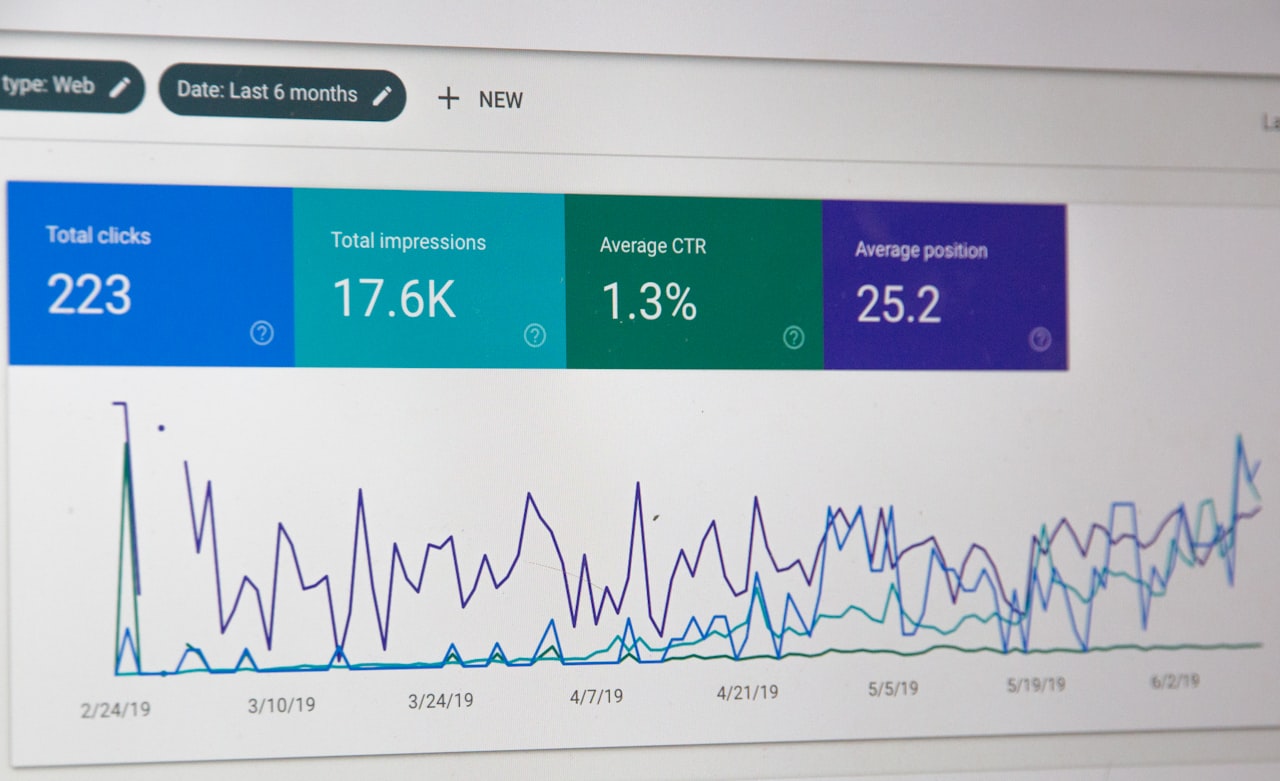
Key data points to extract include: total organic clicks and impressions by month, average position by keyword group, CTR by position for your specific site (which often differs significantly from industry averages), and branded versus non-branded traffic splits. The branded/non-branded distinction is crucial — branded traffic is driven by brand awareness activities and shouldn’t be attributed to SEO efforts in your forecast.
Third-Party Keyword Data
Tools like Ahrefs, SEMrush, and Moz provide search volume estimates, keyword difficulty scores, and competitive landscape data that GSC doesn’t offer. Use these to identify target keywords you don’t currently rank for and to estimate the search volume of opportunity keywords. Be aware that search volume estimates from these tools can vary by 30% to 50% from actual volumes — treat them as directional indicators rather than precise measurements.
Cross-reference tool estimates with your own GSC data where possible. If Ahrefs estimates 1,000 monthly searches for a keyword where you rank position one and GSC shows you received 800 impressions last month, you can calibrate the tool’s accuracy for your specific keyword set and market.
Historical Performance Data
Your analytics platform (Google Analytics, Adobe Analytics, or similar) provides the historical conversion data needed to project revenue from forecasted traffic. Extract monthly organic traffic, conversion rates by landing page category, average order values or lead values, and seasonal patterns. At minimum, use 12 months of data; 24 months is preferable for identifying reliable seasonal trends.
Segment your historical data carefully. Conversion rates for informational content differ vastly from commercial pages. A blog post about “what is SEO” converts at a very different rate than your SEO services page. Your forecast should account for these differences by applying appropriate conversion rates to different traffic segments.
Competitive Intelligence
Understanding the competitive landscape informs the difficulty component of your forecast. Use tools to assess competitor domain authority, content depth, backlink profiles, and SERP feature ownership for your target keywords. Keywords dominated by high-authority competitors will take longer to rank for and should receive more conservative forecast assumptions than keywords with weaker competition.
Google Trends and Seasonal Data
Google Trends provides relative search interest over time, revealing seasonal patterns and long-term trends that affect your forecast. A keyword with growing search interest will deliver more traffic over time even at the same ranking position, while a declining keyword will deliver less. Incorporate these trend factors into your model to avoid static forecasts that miss market dynamics.
For Singapore-specific forecasting, account for local seasonal patterns: Chinese New Year (reduced commercial activity in some sectors), the Great Singapore Sale period (increased retail search volume), National Day (increased local interest searches), and year-end holiday shopping periods. These patterns can significantly impact monthly traffic projections.
Click-Through Rate Curves and Models
Understanding CTR by Position
The click-through rate curve — the relationship between organic ranking position and the percentage of searchers who click — is the fundamental conversion factor in SEO forecasting. It translates ranking positions into traffic estimates. Position one typically receives between 25% and 35% of clicks, position two receives 12% to 18%, and clicks decline sharply through position ten, which typically receives 2% to 4%.
However, these aggregate averages mask enormous variation. CTR curves differ by query type (branded vs non-branded, informational vs transactional), SERP feature presence (featured snippets, PAA boxes, ads, and knowledge panels all reduce organic CTR), device type (mobile vs desktop), and industry. Using a single generic CTR curve for all keywords produces unreliable forecasts.
Building Custom CTR Curves
The most accurate approach is to build CTR curves from your own Google Search Console data. Group your keywords by type (branded, non-branded informational, non-branded commercial), then calculate the average CTR at each position for each group. This gives you CTR curves that reflect your actual SERP landscape, including the impact of ads and SERP features on your specific keywords.
To build these curves, export GSC query data for the past three to six months. Filter out queries with very low impressions (fewer than 100) to avoid statistical noise. Group remaining queries by their average position (rounded to the nearest integer) and calculate the mean CTR for each position. Plot this data to visualise your custom CTR curve and use it as the conversion factor in your forecast model.
Adjusting for SERP Features
SERP features significantly depress organic CTR. A position-one result for a query with four ads, a featured snippet, and a PAA box receives far fewer clicks than position one for a query with no SERP features. Analyse your target keywords for SERP feature presence and apply CTR adjustment factors accordingly.
Common adjustments include: reduce CTR by 15% to 25% when Google Ads appear above organic results, reduce by 10% to 20% when a featured snippet is present (unless you hold the snippet), and reduce by 5% to 10% when a PAA box is prominent. These adjustments are approximate — calibrate them using your own GSC data where possible.
Device-Specific CTR Models
Mobile and desktop CTR curves differ meaningfully. Mobile screens show fewer results above the fold, making positions one and two disproportionately important. Desktop screens display more results and SERP features, distributing clicks more evenly. Build separate CTR models for mobile and desktop, then weight them according to your traffic’s device split.
In Singapore, where mobile traffic typically accounts for 70% to 80% of total search traffic for most industries, the mobile CTR curve heavily influences your overall forecast. Under-weighting mobile by using desktop-centric CTR curves will overestimate traffic for mid-position rankings and underestimate it for top positions.
Traffic Forecasting Models
The Keyword-Level Model
The most granular approach forecasts traffic keyword by keyword. For each target keyword: estimate the monthly search volume, project the expected ranking position at specific future dates (based on your SEO roadmap and competitive analysis), apply the appropriate CTR percentage from your custom CTR curve, and calculate the resulting monthly clicks. Sum across all keywords for total traffic projections.
This model requires assumptions about ranking improvements. Base these on historical data — how quickly has your site historically improved rankings for similar keywords? Factor in planned activities: new content publication, link building campaigns, technical improvements, and their expected impact on rankings. Apply conservative, moderate, and aggressive assumptions to create multiple scenarios.
The Trend-Based Model
For sites with established organic traffic, a trend-based model projects future traffic from historical growth patterns. Fit a trend line to your historical monthly organic traffic (from GSC or analytics) and extrapolate forward. Adjust the trend for planned SEO investments (which should accelerate growth) and seasonal patterns.
This approach is simpler but less precise than keyword-level modelling. It works best when your SEO strategy represents a continuation of existing efforts rather than a significant shift. If you’re planning to enter new keyword verticals, launch a major content programme, or undergo a site migration, the trend-based model won’t capture these changes and should be supplemented with keyword-level projections for the new initiatives.
The Opportunity-Gap Model
This model identifies the traffic gap between your current performance and the theoretical maximum for your keyword portfolio. For each keyword where you rank on page two or lower, calculate the traffic you’d receive if you ranked in position three, position one, or won a featured snippet. The aggregate gap represents your total opportunity, and your forecast projects a percentage of this gap being captured over time.
This model is particularly useful for communicating potential to stakeholders. Showing that your current keyword portfolio represents a specific monthly traffic opportunity — and that planned SEO activities are expected to capture 20% to 40% of that opportunity over 12 months — provides a compelling, data-grounded narrative.
Combining Models for Robustness
No single model is definitively superior. The most reliable forecasts combine multiple approaches and triangulate between them. If your keyword-level model, trend-based model, and opportunity-gap model all produce similar projections, confidence in the forecast is high. If they diverge significantly, investigate why and determine which model’s assumptions are most applicable to your situation.
Revenue and ROI Projections
From Traffic to Conversions
Converting traffic forecasts into revenue projections requires layering conversion data onto your traffic model. Apply conversion rates to forecasted traffic segments — critically, use segment-specific rates rather than site-wide averages. Your blog content converts at a different rate than your service pages, and your high-intent commercial pages convert differently from your top-of-funnel informational content.

For Singapore e-commerce businesses, conversion rates typically range from 1% to 4% for organic traffic, depending on the industry and product category. For lead generation businesses (including professional services and B2B), conversion rates from organic traffic typically range from 2% to 8% for form submissions. Use your own historical rates as the baseline — industry benchmarks are useful only when you lack sufficient historical data.
Revenue Attribution
Assign monetary values to forecasted conversions. For e-commerce, this is straightforward — use your average order value. For lead generation businesses, calculate the value of an organic lead by multiplying lead-to-customer conversion rate by average customer lifetime value. For example, if 10% of organic leads become customers with an average lifetime value of SGD 15,000, each organic lead is worth SGD 1,500.
Be transparent about your attribution methodology. Last-click attribution (crediting the final touchpoint before conversion) understates SEO’s contribution, as organic search often plays an earlier role in the customer journey. Multi-touch attribution models provide a more accurate picture but are more complex to implement. State your attribution model explicitly in your forecast so stakeholders understand the basis of your revenue projections.
Calculating SEO ROI
SEO ROI is calculated as (Revenue from SEO – Cost of SEO) / Cost of SEO, expressed as a percentage. Your forecast should include both the projected revenue and the projected cost of SEO activities (agency fees, tools, content production, developer time for technical SEO) to arrive at a forecasted ROI.
Compare your projected SEO ROI with other marketing channels. In many cases, SEO delivers higher long-term ROI than paid search advertising because organic traffic continues flowing after the investment, whereas paid traffic stops when the budget is paused. However, SEO ROI takes longer to materialise — your forecast should show the crossover point where SEO’s cumulative returns exceed cumulative investment.
Payback Period Analysis
Stakeholders want to know when SEO will “pay for itself.” Include a payback period analysis in your forecast — the number of months until cumulative revenue from SEO equals cumulative investment. For most businesses, the SEO payback period is 6 to 18 months, depending on the starting point, competition level, and investment magnitude. Show this visually with a chart that plots cumulative investment against cumulative revenue over time.
Scenario Planning and Sensitivity Analysis
Three-Scenario Framework
Present every SEO forecast with three scenarios: conservative, moderate, and aggressive. Each scenario should use different assumptions about ranking improvement speed, conversion rates, and search volume growth. The conservative scenario assumes slower-than-average ranking improvements and no increase in search volume; the aggressive scenario assumes faster improvements and growing search demand; the moderate scenario falls between them.
Assign probability weightings to each scenario — for example, 25% probability for conservative, 50% for moderate, and 25% for aggressive. The weighted average provides an expected value that accounts for uncertainty. This approach is far more honest and useful than a single-point forecast that implies false precision.
Sensitivity Analysis
Identify the variables that most significantly impact your forecast and test how changes in these variables affect the output. Common high-sensitivity variables include: the CTR curve assumptions (a 2% change in position-one CTR significantly moves total traffic), the assumed ranking improvement timeline, conversion rates, and search volume accuracy.
Present the sensitivity analysis as a table or tornado chart showing how a 10% or 20% change in each input variable affects the forecast output. This helps stakeholders understand which assumptions carry the most risk and where actual results are most likely to diverge from projections.
Risk Factors and Contingencies
Every SEO forecast should acknowledge risk factors that could cause actual results to fall below projections. Common risks include: Google algorithm updates that negatively impact rankings, new competitors entering the market, changes in search behaviour or SERP layouts, technical issues (site migrations, downtime), and economic factors that affect search demand.
For each identified risk, note its likelihood and potential impact, and describe the mitigation strategy. This demonstrates analytical rigour and protects your credibility — when (not if) actual results diverge from the forecast, having pre-identified the causal risk shows foresight rather than failure.
Presenting Forecasts to Stakeholders
Audience-Appropriate Communication
Different stakeholders need different levels of detail. C-suite executives want the business outcome: projected revenue, ROI, and payback period. Marketing directors want the strategic picture: which keyword categories drive the most value and how SEO compares with other channels. SEO team members need the operational detail: keyword-level projections, timeline assumptions, and activity dependencies.
Prepare layered presentations that start with the executive summary (one to two slides showing projected traffic, revenue, and ROI) and drill into progressively more detail. This allows executives to grasp the key numbers quickly while providing supporting detail for those who want to interrogate the methodology.
Visualisation Best Practices
Present forecasts visually using charts that show monthly or quarterly projections with clearly labelled scenario bands. A line chart showing moderate forecast with shaded regions for conservative and aggressive scenarios communicates both the expected outcome and the uncertainty range. Avoid dense tables of monthly numbers — they’re hard to interpret and obscure the narrative.
Include a cumulative revenue vs cumulative cost chart to visually demonstrate the payback period and long-term value. Stakeholders find it compelling to see the lines cross — the moment where SEO becomes profitable — and the growing gap between revenue and cost in subsequent months. This visual makes the case for sustained SEO investment more powerfully than any spreadsheet.
Updating and Revising Forecasts
Treat your forecast as a living document. Review actual performance against projections monthly and update the forecast quarterly. When actual results outperform or underperform the forecast, analyse why and adjust future projections accordingly. This iterative refinement improves forecast accuracy over time and demonstrates to stakeholders that you are managing SEO as a rigorous, data-driven initiative.
When presenting updates, show the variance between forecast and actual alongside the revised projection. Explain material variances — both positive and negative — with specific causal factors. This builds confidence in your analytical capabilities and ensures that stakeholders trust future forecasts. A strong content marketing programme that consistently executes planned activities makes forecasts more accurate by reducing the variance introduced by inconsistent execution.
Common Pitfalls and How to Avoid Them
Over-Reliance on Generic CTR Curves
Using industry-average CTR curves rather than site-specific data is the most common source of forecasting error. Generic curves don’t account for your specific SERP landscape — the prevalence of ads, SERP features, and brand strength that affect your actual click-through rates. Always build custom CTR curves from your own GSC data, and only fall back on generic curves for keyword categories where you have no historical data.

Ignoring Seasonality
Organic search traffic is seasonal for virtually every industry. Forecasts that project a smooth upward trend without seasonal adjustment will overestimate traffic in low seasons and underestimate it in high seasons. Apply seasonal multipliers derived from your historical data — at minimum, use month-over-month indices from the previous year.
Conflating Branded and Non-Branded Traffic
Branded search traffic (searches for your company name or products) is primarily driven by brand awareness rather than SEO efforts. Including branded traffic in your SEO forecast inflates projected results and misattributes traffic to SEO that would have occurred regardless. Separate branded and non-branded traffic in your forecast, and attribute only non-branded traffic growth to SEO activities.
Single-Point Forecasts Without Uncertainty Ranges
A forecast that says “we’ll generate 50,000 organic visits per month in 12 months” implies a precision that doesn’t exist. If actual results are 40,000, the forecast appears to have failed — even though that might represent excellent performance given the assumptions. Always present ranges (conservative to aggressive) and communicate that forecasts are probabilistic projections, not guarantees. This protects your credibility and sets appropriate expectations.
Forecasting Without an Activity Plan
A traffic forecast without an underlying activity plan is a hope, not a projection. Your forecast should be explicitly tied to planned SEO activities — content publication schedule, link building targets, technical improvements, and their expected impacts. When stakeholders ask “how will we achieve this forecast?”, you should have a detailed answer that connects specific activities to specific outcomes in the projection.
Frequently Asked Questions
What is SEO forecasting?
SEO forecasting is the process of predicting future organic search traffic, conversions, and revenue based on current performance data, planned SEO activities, keyword opportunities, and historical trends. It uses data from Google Search Console, analytics platforms, and keyword research tools to build models that project expected outcomes over a defined time period — typically 6 to 24 months. SEO forecasting enables businesses to evaluate the expected return on their SEO investment and make informed budget allocation decisions.
How accurate are SEO forecasts?
SEO forecasts are inherently uncertain due to the many variables that influence organic search performance, including algorithm changes, competitor actions, and market shifts. Well-built forecasts using site-specific CTR curves and robust data typically achieve accuracy within 20% to 30% of actual results. Accuracy improves over time as the model is calibrated against actual performance. Presenting forecasts with scenario ranges rather than single-point estimates honestly communicates this uncertainty to stakeholders.
What data do I need to build an SEO forecast?
Essential data includes: 12 to 16 months of Google Search Console data (impressions, clicks, positions, CTR by query), historical organic traffic and conversion data from your analytics platform, keyword research data (search volumes, difficulty scores), and competitive landscape analysis. Additional valuable inputs include Google Trends data for seasonal patterns, SERP feature analysis for CTR adjustments, and historical ranking improvement timelines for similar keywords on your site.
How do I calculate SEO ROI?
Calculate SEO ROI as (Revenue attributed to SEO minus Cost of SEO) divided by Cost of SEO, expressed as a percentage. Revenue attribution requires applying conversion rates and average order values (or lead values) to forecasted organic traffic. Costs include agency or team salaries, tools, content production, and technical development. Include a payback period analysis showing when cumulative revenue exceeds cumulative cost. Most businesses see SEO payback periods of 6 to 18 months.
What is a CTR curve and why does it matter for forecasting?
A CTR curve shows the click-through rate at each organic ranking position — the percentage of searchers who click on the result at position one, two, three, and so on. It matters because it’s the key conversion factor that translates ranking positions into traffic estimates. Generic CTR curves average 25% to 35% for position one, but actual rates vary significantly by query type, SERP features, and industry. Building custom CTR curves from your own Search Console data produces far more accurate forecasts than using generic averages.
How far ahead should I forecast SEO performance?
Most SEO forecasts cover 12 to 18 months, with quarterly milestones. Shorter forecasts (6 months) can be useful for specific initiatives or campaigns. Forecasts beyond 18 months become increasingly speculative due to the compounding uncertainty of multiple variables. Present the first 6 months with higher confidence and months 12 to 18 with acknowledged lower confidence. Update forecasts quarterly as new actual data becomes available to maintain relevance.
How do I account for Google algorithm updates in my forecast?
You cannot predict specific algorithm updates, but you can account for their potential impact through scenario planning. Include a risk factor for algorithm volatility in your conservative scenario — assume a 10% to 20% traffic reduction at some point during the forecast period. Build a diversified SEO strategy that isn’t over-reliant on any single ranking factor, reducing vulnerability to any specific update. When presenting forecasts, explicitly acknowledge algorithm risk as a factor that could cause actual results to fall below projections.
Should I include branded traffic in my SEO forecast?
No. Branded traffic — searches for your company name, product names, or brand terms — is driven by brand awareness rather than SEO efforts. Including it in your SEO forecast artificially inflates projected results and misattributes traffic. Separate branded and non-branded traffic using Search Console query data, and build your forecast based on non-branded organic traffic only. Report branded traffic separately as a complementary metric that reflects overall brand health.
How do I present an SEO forecast to executives?
Present SEO forecasts to executives with a focus on business outcomes: projected revenue, ROI, and payback period. Use a one-to-two slide executive summary with clear visualisations showing monthly projections with scenario ranges. Compare SEO’s projected ROI with other marketing channels. Include the key assumptions and risk factors briefly. Provide detailed methodology and keyword-level data as appendix material for those who want to examine the analysis more deeply.
What tools are best for SEO forecasting?
Google Search Console provides the essential CTR and position data. Google Analytics or your analytics platform provides conversion data. Keyword research tools (Ahrefs, SEMrush, Moz) provide search volume and competitive data. Google Trends provides seasonality data. For building the actual forecast model, a well-structured spreadsheet (Google Sheets or Excel) is sufficient for most businesses. Dedicated forecasting tools like SEOmonitor or seoClarity offer automated modelling but require investment. The quality of your inputs and assumptions matters far more than the sophistication of your tool.