SEO for Plumbers: How to Rank Your Plumbing Business in Singapore (2026)
Why SEO Matters for Plumbers
When a pipe bursts at two in the morning, nobody flips through a directory. They grab their phone and search “emergency plumber near me.” If your plumbing business does not appear in those results, you lose the job to a competitor who does. It really is that straightforward.
SEO for plumbers is not about vanity rankings. It is about being visible at the exact moment a homeowner or facility manager in Singapore needs your services. Plumbing is a high-intent industry. People searching for plumbing services are not browsing for fun. They have a problem they need solved now, and they are ready to hire.
The plumbing market in Singapore is competitive. HDB estates, condominiums, and commercial properties all need regular maintenance and emergency repairs. With hundreds of plumbing companies operating across the island, organic search visibility is what separates businesses that grow from those that stagnate.
Investing in search engine optimisation gives your plumbing company a predictable source of enquiries that does not depend on word-of-mouth referrals or expensive classified listings. Once your pages rank, you receive traffic and leads without paying per click.
Emergency Keyword Targeting
Emergency plumbing calls are the highest-value jobs in the trade. They come with urgency surcharges, and the customer almost always converts. Ranking for emergency keywords should be your top SEO priority.

Here are the keyword clusters you need to target:
- “Emergency plumber Singapore” and variations including “24-hour plumber Singapore”
- “Burst pipe repair Singapore” — specific problem-based searches
- “Water heater repair urgent” — appliance-related emergencies
- “Toilet choked Singapore” — one of the most common residential plumbing emergencies
- “Ceiling leak repair” — common in older HDB flats and condominiums
Each emergency service should have its own dedicated page. Do not lump “burst pipe repair” and “toilet choke” onto a single services page. Google ranks individual pages, and a focused page targeting “burst pipe repair Singapore” will outrank a generic services page every time.
Include clear calls to action on every emergency page. Display your phone number prominently. These visitors are not going to fill in a contact form at three in the morning. They want to call and get someone on the way immediately.
Structured data markup for your business hours is critical here. If you operate a 24/7 emergency service, make sure your schema reflects that. Google uses this information to determine whether to show your listing for after-hours searches.
Local SEO for Plumbing Businesses
Plumbing is inherently local. Nobody hires a plumber from across the country. Your SEO strategy must reflect this reality. Local SEO is the foundation of any effective plumbing SEO campaign.
Start with service area pages. Singapore is compact, but customers still search with location modifiers. Create dedicated pages for the areas you serve:
- Plumbing services in Tampines
- Plumber in Jurong East
- Emergency plumber Bukit Timah
- HDB plumbing services Ang Mo Kio
- Condo plumbing maintenance Orchard
Each service area page should contain unique content about the specific plumbing challenges in that location. Older HDB estates in Toa Payoh have different plumbing issues compared to new condominiums in Punggol. Reference local landmarks, mention nearby MRT stations, and describe the types of properties you commonly service in each area.
Consistency in your Name, Address, and Phone number (NAP) across every online listing is non-negotiable. Audit your citations on directories like Singapore Yellow Pages, Carousell services, and industry-specific platforms. Even small discrepancies — abbreviating “Road” to “Rd” in one listing but not another — can confuse search engines and weaken your local ranking signals.
Building local backlinks strengthens your authority. Partner with property management companies, hardware suppliers, or home renovation blogs. A link from a Singapore-based home improvement site carries more weight for local rankings than a generic international directory listing. Read our guide on local SEO for small businesses for a deeper breakdown.
Google Business Profile Optimisation
Your Google Business Profile is arguably the most important asset for plumbing SEO. When someone searches for a plumber in Singapore, the local pack — those three business listings with a map — appears above organic results. Getting into that pack is critical.
Follow our comprehensive Google Business Profile guide for setup fundamentals. Here is what matters specifically for plumbers:
Choose the right primary category. “Plumber” is the obvious choice, but add secondary categories like “Water Heater Installation Service,” “Drain Cleaning Service,” and “Emergency Plumber” if they are available. These categories directly influence which searches trigger your listing.
Complete every section. Add your service areas covering the specific parts of Singapore you operate in. List every service you offer using the products and services section. Write a detailed business description that includes your main keywords naturally.
Post regularly. Google Business Profile posts are underused by most plumbing companies. Share updates about completed jobs (with permission), seasonal plumbing tips, or promotions. Posts show Google that your profile is active and give potential customers additional reasons to choose you.
Upload photos consistently. Before-and-after photos of completed repairs, your team at work, and your service vehicles all help. Profiles with more than 100 photos get significantly more clicks than those with fewer than ten.
Enable messaging. Many customers prefer to text rather than call. Enabling the messaging feature on your profile gives them another way to reach you and can increase your conversion rate.
On-Page SEO for Plumbing Websites
Your website needs to be built with both search engines and customers in mind. Here is how to structure your on-page SEO for maximum impact.

Title tags and meta descriptions. Every service page needs a unique title tag that includes the target keyword and a location modifier. “Burst Pipe Repair in Singapore | 24/7 Emergency Service | [Your Company]” is far better than “Our Services | [Your Company].”
Header hierarchy. Use H1 for the main page title, H2 for major sections, and H3 for subsections. Do not skip levels or use headers purely for styling. Search engines use header structure to understand your content hierarchy.
Service pages. Create individual pages for each core service:
- General plumbing maintenance
- Pipe repair and replacement
- Water heater installation and repair
- Toilet and sanitary ware installation
- Drain cleaning and unclogging
- Bathroom renovation plumbing
- Commercial plumbing services
- PUB compliance and water efficiency
Each page should be at least 800 words. Include the process you follow, the types of properties you service, pricing guidance if possible, and a clear call to action. Thin pages with 200 words of generic text will not rank.
Internal linking. Connect your pages logically. Your “water heater repair” page should link to your “water heater installation” page. Your “emergency plumbing” page should link to all the specific emergency services you offer. Strong internal linking distributes page authority and helps search engines crawl your site efficiently. Learn more about SEO for home services businesses to see broader strategies that apply here.
Review Strategy and Reputation Management
Reviews are a ranking factor for local SEO, and they are the primary trust signal for potential customers. A plumbing company with 200 five-star reviews will always outperform one with 15 reviews, assuming other factors are equal.
Here is a practical review generation system for plumbing businesses:
Ask at the right moment. The best time to ask for a review is immediately after completing a job, when the customer is relieved and grateful. Train your plumbers to ask in person before they leave the property.
Make it easy. Send a follow-up SMS or WhatsApp message with a direct link to your Google review page. In Singapore, WhatsApp is the dominant messaging platform, and a well-timed message with a direct link converts far better than an email.
Respond to every review. Positive or negative, every review deserves a response. Thank customers for positive reviews and address concerns professionally in negative ones. Potential customers read your responses as much as the reviews themselves.
Do not buy reviews. Google is increasingly sophisticated at detecting fake reviews. Getting caught results in review removal and potential profile suspension. Build your review count organically.
Showcase reviews on your website. Embed Google reviews on your service pages. This serves as social proof for visitors who arrive through organic search and reinforces the connection between your website and your Google Business Profile.
Aim for a steady flow of reviews rather than sudden bursts. Five reviews per week looks natural to Google. Fifty reviews in a single day looks suspicious.
Content Strategy for Plumbers
A blog might seem unnecessary for a plumbing company, but it is one of the most effective ways to capture long-tail search traffic and build topical authority.
Focus on content that addresses real questions your customers ask:
- “How to fix a dripping tap” — captures DIY searchers who may eventually need professional help
- “How much does a plumber cost in Singapore” — targets price-conscious customers at the top of the funnel
- “Signs you need to replace your water heater” — educational content that drives awareness of your services
- “HDB plumbing regulations 2026” — demonstrates expertise and targets specific informational queries
- “How to prevent pipe corrosion in older flats” — addresses a common concern for Singapore homeowners
Each blog post should link to the relevant service page. An article about water heater replacement signs should link to your water heater installation service page. This passes topical authority from your content to your commercial pages.
Create seasonal content around predictable demand spikes. Chinese New Year is a peak period for plumbing services as families prepare their homes. The monsoon season brings increased calls for drainage issues. Publishing relevant content before these periods gives it time to rank when demand peaks.
Video content is also valuable if you can produce it. Short clips showing common plumbing fixes, your team at work, or customer testimonials can be embedded on your website and posted to YouTube. Video results increasingly appear in Google search, giving you another avenue for visibility.
Technical SEO Considerations
A plumbing website does not need to be technically complex, but it does need to meet certain standards.
Page speed. Your website must load fast, particularly on mobile. Plumbing searches are overwhelmingly mobile. A customer with a burst pipe is not sitting at a desktop computer. Compress images, use efficient hosting, and minimise unnecessary scripts. Aim for a Largest Contentful Paint under 2.5 seconds.
Mobile responsiveness. Your site must function perfectly on every screen size. Buttons must be large enough to tap. Phone numbers must be clickable. Forms must be easy to complete on a mobile device. Test your site on multiple devices regularly.
Schema markup. Implement LocalBusiness schema with your NAP details, service areas, opening hours, and services offered. Add FAQ schema to your service pages and blog posts to qualify for rich snippets in search results.
SSL certificate. HTTPS is a baseline requirement. Any plumbing website without SSL is at a disadvantage in rankings and will display browser warnings that erode customer trust.
XML sitemap. Submit a clean XML sitemap through Google Search Console. Include all service pages, service area pages, and blog posts. Exclude thin pages, duplicate content, and administrative pages.
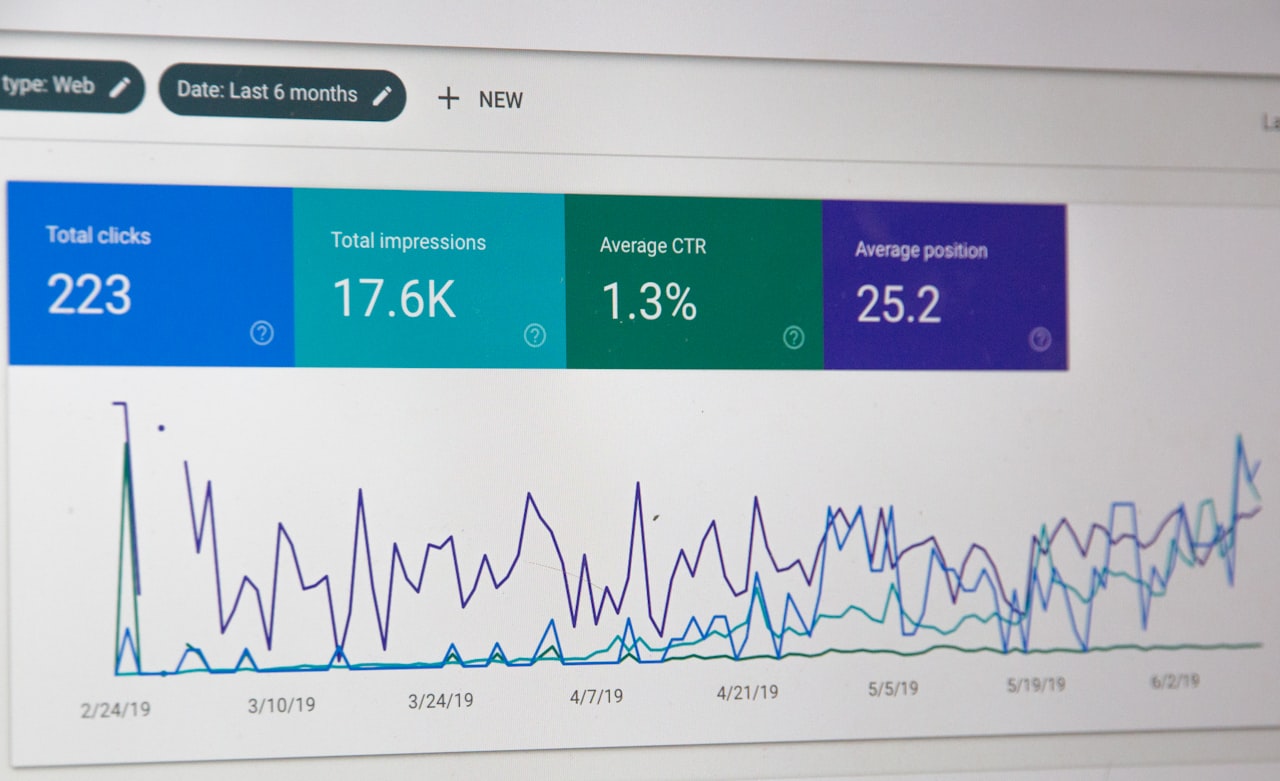
Crawl errors. Monitor Google Search Console for crawl errors weekly. Fix broken links, resolve 404 errors, and ensure redirects are functioning correctly. A clean crawl profile signals a well-maintained website.
For most plumbing companies, a WordPress site with a quality theme and proper configuration is more than sufficient. You do not need a custom-built platform. What matters is that the fundamentals are covered and the site is maintained.
Frequently Asked Questions
How long does SEO take to work for a plumbing business?
Expect to see meaningful results within three to six months for less competitive keywords and six to twelve months for competitive terms like “plumber Singapore.” Local SEO improvements through Google Business Profile often show results faster, sometimes within a few weeks. Consistency is key. SEO is not a one-off project but an ongoing investment that compounds over time.
Should plumbers invest in SEO or Google Ads first?
If you need leads immediately, start with Google Ads while building your SEO foundation. SEO takes time but delivers a lower cost per lead in the long run. The ideal approach is to run both simultaneously — Google Ads for immediate visibility and SEO for sustainable, long-term growth. Most successful plumbing companies in Singapore use both channels.
How many reviews does a plumbing company need to rank in the local pack?
There is no fixed number, but aim to have more reviews than your top competitors. In Singapore, many plumbing companies have fewer than 50 reviews, so reaching 100 or more with a high average rating puts you in a strong position. Focus on a steady stream of genuine reviews rather than chasing a specific number.
What is the most important page on a plumber’s website for SEO?
Your homepage and your primary service pages carry the most weight. However, for conversion purposes, your emergency services page is often the most valuable because it captures the highest-intent traffic. Ensure this page is optimised for emergency keywords, loads quickly, and makes it effortless to contact you.
Can a plumber do SEO without hiring an agency?
Basic SEO tasks like optimising your Google Business Profile, collecting reviews, and writing blog posts can be done in-house. However, technical SEO, link building, and competitive keyword strategy typically require specialist expertise. Many plumbing businesses start with DIY efforts and then engage a professional SEO service once they see the value and want to scale faster.